

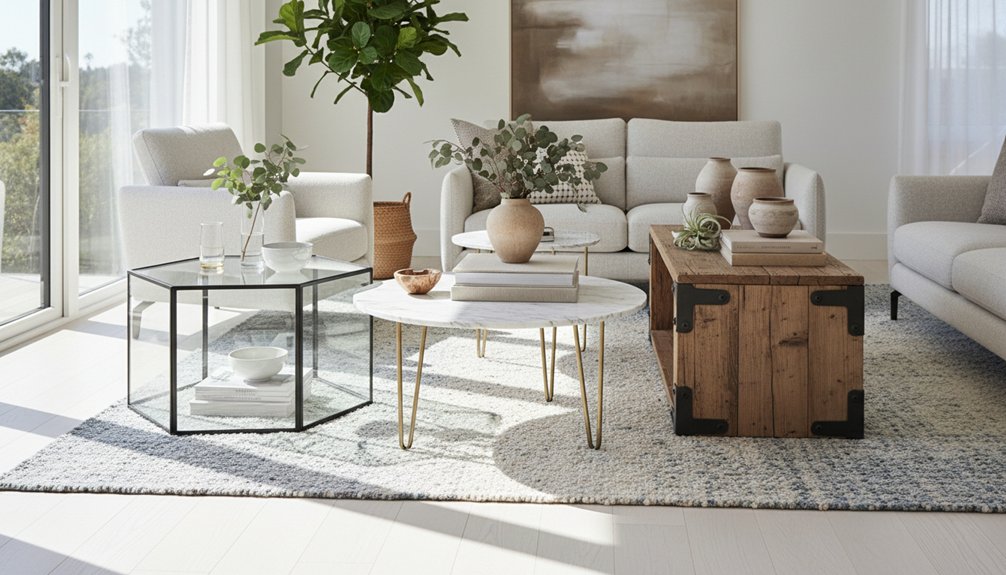
Choose a coffee table that sits 14 to 18 inches away from your sofa and is about two-thirds the length of the sofa. A rectangular coffee table maximizes available surface area, making it great for placing drinks and decor. A round coffee table, on the other hand, enhances traffic flow in smaller living rooms and reduces sharp corners that can get in the way.
Select materials that fit your style and functional needs. Wood provides warmth and durability, making it a solid choice for both modern and traditional settings. Glass offers a sleek, contemporary look, perfect for adding an airy feel to the space. Metal gives an industrial vibe, often ideal for loft-style homes. Stone adds an elegant touch and is naturally heat-resistant, making it suitable for hosting.
Ensure your coffee table’s style aligns with your existing decor, whether that’s modern, rustic, or traditional. Once you have your table, create visual interest by layering decorative elements at different heights. Arrange trays, books, and natural accents to draw the eye. This approach transforms your coffee table from a mere functional piece into a curated focal point in your living room.
How to Choose the Right Coffee Table Size for Your Living Room
To determine the right coffee table size for your living room, measure the space between your sofa and other seating. Position your coffee table 14 to 18 inches away from the sofa’s edge. This distance provides comfortable legroom while keeping items accessible.
Next, consider the length of your coffee table. Aim for a table that’s about two-thirds the length of your sofa. This proportion helps maintain visual balance in the room.
When selecting the height of your coffee table, choose a height between 16 to 18 inches. This height should match or be slightly lower than the height of your sofa cushions for a cohesive look.
In smaller living rooms, opt for compact coffee table designs. These designs shouldn’t obstruct traffic flow or make the room feel cramped.
In contrast, larger living rooms can accommodate oversized coffee tables that act as focal points. Additionally, ensure that your coffee table arrangement allows for clear pathways around the table for easy movement and prevents any obstruction in the room.
Lastly, ensure there’s at least 30 inches of clearance around the coffee table. This space allows for easy movement around the table and prevents any obstruction in the room.
Which Coffee Table Shape Fits Your Space Best?
The shape of your coffee table significantly affects the functionality and flow of your living room. Rectangular coffee tables maximize surface area and fit well in longer spaces alongside standard sofas. For example, a 48-inch by 24-inch rectangular table provides ample room for drinks, books, and decor.
Rectangular coffee tables are the practical choice for maximizing surface space while complementing your sofa’s length and proportion.
Square coffee tables work well in compact, symmetrical layouts and create visual balance when placed in the center of seating arrangements. A typical square table measures around 36 inches on each side, making it ideal for smaller spaces without overwhelming the layout.
Round coffee tables are effective in tight areas because they lack sharp corners, improving traffic flow and safety. For families with young children, a 36-inch round table minimizes the risk of bumps and falls.
Oval tables combine the benefits of rectangular and round designs, offering generous surface space while maintaining smooth edges. An oval table measuring 48 inches by 28 inches provides a good balance of surface area and safety.
When selecting a coffee table shape, measure your living area to ensure proper functionality. Maintain at least 18 inches of clearance between the table and surrounding furniture. This distance allows for comfortable movement and accessibility around the table in your living space. Additionally, consider the types of wood used in crafting your table, as different materials can impact durability and style.
Wood, Glass, Metal, or Stone: Comparing Coffee Table Materials
When selecting a coffee table material, evaluate durability, maintenance, and design compatibility.
Wood provides durability and warmth, making it suitable for various living room styles. Wood surfaces resist daily wear but require polishing every few months to maintain their finish.
Glass delivers a modern look and allows light to flow through the space. Glass surfaces need simple maintenance, requiring only a wipe with a standard cleaner, although fingerprints can be a drawback.
Metal finishes, such as brushed nickel or bronze, offer industrial aesthetics and exceptional longevity. Metal surfaces resist scratches and require minimal upkeep, making them practical for everyday use.
Stone materials like marble or granite add a touch of elegance to any room. Stone surfaces are nearly indestructible and heat-resistant, but their weight can complicate repositioning. Regular sealing is necessary to prevent staining and maintain their integrity.
Consider your lifestyle when choosing a material. For instance, families with children might find wood more forgiving, while those who prefer a minimalist look may lean towards glass. Additionally, selecting a coffee table that complements your overall design movements can enhance the cohesiveness of your living space.
Ultimately, choosing a coffee table material involves assessing both your functional needs and your aesthetic preferences to find the best fit for your living space.
What Coffee Table Styles Work With Your Decor?
Matching your coffee table style to your existing decor is essential for creating a cohesive living room. If your space features modern aesthetics, select coffee tables with clean lines, geometric shapes, and materials like glass or polished metal. These tables enhance minimalist spaces and align with contemporary furniture.
For a rustic charm, choose reclaimed wood tables that offer natural finishes and distressed details. These options introduce warmth and character, making them ideal for farmhouse or country-style settings.
Traditional decor benefits from ornate wooden tables that showcase intricate carvings and rich stains. These tables add a sense of elegance and history to classic settings.
In mid-century modern spaces, look for tables with tapered legs and warm wood tones that reflect the style’s simplicity and functionality. Industrial-style rooms require coffee tables that combine metal frames with raw wood surfaces, contributing to an urban and rugged look.
When selecting a coffee table, consider your room’s color palette, existing furniture shapes, and overall atmosphere. Avoid mismatched styles that disrupt visual harmony.
Keep in mind that tables shouldn’t overwhelm the space; they must fit comfortably within the room’s dimensions. By thoughtfully choosing a coffee table that aligns with your decor, you can enhance the overall aesthetic and functionality of your living area.
How Should You Style and Decorate a Coffee Table?
Styling your coffee table effectively turns it into a centerpiece that enhances your living room. Start by choosing a foundation piece, such as a decorative tray or runner, to organize your table decor. This approach creates a structured look and minimizes clutter.
Next, layer your decorative elements at different heights to add visual interest. Place a tall vase or candlestick next to medium-height books and low decorative objects. Limit your selection to three to five items to maintain balance and prevent overcrowding.
Incorporating natural elements, like plants or flowers, adds freshness to your display. Stack books horizontally to create platforms for your smaller accessories. Ensure you leave enough negative space for functionality, allowing room for drinks and snacks.
Finally, consider rotating your decorations seasonally. This practice keeps your coffee table display dynamic and engaging throughout the year.