

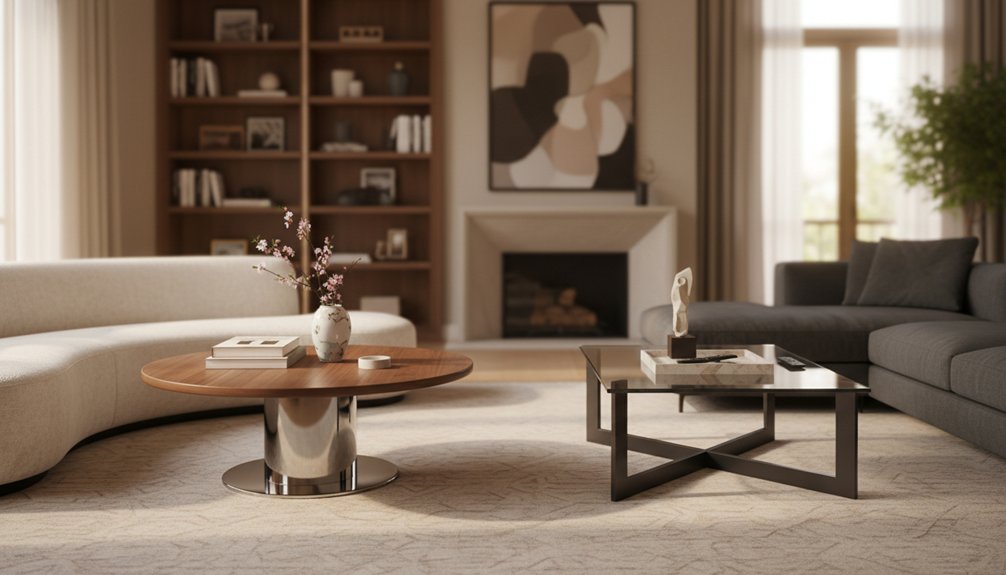
Choose round coffee tables for small living rooms measuring less than 150 square feet. Round tables are ideal for homes with young children because they eliminate sharp corners, reducing the risk of injury. Additionally, they facilitate better traffic flow in conversational seating arrangements.
Opt for rectangular coffee tables in larger spaces, as they provide more surface area and serve as visual anchors that help define separate zones within the room. When selecting a coffee table, match the shape to your sofa configuration: long, single sofas pair well with rectangular tables, while sectional or L-shaped sofas work better with round or square tables.
Maintain a clearance of 14 to 18 inches around any coffee table to ensure comfortable navigation. In high-traffic areas, aim for the full 18 inches of clearance. Your room dimensions, furniture layout, and specific household needs will guide your choice of coffee table shape.
Round vs Rectangular Coffee Tables: Functional Differences Explained
Round and rectangular coffee tables serve different functional purposes in everyday use.
Round coffee tables fit well in tight spaces. They allow easier movement around furniture because they lack sharp corners. This design makes round tables safer for homes with children. Additionally, round tables encourage better conversation flow in smaller rooms.
In contrast, rectangular coffee tables offer more surface area for placing items. You can comfortably set down drinks, books, and decorative objects without overcrowding the space.
Rectangular tables provide stability, making them ideal for larger living rooms where defined zones are necessary. Their shape fits naturally against sofas and sectionals, optimizing your floor plan.
Your choice between a round or rectangular coffee table depends on your room’s layout and daily use. Consider the dimensions of your space and how you’ll interact with the table. In tight areas, round tables excel, while rectangular tables shine in larger spaces. Understanding these differences helps you select the right table for your home. Additionally, maintaining at least 30 inches of clearance around the table ensures comfortable movement and accessibility.
Best Coffee Table Shape for Small vs Large Living Rooms
When choosing a coffee table, the size of your living room significantly influences the best shape. In small living rooms, round coffee tables work effectively. Round tables lack sharp corners, which makes moving in tight spaces easier. They improve traffic flow and reduce the chances of bumping into edges. Additionally, round tables create a less cluttered appearance in small rooms. Choosing the right solid wood finish can enhance the aesthetic appeal of your round coffee table.
In larger living rooms, rectangular coffee tables provide several advantages. Rectangular tables occupy space more efficiently and can serve as a visual anchor for seating arrangements. Their length helps define distinct areas within the room. Rectangular tables also offer a larger surface for entertaining guests or displaying decorative items. They pair well with longer sofas and help maintain visual balance in expansive layouts.
Before selecting a coffee table shape, measure your room’s dimensions carefully. This ensures that the table fits well and complements your overall design.
Matching Coffee Table Shape to Your Sofa Configuration
Your sofa configuration directly influences the best coffee table shape for your living space. Selecting the right coffee table enhances both functionality and aesthetics in your room.
| Sofa Configuration | Recommended Table Shape |
|---|---|
| Single Long Sofa | Rectangular or oval |
| Sectional (L-shaped) | Round or square |
| Two Facing Sofas | Rectangular (long) |
| U-shaped Sectional | Round or large square |
When you choose a coffee table, prioritize height. The coffee table should sit 1-2 inches lower than the seat cushions of your sofa. This height allows for comfortable access without disrupting visual balance. Aim for a coffee table length that is approximately two-thirds the length of your sofa. This ratio promotes accessibility from all seating areas.
Avoid selecting a coffee table that is too high or too low, as this can lead to discomfort and imbalance in your room’s layout. Ensure that the table shape complements your sofa configuration; for example, a single long sofa works well with either a rectangular or oval table, while an L-shaped sectional pairs best with a round or square table. By following these guidelines, you create a cohesive and inviting living space. Additionally, choosing a table that reflects traditional furniture styles can add a touch of elegance to your overall design.
Round Coffee Tables: Ideal Room Types and Furniture Layouts
Round coffee tables enhance smaller living rooms and conversational seating arrangements. Round tables provide an efficient surface for drinks and snacks when sofas and chairs sit in circular or U-shaped layouts.
Round coffee tables maximize functionality in compact spaces while naturally complementing curved seating arrangements for entertaining guests.
These tables fit perfectly in square rooms, as their curved shapes soften sharp angles and create a more inviting atmosphere. In open-concept spaces, round coffee tables facilitate smooth traffic flow since they lack sharp corners that can obstruct movement.
Round coffee tables optimize space by creating better walkways compared to rectangular tables. When you arrange furniture around a central focal point, such as a fireplace or entertainment center, round tables help maintain clear pathways.
These tables also encourage face-to-face interaction during gatherings, making them suitable for social environments.
While round coffee tables work well in many settings, they mightn’t be the best choice for larger rooms with expansive seating arrangements. In those cases, rectangular tables can provide more surface area for larger groups.
Always consider the scale of your space and the layout before selecting a coffee table to ensure it meets your needs effectively.
Rectangular Coffee Tables: Where This Shape Works Best
Rectangular coffee tables provide style versatility that fits various design aesthetics, including modern minimalist and classic traditional. These tables work best in larger seating areas, accommodating multiple people who need access to the table’s surface.
When arranging furniture in a formal layout, rectangular coffee tables create order and structure, enhancing the overall organization of the space.
In contrast, smaller or more cramped areas may not benefit from the use of rectangular coffee tables, as their size can overwhelm the space and restrict movement. For example, if you have a small apartment or a compact living room, consider opting for round or square tables instead, which can offer a more intimate feel without dominating the area.
When selecting a rectangular coffee table, consider the dimensions of your seating arrangement. A table that measures 48 to 60 inches in length works well with sofas that are 72 to 84 inches long, allowing for comfortable interaction and accessibility.
Additionally, ensure that the height of the table aligns with the seating height; a standard coffee table height of 16 to 18 inches works best with standard couch heights.
Coffee Table Shape for Homes With Kids and High Traffic
When selecting a coffee table for homes with kids and high traffic, prioritize safety and functionality. Round coffee tables provide a solution by removing sharp corners that can cause injuries during play or gatherings. This design is especially beneficial in smaller living spaces where movement around furniture is frequent.
Round coffee tables eliminate dangerous sharp corners, making them the smart choice for active families in high-traffic homes.
Consider these key factors when choosing a kid-friendly coffee table:
- Rounded edges reduce the risk of injury when children run or stumble in the living room.
- Stable bases ensure the table remains upright when children lean against or climb on it.
- Kid-friendly materials like wood are more durable and resistant to impacts compared to glass.
- Lower heights decrease fall distances and make it easier for adults to supervise children.
The round shape of these tables naturally guides foot traffic around them, minimizing the risk of accidents. This design is essential for busy households that need to balance safety with everyday functionality.
Clearance Requirements: Space Around Round vs Rectangular Tables
To ensure comfortable movement around your coffee table, maintain a clearance of 14 to 18 inches between the table and surrounding furniture. This space allows easy access to items and smooth passage without awkward stretching.
The shape of your coffee table impacts the necessary clearance. Rectangular tables require more front-to-back clearance because their corners extend into walkways. In contrast, round tables distribute their footprint evenly, which enhances navigation from all angles. This design leads to better flow, particularly in tighter spaces.
For high-traffic areas, aim for 18 inches of clearance to prevent congestion. In rooms designed for relaxation, a minimum of 14 inches is acceptable.
Always measure your space before purchasing a table to ensure you create a comfortable environment for movement.
Choosing Your Coffee Table Shape: Decision Framework by Priority
When selecting a coffee table shape, start by measuring your room’s dimensions to determine which shapes will fit and look balanced in your space. Measure the length and width of the area where you plan to place the coffee table.
Next, assess how your family uses the room. Consider factors like daily traffic flow, whether children play in the area, and if you regularly host guests who need additional surface space. By prioritizing these two steps, you can clearly identify whether a round, rectangular, square, or oval coffee table will meet your needs.
First, check the room’s dimensions. A coffee table should have enough clearance around it for easy movement. If your space is small, a round table may work better since it allows for smoother traffic flow. If you have ample room, a rectangular table can provide more surface area for activities and decor.
Next, evaluate your family’s usage patterns. If you have kids running around, a round table with no sharp corners may be safer. If you frequently entertain, a rectangular table offers more space for serving snacks and drinks.
Consider these specifics when making your decision to ensure the coffee table complements both your space and your lifestyle.
Room Size Considerations First
Measuring your living room is crucial before selecting a coffee table shape. Accurate room dimensions dictate which table shape will function optimally in your space.
In smaller rooms under 150 square feet, prioritize shapes that enhance layout flow and minimize congestion. Larger rooms allow for more creative options, including statement pieces.
Key measurements to consider include:
- Maintain a distance of 14-18 inches from the sofa to the table. This space ensures comfortable access.
- Ensure a minimum walkway clearance of 24-30 inches around all sides of the table for easy movement.
- The table should occupy two-thirds of the length of your sofa. This proportion maintains visual balance.
- Assess overall traffic patterns in the room to avoid blocking movement.
These specific measurements establish clear guidelines for selecting the right coffee table shape for your living space.
Lifestyle and Traffic Patterns
Your daily routines and household activity levels should guide your coffee table shape selection. If your household includes young children, a round coffee table is safer because it has no sharp corners that can cause injuries.
In contrast, a rectangular coffee table suits spaces where traffic flow is predictable along the room’s edges.
Analyze how family members move through your space during daily activities. Do they walk directly across the room, or do they navigate around the edges? For example, if you frequently entertain guests who remain seated, a rectangular table won’t obstruct movement paths.
However, if you have an active household with guests moving around, a rectangular table could create obstacles.
Observe your family’s walking routes over three days. This observation will clarify how people interact with the space and help you choose the most appropriate coffee table shape.
Prioritize safety and flow to enhance both functionality and comfort in your living area.