
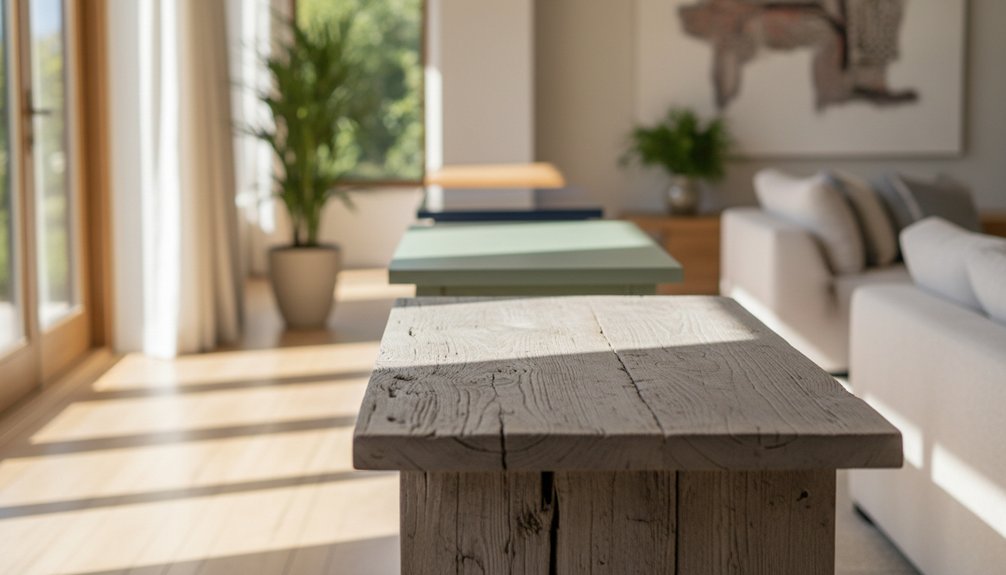
Console table finishes provide various options, including natural wood finishes and painted surfaces. Natural wood finishes highlight grain patterns using clear polyurethane or penetrating oils, offering a classic look. For painted surfaces, you can choose bold colors like navy, emerald green, or classic black and white, which can rejuvenate a space. Distressed finishes add vintage character through sanding and layering techniques, giving each piece a unique touch.
In modern spaces, metallic and high-gloss lacquered surfaces reflect light, enhancing the overall aesthetics. When selecting a finish, consider the style of your room. Traditional spaces benefit from rich wood tones that add warmth, while contemporary designs favor sleek finishes that create a clean look. Rustic aesthetics work best with reclaimed materials, providing an authentic touch.
The sections below will delve deeper into each type of finish, offering specific examples and practical applications that align with your design goals.
Natural Wood Finishes That Highlight Grain and Texture
Natural wood finishes remain a popular choice for console tables because they highlight the wood’s inherent beauty. A natural finish emphasizes the unique grain patterns in each piece. For instance, oak features prominent grain lines, while maple has a smoother, more subtle look. Cherry wood develops a rich patina over time, and walnut showcases deep, chocolate tones with striking variations in grain.
When applying natural finishes, you have several options. Clear polyurethane offers protection while preserving the authentic appearance of the wood. Oil finishes penetrate deeply into the wood, enhancing the grain’s depth and creating a warm glow. Wax finishes provide a soft sheen that accentuates the wood’s natural texture without adding excessive shine.
Choosing the right finish depends on your goals. If you want durability, clear polyurethane is a reliable choice. If you prefer a rich depth to the grain, opt for an oil finish. For a more traditional look with a gentle sheen, wax may be the best option. Each finish has its own characteristics and can drastically change the appearance of the wood. Additionally, understanding the types of solid wood furniture can help you make a more informed decision regarding your console table’s finish.
Painted Console Tables for Bold Color Options
Painted console tables enable you to add vibrant colors to your home while ensuring the furniture remains functional. Popular color choices include classic navy and emerald green, as well as modern neutrals like charcoal gray and soft blush. Each color creates a unique aesthetic in your space.
The finish you choose, whether matte, satin, or high-gloss, directly impacts how the color appears and the table’s durability. For example, matte finishes provide a subtle look, while high-gloss finishes can enhance brightness and make colors pop.
When selecting a painted console table, consider how the color and finish will complement your existing decor. For instance, pairing a charcoal gray table with bright accents can create a sophisticated contrast. Additionally, maintaining at least 30 inches of clearance ensures the console table does not obstruct movement in the entryway.
Remember that lighter colors may show wear and tear more easily, so choose a finish that meets your lifestyle needs.
Popular Paint Color Choices
Bold hues transform console tables into striking focal points in any room. Navy blue and emerald green are popular choices for sophisticated interiors. These bold colors create dramatic statements in entryways and living spaces.
Black serves as a timeless option that complements both modern and traditional décor. White and cream finishes provide versatility, enabling homeowners to refresh their décor without needing to replace furniture.
Pastel colors have gained popularity, with soft sage, blush pink, and powder blue appealing to those who prefer gentler tones. Coral and mustard yellow add vibrant energy without overwhelming the space.
Gray tones offer a neutral sophistication that fits well in various settings. Two-tone finishes, which combine complementary colors, add visual interest and depth to console tables.
When selecting paint colors for console tables, consider the overall room design and existing décor. Ensure the chosen color aligns with your aesthetic preferences and enhances the space rather than competing with it.
Finish Techniques and Effects
Applying various finishing techniques to your console table creates distinct textures and visual effects that significantly enhance the painted surface. Each finish technique offers specific characteristics that transform the ordinary into the extraordinary.
Distressing
Distressing creates an aged, vintage look by removing paint from edges and corners. This technique emphasizes wear and tear, giving the console table a rustic, time-worn charm.
It works best on tables designed to fit a farmhouse or vintage aesthetic.
Glazing
Glazing adds depth to the surface through layers of translucent color applied over base coats. This technique enhances the overall visual interest and can create a more sophisticated appearance.
Use it on tables intended for traditional or transitional interiors to achieve a rich, layered effect.
Ombré
Ombré produces a gradual color transition from dark to light tones. This technique offers a modern, artistic flair that can make a console table stand out as a focal point in a room.
It’s particularly effective in contemporary or eclectic designs.
High-Gloss Finish
Applying a high-gloss finish gives the console table a sleek, modern elegance. This finish reflects light, making the colors appear more vibrant.
It’s suitable for minimalist or contemporary spaces where a polished look is desired.
Matte Finish
Opting for a matte finish results in a sophisticated, understated beauty. This technique absorbs light, creating a soft appearance that works well in rustic or industrial settings.
Metallic Finish
A metallic finish introduces a glamorous, eye-catching shimmer to the console table. This technique can elevate the table’s status as a statement piece, perfect for modern or luxurious interiors.
Conclusion
Each finishing technique provides unique visual impacts that cater to different design styles.
Distressed and Vintage Console Table Finishes
Distressed and vintage finishes elevate your console table, making it a functional piece with unique character. To achieve an authentic distressed look, you must use specific techniques like sanding the surface to create wear, layering paint for depth, and applying wax or glaze to mimic natural aging.
Choose a vintage color palette that includes soft whites, muted grays, and warm creams. These colors help you recreate the essence of aged furniture that appears weathered over time.
When you sand, focus on high-traffic areas like edges and corners to enhance realism. Layering paint involves applying a base color, letting it dry, and then adding a top coat in a contrasting color for depth. Afterward, you can distress the top coat by sanding again for an authentic finish.
Applying a wax or glaze can seal the finish and add a subtle sheen. Avoid using overly bright or modern colors, as they detract from the vintage appeal. Limit your color choices to those that evoke a sense of history and warmth, ensuring your console table feels genuinely aged. Incorporating elements from traditional furniture styles can further enhance the timeless character of your piece.
Achieving Authentic Distressed Looks
To achieve an authentic distressed look on console tables, you need to follow a systematic process that involves multiple steps. Start by applying a base coat of paint in a contrasting color to create a foundation for the distressed finish. Allow the base coat to dry completely before moving on to the top coat.
Once the top coat is applied and dry, focus on sanding the edges, corners, and high-traffic areas. This sanding simulates natural wear over time and exposes the underlying layers of paint, adding depth and character.
For a more authentic aging effect, incorporate techniques like using chain strikes, hammer dents, or wood rasps. These tools help create the appearance of years of use. After that, apply a dark wax or glaze into the recessed areas of the table. This dark finish settles into grooves and crevices, mimicking the look of accumulated dirt and patina.
Additionally, you can create a natural oxidation effect on wood surfaces by using a solution made of vinegar and steel wool. Soak the steel wool in vinegar for a few hours before applying it to the wood. This method will yield a weathered finish that enhances the overall distressed appearance.
Keep in mind that achieving an authentic distressed look requires patience and practice. Avoid rushing through any step to ensure the final product showcases the rich character of a well-loved piece of furniture.
Vintage Finish Color Palettes
Choosing the right color palette is essential for achieving vintage authenticity in any distressed console table project. Vintage color schemes prioritize muted, time-worn tones instead of bright, saturated colors. Focus on classic options like chalky whites, soft grays, weathered blues, and aged creams that resemble naturally faded paint.
For inspiration, consider retro finishes from specific eras; for example, look to avocado green and harvest gold from the 1970s or robin’s egg blue from mid-century designs.
You can layer multiple colors to create depth by allowing base coats to show through distressed areas. Earth tones such as dusty sage, faded terracotta, and warm taupe work effectively for achieving farmhouse or rustic vintage aesthetics.
Always consider the existing décor in your room when finalizing your palette to ensure it harmonizes with your overall design.
When selecting colors, remember that overly bright colors can detract from the vintage feel. Stick to softer, more muted tones to maintain authenticity. Aim for a palette that reflects the age and character of the piece you’re working on.
This approach will help you achieve a cohesive and appealing look for your distressed console table.
Metallic and Lacquered Finishes for Modern Spaces
When you design a contemporary interior, using metallic and lacquered finishes on console tables enhances the space’s modern appeal.
Metallic finishes, such as chrome, brushed brass, and copper, reflect light effectively, which brightens the room and adds depth. These finishes work best in minimalist environments that emphasize clean lines.
Lacquered surfaces provide a high-gloss finish that conveys sophistication and elegance. These surfaces resist scratches and moisture, making them suitable for entryways and areas with high foot traffic.
For example, a glossy black or white lacquered console table creates a striking contrast against textured walls, enhancing the visual dynamic of the space.
Metallic and lacquered console tables complement materials like glass, marble, and polished concrete. This combination allows you to achieve a bold aesthetic while ensuring functional simplicity.
When selecting furniture for a modern home, prioritize console tables with metallic or lacquered finishes to create a striking focal point that aligns with contemporary design principles.
Matching Console Table Finishes to Room Style
Selecting a console table finish requires careful consideration of your room’s design elements and overall style. The finish of the console table should match the character of the space. A traditional room typically pairs well with rich wood tones like cherry or mahogany. In contrast, a modern room benefits from sleek finishes such as white lacquer or glass.
| Room Style | Recommended Finish |
|---|---|
| Traditional | Cherry or mahogany wood |
| Modern | White lacquer or glass |
| Rustic | Reclaimed or distressed wood |
| Industrial | Metal with wood accents |
To make an informed decision, examine your wall colors, flooring materials, and existing furniture. A mismatched console table can disrupt the visual harmony of the room, while a well-chosen piece enhances the space’s appeal. Additionally, consider how natural light interacts with different finishes throughout the day to ensure a cohesive look.
For example, in a rustic room, opting for reclaimed wood not only complements the overall aesthetic but also adds character. In an industrial setting, selecting a console table with metal and wood accents can harmonize with other industrial elements in the room. Always prioritize finishes that enhance the existing decor rather than compete with it.
Coordinating Your Console Table With Existing Furniture
After selecting the right finish for your console table, confirm its coordination with your existing furniture.
Start by identifying the dominant wood tones in your room. If you have warm oak furniture, choose a console table that features similar undertones.
Next, assess the era and design elements of your current pieces. For instance, a modern glass console won’t blend well with traditional carved wood furniture.
Additionally, ensure that metal accents match. Bronze hardware on your dresser should pair well with bronze-finished console legs.
Instead of aiming for exact matches, focus on complementary finishes. Your console table should serve as a unifying element that creates visual flow throughout the space.
Before making a purchase, place samples next to your existing furniture. This practice will help you confirm if the pieces coordinate effectively.
Maintaining Different Console Table Finish Types
To maintain your console table, tailor your cleaning routine to its specific finish type. Each finish requires distinct care methods to keep it looking its best.
Wood finishes need gentle dusting and occasional polishing, while painted surfaces require cleaning with mild soap solutions. Knowing how to repair damages is crucial to prevent further deterioration.
Essential maintenance practices include:
- Dust your console table regularly with microfiber cloths to avoid surface scratches.
- Use cleaners that match your table’s finish type for effective cleaning.
- Protect your table from water rings by using coasters and placemats.
- Address scratches right away using touch-up markers or wax to maintain the finish.
- Avoid harsh chemicals that can strip protective coatings from your table.
Natural wood finishes benefit from conditioning every few months, while lacquered finishes require careful handling to prevent chipping.
Following the manufacturer’s care instructions and responding promptly to damage will help extend your console table’s lifespan.