

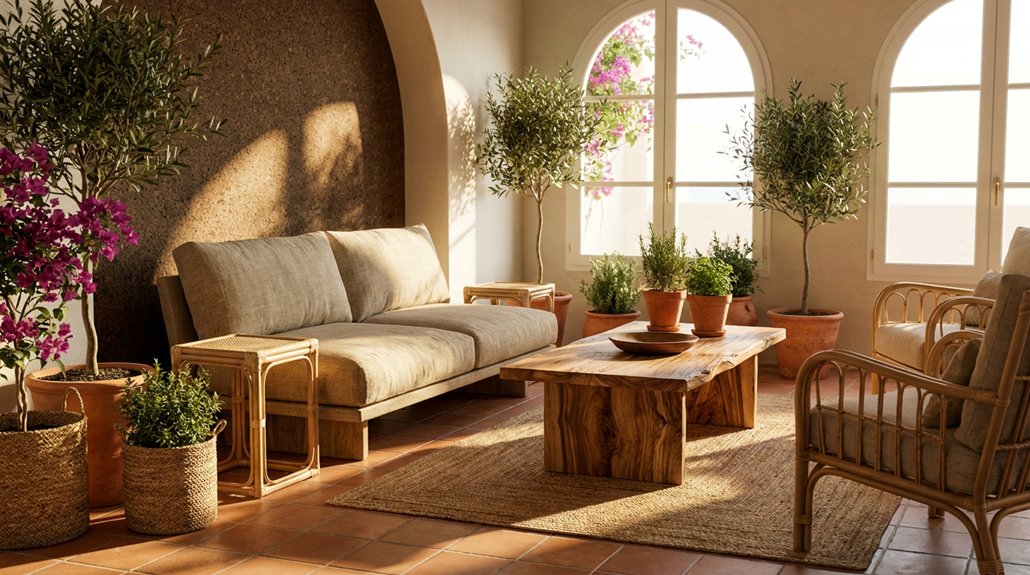
When you furnish your home in Spain sustainably, prioritize materials like bamboo, reclaimed wood, cork, recycled plastics, and FSC-certified wood. These materials significantly reduce environmental impact while offering durability that lasts 15 years or longer. This longevity translates to cost savings over time. Sustainable materials also minimize harmful volatile organic compound (VOC) emissions, which improves indoor air quality.
Brands such as Kibuc and Punt Mobles specialize in sustainable furniture options across Spain, making it easier to find these materials in various designs. Choosing these sustainable options not only benefits the planet but also enhances your living space.
Explore the specific benefits of each material. For example, bamboo grows rapidly, allowing for quick replenishment, while reclaimed wood supports waste reduction by repurposing existing materials. Cork is harvested without harming trees, making it a renewable resource. Recycled plastics help divert waste from landfills, and FSC-certified wood ensures responsible forestry practices.
In summary, opting for sustainable materials when furnishing your home in Spain leads to long-term savings and improved health. It’s essential to make informed choices to create a greener living environment.
The Best Sustainable Materials for Home Furniture
When you select furniture for your home, focus on sustainable materials. Sustainable materials minimize environmental impact while providing durability and style.
Bamboo alternatives, reclaimed wood, and cork are strong choices because these materials grow quickly and require fewer resources to produce. Reclaimed wood offers a unique aesthetic, while cork is lightweight and resistant to moisture. Both materials withstand daily wear effectively.
Recycled plastics create sturdy, weather-resistant furniture pieces. Manufacturers process waste plastic into functional items, preventing this material from ending up in landfills and oceans.
Recycled plastics transform waste into durable, weather-resistant furniture, keeping harmful materials out of landfills and oceans.
Recycled plastic furniture works well in outdoor spaces due to its durability against the elements.
FSC-certified wood represents another excellent option. This certification ensures wood comes from responsibly managed forests, reducing deforestation.
Natural rattan provides flexibility and strength, making it ideal for various furniture styles. Organic cotton, used for upholstery, is grown without synthetic pesticides or fertilizers, making it a safer choice for your home.
Choosing solid wood furniture crafted from FSC-certified wood ensures quality while promoting sustainable forestry practices.
Each of these sustainable materials carries a lower carbon footprint compared to traditional options. By choosing these materials, you support responsible production practices and contribute to preserving natural resources for future generations.
How Eco-Friendly Furniture Cuts Costs and Improves Air Quality
Eco-friendly furniture typically requires a higher initial investment, but it provides significant cost savings over time. Durable materials in sustainable furniture lead to fewer replacements. For example, conventional furniture often lasts about 5-7 years, while eco-friendly options can last 15 years or more, reducing overall spending on furniture.
Eco-friendly furniture also enhances indoor air quality. Traditional furniture often contains synthetic materials that emit volatile organic compounds (VOCs), which can lead to headaches and respiratory problems. In contrast, sustainable furniture uses natural or certified low-emission materials that minimize harmful emissions and promote healthier air. By ensuring proper furniture arrangement that accommodates airflow and movement, homeowners can further enhance the benefits of eco-friendly pieces.
In Spain, more homeowners are choosing eco-friendly furniture for these reasons. Opting for sustainable options not only benefits the environment but also serves as a smart investment in health and finances.
Real Examples of Sustainable Furniture in Spanish Homes
Many Spanish homeowners prioritize sustainable furniture, demonstrating practical eco-friendly choices in their homes. Sustainable furniture appears in various spaces such as bedrooms, kitchens, and living rooms across Spain. Homeowners select materials that balance aesthetic appeal with environmental responsibility.
Sustainable furniture is reshaping Spanish homes, where eco-conscious choices meet everyday living with style and responsibility.
Common examples of sustainable furniture in Spain include:
- Reclaimed wood dining tables sourced from dismantled Spanish farmhouses. These tables utilize materials that would otherwise go to waste, reducing the demand for new timber.
- Bamboo shelving units replace traditional particle board storage in modern apartments. Bamboo’s rapid growth makes it a renewable resource, minimizing environmental impact.
- Recycled metal bed frames constructed from repurposed industrial materials. Using recycled metal reduces energy consumption compared to producing new materials.
These sustainable choices are more than just trends; they reflect a commitment to reducing environmental impact. Additionally, selecting furniture that aligns with traditional styles can enhance the aesthetic of eco-friendly spaces.
Homeowners in urban flats and rural settings alike demonstrate that sustainable furniture fits various lifestyles and budgets. This practical approach to furnishings enhances interior spaces while supporting eco-friendly practices.
Top Sustainable Furniture Brands Leading España’s Green Movement
Spain’s furniture industry actively promotes sustainability through brands like Zara Home, Kibuc, and Punt Mobles. These companies prioritize eco-conscious design and responsible sourcing. They use recycled materials, certified wood, and non-toxic finishes in their products, making them reliable choices for consumers focused on environmental impact.
Kibuc sources FSC-certified wood for all its furniture lines. This commitment ensures that the wood comes from responsibly managed forests.
Punt Mobles emphasizes locally sourced materials, which significantly reduces transportation emissions and supports the local economy.
When consumers shop for sustainable furniture in Spain, they can confidently choose these brands. Each company maintains a transparent supply chain, allowing buyers to understand where their products come from and how they’re made.
This transparency strengthens consumer trust and aligns with the growing demand for environmentally responsible options in home furnishings.
How to Pick Sustainable Furniture That Actually Fits Your Home
How to Choose Sustainable Furniture That Fits Your Home
To choose sustainable furniture that fits your home, measure your space and consider your environmental values.
Start by measuring your room dimensions accurately. Furniture dimensions are critical; a beautiful reclaimed wood table won’t serve its purpose if it obstructs your hallway.
Next, identify eco-friendly furniture styles that complement your existing décor. Sustainable furniture doesn’t compromise on design. Many brands provide modern, rustic, and minimalist options crafted from responsible materials.
Key Factors to Consider Before Purchasing Sustainable Furniture
- Material Source: Select furniture made from certified wood, recycled metal, or organic textiles. These materials ensure environmental responsibility.
- Furniture Dimensions: Verify that the dimensions of each piece fit your room’s layout and allow for smooth traffic flow. Measure doorways and hallways to ensure the furniture can be moved into the space.
- Durability: Choose furniture designed for longevity. Durable pieces minimize long-term waste and reduce the frequency of replacement.
Making Informed Choices
Combine environmental awareness with practical planning to make smarter furniture choices.
Research brands that prioritize sustainability, review their certifications, and focus on high-quality materials. Quality ensures that your furniture meets both aesthetic and functional needs.