

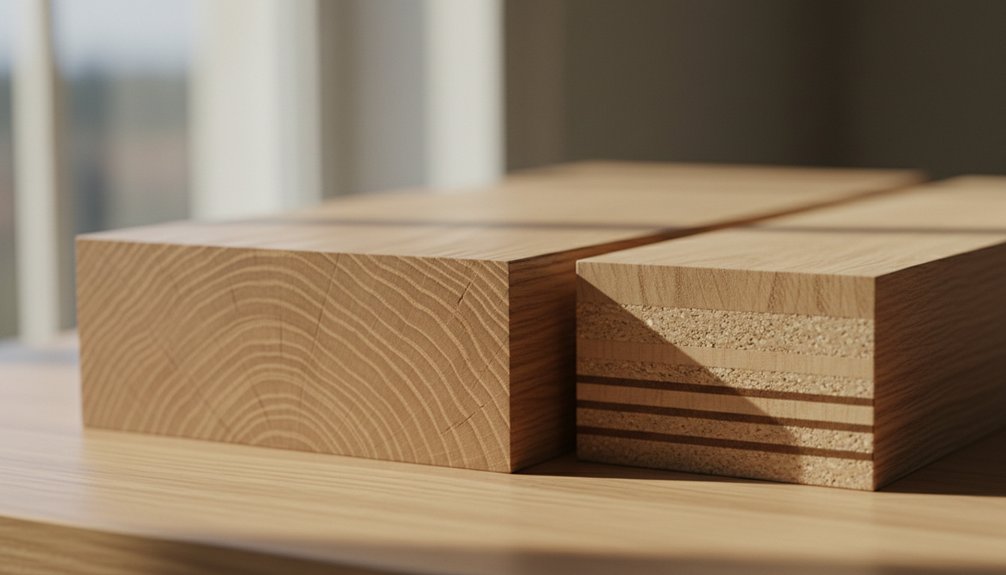
Solid oak furniture requires a higher initial investment but can last between 50 to 100 years. Engineered oak furniture, on the other hand, offers a more budget-friendly option with a lifespan of 20 to 40 years. Solid oak provides authentic wood grain patterns and allows for refinishing, which maintains its aesthetic appeal over time. Engineered oak features a layered construction that enhances stability, especially in humid conditions.
Solid oak furniture demands regular maintenance and is less effective at handling moisture changes, which can lead to warping or cracking. However, solid oak furniture is easier to recycle and can potentially become a family heirloom due to its durability and timeless quality. Your decision between solid oak and engineered oak should consider your budget, the environmental conditions in your home, and how long you intend to keep the furniture. Each option presents unique advantages that merit careful consideration.
Solid vs Engineered Oak Furniture: Which Should You Choose?
When you shop for oak furniture, you’ll face two primary options: solid oak and engineered oak.
Solid oak furniture offers exceptional durability and longevity. Solid oak can last for generations if properly maintained. You can sand and refinish solid oak multiple times, restoring its appearance over the years.
With proper care and maintenance, solid oak furniture becomes a timeless heirloom piece that improves with age.
In contrast, engineered oak furniture provides affordability and stability. Engineered oak consists of a real oak veneer layered over composite wood. This construction makes engineered oak resistant to warping and cracking in humid conditions. You can achieve the authentic look of oak at a lower price point with engineered oak.
Your decision between solid oak and engineered oak depends on three key factors: your budget, the environmental conditions in your home, and how long you plan to keep the furniture. Additionally, solid oak furniture is often crafted using traditional joinery techniques, ensuring a robust and durable piece.
Solid oak is ideal for long-term investments, while engineered oak is suitable for budget-conscious shoppers who need stability.
What Makes Solid Oak Different From Engineered Oak?
Understanding the differences between solid oak and engineered oak begins with their manufacturing processes. Solid oak furniture comes from single pieces of oak wood cut directly from oak trees. In contrast, engineered oak is made up of multiple layers of wood glued together with adhesives.
These construction methods significantly influence each material’s appearance, durability, and overall performance in residential settings.
Solid oak offers a natural look and feel, showcasing the unique grain patterns and colors inherent to the wood. Because solid oak is a single piece, it has a sturdiness that engineered oak may lack. Solid oak is also more susceptible to changes in humidity and temperature, leading to potential warping or cracking over time.
Engineered oak, on the other hand, is designed to mitigate these issues. The layered construction provides stability, making it less prone to warping and more resistant to moisture. Engineered oak can also come in a range of finishes and styles, giving homeowners various aesthetic options without sacrificing performance.
Construction and Material Composition
Solid oak furniture consists entirely of natural wood sourced directly from oak trees. The construction process involves cutting and shaping the wood to showcase the oak grain, which runs consistently throughout each piece. This results in a solid, dense structure, giving solid oak furniture a heavy feel compared to its engineered counterpart.
Engineered oak furniture, on the other hand, employs a layered construction method. Manufacturers adhere a thin oak veneer to a core made of plywood or particleboard. The core typically consists of compressed wood fibers or several layers of wood glued together. This construction technique makes engineered oak lighter, as the core materials are less dense than solid oak.
When examining furniture, you can identify solid oak by its weight and the continuous oak grain. In contrast, engineered oak displays a layered appearance at its edges and joints, revealing its composite nature.
Both types have their unique characteristics, and understanding these differences helps consumers make informed choices based on their specific needs.
Manufacturing Process Differences
The manufacturing process for solid oak furniture starts with selecting and harvesting mature oak trees. These trees are cut down and transported to sawmills for processing. At the sawmill, skilled craftsmen saw the logs into planks.
After cutting, the planks undergo a drying process to remove moisture, which prevents warping. Once dried, the craftsmen mill, shape, and assemble these planks into finished furniture pieces. This entire process relies on basic woodworking techniques due to the use of natural wood.
In contrast, the manufacturing process for engineered oak involves creating thin oak veneers that are bonded to composite cores made from materials like plywood or particleboard.
Manufacturers utilize advanced techniques such as pressing, gluing, and laminating multiple layers. This method allows manufacturers to maximize material usage and reduce waste, resulting in lower production costs. Consequently, engineered oak furniture is typically more affordable than solid oak furniture, appealing to budget-conscious consumers.
Which Type of Oak Furniture Lasts Longer?
When you invest in oak furniture, knowing its lifespan is crucial. Solid oak furniture lasts for generations, typically between 50 to 100 years or even longer. This longevity comes from its construction, as solid oak is crafted from a single piece of dense hardwood, providing strength and durability to withstand daily use.
In contrast, engineered oak furniture has a shorter lifespan, usually lasting between 20 to 40 years. The layered construction of engineered oak makes it more susceptible to wear and moisture damage over time. While engineered oak still offers durability, it can’t match the longevity of solid oak furniture.
To summarize, solid oak furniture is a long-term investment that can endure decades of use, while engineered oak furniture serves as a more affordable option but with a significantly shorter lifespan.
When choosing between the two, consider how long you want the furniture to last in your home.
Solid Oak Lifespan Expectations
Solid oak furniture offers impressive longevity, typically lasting between 50 to 100 years with proper care. Many antique solid oak pieces still in use today highlight the wood’s durability, often exceeding a century in age.
Solid oak’s dense grain structure contributes to its strength and natural wear resistance. Unlike particle board or veneer, solid oak furniture doesn’t chip, peel, or delaminate over time.
You can refinish solid oak multiple times, which allows you to renew its appearance and extend its life significantly. Solid oak furniture maintains its structural integrity better than many other materials, even in varying humidity conditions.
When you choose to invest in solid oak, you’re acquiring furniture that’s likely to outlast you and become a treasured family heirloom.
However, it’s essential to acknowledge that solid oak requires regular maintenance to maximize its lifespan. Neglecting proper care can lead to issues such as surface scratches or water damage.
Additionally, while solid oak is generally resistant to environmental factors, extreme humidity levels may still affect its performance. Therefore, understanding the care requirements and limitations of solid oak furniture is crucial for ensuring its long-term durability.
Engineered Oak Durability Factors
Engineered oak furniture offers a lifespan of 15 to 30 years with proper care, which is shorter than solid oak but still provides significant durability for everyday use.
The longevity of engineered oak depends on several factors. The thickness of the veneer is crucial; thicker veneers resist wear and tear better than thinner ones. High-quality engineered oak features protective finishes that enhance scratch resistance, though it can’t withstand deep gouges as effectively as solid oak.
Engineered oak also offers better moisture resistance compared to solid oak because its layered construction reduces issues like warping and expansion. However, refinishing options for engineered oak are limited; unlike solid oak, you can’t sand and refinish engineered oak multiple times.
Additionally, the quality of the core material impacts durability; higher-density cores significantly extend the functional life of engineered oak furniture.
How to Identify Solid vs Engineered Oak by Appearance?
Identifying solid oak from engineered oak furniture requires a keen eye for specific characteristics. Here’s a straightforward guide to help you make that distinction effectively.
Key Visual Indicators:
- Examine the edges – Solid oak features continuous grain patterns that extend seamlessly across all sides. In contrast, engineered oak displays a layered construction with visible glue lines at the edges and corners.
- Analyze surface finishes – Solid oak has natural variations in color and texture, which give it a unique appearance. Engineered oak tends to have a more uniform finish, lacking the irregularities found in solid wood.
- Inspect the underside – The underside of solid oak maintains a consistent wood appearance, while engineered oak often reveals different materials, such as plywood or MDF, indicating its composite nature.
Solid oak typically feels heavier than engineered oak due to its solid structure.
Additionally, the grain pattern of solid oak continues seamlessly around curves and beveled edges, whereas engineered oak has thinner veneers that may present a more uniform look across larger surfaces.
Why Does Solid Oak Furniture Cost More?
Solid oak furniture costs more primarily due to the high-quality raw materials and skilled craftsmanship involved in its production. Solid oak requires substantial amounts of timber that takes decades to grow before being harvested.
The manufacturing process involves skilled craftsmen who possess in-depth knowledge of wood grain patterns and precise joinery techniques.
The pricing of solid oak furniture also reflects market demand from consumers who value durable, authentic pieces. Solid oak’s strength and longevity mean that replacements are less frequent, making the initial investment worthwhile.
Additionally, solid oak furniture is heavier, which leads to increased transportation costs. The limited availability of oak due to sustainable forestry practices further drives up prices.
When you choose solid oak furniture, you’re not just buying a product; you’re investing in high-quality pieces that retain their value over time. These items can serve as family heirlooms, justifying the premium price.
Which Type of Oak Furniture Requires Less Maintenance?
When comparing oak furniture, engineered oak requires less maintenance than solid oak. Engineered oak features a veneer layer that resists warping and cracking better than solid wood, which simplifies care routines.
To maintain both types effectively, follow these essential tips:
- Dust regularly with a soft cloth. This action prevents dust buildup that can scratch surfaces over time.
- Apply wood polish every few months. This practice maintains the finish and protects against moisture damage.
- Avoid direct sunlight and extreme temperature changes. These conditions can cause wood to expand or contract, leading to potential damage.
Solid oak furniture requires more attention due to its susceptibility to environmental changes. You must regularly monitor humidity levels and respond quickly to spills.
In contrast, engineered oak’s stable construction means you’ll spend less time worrying about these factors, allowing for a more straightforward maintenance routine.
Which Oak Furniture Is More Sustainable?
When comparing sustainability, solid oak furniture provides a clear environmental benefit over engineered oak.
Solid oak furniture uses one material throughout, making it easier to recycle at the end of its lifespan. Quality solid oak furniture sourced from sustainable practices contributes to responsible forest management. This type of furniture doesn’t require adhesives or composite materials, which minimizes chemical use during manufacturing.
Single-material solid oak furniture eliminates adhesives and composites, simplifying recycling while supporting responsible forestry when sustainably sourced.
In contrast, engineered oak furniture maximizes wood usage by employing veneers over engineered cores. This method uses less solid wood per piece, making engineered oak an efficient option. Many manufacturers now create eco-friendly engineered products using low-VOC adhesives and incorporating recycled materials.
Both solid and engineered oak furniture can be sustainable choices if you select FSC-certified products from reputable manufacturers committed to responsible forestry practices.
However, be aware that not all engineered products meet the same sustainability standards as solid oak furniture. Always verify the source and materials used when making your selection to ensure you’re supporting environmentally responsible practices.
Best Oak Furniture Types for Kitchens, Bedrooms, and High-Traffic Areas
Choosing the right type of oak furniture depends on its intended location in your home. Here’s how solid and engineered oak perform in different areas:
1. Kitchens: Engineered oak works best for kitchen cabinets. Its layered construction provides moisture resistance, preventing warping in humid environments created by cooking and steam. This makes engineered oak a practical choice for cabinets that face daily exposure to moisture.
2. Bedrooms: Solid oak is ideal for bedroom furniture. Bedrooms maintain stable conditions with less humidity fluctuation. Solid oak showcases beautiful grain patterns and offers long-lasting durability, making it a smart investment for dressers, nightstands, and beds.
3. High-Traffic Areas: Solid oak is the best choice for tables in high-traffic areas like dining rooms and entryways. These spaces experience constant use, and solid oak’s inherent strength allows it to withstand daily wear and tear effectively. Engineered oak may not hold up as well under heavy use. Additionally, it’s important to maintain clearance for movement around furniture to ensure comfort and accessibility in high-traffic zones.
Before making your purchase, assess the specific conditions of each room. Kitchens benefit from engineered oak due to moisture, while bedrooms and high-traffic areas showcase the durability and beauty of solid oak.
This knowledge helps ensure you choose the right furniture that will last.