
Oak furniture provides several clear advantages over maple furniture. First, oak furniture demonstrates superior durability, which means it can handle daily wear and tear for many years. The distinct grain patterns in oak add visual depth to interiors, enhancing their overall appeal.
Additionally, oak offers excellent moisture resistance, allowing it to maintain its shape and integrity in varying climates. The open grain structure of oak absorbs stains evenly, leading to more professional-looking finishes compared to maple.
Cost-wise, oak furniture typically falls 15-30% lower than maple, making it a more budget-friendly option without sacrificing quality. Furthermore, oak maintains a strong resale value, retaining 60-70% of its original worth after ten years.
Overall, these factors make oak furniture a smart long-term investment for anyone looking for durable, aesthetically pleasing, and cost-effective options.
Superior Durability and Longevity of Oak Wood
Oak wood is one of the most durable hardwoods for making furniture. Oak’s dense grain structure helps it resist daily wear and tear better than other types of wood, like maple. This means oak can handle impacts, scratches, and heavy use without easily showing damage.
When you invest in oak furniture, you can expect it to last for generations if you take care of it properly.
Caring for oak furniture is straightforward. You don’t need specialized cleaning products or complex routines. Regularly dust your oak pieces and polish them occasionally to keep them looking great.
Oak’s natural strength means you won’t have to worry much about spills or accidents causing damage. This durability makes oak furniture a wise investment that can serve your home effectively for decades.
Enhanced Grain Patterns and Visual Appeal
When you select furniture, the appearance of the wood is as crucial as its durability.
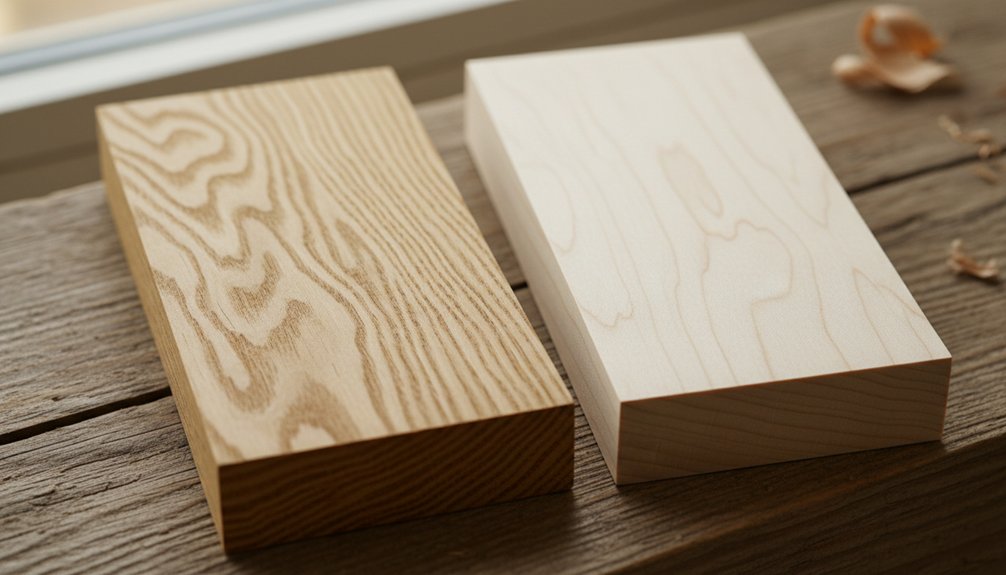
Oak features distinct grain patterns that display bold, sweeping lines. These lines create a level of visual interest that sets oak apart from many other hardwoods.
The unique grain markings give oak furniture a textured look, which enhances the character and depth of any room.
This rich visual appeal makes oak a popular choice for homeowners looking to elevate their interior design.
Oak’s Distinctive Grain Character
When comparing oak and maple hardwoods, the differences in surface appearance are significant. Oak features highly pronounced grain lines and swirling patterns, which create a bold visual impact. This distinct grain results from oak’s open-pore structure, leading to deep and dramatic figuring. In contrast, maple exhibits a more subtle and fine grain that often appears uniform and less distinctive.
| Feature | Oak | Maple |
|---|---|---|
| Grain Visibility | Highly pronounced and bold | Subtle and fine |
| Pattern Variation | Wide range of figures | More consistent appearance |
| Texture Depth | Deep, open pores | Tight, closed grain |
The unique character of oak enhances the dimension of furniture, making each piece unique. This natural variation in oak means that your furniture will stand out as custom-made rather than mass-produced. The bold grain patterns in oak not only add aesthetic appeal but also contribute to the overall durability and quality of the final product.
Natural Visual Depth
Oak and maple differ significantly in their visual depth, impacting the overall aesthetic of furniture.
Oak features a porous grain that creates shadows and highlights as light shifts throughout the day. This grain structure gives oak furniture a dynamic quality, making each piece feel alive and engaging.
In contrast, maple has a smooth, uniform surface that lacks this dimensionality, resulting in a more sterile appearance.
When you incorporate oak furniture into a room, its natural variations add layers of visual interest, making the space feel more substantial and grounded.
The warmth of oak draws the eye and invites interaction, while maple often blends into the background, lacking that same inviting presence.
In practical terms, choosing oak for furniture means selecting materials that enhance the visual appeal and character of a space.
Oak’s unique grain patterns create an engaging visual experience that maple simply can’t match.
When designing or selecting furniture, consider how oak’s depth can elevate the overall look and feel of your environment.
Better Resistance to Moisture and Warping
Oak and maple are both hardwoods, but their responses to moisture and humidity differ significantly. Oak has an open-grain structure that enhances its moisture resistance, while maple’s tighter grain makes it more susceptible to moisture absorption. Oak expands and contracts in a predictable manner, which reduces the likelihood of cracking or splitting. This stability makes oak furniture a better choice for environments with fluctuating indoor climates.
| Feature | Oak | Maple |
|---|---|---|
| Grain Structure | Open, porous | Tight, dense |
| Moisture Absorption | Moderate, controlled | Higher vulnerability |
| Warping Prevention | Excellent stability | Prone to movement |
| Climate Adaptability | Handles humidity well | Requires stable conditions |
| Long-term Durability | Maintains shape | May develop issues |
Oak’s dimensional stability means that your furniture will retain its shape and integrity through seasonal changes. This characteristic protects your investment, making oak a practical and reliable choice for furniture in various climates.
Greater Availability and Cost-Effectiveness
Oak furniture has a significant advantage in terms of availability. Many furniture stores and online retailers stock oak options more than they do maple. This is because oak trees grow abundantly across North America and Europe, ensuring a steady supply for manufacturers.
As a result, customers can easily find a variety of oak styles, which also helps keep prices competitive.
When comparing costs, oak consistently comes out as the more economical choice. You can often save between 15-30% by selecting oak furniture instead of similar maple pieces.
This price difference isn’t due to lower quality; rather, it reflects the market conditions and the harvesting costs associated with each type of wood. For consumers on a budget, choosing oak provides excellent durability and aesthetic appeal without breaking the bank.
Improved Staining and Finishing Options
Oak wood features an open grain structure that allows stains and finishes to absorb deeply and evenly. This characteristic enables you to have precise control over the final look of your furniture.
When you apply stains, they penetrate the wood’s porous surface, resulting in rich and consistent colors that highlight oak’s natural beauty. You can easily achieve a range of shades, from light natural tones to dark espresso finishes.
In contrast, maple wood has a tight grain that often leads to uneven stain absorption. This can create blotchy patches that detract from the overall appearance.
Additionally, oak is more compatible with various finishing options. Whether you choose polyurethane, lacquer, or oil-based products, oak reliably accepts these finishes, allowing you to customize your furniture to fit any décor style.
Overall, working with oak simplifies the staining and finishing process, leading to professional-looking results.
In comparison, maple’s challenging grain pattern makes achieving a uniform finish more difficult. Thus, for consistent and high-quality results in furniture making, oak is often the preferred choice.
Higher Resale Value and Timeless Investment
When you decide between oak and maple furniture, you should consider how each type retains its value over time.
Oak furniture consistently achieves strong resale prices in the secondary market. As oak pieces age, they often gain character and their value tends to increase. This trend makes oak furniture a wise financial investment.
If you want furniture that not only meets your needs today but also protects your financial investment in the long run, oak is the better choice.
Oak Retains Market Value
Oak furniture offers excellent financial value due to its longevity and durability. When you invest in oak pieces, you are purchasing high-quality items that retain their worth over time. Buyers consistently seek oak furniture because they recognize its superior construction and timeless design.
| Factor | Oak Performance |
|---|---|
| Depreciation Rate | Minimal over 10+ years |
| Market Demand | Consistently high |
| Buyer Interest | Multi-generational appeal |
Antique oak furniture often commands premium prices at auctions and estate sales, reflecting its strong resale market. Oak’s durability ensures that furniture remains functional and visually appealing for decades. Homeowners choose oak because it does not go out of style, making it a smart choice for long-term investment.
Antique Appeal Increases Worth
The value of oak furniture increases over time as it ages into a sought-after antique. Collectors and decorators actively seek out high-quality oak pieces from the Victorian and Arts and Crafts periods.
These pieces often sell for high prices at auctions and estate sales due to their historical significance and durability. Many oak furniture items remain in excellent condition, making them prime candidates for restoration projects that can yield profitable returns.
Oak’s distinctive grain patterns help collectors authenticate genuine antiques. Quarter-sawn oak furniture produced between 1900 and 1930 is particularly valuable and can command top dollar in the marketplace.
As the demand for authentic antique furniture rises, the worth of oak furniture continues to grow over the years.
When you invest in quality oak furniture, you’re acquiring an appreciating asset that can deliver long-term value.
Long-Term Investment Returns
Oak furniture holds a strong resale value, making it a smart choice for homeowners who see their furnishings as investments.
Oak pieces typically retain 60-70% of their original value after ten years, while maple only holds about 40-50%. This difference results from oak’s consistent demand and durability. When you maintain oak furniture properly, it can even appreciate in value over decades. This means you’re buying an asset that maintains its worth.
Additionally, oak furniture sells more quickly in secondary markets because buyers recognize its quality and longevity.