

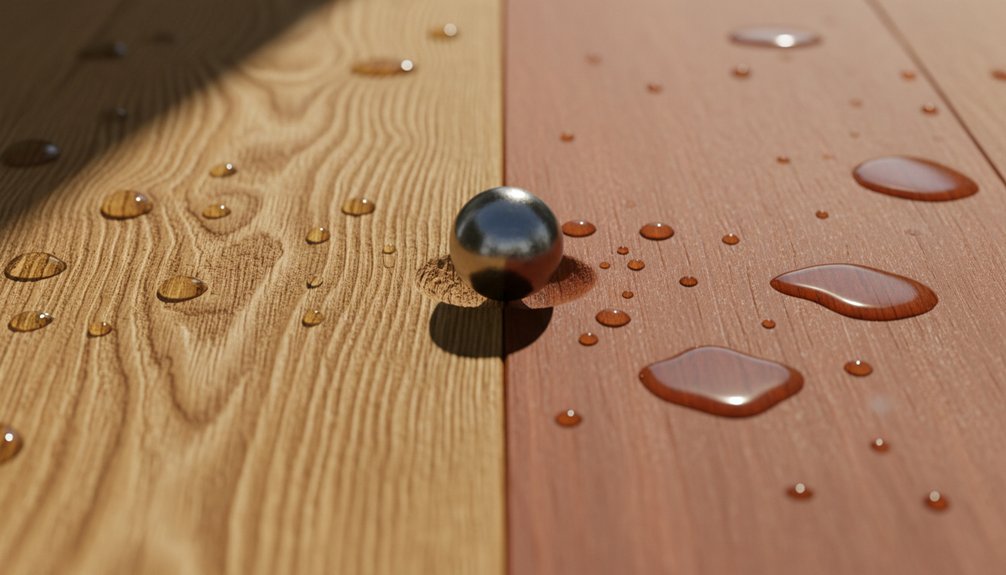
When selecting between oak and cherry wood, consider three essential durability factors. First, oak has a Janka hardness rating between 1,290 and 1,360, while cherry rates at 950. This means oak better withstands dents and scratches, making it a more suitable choice for high-traffic areas. Second, oak features a tight grain pattern that provides superior moisture resistance compared to cherry. This characteristic means you will need to treat oak less frequently to maintain its condition. Third, oak requires refinishing every 7 to 10 years, while cherry needs refinishing every 5 to 7 years. This difference in maintenance intervals can ultimately save you time and repair costs. The following sections will delve deeper into how these durability factors influence your flooring decisions.
Understanding the Janka Hardness Scale Ratings for Oak and Cherry
When evaluating wood durability, the Janka hardness scale provides a clear measurement of a wood species’ resistance to denting and wear. Red oak scores 1,290 on this scale, while white oak scores slightly higher at 1,360. Cherry wood, on the other hand, measures 950, making it softer than both oak varieties. This difference in hardness means that oak will better resist dents and scratches, especially in high-traffic areas.
The grain characteristics of oak feature pronounced patterns that can help conceal minor damage over time. In contrast, cherry wood’s lower hardness doesn’t indicate weakness; it still performs well for furniture and cabinets.
Additionally, cherry wood darkens beautifully with age, and this color variation can make surface imperfections less noticeable despite its softer nature.
How Moisture Resistance Differs Between Oak and Cherry Wood
Oak and cherry wood differ significantly in moisture resistance due to their unique cellular structures.
Oak wood resists moisture better than cherry wood, making oak a suitable choice for humid areas like kitchens and bathrooms. The tight grain pattern in oak creates a barrier that minimizes moisture absorption.
In contrast, cherry wood has a softer composition that allows water to penetrate more easily. As a result, cherry wood requires more frequent treatment to maintain its moisture resistance. Without proper sealing, cherry wood can warp, swell, or develop mold when exposed to moisture.
If you’re selecting wood for areas prone to moisture, oak provides better protection due to its inherent properties. However, with regular maintenance and high-quality finishes, you can significantly improve cherry wood’s moisture resistance.
Comparing Long-Term Wear Patterns and Maintenance Requirements
Oak and cherry wood have distinct aging patterns that impact their durability and maintenance needs.
Oak has a hard surface that resists dents and scratches effectively, making it suitable for high-traffic areas. This durability allows oak to maintain its appearance longer with less upkeep.
Oak’s exceptional hardness delivers superior scratch resistance, making it the ideal choice for busy households seeking long-lasting beauty with minimal maintenance.
In contrast, cherry wood is softer, which means it shows wear more quickly. Daily use can leave small dents on cherry surfaces, but the wood’s natural darkening process can help obscure these minor scratches over time.
When it comes to maintenance, oak requires refinishing every 7-10 years for floors. This less frequent need for refinishing means you can spend more time enjoying your space rather than worrying about repairs.
On the other hand, cherry wood typically needs refinishing every 5-7 years to keep its protective finish intact.
Both oak and cherry benefit from regular cleaning and occasional polishing, but the density of oak means you’ll spend less time on repairs and touch-ups throughout its lifespan.