

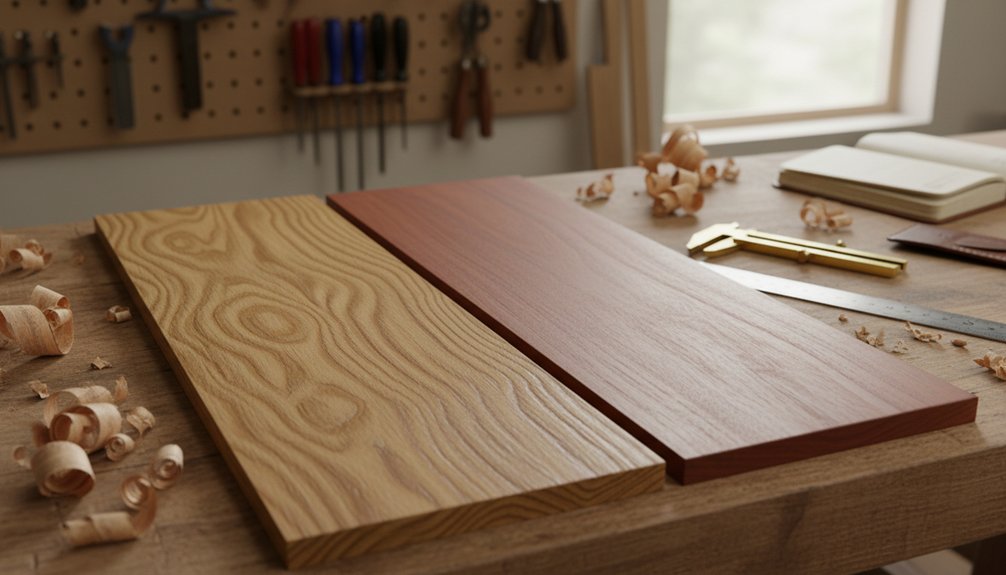
Oak wood is significantly more durable than cherry wood. Oak has a Janka hardness rating between 1,290 and 1,360, while cherry wood has a rating of 950. This difference means that oak is more resistant to dents, scratches, and general wear. As a result, oak is a better choice for high-traffic areas and furniture that undergoes heavy use.
In terms of longevity, oak generally lasts between 100 to 150 years in residential settings. In contrast, cherry wood typically lasts around 50 to 100 years. While cherry wood does offer better dimensional stability in humid conditions, oak’s greater strength and longer lifespan make it the more durable option overall.
Understanding these differences is important when selecting wood for specific applications. For projects requiring high durability, such as floors or heavy-use furniture, oak is the preferred material. When considering aesthetics or use in less demanding environments, cherry can be suitable, but it won’t match the durability that oak offers.
Understanding Hardness Ratings: The Janka Scale Explained
When you need to evaluate the durability of various wood species, rely on the Janka scale. The Janka scale measures wood hardness by calculating the force needed to embed a steel ball halfway into a wood sample. It uses pounds-force (lbf) as its unit, providing specific numbers for comparison. Higher Janka ratings indicate that the wood is harder and more resistant to dents.
This means harder woods typically handle heavy foot traffic and daily use better than softer options.
The Janka test applies to both domestic and exotic woods. This makes it an essential tool for selecting materials for flooring, furniture, and cabinetry. Manufacturers, retailers, and woodworkers reference the Janka scale consistently, as it has become the industry standard for assessing wood durability and performance.
Oak Wood Characteristics and Strength Properties
Oak wood serves as a top choice for many in North America due to its strength and unique grain patterns. Professionals in woodworking often choose between two main types: red oak and white oak. Red oak has a Janka hardness rating of 1,290, while white oak is rated slightly higher at 1,360. This hardness makes both varieties significantly tougher than many other hardwood options.
The distinct grain of oak not only enhances its visual appeal but also contributes to its overall strength. Oak wood withstands wear, dents, and scratches more effectively than softer woods. White oak, in particular, contains natural tannins that improve moisture resistance, making it suitable for outdoor use.
In terms of finishing, oak wood takes stains uniformly, allowing craftspeople to accentuate its natural beauty. The density of oak ensures that furniture, flooring, and cabinetry made from this wood remain durable over time.
Cherry Wood Characteristics and Strength Properties
Cherry wood has specific characteristics that differentiate it from oak in both appearance and performance. Cherry wood features a warm reddish-brown hue and a smooth, straight grain. This grain darkens over time when exposed to light, enhancing its visual appeal.
In terms of structural properties, cherry wood ranks lower on the Janka hardness scale compared to oak. This lower hardness affects cherry wood’s resistance to dents, scratches, and wear. Therefore, cherry wood may not be the best choice for high-traffic areas where durability is crucial.
When selecting wood for furniture or cabinetry, consider the intended use. If you need a material that withstands heavy use, oak might be more suitable.
However, if you prefer aesthetic qualities and don’t mind a bit of wear over time, cherry wood can be a great option.
Natural Color and Grain
Cherry wood’s warm, reddish-brown color distinguishes it from other hardwoods used in furniture and cabinetry.
Over time, cherry wood naturally darkens and develops a rich patina when exposed to light. This process creates appealing color variations within a single piece.
The grain patterns in cherry wood are typically straight and uniform, but you may also encounter curly or wavy figures that enhance its visual appeal.
In contrast to oak, which has a prominent grain, cherry wood features a fine, smooth texture with minimal pore visibility.
These characteristics make cherry wood an excellent choice for achieving a refined and elegant look in your projects.
The wood’s natural beauty requires minimal enhancement, as its inherent qualities provide sufficient visual interest for various applications.
Hardness and Density Ratings
When evaluating hardwood durability, measurements play a crucial role in assessing how well each material holds up under daily use. The Janka hardness test quantifies the durability of various wood species. For example, red oak has a hardness rating of 1,290 pounds of force, while white oak scores slightly higher at 1,360 pounds. In contrast, cherry wood has a lower hardness rating of 950 pounds, indicating that it’s softer than both oak types.
This density data shows that oak wood is more resistant to denting and scratching compared to cherry wood, making it a better choice for high-traffic areas. Oak’s density varies between 37 to 56 pounds per cubic foot, depending on the specific variety. In comparison, cherry wood typically measures around 35 pounds per cubic foot. These density figures directly influence how each wood type performs under pressure.
When heavy objects are dropped or when furniture is moved, oak wood maintains its surface integrity longer than cherry wood. This makes oak a preferred material for flooring and furniture in spaces that experience frequent use.
Resistance to Wear
Cherry wood, despite having a lower hardness rating than some other woods, has unique qualities that contribute to its wear resistance in specific applications.
Cherry wood develops a protective patina over time, which helps shield the surface from minor scratches and abrasions. Research shows that cherry’s fine, uniform grain structure distributes impact forces evenly, which reduces localized damage from everyday use. Additionally, the natural oils in cherry wood provide some protection against moisture-related wear.
To ensure cherry wood maintains its durability, proper maintenance practices are essential. Regular cleaning helps remove dirt and debris that can cause wear, while periodic refinishing protects the surface and enhances its aesthetic appeal.
In high-traffic areas, oak generally performs better than cherry. However, cherry wood excels in moderate-use environments such as bedroom furniture and cabinetry, where its balance of aesthetic appeal and adequate durability is highly valued.
Impact Resistance and Wear Patterns Over Time
Oak and cherry are both hardwoods, but their ability to withstand everyday wear differs significantly.
Oak has a dense grain structure that absorbs impacts better than cherry. When you drop objects on oak, it resists dents and maintains its appearance longer in high-traffic areas. In contrast, cherry’s softer composition leads to dents under similar conditions.
Over time, oak develops a patina that conceals minor surface damage. This characteristic is particularly noticeable in kitchens and hallways, where foot traffic is heavy.
The wear patterns on cherry become more prominent over time, making it less suitable for high-traffic spaces. Oak’s superior wear resistance makes it a practical choice for commercial environments, while cherry requires more diligent maintenance to keep it looking good.
These differences in impact resistance and wear patterns directly affect the long-term appearance and upkeep of your flooring.
Moisture Resistance and Dimensional Stability
When you select oak or cherry wood for your project, you must consider how each type reacts to moisture. Oak absorbs water more quickly than cherry, which means oak will swell more when humidity increases. In contrast, cherry tends to retain its dimensions better under varying moisture conditions.
Understanding these differences is crucial. Increased humidity can lead to gaps, warping, or joint failures if you don’t factor in how each wood expands and contracts. For instance, if you use oak in a humid environment without proper considerations, you might find that it warps or cracks over time.
On the other hand, cherry’s stability can prevent these issues, making it a better choice for certain applications.
When planning your project, choose the wood that aligns with the moisture conditions it will face. This decision directly impacts the longevity and integrity of your work.
Prioritize understanding these moisture resistance characteristics to ensure your finished product meets your standards.
Water Absorption Rates Compared
Understanding how oak and cherry wood respond to moisture is crucial for selecting materials for your projects. Oak absorbs water slower than cherry, which helps it resist moisture-related damage. When comparing these woods, you’ll notice that oak maintains lower moisture content levels in humid environments.
Here are the key differences in their water absorption characteristics:
- Oak absorbs about 8-12% moisture in typical indoor conditions, while cherry can absorb 10-14%.
- Cherry wood swells significantly with high humidity, leading to more dimensional changes.
- Oak’s denser grain structure slows water penetration, providing a natural barrier against moisture.
These characteristics impact how each wood performs in areas like bathrooms, kitchens, or outdoor applications where moisture exposure is common.
When choosing between oak and cherry, consider the specific moisture conditions of your project to ensure long-term performance.
Seasonal Swelling and Contraction
As temperatures change throughout the year, oak wood and cherry wood react differently, impacting the stability and appearance of your furniture.
Oak wood expands more than cherry wood due to its open-grain structure, which allows moisture to penetrate easily. During humid months, oak can swell up to 8% across its width. When the air dries, oak contracts significantly.
In contrast, cherry wood has a tighter grain pattern, resulting in better dimensional stability. Cherry typically experiences only 4-5% movement across the grain, which makes it less likely to warp or crack.
This difference in movement is crucial when choosing wood for components like doors, drawers, or tabletops.
Cherry wood maintains tighter joints and smoother surfaces throughout seasonal changes, while oak requires careful finishing and installation techniques to manage its expansion and contraction.
Understanding these characteristics ensures that your furniture remains functional and visually appealing over time.
Dent and Scratch Resistance in Real-World Applications
Oak and cherry wood each have their own strengths when it comes to resisting dents and scratches, which is important for furniture durability.
Oak has a higher Janka hardness rating of 1,290 compared to cherry’s 950. This means that oak can better withstand impacts from dropped items in areas with heavy foot traffic. In contrast, cherry’s finer grain allows it to mask minor scratches more effectively, making it visually appealing for everyday use.
Here are some specific examples of how each wood performs in real-world situations:
- Kitchen tables: Oak handles impacts from dropped utensils and cookware better than cherry.
- Flooring: Oak resists damage from pet claws and furniture being dragged across the surface more effectively than cherry.
- Desktops: Cherry conceals fine scratches from daily use, while oak tends to show them more clearly.
Lifespan Expectations for Oak vs. Cherry Furniture
When properly maintained, oak furniture lasts over 100 years, while cherry furniture typically lasts between 50 to 80 years under similar conditions. This comparison highlights a clear difference in longevity between the two types of wood.
| Factor | Oak Furniture | Cherry Furniture |
|---|---|---|
| Average Lifespan | 100+ years | 50-80 years |
| Commercial Use | 20-30 years | 15-25 years |
| Residential Use | 100-150 years | 50-100 years |
| Outdoor Use (treated) | 25-40 years | Not recommended |
Oak’s dense structure contributes to its long lifespan. Cherry, being a softer wood, shows wear more quickly, though it still outlasts many other hardwoods. Regular maintenance impacts the longevity of both woods. However, oak generally requires less frequent refinishing to maintain its strength and appearance.
In practical terms, if you want furniture that will stand the test of time, choose oak for its durability. If you prefer the aesthetic of cherry, be prepared to invest more in maintenance over the years to keep it looking its best.