
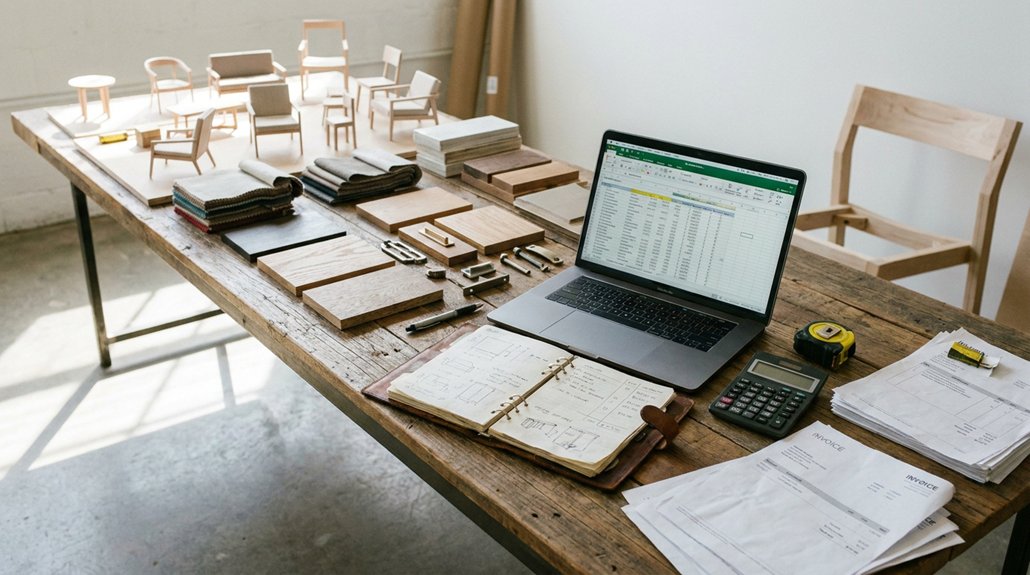
When we source custom furniture for dropshipping, we view samples and prototypes as essential investments rather than one-off expenses. We expect the cost of unit fabrication to be 1.5 to 4 times the standard production price. Additionally, we account for one-time costs related to engineering, CAD/CNC programming, crating, insurance, and international freight, which can total several thousand dollars.
We budget for design revisions and validation testing to ensure product quality while capturing data on landed costs to protect our profit margins. This structured approach helps us manage risks effectively.
Next, we break down the typical cost components. We identify specific negotiation angles and establish a clear approve/revise/walk-away framework. This transparency allows us to make informed decisions and align our sourcing strategy with our financial goals.
In summary, understanding these costs and processes allows us to navigate the complexities of custom furniture sourcing effectively.
How Much Do Furniture Samples and Prototypes Cost?
When budgeting for custom furniture, expect to categorize costs into three main areas: unit fabrication, one-off setup, and logistics.
Unit Fabrication Costs
Unit fabrication costs for samples and prototypes range from 1.5 to 4 times higher than the production price for final units. This variation depends on the quality of the sample, the complexity of the design, and the materials used for the prototype.
Single units don’t benefit from volume discounts or production efficiencies, driving up costs significantly.
One-Off Setup Expenses
One-off setup expenses can equal or surpass the unit fabrication costs. This includes costs associated with refining CAD designs, programming CNC machines, creating jigs, and conducting finishing trials.
Any deviation from standard construction methods or finishes increases these non-recurring engineering costs. For example, if a custom finish requires new tools, those costs will add up quickly.
Logistics Costs
Logistics costs encompass crating, insurance, and shipping. For large prototypes, the freight cost can be comparable to the fabrication cost, especially for international air shipments.
For instance, shipping a single large prototype internationally could reach several thousand dollars, depending on the destination and carrier.
Amortizing Costs
When utilizing dropshipping models, treat sample and prototype expenses as upfront research and development (R&D) investments. Additionally, consider that solid wood furniture often requires specialized craftsmanship, which can further impact costs.
Amortize these costs over anticipated sales volume to better manage financial expectations and align with overall business strategies.
Understanding these cost components helps in accurately budgeting for custom furniture projects, ensuring you prepare for both expected and unexpected expenses.
What’s Included in Sample and Prototype Pricing
Sample and prototype pricing generally includes three main components: direct build costs, non-recurring engineering, and handling and logistics. Each component plays a critical role in determining the overall cost and timeline.
Direct Build Costs
Direct build costs cover materials, labor, machining, and finishing. Higher sample quality demands tighter tolerances and upgraded hardware, which leads to increased material waste, longer labor hours, and additional finishing steps.
For example, if a project requires precise machining, expect a 15% increase in material scrap. This directly impacts both the budget and timeline for the prototype. Additionally, maintaining clear pathways in design can reduce complications during the build process.
Non-Recurring Engineering
Non-recurring engineering involves one-time tasks such as refining specifications into production-ready CAD designs, programming CNC machines, and fabricating jigs. Completing these tasks is essential before any repeatable production can begin.
If a project requires extensive CAD refinement, allocate at least two weeks for this phase. Delays in non-recurring engineering can extend the overall prototype timeline significantly.
Handling and Logistics
Handling and logistics encompass crating, documentation, insurance, and freight. These costs depend on the weight and volume of the shipment, as well as the risk associated with the destination.
For instance, shipping a prototype overseas may increase freight costs by 30% due to insurance and specialized packaging. Proper planning is crucial to avoid unexpected expenses in this area.
Summary
Sample and prototype pricing includes direct build costs, non-recurring engineering, and handling and logistics. Each component affects the overall project timeline and budget. Understanding these elements helps manufacturers manage costs and timelines effectively.
Budgeting Sample and Prototype Costs for Dropshipping
In dropshipping, cost drivers for sample and prototype pricing become more critical to analyze. We need to approach sample sourcing as a method to uncover our long-term unit economics, rather than viewing it as a one-time expense.
We can organize budget allocation for samples and prototypes into four key categories:
- Base Build Costs: Calculate the per-unit costs for manufacturing, materials, and labor for each prototype. Ensure these costs align with projected order volumes to maintain financial accuracy.
- Design Iterations: Plan the number of design revisions required, detailing the cost of each modification. This includes adjustments for tooling, new finishes, and hardware replacements to meet quality standards.
- Validation and Quality Assessment: Conduct destructive testing, package tests, and dimensional checks. These assessments simulate conditions faced during dropshipping, ensuring the product withstands real-world handling.
- Logistics and Data Capture: Account for international freight costs and last-mile test shipments. Measure transit damage, delivery times, and packaging durability to understand logistics efficiency. Incorporating elements from Scandinavian design principles can enhance product appeal and functionality in your offerings.
Negotiating Better Sample and Prototype Terms With Suppliers
Negotiate Sample and Prototype Terms as Investments
Sample and prototype work establishes the foundation for our long-term unit economics. We need to negotiate terms that view this phase as an investment rather than a sunk cost.
Start by aligning expectations around engineering complexity, material utilization, and process setup. This alignment enables us to challenge assumptions and quantify cost drivers effectively.
Leverage Supplier Relationships with Negotiation Tactics
Strong supplier relationships can enhance our negotiation leverage. We apply disciplined negotiation tactics by requesting line-item breakdowns for transparency.
We analyze costs related to design labor, jigs and tooling, CNC programming, finishing tests, packaging trials, and freight. This detailed breakdown allows us to benchmark across multiple vendors and identify areas where we may be overpaying.
Conduct Value Assessments to Enhance Lifecycle Margins
Next, we run strict value assessments during negotiations. We trade higher sample fees for concessions that have long-term benefits, such as lower minimum order quantities, partial tooling amortization into mass production, or credited prototype charges once we reach a specific volume threshold.
Each term we negotiate should improve lifecycle margins, focusing on long-term profitability rather than just upfront costs.
Limitations in Negotiation Terms
While negotiating, we must consider limitations like supplier capacity and willingness to accommodate specific requests. Not all suppliers will agree to every concession, and some may have rigid pricing structures.
Understanding these constraints helps us set realistic expectations and avoid unnecessary frustration.
Use Specific Examples to Drive Negotiations
In practice, when negotiating sample fees, we might offer to pay a 20% higher fee in exchange for reducing minimum order quantities from 1,000 units to 500 units.
This specific trade-off can make a significant difference in our cash flow and inventory management in the long run.
Maintain Focus on Key Negotiation Objectives
Throughout the negotiation process, we remain focused on improving our long-term unit economics.
We continuously assess how each term affects our overall strategy, ensuring that every concession aligns with our financial goals.
Reducing Sample Risk: Approve, Revise, or Walk Away
Reducing Sample Risk: Approve, Revise, or Walk Away
Sample decisions serve as critical control gates that impact our unit economics. To effectively reduce sample risk, we need a clear decision framework for sample approval, revision cycles, and walk-away thresholds.
1. Approve: We approve prototypes when dimensional tolerances, finish quality, and packaging meet established standards.
We also confirm that the landed cost aligns with our target margin, factoring in realistic defect rates. This ensures we secure a viable product before moving forward.
2. Revise: We provide specific prototype feedback, including photos, measurements, and defect counts.
We limit the number of revision rounds to maintain efficiency. We also monitor the impact of changes on tooling, minimum order quantities (MOQs), and per-unit costs to avoid escalating expenses.
3. Walk Away: We decide to Walk Away when we encounter repeated deviations, unclear cost justifications, or schedule delays.
These indicators suggest systemic risks that could affect our returns, lead to chargebacks, or damage our brand reputation. Exiting at this stage prevents further losses.
4. Document: We standardize our checklists, inspection reports, and cost logs.
This documentation streamlines future sample approval processes, reducing the number of iterations required and minimizing total development expenses. Having a consistent approach helps ensure that we learn from past experiences.