

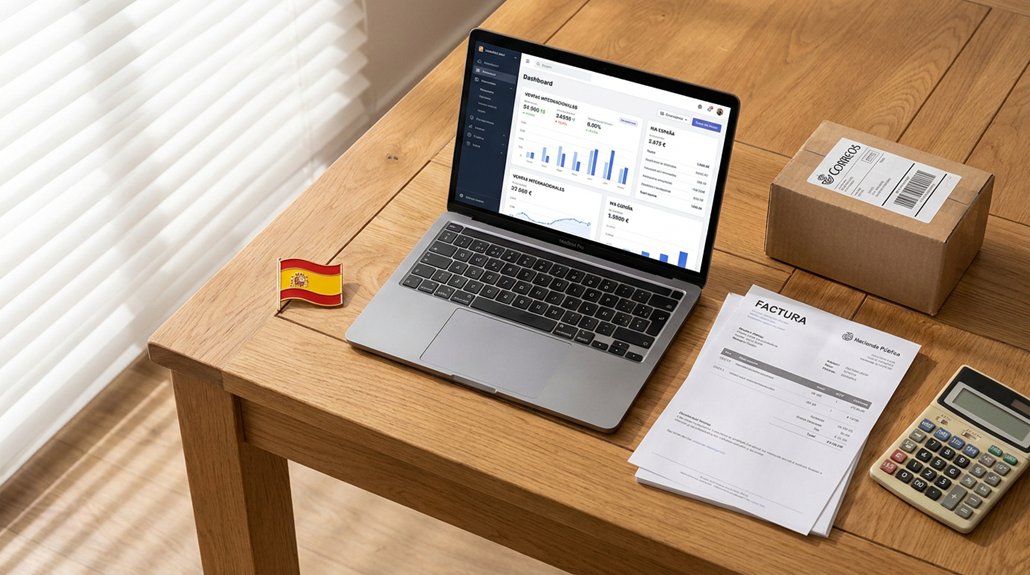
If you are dropshipping in Spain, you must understand the IVA system, which is Spain’s VAT structure. The VAT has three distinct rates: 21% applies to general goods, 10% is for food and books, and 4% is designated for basic necessities. EU-based sellers need to register for VAT once their annual sales exceed €10,000. In contrast, non-EU sellers must register immediately upon starting operations.
To simplify cross-border VAT management, utilize the OSS (One-Stop Shop) scheme through Spain’s Agencia Tributaria. This scheme allows you to report VAT for all EU sales in one go, reducing administrative burden. Accurate record-keeping is essential; maintain invoices and sales records for at least four years to comply with tax regulations.
Understanding these specific VAT requirements is crucial for successful dropshipping in Spain. Neglecting to register or failing to follow VAT regulations can lead to penalties. Prioritize compliance to ensure smooth operations and avoid potential issues down the line.
How Spain’s IVA System Actually Works for Dropshippers
Spain’s value-added tax system, known as IVA (Impuesto sobre el Valor Añadido), directly impacts dropshipping operations. Dropshippers must navigate three IVA rates: 21% (standard), 10% (reduced), and 4% (super-reduced). Each rate applies to specific product categories, influencing pricing strategies.
When dropshippers ship products internationally, they face import duties on goods entering Spain from outside the EU. Understanding these import duties is crucial for calculating total costs and pricing products correctly. Certain transactions can qualify for tax exemptions, but dropshippers must verify eligibility to avoid unexpected tax liabilities.
Meeting invoicing requirements is essential. Each sale requires a compliant invoice that includes specific details, such as customer information and product descriptions. Non-compliance can lead to penalties, so dropshippers should prioritize accurate record-keeping.
Navigating the IVA system can be complex, but early understanding helps dropshippers avoid costly mistakes. By familiarizing themselves with the IVA structure, dropshippers can operate legally and efficiently in the Spanish market.
When Do You Need to Register for VAT in España?
When to Register for VAT in España
Registering for VAT in España is crucial for dropshippers entering the Spanish market. You must register based on your business location, online sales volume, and product tax exemptions.
| Situation | VAT Requirement |
|---|---|
| EU-based seller exceeding €10,000 | Must register |
| Non-EU seller with Spanish customers | Must register immediately |
| Selling VAT-exempt goods | Registration may not apply |
| Using OSS scheme | Single EU registration accepted |
| Below threshold online sales | Registration not required |
You must monitor your sales regularly to ensure compliance with VAT regulations. If your sales exceed the applicable thresholds, you must register for VAT promptly. Failure to do so can lead to penalties that affect your dropshipping operations.
Specific Situations and Actions
- EU-Based Sellers: If you are an EU-based seller and your online sales to Spain exceed €10,000, you must register for VAT in España.
- Non-EU Sellers: If you are a non-EU seller with customers in Spain, you must register for VAT immediately upon making sales.
- VAT-Exempt Goods: If you sell goods that are exempt from VAT, you may not need to register. However, confirm the specific exemptions that apply to your products.
- Using OSS Scheme: If you are using the One-Stop Shop (OSS) scheme, you can register in one EU country, which will cover your VAT obligations across the EU, including España.
- Below Threshold Sales: If your online sales are below the threshold of €10,000, you do not need to register for VAT. However, this requires regular monitoring of your sales figures.
Importance of Compliance
Maintaining compliance with VAT regulations is essential for your dropshipping business. Regularly check your sales figures against the thresholds. If your sales increase, register for VAT without delay. Ignoring these requirements can result in significant penalties, disrupting your business operations.
How the OSS Scheme Simplifies Cross-Border IVA for Dropshippers
OSS Scheme Simplifies Cross-Border IVA for Dropshippers
The One-Stop Shop (OSS) scheme simplifies cross-border Value Added Tax (VAT) for dropshippers selling across the European Union (EU). Dropshippers register for OSS in Spain instead of registering for VAT in each EU country where they sell. This allows them to report all EU sales in one single quarterly return rather than managing multiple filings.
The OSS scheme is particularly beneficial for dropshippers whose total EU cross-border sales exceed €10,000 annually.
Dropshippers surpassing €10,000 in annual EU cross-border sales stand to gain the most from the OSS scheme.
The OSS scheme streamlines compliance by requiring one registration, one filing deadline, and one payment. Dropshippers submit their OSS return quarterly through Spain’s tax authority, Agencia Tributaria. This process eliminates the need for multiple foreign tax registrations, reducing administrative burdens.
While the OSS scheme offers significant advantages, it has limitations. For instance, dropshippers must track their total EU sales to ensure they exceed the €10,000 threshold. If sales fall below this amount, they can’t use the OSS and must handle VAT registrations in individual countries.
Additionally, the OSS scheme doesn’t apply to sales of goods to non-EU countries, limiting its applicability for some dropshippers.
In summary, the OSS scheme provides a practical solution for dropshippers navigating cross-border VAT in the EU. By allowing a single registration and return, it simplifies the compliance process, saving time and effort.
However, dropshippers must be mindful of the sales threshold and the scheme’s limitations to ensure they remain compliant.
Spain IVA Rates by Dropshipping Product Type
Understand Spain’s IVA Rates for Dropshipping Products
Spain’s VAT system requires dropshippers to accurately categorize their products to apply the correct IVA rates. Misclassification can result in penalties or overpayments. Spain has three primary IVA rates and some products may qualify for exemptions.
| Product Type | IVA Rate |
|---|---|
| General goods (electronics, clothing) | 21% |
| Food, books, medicine | 10% |
| Basic necessities, specific foods | 4% |
| Certain medical/financial services | 0% (Exempt) |
Determine the Correct IVA Rate
Dropshippers must classify their products accurately to determine the correct IVA rate. For example, electronics and clothing fall under the 21% IVA rate, while food, books, and medicine qualify for a reduced rate of 10%. Basic necessities and certain specific foods benefit from an even lower rate of 4%. Certain medical and financial services are exempt from IVA altogether.
Avoid Misclassification Risks
Dropshippers must avoid misclassifying products to prevent penalties or overpayments. Misclassifying a product can lead to paying a higher IVA rate than necessary. Always cross-check the product category against the current IVA regulations. If classification is uncertain, consult a Spanish tax advisor for accurate guidance.
Consult Professional Help When Needed
Dropshippers should seek assistance from a Spanish tax advisor if they encounter classification issues. Professional guidance helps prevent costly mistakes and ensures compliance with Spanish tax regulations. This step is crucial for maintaining profitability and avoiding legal complications in your dropshipping business.
How to File and Manage Spanish VAT Without an Accountant
Managing Spanish VAT requires four essential steps: registering for IVA, tracking sales, filing returns, and maintaining accurate records.
Register for IVA: First, register with Spain’s Tax Agency (Agencia Tributaria) to obtain your IVA number. This registration is crucial because it allows you to collect VAT on your sales legally.
Track Sales: Next, track every sale meticulously. Document the sales amount and applicable VAT exemptions for specific product categories.
Keeping detailed records helps ensure compliance and prepares you for potential audits.
File Returns: File your quarterly VAT returns using Modelo 303. The deadlines for these submissions are strict: typically due in April, July, October, and January.
Missed deadlines result in penalties, so mark these dates clearly on your calendar.
Maintain Records: Use accounting software like QuickBooks or Holded to streamline your sales tracking and minimize errors.
Retain all invoices and sales records for at least four years, as Spanish tax authorities can conduct audits during this period.