
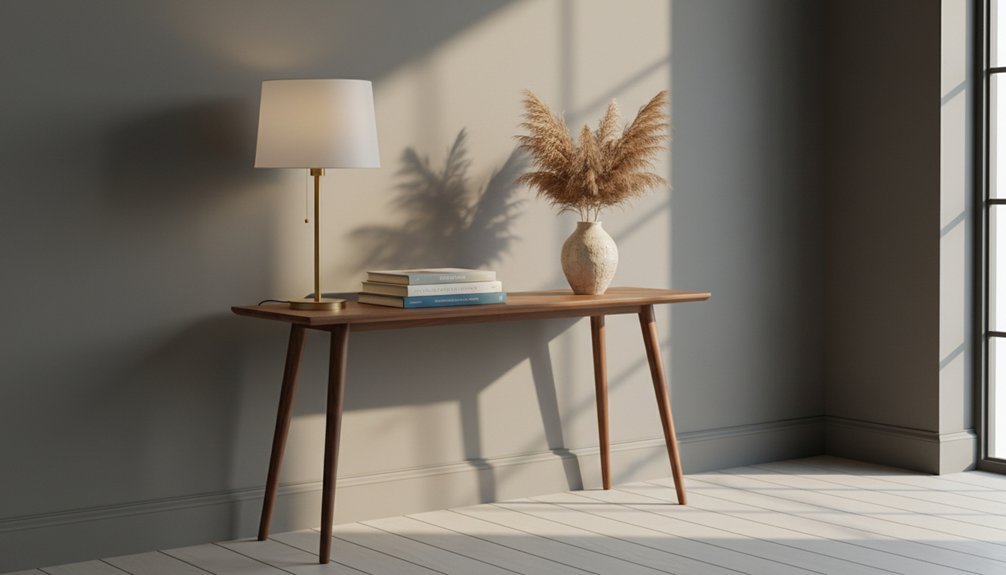
Console tables provide essential functionality in various areas of your home. These tables typically measure between 28 to 32 inches in height and 12 to 18 inches in depth, making them ideal for narrow spaces. You can place console tables in entryways as decorative pieces, behind sofas in living rooms for added surface area, or use them as buffet servers in dining areas.
Choose materials based on your style preferences: wood offers traditional warmth, metal provides industrial durability, and glass creates a contemporary look. Many console tables come with drawers, shelves, and hooks, allowing you to organize keys, mail, and everyday items while keeping the area visually appealing.
To select the right console table, measure the available space to ensure a proper fit. Consider the table’s height in relation to other furniture to maintain a cohesive look. When styling, use the surface to display decorative items, and keep the area tidy by utilizing storage options.
Be aware that not all console tables are suitable for heavy items, so check the weight capacity before placing large objects. If you have children or pets, consider tables with rounded edges for safety. By understanding these aspects, you can effectively choose, measure, and style console tables to meet your specific needs.
Console Table Dimensions: Standard Sizes and Measuring Your Space
Before purchasing a console table, understand the standard dimensions to ensure proper fit in your space. Console table height typically measures between 28 to 32 inches. This height aligns with most sofa backs, facilitating comfortable use.
Console table depth generally falls between 12 to 18 inches. This depth makes console tables suitable for narrow areas like hallways and entryways.
Start by measuring your designated space. Measure the width of your wall area for accurate fitting. Ensure you account for doorways and traffic flow. Maintain at least 30 inches of clearance for walking paths.
Consider the items you plan to place on top of the console table, such as lamps, décor, or keys, as this will influence the depth required. Choose a table that matches the proportions of your room for a balanced look. Additionally, be sure to maintain clear pathways to facilitate movement and enhance accessibility throughout your home.
Wood, Metal, or Glass: Choosing Console Table Materials
The material you choose for your console table directly affects its durability, maintenance, and look.
Wood offers various finishes, such as natural oak or painted surfaces, which provide warmth and a traditional feel. Wooden tables are durable but require regular dusting and periodic polishing to maintain their appearance.
Metal materials, like brushed steel or bronze, bring an industrial style and high durability. You can easily clean metal surfaces using a damp cloth, making maintenance straightforward.
Glass console tables create a sense of openness, making smaller spaces appear larger. However, glass requires frequent cleaning to remove fingerprints, although it’s resistant to scratches.
When selecting materials, consider your home’s design. Glass or metal suits contemporary interiors, while wood pairs well with classic styles. Solid wood furniture is an investment that reflects quality and longevity, making it a worthwhile choice.
To preserve the appearance of your console table, use coasters, avoid harsh chemicals, and clean spills immediately.
Narrow Console Tables for Small Hallways and Tight Entryways
Narrow console tables serve a critical function in small hallways and tight entryways. These tables maximize storage and organization without overwhelming the space.
Focus on tables with narrow widths, generally between 12 to 30 inches, to ensure they fit comfortably. Practical storage solutions include drawers or shelves for everyday items like keys, mail, and small accessories.
When selecting a narrow console table, prioritize smart design features that promote multi-functionality. For example, a table with built-in hooks can provide extra storage for bags or coats. Additionally, some tables come with a lower shelf, allowing for decorative storage or additional organization space.
Avoid bulky or oversized options, as they can restrict movement and make the hallway feel cramped. Instead, choose slim profiles that maintain a clear walkway.
Pay attention to the materials used; lightweight options can make rearranging easier while sturdy materials ensure durability. Incorporating contemporary minimalist furniture can enhance the overall aesthetic of your hallway while maintaining functionality.
Space-Saving Design Features
Narrow console tables maximize space efficiency in tight areas where traditional furniture can’t fit. These tables utilize specific design features that enhance functionality while maintaining a minimal footprint. They provide practical storage and display options, ensuring your space remains organized without feeling cluttered.
Key space-saving features of narrow console tables include:
- Slim profiles that measure 10-12 inches deep. This design enables the tables to fit closely against walls, maximizing floor space.
- Built-in shelves that offer vertical storage solutions. These shelves allow you to store items without occupying additional floor space.
- Floating wall-mounted designs that create floor clearance. This design makes cleaning easier and gives a more open feel to your room.
- Foldable or extendable surfaces that provide flexibility. You can expand the surface area when needed, accommodating extra items without a permanent footprint.
- Multi-tier configurations that utilize vertical space. These designs allow multiple levels for organizing items, minimizing horizontal spread.
You can place these tables in narrow hallways or behind sofas, utilizing previously underused areas. Their streamlined construction ensures you maintain clear walkways while gaining valuable surfaces for keys, mail, and decorative items.
Narrow console tables serve a specific purpose: they enhance space management by combining functionality with a compact design. Each feature contributes to the overall goal of optimizing small spaces effectively.
Ideal Width Measurements
Three key measurements determine if a console table fits in your small hallway or tight entryway: depth, length, and height. For narrow spaces, select a console table with a depth between 10 and 14 inches. This shallow profile maintains a clear walkway while offering functional surface space.
Console table lengths should typically range from 30 to 48 inches, depending on your available wall space. The height of the console table should fall between 28 and 32 inches, which aligns with standard table dimensions.
Before purchasing a console table, measure your hallway’s width. Subtract the console’s depth from this measurement to ensure you have adequate clearance. You need at least 36 inches of remaining space for comfortable passage.
To visualize the space the console table will occupy, use painter’s tape to outline its footprint on your floor. This technique helps you assess whether the dimensions will work in your specific entryway or hallway.
Multi-Functional Storage Solutions
Smart storage solutions enhance a narrow console table, transforming it into a highly functional organizational tool for small hallways. This approach maximizes available space while ensuring essential items remain easily accessible, particularly in tight entryways where every square foot counts.
Key storage elements to consider include:
- Lower shelves accommodate shoes, baskets, or decorative bins for organized footwear and supplies.
- Small drawers provide dedicated spaces for keys, mail, and accessories, preventing clutter on the tabletop.
- Built-in hooks underneath offer convenient spots for bags and umbrellas, keeping them off the floor.
- Open cubbies allow quick access to frequently used items like dog leashes or hats.
- Cabinet doors conceal clutter, maintaining a neat appearance in your entryway.
Choosing a console table with multiple storage zones simplifies decorative organization. You can showcase attractive decor on the top while hiding everyday necessities in the lower sections, ensuring a balanced and functional entryway.
Avoid console tables that lack sufficient storage options, as they may lead to a disorganized space. Instead, prioritize models that combine aesthetics with practicality, focusing on designs that fit your specific needs and available space.
Behind-the-Sofa Console Tables for Living Room Layouts
When you place a sofa away from the wall, a console table behind it creates a functional space that clarifies your living room’s layout. This setup converts unused space into a practical area for lamps, drinks, or decorative items. The console table not only provides storage solutions, but also stabilizes your furniture arrangement and enhances the aesthetic appeal of your living area.
To achieve the best results, measure the console table’s height so that it’s slightly lower than your sofa’s backrest. This ensures a seamless visual flow while allowing easy access to items from both sides.
Console tables work particularly well in open-concept living areas, as they help delineate different zones without closing off the space. Opt for a slim design to maintain clear walkways and prevent the area from feeling cramped.
When selecting a console table, consider the width and depth. A table that’s 12 to 18 inches deep usually balances well without overwhelming the space. Additionally, ensure that the table has a sturdy construction to support the items you plan to place on it.
Avoid bulky designs, as they can obstruct movement and disrupt the overall layout.
Console Tables in Dining Rooms as Buffets and Servers
Console tables serve as effective buffet stations in dining rooms. They provide ample surface space for serving dishes and offer storage for dining essentials throughout the year. Placing servers against walls optimizes floor space while keeping food easily accessible for guests. Console tables are particularly beneficial during holiday gatherings and dinner parties.
Style Your Buffet with a Console Table
First, stack plates on one end of the console table. Next, place utensils in decorative containers nearby for easy access. Then, set serving dishes directly on the table’s surface, ensuring that warming trays are positioned underneath to keep food at the right temperature.
Utilize drawers or baskets below the console table to store table linens, napkins, and placemats. This organization keeps dining essentials out of sight but within reach. Display wine bottles, glasses, and bar accessories on top of the table for beverage service, making it convenient for guests to serve themselves.
Incorporate decorative elements like candles or flowers between functional items to add visual appeal. Adjust the accessories based on the occasion to transition from formal dinners to everyday use. Rotating displayed items can refresh the console’s appearance and maintain a cohesive dining experience.
Styling Console Tables: Balancing Height, Symmetry, and Function
Styling a console table requires attention to three essential design principles: height balance, symmetry, and functionality.
First, select decor items that match the console table’s scale. For example, if your table is 30 inches high, choose decor pieces that range from 12 to 24 inches in height to create a balanced look.
Second, arrange these items in a way that achieves visual symmetry. Consider placing two identical lamps on either end of the table, with a decorative bowl in the center. This arrangement draws the eye and creates a cohesive appearance.
Finally, ensure your styling doesn’t compromise practical storage needs. Use decorative boxes or trays to organize items like keys or mail while maintaining an attractive surface.
By focusing on these three principles, you transform your console table into a functional and polished focal point that enhances the overall aesthetic of your room.
Choosing Proportional Decor Items
Guidelines for Selecting Proportional Decor Items for Your Console Table
To enhance your console table effectively, focus on the proportions of decorative objects. This approach ensures that each piece complements the table’s dimensions and integrates well with surrounding furniture. For a standard 48-inch console table, choose decor items that don’t exceed 32 inches in length, as this allows for a balanced arrangement.
Create Balanced Arrangements
- Select Tall Items: Choose vases or other vertical objects that measure between 16 and 24 inches in height. These should be proportionate to the table’s width, ideally one-third to one-half of that measurement.
- Group Smaller Objects: Arrange smaller decor items in odd numbers, such as three or five. This grouping creates visual interest and draws the eye.
- Maintain Surface Visibility: Ensure at least 30% of your console table surface remains visible. This openness prevents clutter and maintains a clean look.
- Vary Heights: Incorporate items with heights ranging from 6 to 18 inches. This variation adds depth and dimension to your arrangement.
- Limit Statement Pieces: Use only one large statement piece per table. This keeps the focus on that item without overwhelming the space.
Coordinate Color Schemes
Select two to three complementary colors that align with your room’s existing palette. This color coordination enhances cohesion and prevents the decor from appearing monotonous or mismatched.
Creating Balanced Visual Arrangements
When you arrange decorative items on your console table, achieve balance to create an attractive display. Balance doesn’t require all items to match, but each piece should feel evenly distributed across the surface. You can create balance through symmetrical arrangements, where identical objects sit on each end, or by using asymmetrical designs that incorporate different-sized pieces.
Consider the visual weight of each item. For example, place a large vase on one side and balance it with several smaller objects grouped together on the opposite side. This method balances the visual weight across the table.
Next, vary the height of your items to create layers that draw the eye upward. Position taller items toward the back and place shorter pieces in front. This layering technique adds depth while maintaining balance. A well-balanced console table looks intentionally styled rather than cluttered.
Avoid cluttered displays by ensuring that every item has a purpose and contributes to the overall arrangement. Limit the number of items to around five to seven pieces for a cleaner look. Too many items can create visual chaos and undermine the balance you aim to achieve.
Combining Beauty With Storage
Console tables provide both decorative appeal and practical storage solutions in your home. When you choose tables with functional designs, you enhance your space while keeping it stylish. Focus on tables that integrate useful storage features without compromising on aesthetics.
To effectively utilize your console table for storage, consider the following options:
- Drawers: Use drawers to conceal clutter such as keys, mail, and small accessories. This keeps your surface clear and organized.
- Lower Shelves: Add lower shelves to display decorative baskets or boxes. This allows for both style and additional storage.
- Cabinets: Select tables with cabinets that feature doors. These cabinets can store larger items out of sight while maintaining a clean look.
- Open Cubbies: Incorporate open cubbies that offer display space alongside organization. You can showcase decorative items while keeping essentials within reach.
- Built-in Charging Stations: Look for tables that include built-in charging stations for electronics. This keeps your devices charged and easily accessible without cluttering your space.
By selecting console tables with these hidden storage features, you can create a tidy entryway or living room. These designs allow you to keep everyday items readily available yet out of sight.
A well-chosen console table strikes the right balance between visual interest and practical storage capabilities.
Console Tables With Drawers and Shelves for Hidden Storage
If you want to enhance your entryway’s functionality, choose a console table with drawers and shelves for optimal storage. These tables combine elegant design with practical compartments that keep clutter hidden.
Drawers secure keys, mail, and personal items, while open shelves hold decorative baskets or books.
Console table drawers provide secure storage for everyday essentials while open shelving displays decorative accents that enhance your entryway’s style.
Look for models with multiple drawers to organize various household essentials. You can find configurations ranging from one large drawer to several smaller compartments. This variety allows you to categorize your belongings effectively.
Lower shelves work well for storing shoes or displaying decorative items.
When selecting a storage console, assess your specific needs. First, measure your available space to ensure a proper fit. Then, determine what items you’ll store.
Tables with deeper drawers can accommodate bulkier items, while shallow drawers are suitable for paperwork and smaller accessories.
Avoid models that lack sufficient depth if you plan to store larger items. Additionally, consider the overall style of your entryway to ensure the console table complements your decor.
This way, you achieve both functionality and aesthetic appeal in your space.
Rustic, Modern, or Industrial: Matching Console Table Styles to Your Décor
After you identify the necessary storage features for your console table, focus on selecting a style that integrates seamlessly with your décor. Console tables provide versatility, allowing them to fit into various room designs.
Here are the key style options to consider:
- Rustic charm incorporates natural wood finishes and distressed textures, making it suitable for farmhouse-style interiors.
- Modern elegance features clean lines and minimalist designs, often using materials like glass or lacquer, ideal for contemporary spaces.
- Industrial edge merges metal frames with reclaimed wood, creating an urban warehouse aesthetic that works well in lofts or modern industrial settings.
- Color coordination ensures that your console table complements the existing color palette of your room, enhancing the overall design.
- Texture mixing introduces visual interest by pairing different materials and finishes, which can elevate the look of your space.
When selecting a console table, match its style to the overall aesthetic of your room. For example, a rustic piece enhances traditional spaces, while a modern design fits perfectly in contemporary interiors.
Be mindful of the limitations; avoid choosing a style that clashes with your existing décor.
Sofa Tables vs. Console Tables: What’s the Actual Difference?
Many homeowners find it challenging to differentiate between sofa tables and console tables, often using these terms interchangeably. The key difference lies in their intended function and placement in the home.
Console tables serve as versatile, standalone decorative pieces. You can place them in various locations, such as entryways, hallways, or behind sofas, making them adaptable to any room.
Console tables are versatile standalone pieces that adapt to any room, from entryways to hallways to living spaces.
Sofa tables, on the other hand, have a specific role. They’re designed to sit directly behind a couch, usually in the center of a room. Sofa tables are narrower and lower than traditional console tables, allowing them to align better with the height and dimensions of a sofa.
While both types of tables share a similar construction, their purposes are distinct. Understanding these differences aids homeowners in making informed furniture choices.
You can certainly use a console table as a sofa table, but the reverse isn’t always practical.