

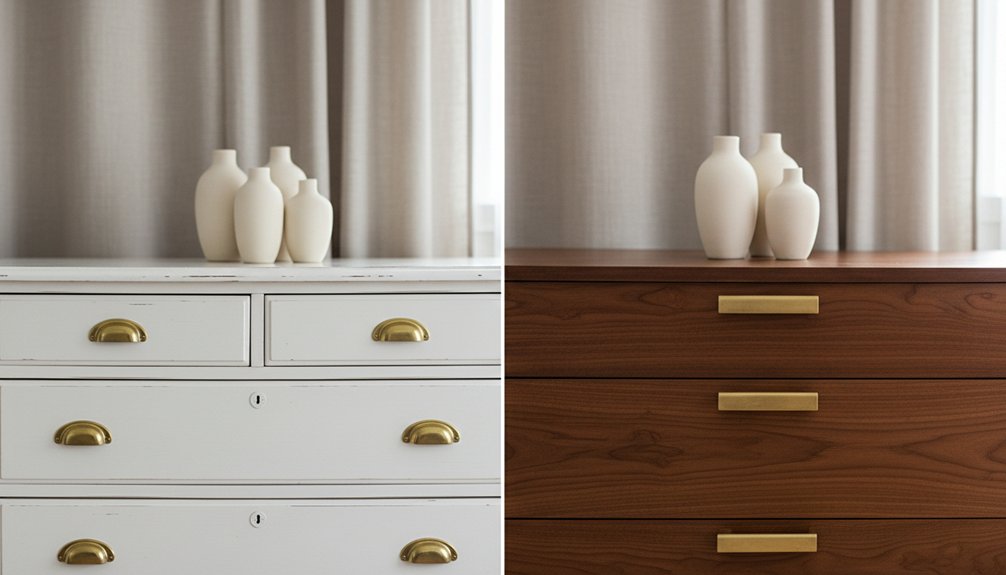
You’ll find that painted furniture sells better primarily to younger buyers aged 25-40, who typically earn between $40,000 and $75,000. In contrast, natural wood furniture attracts traditional customers over the age of 50 with incomes of $75,000 and above.
Painted furniture offers higher profit margins due to lower pricing—usually 15-30% less than natural wood. Additionally, painted pieces provide better scratch resistance, making them a practical choice for everyday use. On the other hand, natural wood commands premium prices and requires less touch-up maintenance, which appeals to buyers looking for long-lasting quality.
To optimize sales, start your inventory with a 60/40 split favoring painted furniture, which has historically been your best-selling finish. Adjust this ratio quarterly based on sales performance and seasonal trends that influence buyer preferences throughout the year. This approach allows you to adapt to market demands effectively.
What Furniture Buyers Want: Painted vs Natural Wood
Furniture buyers exhibit distinct preferences for either painted or natural wood finishes. Understanding these preferences is crucial for making informed inventory decisions.
Younger buyers typically prefer painted furniture because it aligns with contemporary design trends and offers adaptability in styling. They often select soft neutral colors such as white, gray, and sage green.
Painted furniture appeals to younger buyers seeking contemporary style and versatility through soft neutral tones like white, gray, and sage green.
In contrast, traditional buyers favor natural wood finishes that highlight the wood grain and craftsmanship. These buyers seek authenticity and a timeless aesthetic.
Geographic location plays a significant role in these preferences. Urban buyers tend to lean toward painted furniture, while rural buyers often choose natural wood pieces.
To effectively target your market, assess the style preferences and age demographics in your local area. Additionally, understanding furniture styles and their appeal can further enhance your inventory strategy.
Both painted and natural wood finishes have dedicated audiences. By understanding your specific market, you can strategically select inventory to meet the demands of your customers.
Painted vs Natural Wood Furniture Durability Over Time
When you invest in furniture, it’s crucial to understand how painted and natural wood finishes hold up against daily wear and tear.
Painted furniture tends to resist scratches and dents better than natural wood because the paint creates a protective layer. However, this layer can chip or peel if exposed to heavy impacts or moisture.
On the other hand, natural wood can handle moisture better due to its inherent properties, but it’s more prone to scratches and dents that can affect its appearance over time.
Maintaining the durability of painted furniture requires regular touch-ups to address any chips, while natural wood furniture needs periodic sanding and refinishing to keep its surface intact.
For both types, exposure to heat can cause damage; painted surfaces can melt or discolor, while natural wood may warp.
To ensure longevity, consider the environment where the furniture will be placed. For example, if you have young children or pets, painted furniture might be a better choice due to its resilience against everyday accidents.
If you prefer a more classic look and don’t mind regular maintenance, natural wood could work well for you.
Ultimately, understanding these differences will help you choose furniture that maintains its beauty and functionality in your home for years to come. Additionally, solid wood furniture offers unique grain patterns and color variations that enhance the aesthetic appeal of your space.
Scratch and Dent Resistance
Natural wood furniture provides better scratch resistance than painted furniture. The reason lies in the wood grain, which runs consistently throughout the entire piece. When scratches occur on natural wood, the color beneath the surface remains uniform, making them less noticeable.
You can also sand and refinish natural wood to restore its original appearance, which is a practical option for maintaining its look over time.
In contrast, painted furniture doesn’t perform as well in terms of scratch resistance. When scratches happen, the underlying wood becomes exposed, creating a visible contrast against the paint. The paint serves as a surface coating and doesn’t penetrate the wood, which means that any scratches can be quite obvious.
Both natural and painted furniture perform similarly when it comes to dent resistance. Dents affect the wood structure, regardless of the finish applied. Hardwoods, such as oak, resist dents better than softwoods, like pine. This durability remains consistent whether the wood is painted or left natural.
Moisture and Heat Damage
Painted furniture provides better protection against moisture and heat damage than natural wood finishes. The paint layer creates a barrier that prevents water from penetrating the wood and helps maintain stable temperatures.
In contrast, natural wood finishes require frequent upkeep to avoid warping, cracking, or discoloration caused by moisture and heat.
Painted furniture effectively resists common issues that arise in daily use:
- Moisture resistance stops water rings from drinks and accidental spills.
- Heat resistance prevents permanent marks from hot coffee cups.
- Sealed surfaces block humidity, reducing the risk of wood expansion.
Natural wood finishes need regular conditioning and constant attention to humidity levels in the room. They’re more vulnerable to damage from direct heat sources and moisture.
If you’re selling furniture designed for humid climates or busy households, painted options offer greater durability against these everyday challenges.
Long-Term Maintenance Requirements
Long-Term Maintenance Requirements for Painted and Natural Wood Furniture****
Painted furniture requires regular touch-ups to address chips and scratches that expose the underlying wood. You’ll need matching paint and proper preparation to ensure seamless repairs. Schedule these touch-ups every year or as needed to maintain the furniture’s appearance.
Natural wood furniture demands consistent care through oiling or waxing. Apply oil or wax every 6 to 12 months to maintain the protective barrier against moisture. Failing to do so can lead to damage from water penetration.
When it comes to repair costs, painted furniture often requires professional refinishing for extensive damage, which can be expensive and time-consuming. In contrast, natural wood allows for localized sanding and spot treatment, making repairs more manageable and less costly.
From an environmental standpoint, natural finishes generally use fewer chemicals during maintenance. However, painted surfaces typically last longer between major refinishing projects, which can reduce waste over time. This means that while painted furniture may need more frequent touch-ups, it may not require complete refinishing as often as natural wood finishes.
Each furniture finish type has distinct maintenance needs that affect its longevity and overall care. By understanding these requirements, you can make informed decisions about the type of furniture to invest in based on your willingness and ability to maintain it.
Maintaining Painted vs Natural Wood Furniture
To maintain the appearance of painted and natural wood furniture, you must use specific cleaning methods and long-term care strategies tailored to each type.
For painted furniture, you should regularly wipe surfaces with a damp microfiber cloth to remove dust and grime. Use a gentle cleaner specifically designed for painted finishes to avoid damaging the paint. Avoid abrasive scrubbers, as they can scratch the surface. Additionally, traditional furniture styles often feature painted finishes that enhance their aesthetic appeal, making maintenance especially important.
When it comes to long-term care, apply a protective wax or sealant every six months to keep the finish looking fresh.
For natural wood furniture, dusting with a soft cloth is essential to prevent scratches. Use a wood-specific cleaner that nourishes the wood and brings out its natural shine. Avoid products containing harsh chemicals that can strip the finish.
To maintain the integrity of natural wood over time, apply a quality wood conditioner or oil every three to six months, depending on the climate and humidity levels in your home.
Cleaning and Care Requirements
Cleaning and maintaining furniture requires specific actions based on the type of finish. Painted furniture needs careful cleaning techniques to keep its finish intact. Use mild soap mixed with water and a soft cloth to clean painted surfaces. Avoid harsh chemicals, as they can strip the paint.
Natural wood furniture requires different care. Regular dusting helps remove dirt and grime, while periodic oil treatments maintain the wood’s protective coating. Use furniture oils specifically designed for natural wood to prevent drying and cracking.
Here are key maintenance differences:
- Don’t use furniture wax on painted surfaces, as it can damage the finish.
- Condition natural wood monthly with appropriate oils to keep it nourished.
- Water rings can severely damage natural wood, while painted finishes are less affected.
Regular inspections are necessary. Check painted furniture for chips that expose bare wood, which can lead to further damage.
For natural wood, monitor for signs of drying and cracking. Proper maintenance for both types of furniture extends their lifespan significantly.
Long-Term Durability Considerations
Natural wood furniture lasts for decades, but its durability hinges on various factors. Natural wood develops a patina over time, appealing to many buyers, but it’s vulnerable to water damage and scratches that penetrate the surface.
In contrast, painted furniture provides better protection against moisture and stains, though the longevity of the finish depends on the quality of the paint used. Chips and scratches are more visible on painted surfaces, necessitating regular touch-ups to maintain their appearance.
When choosing finishes for furniture, consider the environmental impact. Natural wood can be refinished without the need for harsh chemical strippers, making it a more eco-friendly option.
Painted furniture, however, often requires strong removers for refinishing, which can be less environmentally friendly.
Evaluate your target market’s lifestyle when deciding on finishes. Active households may prefer painted furniture due to its protective qualities against everyday wear and tear.
Understanding these differences will help you make informed decisions about which types of furniture to stock.
Profit Margins: Which Finish Makes You More Money
Your profit margins depend on understanding the differences between painted and natural wood furniture. Analyzing profit reveals that painted furniture often yields higher returns. Painted pieces typically cost less to produce due to lower material expenses and quicker production times. You can choose more affordable lumber grades because paint hides imperfections.
When setting your pricing strategy, focus on these key factors:
- Natural wood requires premium materials, which can raise your costs by 30-40%.
- Painted furniture offers pricing flexibility with trendy color options that attract buyers.
- Refinishing painted pieces creates additional revenue opportunities.
Although natural wood can command higher initial prices, painted furniture generally sells in greater volumes. In specific markets, painted pieces move faster, enhancing your cash flow.
Your pricing strategy should reflect both immediate profit margins and the preferences of your customers. Prioritize finishes based on these insights to maximize your profitability.
Painted vs Natural Wood Across Farmhouse and Modern Design
When choosing between painted and natural wood finishes, the design style of your furniture is crucial.
Farmhouse design typically favors painted finishes, particularly in white, cream, and soft pastel colors. These colors create a warm, cozy atmosphere that appeals to buyers looking for rustic charm. Distressed painted furniture often sells well in this market due to its authentic, lived-in appearance.
In contrast, modern design prioritizes natural wood finishes. Here, the focus is on showcasing the wood’s authentic grain and color, often found in species like walnut, oak, or maple. Buyers interested in modern furniture prefer clean lines and organic materials that highlight the beauty of the wood itself.
Mixing these two styles can lead to mismatched preferences. For example, painted pieces don’t appeal to modern buyers, while glossy natural wood finishes rarely fit into farmhouse collections.
Therefore, it’s essential to align your finish choice with the design style you’re targeting. Understanding these distinctions helps you make informed decisions when selling furniture.
Why Oak Takes Paint Better Than Walnut
Oak’s open grain structure allows paint to adhere effectively, making it the preferred choice for painted finishes. In contrast, walnut’s dense and tight grain complicates the painting process.
Oak’s porous grain creates superior paint adhesion, while walnut’s tight density makes it poorly suited for painted applications.
When selecting wood for painted furniture, consider how oak’s characteristics benefit your project. Oak’s porous surface enables paint to penetrate deeply, forming a strong bond that minimizes issues like chipping and peeling.
Walnut poses several challenges for painting:
- Paint remains on the surface instead of absorbing into the wood.
- Primer application requires additional steps to achieve adequate adhesion.
- The dense grain restricts the paint’s ability to grip the surface effectively.
Preparing oak for painting is straightforward, requiring minimal sanding and surface prep. Walnut, however, demands extensive sanding and often necessitates multiple primer coats to ensure proper adhesion.
This difference in preparation significantly affects production timelines and costs for painted furniture projects.
Age and Income: Who Buys Each Finish
Demographic data clearly shows how age and income influence preferences for painted versus natural wood furniture. Younger buyers, specifically those aged 25-40, often choose painted finishes. This age group typically has an income ranging from $40,000 to $75,000.
In contrast, buyers over 50 years old usually prefer natural wood finishes, and their income is generally $75,000 or higher.
Painted furniture attracts budget-conscious millennials who seek affordable, trendy options. They value versatility and modern aesthetics in their choices.
On the other hand, natural wood furniture appeals to established homeowners who appreciate quality craftsmanship and see it as a long-term investment. These buyers prioritize durability and timeless design in their furniture selections.
To effectively target these different customer groups, businesses should analyze their local market’s demographic composition.
Stocking the right inventory based on age and income demographics can significantly enhance sales potential. Understanding these factors allows manufacturers and retailers to align their offerings with the preferences of specific buyer profiles.
Stocking Strategy: Balancing Painted and Natural Inventory
Several factors determine the ideal ratio of painted to natural wood furniture in your inventory. Analyze your local market’s customer preferences by reviewing sales data and demographic research. Track the inventory turnover rates for both finishes to identify which type sells more quickly in your store.
Determine your ideal painted-to-natural wood furniture ratio by analyzing local sales data, demographic trends, and inventory turnover rates for each finish type.
Monitor seasonal trends that impact finish popularity. For example, customers may prefer painted furniture in spring and summer, while natural finishes may be more popular in fall and winter.
Calculate the profit margins for both painted and natural wood furniture to understand the financial implications of your stock choices. Evaluate your available display and storage space, as this will influence how much of each finish you can carry.
Start with a 60/40 split favoring the finish that has historically sold better in your area. Adjust this ratio quarterly based on actual sales performance. Avoid overcommitting to either finish without testing customer responses first.
Review your inventory turnover metrics monthly to ensure you maintain optimal stock levels and minimize carrying costs. This approach allows you to make informed decisions that align with customer preferences and market trends.
Price Positioning for Painted vs Natural Wood Furniture
Once you finalize your inventory mix, you must set prices for painted and natural wood furniture.
Painted furniture usually sells for 15-30% less than natural wood furniture. This price difference stems from consumer preferences and the costs involved in production. Natural wood furniture uses high-quality materials and craftsmanship, which justifies its higher price. Buyers value the visible grain patterns and overall quality of natural wood pieces.
On the other hand, painted furniture targets budget-conscious consumers looking for affordable options. While you can price painted items lower, avoid undervaluing them. High-quality painted pieces with intricate finishes deserve competitive pricing.
To effectively price your furniture, study your local market. Analyze what customers are willing to pay and monitor competitor pricing. Adjust your pricing strategy based on your findings.
Keep in mind that consumer preferences can differ by region, so ensure your pricing structure aligns with local market conditions.