

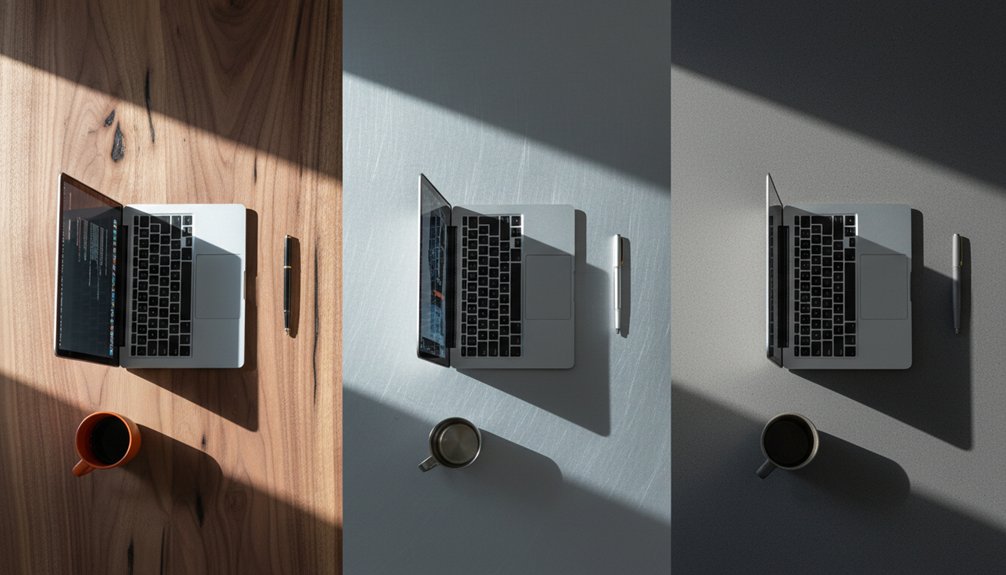
Solid wood desks provide unparalleled durability, lasting decades with proper care. However, these desks require regular oiling to maintain their appearance and finish. Additionally, solid wood desks often come with a higher upfront cost.
Metal desks deliver industrial strength, supporting weights between 200 and 500 pounds. These desks require minimal maintenance, primarily just the occasional dusting to keep them clean.
Engineered wood and laminate desks present a cost-effective solution, resisting warping better than solid wood. These options handle daily use reliably, making them suitable for home offices on a budget.
Glass desks offer a modern aesthetic and are easy to clean, making them a popular choice for contemporary workspaces.
Bamboo desks combine sustainability with strength, providing an eco-friendly option without sacrificing durability.
Each material presents distinct trade-offs regarding initial investment, maintenance requirements, and long-term value. Evaluating these factors will help you determine the best desk material for your specific needs.
Durability, Cost, and Maintenance: What Actually Matters in Desk Materials?
When you choose a desk for your home office, focus on three key factors: durability, cost, and maintenance. These factors will determine your satisfaction with the desk over the years.
Durability measures how well the desk material resists daily wear and tear, including scratches, stains, and structural damage. For example, solid wood desks typically last longer than particleboard desks, which can sag or chip over time. Assess the material’s ability to withstand daily use to ensure a long-lasting investment. Additionally, solid wood furniture offers exceptional durability which significantly outperforms alternative materials.
Desk durability directly impacts longevity—solid wood withstands daily wear far better than particleboard, which deteriorates quickly under regular use.
Cost includes both the initial purchase price and any future expenses, such as repairs or refinishing. For instance, a high-quality laminate desk may cost less upfront but require replacement sooner than a more expensive hardwood desk that can be refinished. Calculate the total cost over the desk’s lifespan to make a more informed choice.
Maintenance varies significantly across different materials. Some materials, like glass and polished wood, need regular cleaning and care to maintain their appearance. Others, such as metal or laminate, require minimal upkeep and can stay looking good with occasional wipes. Understand the maintenance requirements of each material to avoid spending excessive time keeping your desk presentable.
These factors impact your workspace functionality and comfort. A desk that deteriorates quickly can disrupt your productivity, while a high-maintenance desk can distract you from work.
Consider how the desk’s structure supports ergonomic design, as this affects monitor height, keyboard positioning, and overall comfort during long work sessions.
Solid Wood Desks: Premium Durability With Timeless Style
When you choose a solid wood desk, you need to compare different wood species: oak, walnut, and maple. Each wood type has unique grain patterns and varying hardness levels.
Solid wood desks require regular maintenance, including oiling or waxing, to prevent scratches, water damage, and warping from environmental changes.
Solid wood desks typically have a higher initial cost than desks made from other materials. However, with proper care, these desks can last for decades.
Investing in a solid wood desk is wise if you plan to use your workspace long-term, as its durability and timeless style will pay off over the years. Additionally, ensure you maintain at least 30 inches of clearance around the desk for comfortable movement and accessibility.
Wood Types and Grades
Solid wood desks are constructed from single pieces or planks of genuine timber. This construction method provides superior strength and longevity, allowing these desks to last for generations.
When selecting a solid wood desk, you’ll encounter two main categories: hardwoods and softwoods.
Hardwoods such as oak, maple, walnut, and cherry offer exceptional durability. These woods resist scratches and dents, maintaining their appearance over decades of use. Hardwoods are graded as Select, #1 Common, or #2 Common. Select grade hardwoods have fewer knots and imperfections, making them a premium choice.
Softwoods, including pine, cedar, and fir, differ significantly from hardwoods. Softwoods are lighter and generally more affordable but show wear more readily. Softwoods are graded as Clear, Select, and Common. While higher grades of softwood offer better aesthetics, they still don’t match the durability of hardwoods.
When choosing between hardwood and softwood desks, consider your budget and the expected wear and tear. Hardwoods provide long-lasting performance, while softwoods offer a cost-effective, lightweight option.
Ensure you select the appropriate grade based on your needs to maximize the desk’s lifespan and appearance.
Maintenance and Care Requirements
To keep your solid wood desk looking great and functioning well, follow this specific care routine. Start by dusting the desk weekly with a soft microfiber cloth. This action removes dirt and prevents buildup. If spills occur, wipe them up immediately with a damp cloth to avoid damage. Steer clear of harsh chemicals, as these can harm the wood’s finish.
| Maintenance Task | Frequency |
|---|---|
| Dust with microfiber cloth | Weekly |
| Apply furniture polish | Monthly |
| Deep clean with wood cleaner | Quarterly |
| Reapply protective finish | Every 2-3 years |
For long-term care, position your desk away from direct sunlight and heat sources. This prevents warping and fading of the wood. Use coasters under drinks to avoid water rings and place desk pads in work areas to prevent scratches. Regular maintenance safeguards your investment, ensuring your desk lasts for decades.
Price Versus Longevity Factors
Understanding the relationship between the initial cost of a desk and its long-term value is crucial for making an informed purchasing decision. A solid wood desk typically requires a higher upfront investment, but with proper maintenance, it can last for decades. Here’s a breakdown of key factors to consider:
- Material Durability: Solid wood desks resist daily wear better than particle board or veneer options. This durability means fewer repairs and replacements over time.
- Repair Potential: You can refinish solid wood surfaces multiple times. This ability to restore the desk extends its useful life significantly compared to other materials.
- Resale Value: Quality wood desks maintain substantial resale value. In contrast, composite alternatives often depreciate quickly, leading to a lower return if you decide to sell.
Composite desks may be cheaper initially, but they typically require replacement within 5 to 10 years due to limited repair options. Metal desks offer a middle ground, providing decent longevity at a moderate price, but they lack refinishing capabilities.
To assess the true value of your desk investment, calculate your cost-per-year. This calculation helps you understand how much you’re spending annually based on the desk’s lifespan, allowing for a clearer comparison between different options.
Metal Desks: Industrial Strength for Modern Home Offices
Metal desks provide robust support for home offices while integrating seamlessly into modern design aesthetics. These desks can bear significant weight, making them suitable for heavy equipment like multiple monitors or printers without compromising stability. Compared to wood or plastic options, metal desks require less maintenance, which is essential for busy work environments.
Metal desks are built to withstand wear and tear, ensuring long-term durability. Their materials resist scratches and dents, so you won’t have to worry about the desk deteriorating over time. Additionally, the sleek lines and finishes of metal desks align with contemporary office design, enhancing the overall look of your workspace. Industrial design plays a significant role in the aesthetic appeal and functionality of these desks.
In terms of care, metal desks typically require just a simple wipe-down with a damp cloth to maintain their appearance. Avoid using harsh chemicals that could damage the finish.
When choosing a metal desk, consider factors like weight capacity, surface finish, and size to ensure it meets your specific needs.
Durability and Load Capacity
Metal desks provide the structural integrity required to support heavy equipment in a workspace. Steel and aluminum frames offer the strength needed to handle substantial weight without bending or weakening over time. These metal desks typically withstand loads ranging from 200 to 500 pounds, depending on their construction quality, making them suitable for multi-monitor setups and professional equipment.
Metal desks excel in three critical areas:
- Metal desks distribute weight evenly across the surface, which prevents stress concentration in any one area.
- Reinforced frames in metal desks maintain stability under continuous heavy loads, ensuring the desk remains secure even with equipment changes.
- Powder-coated finishes on metal desks resist scratches and damage, enhancing their durability against daily use.
Investing in a metal desk guarantees longevity, even in high-demand work environments where equipment frequently shifts.
However, it’s essential to avoid overloading beyond the desk’s specified weight limit to maintain its performance and avoid potential failure.
Metal desks are a practical choice for anyone needing reliable support for heavy equipment.
Modern Aesthetic Design Options
A metal desk enhances your workspace by creating a sleek, contemporary environment.
Metal desks feature clean lines and geometric shapes that align with modern office aesthetics. You can find various options, such as powder-coated steel frames and brushed aluminum surfaces, that fit perfectly into minimalist designs. These metal desks often come with glass tops, which provide a sense of visual lightness while ensuring durability.
Industrial-inspired designs include exposed hardware and angular supports that contribute to bold architectural statements. You can select finishes like matte black for a striking contrast or polished chrome for a sophisticated shine.
Manufacturers are increasingly integrating ergonomic elements into metal desk designs, such as adjustable height mechanisms and efficient cable management systems.
The versatility of metal as a material allows for innovative configurations like floating desk surfaces and cantilever designs. These configurations maximize floor space while delivering unique visual appeal.
Maintenance and Care Requirements
Caring for your metal desk requires simple, consistent actions to keep it in good condition. You only need to clean it regularly and perform a few maintenance tasks throughout the year. Busy professionals will find this low-maintenance approach beneficial.
To clean your desk, wipe surfaces with a damp microfiber cloth to remove dust and fingerprints. For stubborn stains, mix mild soap with water, apply it, then dry the surface immediately to prevent water spots.
To maintain your metal desk’s appearance, follow these steps:
- Clean spills immediately to prevent corrosion or staining.
- Apply furniture wax every three months to protect the finish.
- Inspect joints and connections once a year for any loose screws.
Avoid using abrasive cleaners or steel wool, as these can scratch the metal surface. If your desk has a powder-coated finish, understand that it effectively resists rust and retains its look for years with minimal upkeep.
Engineered Wood and Laminate: Affordable Desk Materials That Perform
Engineered wood and laminate desks provide strong performance at an affordable price. These materials resist warping and cracking better than solid wood. Engineered wood consists of wood fibers bonded with resins, resulting in stable surfaces that manage humidity changes effectively.
Laminate materials offer versatile design choices. You can select from various wood-grain patterns, solid colors, or modern finishes to fit your office style. The laminate surface is durable; it resists scratches, stains, and heat damage. Maintenance is straightforward—just use a damp cloth for cleaning without the need for special products.
Additionally, engineered wood and laminate desks support heavy equipment without sagging, making them reliable choices for daily use.
For buyers on a budget, engineered wood and laminate desks deliver durability and low maintenance. These materials represent practical investments for functional and aesthetically pleasing office environments.
Glass, Bamboo, and Hybrid Desks: Alternative Materials Compared
Glass, bamboo, and hybrid desks provide valuable alternatives to traditional desk materials. Each option offers unique benefits that can enhance your workspace.
Glass desks create a modern and minimalist aesthetic. They maintain a sleek appearance while being easy to clean. Tempered glass versions resist scratches more effectively than you might expect.
Bamboo desks offer sustainability advantages. Bamboo grows quickly, requires minimal pesticides, and provides a durable surface comparable to hardwood. This makes bamboo an attractive option for eco-conscious consumers.
Hybrid desks combine materials to enhance functionality. For example, metal frames paired with wood tops deliver an industrial style while adding warmth. Glass surfaces atop steel legs maximize visual space, making them ideal for smaller rooms.
Bamboo and metal combinations merge eco-friendly attributes with structural strength.
Each material serves specific needs. Glass desks fit contemporary designs, bamboo desks cater to environmentally-conscious buyers, and hybrid desks deliver performance benefits that traditional single-material desks can’t match.
Scratch Resistance and Water Damage: How Desk Materials Age Over 5+ Years
When you invest in a home office desk, you need to understand how different materials handle daily wear over time.
Solid wood desks develop unique character through scratches, but they can warp due to water damage if coasters and placemats aren’t consistently used.
Metal desks provide excellent scratch resistance, but they can dent from heavy impacts. The powder-coated surfaces of metal desks resist water damage effectively, provided that the finish remains intact.
Composite materials like laminate and MDF have moderate scratch resistance at lower price points, but they’re vulnerable to water damage, which can cause irreversible swelling and bubbling.
Glass desks offer great scratch resistance, especially tempered glass, but they tend to show fingerprints and minor surface scratches prominently.
Bamboo desks perform similarly to hardwood desks, offering decent scratch resistance, yet they also require protection from moisture.
Regular maintenance significantly extends the lifespan of any desk material.
In summary, choosing a desk based on its material involves balancing scratch resistance and vulnerability to water damage.
Select materials that align with your usage habits to ensure your desk remains functional and visually appealing for years.