

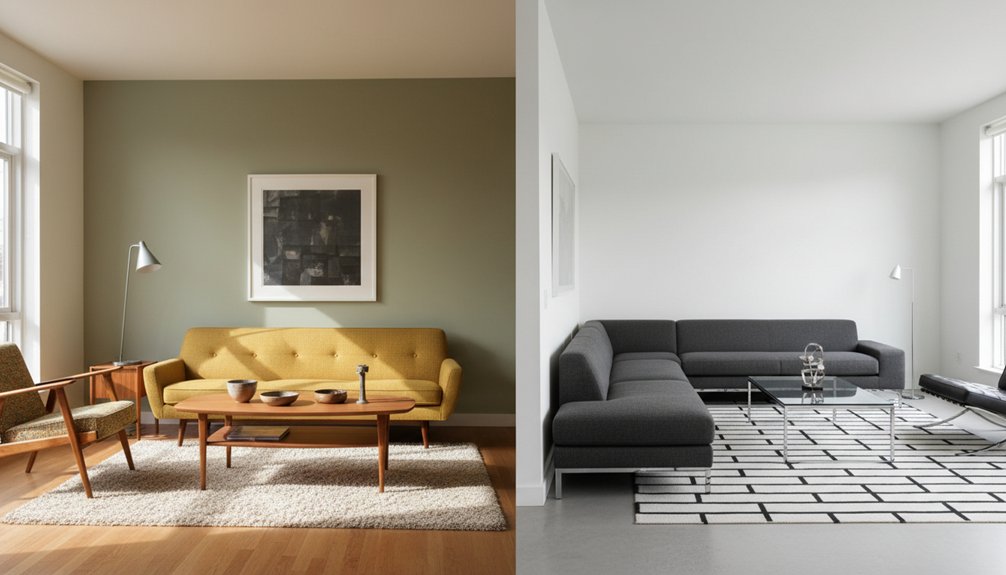
Mid-century modern furniture features warm wood tones, such as walnut and teak, along with organic curves and tapered legs. This design style flourished from the 1940s to the 1960s. In contrast, contemporary furniture emerged in the 1970s and emphasizes stark minimalism. This style utilizes mixed materials, including metals and plastics, and showcases cooler color palettes with dominant grays and whites. Contemporary designs often incorporate geometric shapes that adapt to current trends.
Mid-century modern designs prioritize natural wood finishes that accentuate grain patterns. In contrast, contemporary pieces frequently utilize painted surfaces and matte finishes for a sleek look. Understanding these distinctions between mid-century modern and contemporary furniture can guide your decorating choices effectively.
For example, if you prefer a cozy, inviting atmosphere, mid-century modern furniture may be the right choice. If you favor a clean, minimalist aesthetic, contemporary furniture would align better with your preferences. Each style offers unique attributes that can significantly influence the overall feel of your space.
Mid-Century Modern vs Contemporary Furniture: Key Differences
Mid-century modern and contemporary furniture exhibit distinct characteristics rooted in different design philosophies and historical contexts.
Mid-century modern furniture originated between the 1940s and 1960s. This style features organic forms, tapered legs, and warm wood tones. Iconic pieces often showcase a combination of clean lines and curved elements. Designers prioritize functionality alongside visual appeal, resulting in practical yet aesthetically pleasing furniture.
Contemporary furniture, however, reflects current design trends and evolves rapidly. This style emphasizes stark minimalism, using neutral color palettes and innovative materials like metal and glass. Contemporary pieces frequently display geometric shapes and asymmetrical designs, aligning with modern sensibilities.
The core difference lies in their timeframes. Mid-century modern furniture represents a specific historical period, while contemporary furniture adapts to ongoing styles. Understanding the significance of functional design in both styles enhances your ability to choose pieces that resonate with your design goals and fit your lifestyle.
Recognizing these differences is crucial for making informed decisions when selecting furnishings for your space. Understanding these distinctions allows you to choose pieces that resonate with your design goals and fit your lifestyle.
Materials That Define Mid-Century Modern and Contemporary Styles
The materials used in furniture construction distinctly differentiate mid-century modern from contemporary styles. Mid-century modern furniture predominantly uses hardwoods such as walnut, teak, and oak, often showcasing natural finishes that highlight the wood grain.
In contrast, contemporary furniture incorporates a wider variety of materials, including metals like stainless steel and aluminum, plastics, and synthetic composites, allowing for diverse textures and colors.
Understanding these material choices is crucial for identifying each style. For example, if you see a piece made from solid walnut with a clear finish, you can confidently classify it as mid-century modern.
Conversely, if a chair combines molded plastic with a metal frame, it likely falls under the contemporary category.
When selecting furniture for your space, consider these material characteristics. Mid-century modern pieces often emphasize craftsmanship and simplicity, while contemporary designs focus on innovation and versatility. This knowledge helps you make informed decisions that align with your design vision, especially since materials like solid wood significantly impact both durability and aesthetic appeal.
Wood Types and Finishes
Natural wood selection plays a crucial role in mid-century modern design. Designers prioritize warm-toned woods such as walnut, teak, and rosewood for their organic grain patterns. These species showcase distinct wood grain that draws attention instead of being hidden.
Mid-century modern furniture typically uses oil or lacquer finishes. These finishes enhance the wood’s natural beauty and provide durability.
In contrast, contemporary furniture uses lighter woods like ash, maple, and oak. Designers often bleach or whitewash these woods to achieve a minimalist look.
Contemporary furniture frequently features painted surfaces or matte finishes, which minimize the visibility of wood grain. This design approach shifts focus from the natural characteristics of wood to streamlined, uniform appearances.
When selecting furniture styles, consider whether you prefer the warmth and texture of mid-century modern surfaces or the clean, neutral aesthetics of contemporary designs.
Metal and Plastic Applications
Metal and plastic components play crucial roles in defining mid-century modern and contemporary furniture movements. Mid-century modern designs prominently feature materials like chrome, brass, and brushed steel, often showcasing warm, slightly aged finishes. These metals support tables, form chair legs, and create structural frames, providing both strength and aesthetic appeal. Designers typically pair these metal elements with molded plywood and upholstery, achieving a harmonious look.
In contrast, contemporary furniture focuses on sleek metal finishes such as polished stainless steel, matte black powder coating, and gunmetal gray. These finishes contribute to a more minimalist and sophisticated appearance.
Contemporary designs also utilize plastic materials more extensively, incorporating acrylic panels, resin components, and high-gloss polymer surfaces as primary design features. While mid-century designs reserved plastic for functional parts, contemporary furniture embraces various plastic textures, making them integral to the overall design.
These material choices reflect the manufacturing capabilities and design philosophies characteristic of each era. Mid-century modern furniture highlights craftsmanship and warmth, while contemporary pieces emphasize innovation and bold aesthetics.
Understanding these distinctions allows designers and manufacturers to create pieces that resonate with the intended style and consumer preferences.
Natural Versus Synthetic Materials
Mid-century modern furniture primarily utilizes natural materials like solid wood, leather, and wool. These materials, such as teak, walnut, and oak, provide durability and warmth in furniture design. Over time, these natural materials develop a unique patina, enhancing their character.
In contrast, contemporary furniture incorporates both natural and synthetic materials, allowing for eco-friendly choices like recycled plastics, engineered wood, and sustainable composites.
Contemporary designs often combine materials, such as metal frames with upholstered seats or glass with wood accents, which adds flexibility in both design and cost.
While natural materials in mid-century furniture typically offer superior durability compared to synthetic options, advancements in modern manufacturing techniques have improved the longevity and environmental impact of contemporary furniture.
Color Palettes: Mid-Century Modern vs Contemporary
Color schemes represent a key difference between mid-century modern and contemporary furniture styles.
Mid-century modern furniture features warm, earthy tones such as mustard yellow, burnt orange, avocado green, and rich walnut browns. These colors reflect the design aesthetics popular in the 1950s and 1960s. Mid-century modern pieces often showcase bold accent colors against neutral backgrounds to create visual interest.
Mid-century modern embraces the vibrant warmth of the 1950s and 1960s through mustard yellows, burnt oranges, and rich walnut tones.
In contrast, contemporary furniture utilizes cooler, subdued palettes dominated by grays, whites, blacks, and beiges. When contemporary designs incorporate color, they typically focus on single statement pieces instead of multiple bold hues. This minimalist color approach aims to create calm and sophisticated spaces.
Additionally, contemporary style adapts more readily to current color trends, whereas mid-century modern maintains its distinct vintage palette that characterizes its era.
How Mid-Century Modern and Contemporary Styles Emerged
Mid-century modern furniture originated during the post-war design revolution from the 1940s to the 1960s. Designers focused on creating affordable and functional furniture for returning soldiers and expanding families. This resulted in iconic pieces that emphasize clean lines and practical use.
Contemporary style, in contrast, evolves continuously. It reflects current trends and technological advancements instead of being tied to a specific time frame. Contemporary designers prioritize flexibility and adaptability in their work, allowing for a diverse range of expressions.
Understanding these origins clarifies why mid-century modern furniture retains a retro character. In contrast, contemporary design constantly adapts to modern innovations and societal shifts.
Recognizing these distinctions helps you appreciate how each style serves different needs and preferences in today’s market.
Post-War Design Revolution
After World War II ended in 1945, designers and architects redefined furniture design for modern homes. They focused on creating fresh, optimistic interiors that moved away from traditional styles. They utilized new manufacturing techniques and materials that emerged during the war to drive this change.
This design revolution resulted in several key transformations:
- Mass production made quality furniture affordable for families, allowing widespread access to modern design.
- Plywood molding and plastic innovations enabled the creation of sleek, organic shapes that matched contemporary aesthetics.
- Open floor plans led designers to develop versatile, multi-functional furniture pieces that catered to varied uses.
- Scandinavian design principles emphasized clean lines and the use of natural materials, making simplicity a focal point.
- Advances in space-age technology inspired designers to experiment with futuristic forms and unconventional designs.
Mid-century modern furniture exemplifies this transformative period. It combines functionality with beauty, reflecting the practical needs of households while showcasing innovative design.
Contemporary styles continue to build on these foundations, incorporating new technologies and global influences, ensuring that the legacy of post-war design remains relevant in today’s market.
Evolution of Modern Aesthetics
The post-war design revolution introduced two significant furniture movements: mid-century modern and contemporary design.
Mid-century modern furniture emerged between the 1940s and 1960s. Designers focused on organic shapes, natural materials, and functional simplicity. This movement mirrored societal optimism and the demand for accessible, well-crafted furniture pieces.
Contemporary design began in the 1970s and continues to evolve today. Contemporary furniture adapts to current aesthetic trends and incorporates new technologies. Unlike mid-century modern, which is tied to a specific historical period, contemporary design reflects the ongoing innovations in furniture design.
Both mid-century modern and contemporary design prioritize clean lines and functionality. However, mid-century modern furniture maintains a fixed aesthetic rooted in its era, while contemporary furniture evolves with each generation, reflecting the changing preferences and requirements of modern living.
Understanding these distinctions helps consumers make informed choices when selecting furniture that aligns with their style and functional needs. Mid-century modern offers timeless design, while contemporary furniture provides flexibility and current trends.
Mixing Mid-Century Modern and Contemporary Furniture
Mixing Mid-Century Modern and Contemporary furniture creates a cohesive and visually appealing space. This combination works because mid-century modern furniture features warm woods and organic shapes, while contemporary pieces offer sleek lines and minimalist forms.
To achieve a harmonious blend of these styles, follow these strategies:
- Maintain a Consistent Color Palette: Use a unified color scheme throughout your space. This step helps different design elements feel connected.
- Pair Mid-Century Modern Chairs with Contemporary Sofas: Incorporate mid-century modern accent chairs next to contemporary sofas. This combination adds visual interest and contrasts well with clean lines.
- Select Complementary Pieces: Choose furniture that shares geometric principles or proportions. For instance, find contemporary tables with similar shapes to mid-century modern seating.
- Balance Materials: Mix warm-toned wood furniture with cool metal or glass surfaces from contemporary designs. This contrast enhances the overall aesthetic and creates depth.
- Limit Style Proportions: Keep your design to 60% of one style and 40% of the other. This ratio maintains cohesion and avoids visual clutter.
- Incorporate Functional Layouts: Arrange furniture to create distinct zones that promote interaction, ensuring clear pathways for movement while maintaining aesthetic appeal.
Best Room-by-Room Choices for Each Style
Each room in your home has a specific function, which means some furniture styles fit better than others. Understanding which style works best for each room allows for effective decision-making.
| Room | Mid-Century Modern | Contemporary |
|---|---|---|
| Living Room | Choose iconic lounge chairs and walnut credenzas for a warm look. | Opt for sectional sofas and glass coffee tables for a sleek design. |
| Dining Area | Select oval tables with molded plastic chairs for a retro vibe. | Use rectangular tables and upholstered seating for a modern feel. |
| Bedroom | Incorporate platform beds and teak dressers to create a cozy atmosphere. | Utilize floating nightstands and minimalist frames for a clean look. |
In home offices, mid-century desks with tapered legs provide a stylish workspace, while contemporary designs focus on sleek workstations that maximize efficiency. Mid-century modern designs typically do not extend to outdoor spaces. However, contemporary furniture adapts well to outdoor settings with weather-resistant materials. Always choose furniture based on the specific function of the room and the atmosphere you want to create.