
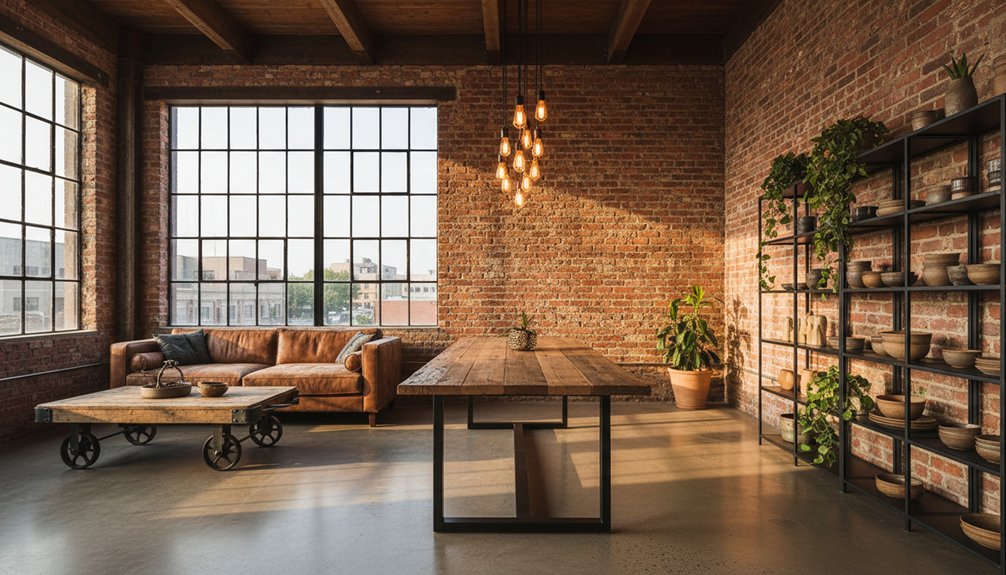
To style industrial furniture effectively, pair metal and wood pieces with warm neutral colors like cream and soft gray. These colors help create a cohesive look that balances the rawness of industrial materials. Next, soften hard surfaces by adding chunky knit throws, wool rugs, and potted plants to introduce texture and comfort.
Arrange larger furniture pieces, such as a heavy metal sofa or wood dining table, opposite lighter items, like a glass coffee table or upholstered chairs, to balance visual weight in the space. Ensure at least 30 inches of space between seating areas for comfortable flow and accessibility.
Incorporate lighting by adding Edison bulb pendant lights and amber-toned floor lamps. These light fixtures create warmth and enhance the industrial aesthetic. Additionally, introduce natural elements such as rattan baskets and leather cushions to add warmth and contrast the metal and wood materials.
The following sections will delve into specific color combinations, layout strategies, and common mistakes to avoid when styling industrial furniture.
Industrial Furniture Color Schemes That Create Visual Balance
Industrial furniture features a raw, utilitarian design that requires careful color selection to maintain a welcoming atmosphere. To achieve visual balance, combine metal and wood tones with warm neutrals such as cream, tan, or soft gray. These warm neutral colors soften the harshness of industrial materials without overshadowing their inherent character.
When selecting your color palette, incorporate muted accent colors like rust orange, deep teal, or olive green. These colors enhance metal finishes and add warmth to your space. You can introduce these accent colors through textiles, artwork, or decorative accessories.
For optimal contrast, pair darker industrial furniture pieces with lighter walls and floors. This approach helps define each element in the space. Alternatively, using darker walls with lighter metal furniture can create depth and interest. This method ensures that your industrial furniture pieces serve as focal points rather than overwhelm the overall design.
Softening Industrial Pieces With Textiles and Natural Materials
Industrial design relies on metal and wood for its core structures. To enhance these stark elements, adding textiles and natural materials transforms spaces into comfortable environments.
Layer soft fabrics throughout your room to balance hard surfaces effectively. For example, drape chunky knit throws over metal chairs to introduce warmth. Place wool rugs under steel coffee tables to create a welcoming atmosphere. Hang linen curtains near exposed brick walls to soften the industrial feel. These textile choices provide warmth and help absorb sound in rooms with hard surfaces.
Soft textiles layered thoughtfully throughout industrial spaces transform cold, hard surfaces into warm, acoustically balanced environments that invite comfort and everyday living.
To further soften industrial furniture, incorporate natural elements. Use rattan baskets for storage to add texture and function. Position potted plants on metal shelving to introduce greenery and life into the space.
Add wooden bowls to steel countertops to create contrast and warmth. Leather cushions on seating and jute rugs on the floor can bridge the gap between raw industrial materials and organic comfort. These additions ensure your space feels inviting rather than cold, making it more livable. Additionally, choosing solid wood furniture can enhance the overall aesthetic while providing durability and timeless appeal.
How to Arrange Industrial Furniture for Flow and Function
Before positioning industrial furniture, map out clear walking paths to ensure comfortable movement without obstacles. Identify main entry and exit points in the room first.
Arrange furniture to create natural corridors that are at least 30 inches wide. Once you have established these pathways, distribute the visual weight of the furniture evenly across the space. Additionally, maintain at least 30 inches of clearance between seating areas to facilitate comfortable movement and enhance overall functionality.
Place heavier items, like metal shelving units and leather sofas, opposite lighter pieces. This balance prevents one side of the room from feeling overly dominant, enhancing both flow and function.
Define Traffic Pathways First
Identifying traffic pathways is crucial for arranging an efficient workspace. Start by mapping out the main traffic flow patterns in your room. Stand at each doorway and observe the natural walking routes to windows, other rooms, and frequently used areas.
Ensure these pathways remain clear and measure at least 30 inches wide to allow comfortable passage.
When planning pathways, consider how industrial furniture will impact movement. Position large items, like metal shelving units and workbenches, against walls to keep walking zones open.
Arrange seating areas away from main routes to avoid congestion. Create direct lines between entrances and exits, allowing individuals to move without navigating around obstacles.
This careful layout ensures your industrial furniture enhances functionality while maintaining smooth circulation throughout your space.
Prioritize clear pathways to facilitate movement and improve the overall efficiency of your room.
Balance Visual Weight Distribution
To create a balanced visual weight distribution in your industrial space, follow these steps. First, assess the pathways you’ve established. Then, distribute your industrial furniture to achieve even visual weight across the room.
Visual weight influences how heavy or substantial each piece of furniture appears, directly impacting the design harmony of your space. Place larger pieces, such as metal shelving units or heavy workbenches, opposite lighter items to ensure no area feels overcrowded.
When evaluating each piece’s impact, consider both its physical size and color darkness.
For example:
- Heavy Visual Weight: Large metal cabinets and dark leather sofas dominate space and should be strategically placed.
- Medium Visual Weight: Wooden chairs and industrial coffee tables provide balance without overwhelming the room.
- Light Visual Weight: Wire baskets and glass display cases add airiness and contrast to heavier elements.
Distributing these items evenly throughout the different zones of your room promotes equilibrium. This strategy prevents any single area from becoming visually dominant while maintaining interest throughout the space.
Remember, achieving balance is crucial. Avoid clustering heavy items in one corner, as this creates a visual imbalance.
Instead, spread out your heavier elements and complement them with medium and light-weight pieces to enhance the overall aesthetic of your industrial design.
Warm Lighting Fixtures That Complement Raw Metal and Wood
The right lighting fixtures enhance industrial furniture by softening hard edges and highlighting raw materials. Edison bulb pendant lights emit a warm glow that accentuates wood grain’s natural colors and adds depth to exposed metal components.
Amber-toned floor lamps fit perfectly in corners and reading nooks, balancing the cold, utilitarian look of steel and iron furniture.
When selecting lighting, focus on how each fixture interacts with your space. For instance, choose Edison bulbs for their warm hue, which complements the texture of wood and metal.
Place amber-toned lamps strategically to create cozy, inviting areas within your industrial design. Avoid harsh, bright lighting, as it can detract from the aesthetic you want to achieve.
In practice, aim for a combination of pendant lights and floor lamps to create layered lighting. This approach not only enhances the materials used in your furniture but also improves the overall ambiance of the space.
Consider the size and height of your fixtures to ensure they fit well within your design scheme and maintain a cohesive look. Additionally, incorporating raw materials like wood and metal in your lighting choices further accentuates the industrial aesthetic.
Edison Bulb Pendant Lights
Edison bulb pendant lights deliver a strong industrial style when placed above dining tables or kitchen islands.
These fixtures use exposed filaments to produce warm, ambient lighting, enhancing the raw aesthetic characteristic of industrial design.
Edison bulb pendant lights pair well with metal and reclaimed wood furniture, adding unique character without cluttering the space.
Key considerations for Edison bulb pendant lights include:
- Selecting fixtures with black metal or brass hardware enhances the authentic industrial appeal.
- Hanging pendants 30-36 inches above surfaces provides optimal lighting and visual balance.
- Mixing multiple pendant heights creates visual interest and depth in the design.
- Choosing dimmable bulbs allows control over ambiance throughout various times of the day.
- Pairing vintage lighting options with exposed cords reinforces the industrial look.
These lighting choices effectively transform ordinary spaces into stylish industrial environments.
Amber-Toned Floor Lamps
Amber-toned floor lamps enhance industrial spaces by providing warmth while preserving their rugged character. Positioning these lamps next to raw wood furniture or exposed brick walls creates a cozy atmosphere that counters the starkness of industrial design. The warm, golden glow of amber lighting softens the appearance of metal finishes, making steel and iron feel less cold and harsh.
Selecting floor lamps with Edison-style bulbs housed in metal cages or mesh shades complements industrial aesthetics effectively. For practical application, place these lamps in reading corners near leather chairs or beside concrete columns to create dramatic focal points. The amber tones balance the harshness of untreated wood and weathered metal, adding depth to the overall design.
When choosing fixtures, consider options with adjustable arms or tripod bases. These designs offer flexibility in positioning while providing ambient illumination. Proper placement of amber-toned floor lamps highlights the textural contrast between smooth metals and rough surfaces, which is essential in industrial design.
Keep in mind that excessive brightness or overly ornate lamps can detract from the intended industrial look; therefore, opt for simplicity and functionality in your selections.
Accent Décor That Enhances Industrial Character Without Clutter
Accent pieces enhance industrial spaces by adding style without overwhelming the raw aesthetic. Carefully chosen items like metal sculptures, vintage factory signs, and black-and-white photography work well with exposed materials.
Focus on minimalist designs to ensure that your furniture remains the main attraction.
Here are key accent pieces that fit in industrial settings:
- Exposed Edison bulbs provide functional lighting while showcasing raw electrical elements. Use simple fixtures to keep the focus on the bulbs.
- Reclaimed wood boxes serve as functional storage solutions, adding character without cluttering the space.
- Metal wire baskets organize items efficiently. Their open design allows for visibility while avoiding visual heaviness.
- Concrete planters introduce greenery, softening the hard surfaces of the industrial environment. Choose plants that thrive indoors to enhance the space further.
- Vintage industrial clocks with exposed metal frames offer a classic touch while remaining functional. Look for designs that display visible mechanisms for added interest.
Selecting these accent pieces carefully increases the authenticity of your industrial space while avoiding visual chaos.
Each item should contribute to the overall industrial character without competing with the furniture.
Blending Industrial Furniture With Mid-Century and Scandinavian Styles
Industrial furniture uses raw materials and exposed metal, while mid-century and Scandinavian styles introduce warmth through organic shapes and natural wood tones.
To achieve visual balance, pair a steel-framed coffee table with a teak sideboard or walnut dining chairs. This combination prevents spaces from feeling cold or sterile and enhances overall comfort.
Mixing textures is essential for creating an inviting atmosphere. Combine smooth leather seating with rough concrete surfaces and soft wool throws.
Incorporate mid-century ceramic pieces or Scandinavian glassware into your industrial shelving units to add character and interest.
Color harmony is crucial in blending these styles. Use a neutral palette of whites, grays, and blacks as a foundation, and introduce warm wood tones as accent pieces.
Consider muted colors like sage green or burnt orange in textiles and accessories to add depth without overwhelming the space. Keep patterns minimal and geometric to maintain the clean aesthetic shared by industrial, mid-century, and Scandinavian styles.
Avoid overcrowding the space with too many contrasting elements, which can create visual chaos.
Focus on a few key pieces from each style to maintain coherence and support the overall design.
Industrial Furniture Styling Mistakes That Ruin the Look
Industrial furniture can enhance your space, but common mistakes can quickly compromise its aesthetic appeal. Here are key mistakes to avoid when styling with industrial furniture.
1. Proportions Matter: Choosing industrial furniture that doesn’t match your room size creates an unbalanced look.
For instance, a large metal dining table in a small kitchen may overwhelm the space. Always measure dimensions and select pieces that fit your area.
2. Finish Cohesion: Mixing multiple industrial finishes without a clear plan can make your space feel chaotic.
For example, combining a rustic steel table with a polished chrome chair can create visual discord. Stick to two or three finishes that complement each other for a unified appearance.
3. Avoid Overcrowding: Filling a room with heavy industrial pieces can overwhelm the eye and reduce functionality.
For instance, placing a bulky metal sofa alongside multiple metal shelves may clutter the space. Limit the number of large pieces to maintain an open and inviting environment.
4. Incorporate Soft Elements: Neglecting softer elements, such as textiles and plants, can make industrial spaces feel cold and uninviting.
Adding cushions, throws, or potted plants can soften the harshness of metal and enhance comfort. Aim for a balance of hard and soft materials.
5. Lighting Choices: Poor lighting that doesn’t complement metal finishes can diminish the visual impact of your furniture.
For instance, using harsh fluorescent lights can create an unflattering glare on metal surfaces. Opt for warm, ambient lighting to highlight the beauty of industrial materials.
By focusing on these areas, you can achieve a cohesive and inviting industrial design.
Balancing raw industrial elements with warmer materials ensures your space remains functional and aesthetically pleasing.