
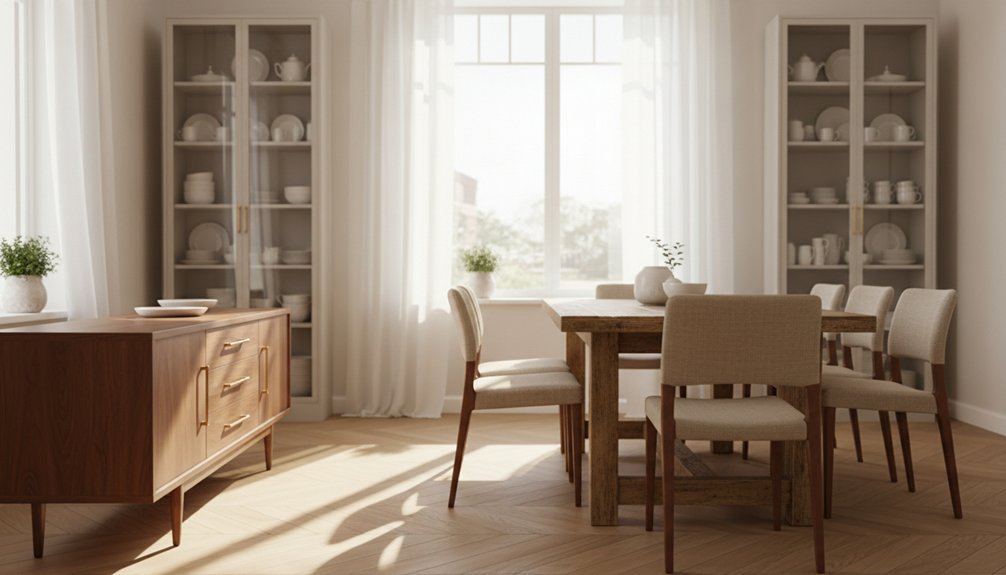
When selecting dining room storage solutions, you must decide between cabinets, sideboards, and display units based on your storage needs and aesthetic preferences. Cabinets provide enclosed storage to keep items out of sight, which works well for a clean, minimalist look. Sideboards offer both hidden storage and a serving surface, making them ideal for smaller dining spaces where multifunctionality is key. Display units allow you to showcase dishware and collectibles behind glass doors, adding visual interest to your dining area.
Measure your available space to ensure that the furniture fits comfortably. For instance, ensure you have at least 36 inches of clearance for walkways around the dining area. Match the chosen storage solution’s style with your dining room decor to create a cohesive look. For example, if your dining room features modern decor, opt for sleek, contemporary cabinets. In contrast, a rustic dining room might benefit from a vintage-style sideboard.
Consider limitations such as the size of your dining room and the amount of storage you need. For small spaces, a sideboard might be the best option as it combines storage with a surface for serving. If you have a larger collection of dishware or decorative items, a display unit could be more suitable.
In summary, cabinets hide clutter, sideboards provide dual functionality, and display units elevate your decor by showcasing items. Choose based on your storage needs and the visual impact you want to create in your dining room.
Cabinets vs Sideboards vs Display Units: Which Fits Your Needs?
Choosing the right storage piece for your dining room requires understanding your specific needs for both function and style.
Cabinets provide enclosed storage that hides clutter and protects dishware from dust. If you value a clean, minimalist look, a cabinet is a solid choice.
Sideboards offer versatility; they combine concealed storage with a flat surface for serving dishes or displaying décor. Their low profile makes them suitable for smaller spaces.
Display units are designed to showcase your favorite items through glass doors while keeping them protected. If you have collections you want to keep visible, a display unit fits well.
To make an informed decision, first assess your storage needs. Determine whether you need to hide items or showcase them.
Next, measure your space carefully to ensure the selected piece fits comfortably.
Finally, choose the storage option that meets your practical requirements while aligning with your aesthetic preferences. In addition, consider the clearance for walkways to ensure smooth movement around your dining area.
How to Choose Dining Room Storage for Small vs Large Spaces
When selecting storage for your dining room, consider the size of your space. The dimensions of your area dictate the type of storage solutions you can effectively implement.
For small spaces**, opt for slim sideboards** or corner cabinets. These designs maximize vertical storage while maintaining open floor space.
Wall-mounted display units provide efficient storage without cluttering surfaces. Choose multifunctional pieces, such as tables with integrated drawers or benches with hidden compartments, to enhance functionality without sacrificing space. Additionally, selecting pieces made from solid wood materials ensures durability and timeless appeal in your dining room.
Maximize your dining room’s potential by choosing multifunctional furniture that offers hidden storage while keeping your space open and uncluttered.
For large spaces****, you have greater flexibility in your storage choices. You can incorporate larger hutches, expansive buffets, or multiple storage units without overcrowding the room.
Create dedicated zones by positioning a sideboard for serving and separate display cabinets for showcasing decorative items. Use statement pieces that combine ample storage with architectural interest to elevate your dining area and enhance its functionality.
Why Solid Wood Dining Storage Furniture Outlasts Alternatives
When you invest in dining room storage, choose solid wood furniture over alternatives like particleboard or MDF. Solid wood offers superior strength, which resists warping, cracking, and structural failure. This durability allows solid wood furniture to withstand decades of daily use without losing its stability or appearance.
In contrast, composite materials tend to degrade over time. By selecting solid wood storage, you ensure a longer lifespan for your furniture, making it a more cost-effective choice in the long run.
Solid wood furniture consistently maintains its quality, while alternatives often fall short. For instance, particleboard can sag under weight, and MDF can chip or peel. Solid wood delivers reliability that you can trust for your dining room needs.
It’s worth noting that solid wood can be refinished, enhancing its lifespan even further, whereas manufactured options typically offer no such possibility. This makes solid wood the clear choice for anyone looking to invest in durable and attractive dining room storage.
Superior Durability Over Time
Solid wood dining storage pieces offer superior durability compared to particleboard and MDF furniture. Solid wood furniture can last for decades, while budget alternatives often need replacement every five years.
Solid wood resists daily wear, warping, and maintains structural integrity under heavy loads that would damage composite materials. You can easily sand out scratches and dents on solid wood, allowing for refinishing, which is impossible with particleboard or MDF.
The natural strength of wood fibers supports heavy dinnerware collections without sagging shelves. To maximize the longevity of your solid wood furniture, follow basic maintenance tips. Dust regularly, avoid excessive moisture, and apply wood polish once a year.
Natural Strength And Stability
Solid wood offers unmatched stability that engineered materials cannot replicate. The unique molecular structure of solid wood allows its fibers to interlock naturally. This interlocking provides structural integrity that resists warping and twisting under typical conditions. As a result, your storage furniture made from solid wood maintains its shape for decades.
| Feature | Solid Wood | Particleboard |
|---|---|---|
| Load Capacity | Solid wood supports heavy dishes and items effectively | Particleboard has limited weight tolerance |
| Moisture Response | Solid wood expands and contracts predictably with humidity changes | Particleboard swells and deteriorates in moisture |
| Joint Strength | Solid wood accepts screws firmly, ensuring durability | Particleboard strips easily over time, leading to weak joints |
| Impact Resistance | Solid wood withstands daily bumps and impacts | Particleboard chips and crumbles readily under stress |
| Lifespan | Solid wood typically lasts 50+ years with proper care | Particleboard has a maximum lifespan of 5-15 years |
When you load shelves with china or glassware, solid wood’s density distributes weight evenly. This distribution prevents sagging, a common issue with cheaper alternatives like particleboard. The structural integrity of solid wood protects both your investment and your belongings effectively.
In manufacturing, we prioritize solid wood for its superior performance in furniture. The predictable moisture response of solid wood ensures that it remains stable in various environments, unlike particleboard, which can warp and lose integrity. We also rely on the joint strength of solid wood, as it holds screws firmly, providing long-lasting durability that particleboard cannot match.
Matching Cabinet and Sideboard Styles to Your Dining Room Decor
Creating harmony between your storage pieces and dining room décor is crucial for a cohesive look. Start by identifying your room’s design style, such as modern, traditional, farmhouse, or industrial. Your cabinet and sideboard should match this style through cohesive colors and materials.
For instance, if you have a contemporary dining table with clean lines, select storage pieces that also feature sleek profiles. In a traditional setting, opt for cabinets with ornate hardware and carved details to complement the overall aesthetic.
Match wood tones or finishes to enhance style consistency. A rustic oak dining table pairs well with a weathered wood sideboard, while glossy white furniture fits seamlessly into minimalist designs.
Ensure your selected storage pieces reflect key architectural features in the room, such as molding styles, door frames, and window treatments. This attention to detail helps achieve a unified look in your dining space.
Avoid mismatched styles, as they can disrupt the flow of your décor. For example, a contemporary cabinet can clash with a vintage dining table, creating visual discord.
Focus on creating a balanced environment by keeping proportions in mind; a large dining table may require a more substantial sideboard for visual balance. Additionally, understanding traditional styles can guide your choices in selecting pieces that enhance the aesthetic appeal of your dining area.
In short, prioritize matching your cabinet and sideboard to your dining room’s overall design for an intentional and appealing space.
Organizing Serveware, Linens, and Barware by Storage Type
Once you select storage pieces that fit your dining room decor, you must organize serveware, linens, and barware efficiently. Focus on cabinets, sideboards, and display units since each requires different organization strategies to maximize space and accessibility.
Organize Serveware in Cabinets
Start by placing larger serveware, such as platters and bowls, on the bottom shelves of your cabinets.
Store smaller items, like serving utensils and dishes, on higher shelves for easy access. Use adjustable shelves to tailor the space according to the size of your serveware.
Avoid overcrowding by limiting each shelf to a specific category of serveware, which helps you locate items quickly.
Arrange Linens in Sideboards
Store table linens, such as tablecloths and napkins, in sideboards.
Fold linens neatly and place them in designated drawers or compartments. Use dividers to keep different types of linens separated.
Consider labeling each section to ensure you can find specific items without hassle. Avoid stacking too many linens in one spot to prevent wrinkling and damage.
Display Barware in Display Units
Showcase your barware in display units for easy access and visual appeal.
Arrange glassware by type, such as wine glasses, cocktail glasses, and tumblers, to streamline retrieval.
Keep bar tools, like shakers and stirrers, in a dedicated section. Ensure that each item is visible and easily reachable to facilitate quick service during gatherings.
Avoid placing barware too high or too low, as this can lead to breakage or difficulty in accessing items.
Cabinet Storage Best Practices
Maximizing your dining room’s potential involves not only selecting the right furniture but also efficiently organizing cabinet contents.
Organizing your cabinets enhances their functionality. Follow these cabinet organization strategies to ensure long-term efficiency.
Cabinet Organization Steps:
- Stack plates vertically with dividers. This action prevents chips and maximizes vertical space in your cabinets.
- Store glassware upside down on lined shelves. This method protects glass rims from damage and prevents dust from settling inside.
- Use drawer inserts for flatware and serving utensils. This keeps every piece separated and easily accessible.
Implementing these storage solutions protects your dining essentials while keeping them organized.
Clean your shelves every three months and adjust the arrangement as your collection grows. Proper organization converts cramped cabinets into efficient storage spaces, making entertaining easier.
Sideboard Organization Ideas
Sideboards provide three main storage areas tailored for dining essentials based on size and usage frequency. Deep drawers effectively store table linens, napkins, and placemats, ensuring they remain wrinkle-free and easily accessible.
The cabinet section accommodates larger items like serving platters, bowls, and seasonal dishware that aren’t used daily. Open shelving or glass-front compartments allow for displaying barware, wine glasses, and decorative pieces while keeping them dust-free.
When organizing a sideboard, align your storage method with the sideboard’s materials and construction. For instance, wood sideboards with adjustable shelves enable customization for taller bottles or stacked plates.
Different styles of sideboards offer distinct configurations; traditional designs typically include more closed storage, while modern pieces often feature open sections. To maximize efficiency, group similar items together and position frequently used items in accessible drawers or shelves.
Some limitations to consider include the weight capacity of drawers and shelves. Avoid overloading any section to maintain structural integrity.
For practical application, assess the dimensions of your sideboard and the size of your dining essentials to determine the most effective layout. Organizing in this way enhances both functionality and aesthetics in your dining area.
Display Unit Styling Tips
Display units require careful organization because of their transparent or open sections. You need to arrange items in a way that balances visual appeal and functionality.
Choose display unit materials based on the weight of the items you plan to showcase: use glass shelves for lighter items and wooden units for heavier serveware.
Here are specific strategies to style your display unit effectively:
- Group similar items together: Place white dinner plates on one shelf, organize crystal glasses on another, and allocate a distinct area for serving platters. This grouping helps maintain order and makes it easy to locate items.
- Apply color coordination principles: Use neutral pieces as your base layer. Then, introduce colorful decorative bowls or patterned linens to add visual interest. This method creates a cohesive look while allowing for standout pieces.
- Vary heights and depths: Position taller items like decanters behind shorter pieces. This arrangement creates dimension and visual interest, making the display more engaging.
Displaying China and Glassware Without Cluttering Shelves
Displaying china and glassware effectively requires careful planning to avoid clutter. Overcrowded shelves can obscure the beauty of your collection. To maintain visual clarity, group similar items together. Arrange dinner plates upright, stack bowls in descending sizes, and cluster glasses by type. This organization method enhances visibility and showcases each piece.
Leave generous space between groupings on your shelves. For optimal display, position your most attractive pieces at eye level. Reserve upper and lower shelves for less decorative items. You can rotate your collection periodically, storing some pieces while displaying others to keep the arrangement fresh.
Utilize shelf risers to add depth without overcrowding. Limit each shelf to one or two groupings for a clean, curated look. This approach ensures each item contributes to the overall aesthetic without overwhelming the viewer.
Avoid mixing too many styles or types on a single shelf, as this can create visual confusion. By following these guidelines, you can display your china and glassware beautifully and maintain an organized space.
Arranging Multiple Storage Pieces in Open vs Closed Floor Plans
When you arrange multiple storage pieces in your dining room, consider your home’s layout. Open floor plans require attention to sightlines from the kitchen and living room. Position your storage units to define the dining area while ensuring smooth traffic flow between spaces.
In closed layouts, you can maximize storage by placing pieces against walls without worrying about visibility from adjacent rooms.
Here are practical arrangement strategies:
- Anchor pieces: Place your largest cabinet or sideboard against the longest wall to create a visual focal point. This establishes a clear center for the dining space.
- Balance: Position matching display units on opposite sides of the room. This symmetry enhances the room’s visual appeal and creates a cohesive look.
- Clearance: Maintain a minimum of 36 to 48 inches between furniture and the dining table. This spacing provides comfortable movement for guests and enhances accessibility.
Regardless of your floor plan, ensure that traffic flow remains unobstructed. Proper arrangement of storage pieces can improve both functionality and aesthetics in your dining area.
Protecting Wood Dining Furniture From Scratches and Water Damage
Wood dining furniture requires consistent protection to preserve its appearance and durability. To prevent scratches and water damage, use placemats, coasters, and trivets under all dishes, glasses, and hot items. These items shield surfaces from heat rings and water marks effectively.
Protect your wood dining table’s beauty with simple daily habits: always use placemats, coasters, and trivets to prevent damage.
Apply furniture wax or polish every three months to create a moisture-resistant barrier and to minimize minor scratches.
When spills happen, wipe them immediately with a soft, dry cloth; this action prevents liquid from penetrating the wood. For regular maintenance, dust the furniture weekly using microfiber cloths. Avoid using harsh chemical cleaners, as they can strip the protective finishes.
Additionally, place felt pads under decorative items and serving pieces to prevent scratches during daily use.