

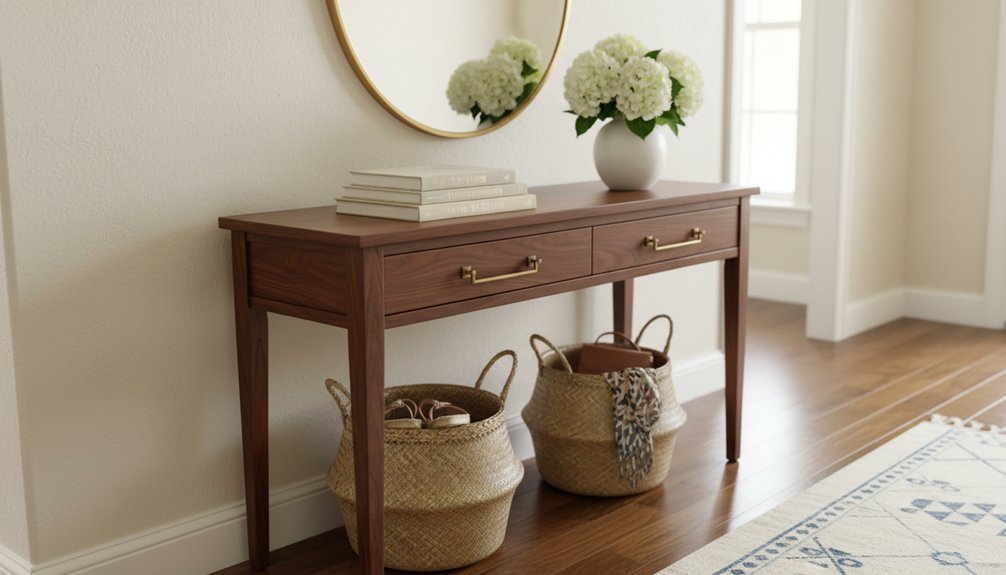
Your hallway console table sets the tone for your home within the first fifteen seconds of a guest’s arrival. Select a slim console table that measures 20-30 centimeters in depth to fit narrow European hallways. Ensure the table provides at least 36 inches of clearance to allow for smooth movement. Prioritize tables with built-in drawers to store keys and mail, while keeping 40% of the surface area clear to prevent visual clutter. Solid wood and metal frame constructions deliver greater durability in high-traffic areas than particleboard options.
In the following sections, I will cover precise measurements for your space, effective storage configurations for daily items, and styling techniques to enhance visual appeal.
Why Hallway Console Tables Deserve More Attention Than You Think
Hallway console tables play a crucial role in home organization and aesthetics. These tables serve as the first piece of furniture guests encounter, making them essential for creating a positive first impression. Hallway console tables provide practical storage options for keys, mail, and other daily necessities while also enhancing the overall visual appeal of your entryway.
These versatile tables help organize entryways by creating a designated drop zone. This dedicated space reduces clutter, preventing items from spreading throughout the home. Furthermore, hallway console tables can transform awkward or narrow hallways into functional and welcoming areas.
Additionally, hallway console tables offer opportunities for vertical displays. Homeowners can showcase mirrors, artwork, or decorative items above them, adding personality and style to the space. Seasonal changes can be easily implemented by swapping out decorations, allowing homeowners to refresh the entrance without significant renovations.
The combination of functionality and style in hallway console tables makes them deserving of attention. It’s essential to consider their role in maintaining organization and enhancing the visual appeal of your home. Moreover, selecting proper sizing for your space ensures that the table complements the layout without obstructing movement.
Narrow Console Tables for Tight European Hallways
European homes often feature narrow hallways, typically measuring less than 90 centimeters in width. Standard console tables don’t work well in these spaces due to their larger dimensions. Instead, homeowners need space-saving console tables that provide functionality without taking up too much room.
Narrow European hallways under 90 centimeters wide require slim console tables that maximize functionality while minimizing spatial footprint.
Look for tables with depths ranging from 20 to 30 centimeters. These slim profiles allow for essential functions like holding keys and mail without obstructing traffic flow.
Wall-mounted console tables serve as another effective solution for tight entryways. These floating designs eliminate the need for floor space, which helps create a more open feel in the hallway. You can install wall-mounted tables at custom heights to match your specific needs.
Many of these models come with hidden compartments or slim drawers that offer additional storage options. Choose materials like tempered glass or light-colored wood to further enhance the sense of spaciousness in narrow hallways. Incorporating solid wood furniture can also add durability and character to your entryway decor.
When selecting hallway furniture, consider the limitations of your space. For instance, a table that’s too deep will block movement, while one that’s too wide won’t fit through the corridor.
Focus on functionality by ensuring that every piece of furniture serves a clear purpose without crowding the area. By prioritizing these factors, homeowners can effectively utilize their hallway space.
Console Table Dimensions: Measuring Width, Depth and Clearance
Before purchasing a console table for your hallway, measure the available space accurately to ensure a proper fit. Console tables typically measure between 30 to 60 inches in width, 10 to 18 inches in depth, and 28 to 32 inches in height.
Measure your hallway’s width and determine the necessary clearance for comfortable traffic flow, which should generally be at least 36 inches. This clearance allows people to move past the console table without obstruction, maintaining a smooth flow in the hallway.
To ensure a successful fit, follow these steps: First, measure the width of your hallway with a tape measure. Next, calculate the space needed for clearance around the console table.
Keep in mind that narrow hallways may require smaller tables to avoid crowding the space. Finally, confirm that the height of the console table aligns with other furniture in the area to create a cohesive look.
Incorporating different styles, such as traditional styles, can enhance the console table’s visual appeal and functionality.
Avoid purchasing a console table that exceeds the measurements you’ve taken. A table that’s too wide or deep can block movement, while one that’s too tall may feel overpowering in a smaller space.
Stick to the standard dimensions and prioritize functionality over aesthetics to achieve a practical setup in your hallway.
Standard Console Table Sizes
Console tables come in three standard dimensions that determine their fit and functionality in your hallway. Understanding these measurements helps you select the right console table for your home.
Console table height**** typically ranges from 28 to 32 inches. This height matches standard sofa heights, allowing you to easily place lamps, decor, or keys on top without straining.
Console table width** varies significantly, with compact models** measuring 24 inches and larger pieces reaching up to 72 inches. However, the most common widths are between 48 and 60 inches, which work well in average hallways.
Console table depth** generally measures between 12 to 18 inches. Narrower depths are ideal for tight spaces**, while deeper tables provide more storage and display area.
Keep in mind that deeper consoles require wider hallways to maintain a comfortable walking clearance.
Using these standard sizes as a guide helps you choose a console table that fits your specific space and meets your functional needs.
Measuring Your Hallway Space
To ensure your console table fits perfectly in your hallway, start by measuring your space accurately. First, measure the total width of your hallway from wall to wall.
Next, measure the depth from the wall where you plan to place the console table to the opposite side. Maintain a minimum clearance of 36 inches for comfortable passage, especially in narrow areas. This clearance is essential for optimizing space and ensuring easy movement.
Then, measure the length of the wall section where the console table will sit. Identify potential obstacles such as door swings, light switches, or heating vents that could affect placement.
Record these measurements clearly and bring them when shopping. Accurate dimensions help you avoid purchasing a console table that’s either too large or too small for your hallway.
Hallway Console Tables With Built-In Storage Solutions
Hallway console tables with built-in storage solutions effectively combine style and functionality. These tables offer drawers, shelves, and cabinets that help you organize everyday items and reduce clutter in your entryway. Use drawers to store small items like keys and mail, while larger compartments can accommodate bags and umbrellas.
When choosing a console table, assess your storage requirements and the layout of your hallway. A table with excessive compartments may overwhelm a narrow space, while minimal storage options might leave you disorganized. Select closed storage solutions for a clean look, or opt for open shelving to showcase decorative pieces. Tailor your choice to fit both your storage needs and the dimensions of your entryway for optimal use.
Take measurements of your available space before purchasing. Ensure that the console table you choose fits comfortably without obstructing foot traffic. Consider the weight capacity of shelves and drawers, especially if you plan to store heavier items.
Best Materials for High-Traffic Hallway Console Tables
When you choose a console table for your high-traffic hallway, prioritize materials that combine durability with aesthetic appeal. High-traffic areas experience constant use, so select materials that resist scratches and dents. For example, hardwoods like oak or maple withstand wear and tear better than softer woods.
Metal frames provide strength and stability while offering a modern look, which can complement various decor styles.
Consider how much maintenance each material requires. For instance, glass surfaces may need frequent cleaning to avoid smudges, while laminate offers easy upkeep and resists stains. Evaluate your cleaning routine and select a material that aligns with your lifestyle.
Be aware of limitations. Avoid materials like particleboard in high-traffic areas, as they can chip and break under pressure. Instead, focus on solid wood, metal, or quality laminate that can handle daily use without compromising appearance.
Durability Versus Aesthetic Appeal
When you choose a console table for your hallway, focus on two main factors: durability and aesthetic appeal. The materials you select will determine how well the table can endure daily use and how it complements your home’s design.
Solid wood provides high durability and fits both traditional and modern styles. However, it typically comes with a higher price tag. Metal frames offer very high durability, making them ideal for high-traffic areas, but they often convey a more industrial look that may not suit every décor. Glass options provide medium durability and fit well in modern or minimalist settings, but they require careful handling to avoid breakage. Engineered wood offers a balance of affordability and moderate durability, making it a versatile choice for various styles.
Consider the maintenance needs of each material. Solid wood requires regular care to keep its finish intact, while metal frames generally resist wear and scratches. Glass surfaces can show smudges and require frequent cleaning, whereas engineered wood is designed to resist stains and scratches, simplifying upkeep.
Before making a decision, assess your hallway’s traffic patterns and your design preferences. A table that withstands daily use while enhancing your décor will serve your home best.
Maintenance and Cleaning Considerations
Each material used in hallway console tables requires specific care to preserve its appearance and functionality.
Wood Console Tables:
Wood console tables require regular dusting with a soft cloth to remove dust. Additionally, polish the surface every few months to maintain the finish. When spills occur, wipe them up immediately using a dry cloth to prevent water damage and staining.
Metal Surfaces:
Metal surfaces are typically low-maintenance. Wipe them down periodically with a damp cloth to remove fingerprints and dust. Avoid abrasive cleaners that could scratch the surface.
Glass Tops:
Glass tops show fingerprints and smudges easily. Clean them frequently with a glass cleaner and a microfiber cloth to maintain clarity. If you notice streaks, use a dedicated glass cleaning solution to ensure a spotless finish.
Consistent Maintenance Routines:
Establishing a maintenance routine helps extend the lifespan of your console table. For high-traffic areas, choose materials that resist wear. Regular cleaning using tips specific to each material prevents damage from harsh chemicals or abrasive tools.
Testing Cleaning Products:
Always test any cleaning products on inconspicuous areas first to ensure they won’t harm the finish. This precaution helps avoid unexpected damage.
Regular maintenance keeps your hallway furniture looking presentable and functioning well. By following these specific care guidelines, you can ensure that your console table remains a stylish and durable addition to your hallway.
Styling Your Console Table Without Overcrowding the Space
Console tables often sit in narrow hallways or entryways, making them prone to clutter when you add decorative items. To style these tables effectively, follow a few straightforward tips.
Start by grouping decorative objects in sets of three. Use one tall item, such as a lamp or a vase, paired with a medium-height piece and a low element. This method creates balance and depth without overcrowding the space.
If you prefer a minimalist approach, select one striking piece with clean lines to serve as the focal point. Ensure you leave at least 40% of the table’s surface clear to maintain an open and uncluttered look.
For smaller items, use decorative boxes or trays to store essentials. This strategy reduces visual chaos while keeping necessary items easily accessible.
Avoid overcrowding by adhering to these principles, ensuring your console table remains functional and visually appealing.
Console Table Lighting: Lamps vs. Sconces for Small Hallways
Lighting choices significantly impact the usability of small hallways, especially when placing a console table. You need to choose between table lamps and wall-mounted sconces. Each option has specific benefits based on the dimensions and layout of your hallway.
Table Lamps vs. Wall Sconces
| Feature | Table Lamps | Wall Sconces |
|---|---|---|
| Space Usage | Table lamps occupy the surface of the console table. | Wall sconces free up space on the table. |
| Installation | Table lamps require a simple plug-and-play setup. | Wall sconces involve electrical work for installation. |
| Flexibility | Table lamps are easy to move or replace when needed. | Wall sconces have fixed placements and cannot be easily relocated. |
| Style Options | A wide variety of table lamp styles are available. | Wall sconces offer limited design options compared to lamps. |
| Cost | Table lamps are generally more affordable than sconces. | Wall sconces incur higher installation costs due to electrical work. |
When selecting lighting, consider the width of your hallway. Narrow hallways benefit from sconces mounted 60-66 inches above the floor to avoid obstruction. Wider hallways can accommodate table lamps without crowding the space.
Mirrors That Make Narrow Hallways Feel Twice as Wide
Placing a mirror above your console table in a narrow hallway effectively creates the illusion of doubled space and increased depth. The mirror reflects light, enhancing the area and making cramped quarters feel more open and welcoming.
Select mirror styles that complement your décor. Large rectangular mirrors suit modern spaces, while ornate frames fit traditional homes. Frameless mirrors provide a clean, contemporary look that doesn’t overwhelm small areas.
Position the mirror at eye level, approximately 6 to 8 inches above your console table. This height maximizes the reflective effect. Choose mirrors with beveled edges to add dimension, or opt for rounded shapes to soften sharp corners.
Avoid mirrors that exceed the width of your console table, as wider mirrors can create visual imbalance and detract from the spacious effect you want to achieve.
Modern vs. Traditional Console Tables for Period Hallways
Period hallways require careful selection of console tables to maintain architectural integrity. Traditional console tables made from ornate carved wood, featuring curved legs and decorative details, suit Victorian and Georgian homes.
Ornate wooden console tables with curved legs and carved details preserve the authentic character of Victorian and Georgian period hallways.
These traditional pieces enhance original moldings and period features effectively.
To incorporate modern designs, select contemporary console tables with clean lines made from materials like glass or metal. Ensure these modern tables proportionally align with existing architectural elements to avoid visual discord.
Match wood tones, finish quality, and overall scale to create a harmonious balance between traditional and modern styles. Avoid pieces that clash with your hallway’s character, as this can detract from the space’s overall aesthetic.
Focus on maintaining the historical essence of your hallway while introducing modern elements thoughtfully.