
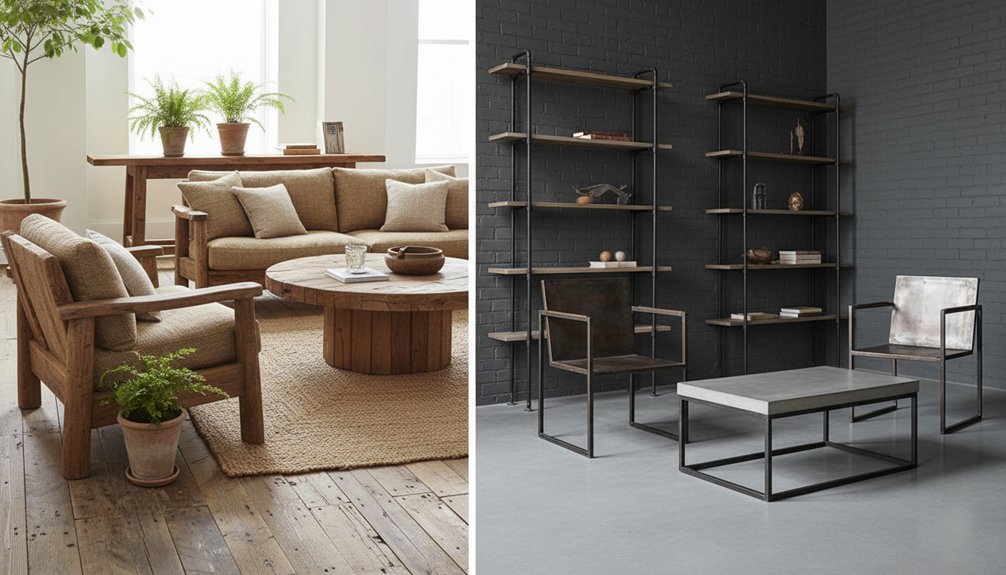
Rustic furniture uses natural wood grains and warm honey browns to create cozy spaces suitable for cottages and farmhouses. This style features handcrafted curves that add character and charm to each piece. Over time, rustic furniture develops warm amber patinas, enhancing its appearance and value.
Industrial furniture, on the other hand, incorporates exposed metal frames and raw steel in cool gray tones, delivering an urban warehouse look that fits well in lofts and modern apartments. This style showcases distinctive oxidation patterns, which contribute to its rugged aesthetic.
Both rustic and industrial furniture provide strong long-term value and durability. However, they require different maintenance approaches. Rustic furniture benefits from regular oiling to preserve its wood, while industrial furniture may need periodic cleaning to maintain its metal surfaces.
Choosing between rustic and industrial furniture depends on your personal style and the atmosphere you want to create in your space. You can even combine elements from both styles to achieve a balanced, unique environment that reflects your taste.
Rustic vs Industrial Furniture: Key Visual Differences
Texture defines the differences between rustic and industrial furniture styles. Rustic furniture features natural wood grains, knots, and weathered finishes that highlight organic imperfections. You’ll see warm earthy tones, such as honey browns and golden ambers, which create a cozy atmosphere in your space.
In contrast, industrial furniture utilizes exposed metal frames, concrete surfaces, and raw materials. The industrial aesthetic includes cool grays, blacks, and metallic finishes that convey a modern, urban vibe.
Rustic designs exhibit curved lines and handcrafted details. Industrial pieces prioritize geometric shapes and mechanical components. For example, rustic furniture often incorporates vintage hardware and distressed paint, while industrial furniture showcases welded joints, visible bolts, and factory-inspired elements.
These visual characteristics make it easy to distinguish between rustic and industrial styles. Additionally, understanding the distinct wood types used in each style can greatly influence your overall design choice.
When selecting furniture for your space, consider the textures and colors that align with your design goals. Rustic furniture provides warmth and a sense of nature, whereas industrial furniture offers a sleek, modern look.
Understanding these differences can help you choose the right style for your needs.
Wood Types and Metal Materials That Define Each Style
Rustic furniture consists of pieces made from reclaimed barn wood, pine, cedar, and oak. These materials highlight natural aging and character marks, such as knots and grain variations. Craftsmen select these woods to emphasize unique weathered textures that can’t be duplicated.
Industrial furniture, in contrast, typically incorporates darker woods like walnut and mahogany. These selections feature minimal finishing to preserve the wood’s raw appeal.
Metal components play an essential role in defining these furniture styles. Rustic furniture often includes wrought iron, copper, or bronze, which provides warm, antiqued patinas that enhance the rustic aesthetic.
Industrial furniture utilizes raw steel, iron pipes, and aluminum, showcasing exposed welds and minimal metal finishes. Many industrial pieces feature galvanized or powder-coated surfaces that retain an unpolished, utilitarian look.
Each material choice is critical to the furniture’s overall character. Rustic furniture focuses on organic materials that tell a story of the past, while industrial furniture prioritizes a modern, functional approach.
Both styles reflect the craftsmanship behind their design, making these material selections not just aesthetic but fundamental to each style’s identity.
Distressed Wood vs Raw Metal: How Finishes Differ
When you compare rustic furniture made from distressed wood to industrial furniture made from raw metal, you’ll find that the finishes significantly affect both aesthetics and touch. Rustic wood features rough, weathered textures that provide a warm, organic feel. You can expect the surface to change over time, as rustic wood deepens in color and the grain patterns become more pronounced.
In contrast, industrial metal features smooth, cool surfaces that are intentionally left unfinished. Over time, raw metal develops a natural patina, which adds depth and visual interest.
Rustic wood requires careful sourcing and finishing techniques to enhance its unique characteristics. Craftsmen often select reclaimed wood for its inherent beauty and history. They then treat the wood with oils or waxes to protect and highlight its texture. This process ensures that each piece maintains its rustic charm while becoming more visually appealing with age.
On the other hand, industrial metal pieces are typically made from steel or aluminum. Manufacturers often leave these surfaces raw to allow for the development of a patina. This untreated approach not only emphasizes the metal’s inherent qualities but also gives each piece a distinctive look as it ages.
Regular maintenance involves cleaning the metal surfaces to prevent rust while allowing the patina to form naturally. Additionally, it’s essential to consider accurate room dimensions when integrating these pieces into your home to ensure they fit harmoniously within your space.
In summary, when choosing between rustic wood and raw metal furniture, consider how each finish impacts not just the look but also the tactile experience. Rustic wood offers warmth and organic textures, while raw metal provides a smooth, cool surface that evolves uniquely over time.
Each style has its own character that develops through use, making them suitable for different tastes and settings.
Texture and Tactile Qualities
When you touch rustic furniture, you feel the worn grooves and weathered surfaces that showcase its age and character. Rustic furniture features smooth, time-worn wood, allowing you to feel the natural grain patterns under your fingers. The surface includes subtle bumps and valleys from years of use, adding to its tactile appeal.
In contrast, industrial furniture provides a different tactile experience. You encounter cool, smooth metal surfaces and rough, untreated steel with visible weld marks. The mix of materials creates a sensory contrast where metal feels cold and rigid, while reclaimed wood elements contribute warmth.
Industrial furniture often showcases exposed hardware, which gives you a direct connection to the furniture’s construction.
Both styles have unique tactile qualities. Rustic furniture emphasizes an organic feel, while industrial furniture highlights a mechanical aesthetic. Understanding these differences helps you make informed decisions when choosing furniture based on texture and tactile experience.
Aging and Patina Development
The aging process of rustic and industrial furniture significantly enhances their character. Rustic furniture develops a warm amber patina as distressed wood ages through light exposure and handling. This patina deepens the wood’s color and smooths rough edges over time. For example, a pine table may transition from a light honey color to a deep, rich amber within a few years of regular use.
Industrial furniture ages differently. Raw metal surfaces develop dark oxidation or rust patterns that create unique textures. A metal shelf, for instance, may start with a polished surface and evolve into a piece with intricate rust spots and varying textures after prolonged exposure to air and moisture.
| Feature | Rustic Furniture | Industrial Furniture |
|---|---|---|
| Patina Type | Warm amber tones develop as wood ages | Dark oxidation or rust forms on metal surfaces |
| Surface Changes | Wood softens and smooths with use | Metal develops varied textures due to oxidation |
| Maintenance Needs | Requires occasional oiling or waxing to maintain appearance | May need a protective coating to prevent excessive rust |
Understanding these aging characteristics helps you anticipate how each piece will transform in your home. Choose rustic furniture if you want warm tones that develop over time. Opt for industrial furniture if you prefer the bold, textured look of oxidized metal. Each type requires specific care to ensure they age gracefully and maintain their appeal.
Rustic vs Industrial Furniture: Price and Long-Term Value
Understanding the financial aspects of furniture shopping helps you make informed decisions for your home and budget.
When comparing prices between rustic and industrial furniture, you’ll notice both styles fall within similar price ranges. Rustic furniture often has higher initial costs due to its solid wood construction and handcrafted details. In contrast, industrial furniture typically uses metal and reclaimed materials, which can reduce initial costs.
Both rustic and industrial furniture offer long-term value. Rustic furniture lasts for decades when properly maintained, thanks to its durable materials. Industrial furniture also withstands wear and damage due to its robust metal frames.
You can refinish or repurpose both styles as design trends evolve, allowing for continued use over time. Additionally, understanding major design families can help you appreciate the unique characteristics that contribute to each style’s value.
Resale value remains strong for both rustic and industrial furniture, particularly for authentic vintage pieces or high-quality reproductions.
Therefore, when selecting furniture, focus on your aesthetic preference rather than just price. Prioritize styles that resonate with you, knowing both options can provide lasting value.
Where Each Style Fits: Matching Furniture to Interior Design
To determine which furniture style fits your living space, assess your home’s architectural features and existing decor.
For example, rustic furniture suits cottages, farmhouses, and homes with exposed wooden beams or stone fireplaces. This style enhances warm color palettes and natural textures like wool and linen. You’ll find rustic furniture particularly effective in mountain retreats and country homes.
In contrast, industrial furniture works best in urban lofts, modern apartments, and spaces with high ceilings and open floor plans. Look for homes with concrete floors, exposed brick walls, or large windows to incorporate this style effectively.
Industrial furniture pairs well with minimalist designs and contemporary color schemes, especially those featuring grays, blacks, and whites. Additionally, industrial furniture complements mixed-style interiors, providing contrast to softer design elements.
When selecting furniture, always align your choices with the architectural character of your home and the aesthetic you wish to achieve.
Can You Mix Rustic and Industrial Furniture Successfully?
Combining rustic and industrial furniture works effectively when you focus on two main aspects: proportion and color.
First, balance the proportions and scale of your furniture. For example, pair a large rustic dining table with industrial metal chairs that complement its size without overpowering it. This approach ensures that both styles fit comfortably within the space and create a cohesive look.
Second, establish a unified color palette. Use earthy tones from rustic pieces, like deep browns and warm greens, and combine them with the cooler grays and blacks typical of industrial furniture. For instance, if your rustic furniture features a weathered wood finish, look for industrial pieces that incorporate similar tones or textures.
Avoid mixing overly ornate rustic elements with sleek, minimalist industrial designs, as this can create visual dissonance. Instead, seek out items that share a common theme or texture, like a reclaimed wood shelf paired with a metal framework for stability.
Balance Proportions and Scale
When mixing rustic and industrial furniture, focus on achieving the right proportions and scale to create a cohesive room. Pair similar-sized pieces together to maintain scale harmony. For example, place a large industrial metal shelving unit next to a substantial reclaimed wood dining table.
Conversely, use delicate rustic accents with smaller industrial pieces to create balance.
Proportion also plays a critical role. If you select a heavy industrial coffee table with thick metal legs, balance its weight by pairing it with chunky wooden chairs instead of thin, delicate rustic seating.
Additionally, consider the vertical space in your room. Position tall industrial bookcases alongside equally commanding rustic elements to maintain visual equilibrium.
Ensure that the visual weight of your furniture pieces corresponds across styles. Avoid allowing either rustic or industrial elements to overpower the space.
For instance, if your room features a dominant industrial element, complement it with a robust rustic counterpart to create harmony.
Always aim for balance; this will lead to a well-designed environment that feels intentional and unified.
Create Cohesive Color Palettes
Balancing the physical dimensions of your furniture is essential, but color coordination is equally important for unifying rustic and industrial styles. To create color harmony, select a dominant palette that connects both aesthetics. Rustic pieces typically feature warm, earthy tones, while industrial furniture showcases cooler, neutral shades. You can bridge these contrasting shades by choosing a unifying color family.
| Rustic Colors | Industrial Colors |
|---|---|
| Warm browns | Charcoal gray |
| Honey tones | Black metal |
| Cream whites | Steel silver |
| Terracotta red | Dark bronze |
| Natural beige | Concrete gray |
Use neutral walls as a backdrop to allow furniture pieces to complement each other instead of competing for attention. Repeating accent colors throughout your space will create visual flow, connecting different elements into a cohesive design.
When combining rustic and industrial styles, focus on specific color relationships. For example, use warm browns from rustic pieces alongside charcoal gray from industrial furniture. This pairing unifies the two styles, creating a balanced aesthetic. Be mindful of limitations; avoid overwhelming a small space with too many contrasting colors. Instead, stick to two or three main colors to ensure clarity and coherence in your design.
In practical terms, take measurements to ensure that larger pieces, like a rustic wooden table, don’t clash with the sleek lines of an industrial metal chair. This attention to detail enhances the overall visual impact and maintains the integrity of both styles. By thoughtfully selecting and applying colors, you can successfully merge rustic warmth with industrial coolness in any space.
Rustic vs Industrial Durability: Maintenance Requirements Compared
Rustic furniture and industrial furniture both offer durability but require different maintenance routines to maintain their appearance and structural integrity. This comparison helps you choose the right style for your lifestyle.
Rustic furniture maintenance requires the following actions:
- Apply wood conditioning oil or wax every 3 to 6 months. This action prevents the wood from drying out and cracking.
- Clean up spills immediately. Porous wood surfaces absorb liquids quickly, which can lead to permanent stains if not addressed right away.
- Monitor humidity levels. Maintain consistent moisture to prevent warping or splitting of the wood.
In contrast, industrial furniture requires less frequent maintenance. You can wipe down metal components with a damp cloth regularly.
Additionally, apply protective coatings to metal surfaces occasionally to prevent rust. The sealed finishes on industrial pieces make cleaning simple and efficient.
How to Decide Which Style Fits Your Home Best
After assessing the maintenance requirements of various furniture styles, you can make a clear decision about which style suits your home best.
Begin by analyzing the atmosphere of your home. For example, rustic furniture enhances warm, inviting spaces that feature natural elements like wooden beams and stone fireplaces. In contrast, industrial furniture fits well in open floor plans that include exposed brick, concrete, or metal details.
Next, consider your color preferences. Rustic styles typically utilize earth tones and natural wood finishes, while industrial designs often feature darker metals and neutral grays.
Evaluate your lifestyle needs as well. If you enjoy softer textures and traditional comfort, rustic furniture will align with your tastes. However, if you prefer a minimalist look with raw materials, industrial furniture may be the better choice.
Finally, ensure that the furniture style you select complements your existing décor. This approach promotes a cohesive design throughout your space.
Top Retailers for Authentic Rustic and Industrial Pieces
Finding the right retailer is essential for purchasing authentic rustic or industrial furniture. Focus on retailers that prioritize quality craftsmanship and genuine materials rather than mass-produced alternatives.
Here are three retailers that excel in this area:
- Wayfair offers a wide range of rustic farmhouse and industrial-style furniture. Each product comes with detailed descriptions and customer reviews, helping you make informed decisions about your purchase.
- West Elm specializes in industrial designs featuring metal frames and reclaimed wood. This store is ideal for those looking to enhance modern urban spaces with unique pieces.
- Pottery Barn delivers high-quality rustic furniture, focusing on distressed finishes and solid wood construction. Their commitment to durability ensures that the pieces will last for years.
These retailers have established strong reputations for authenticity and craftsmanship.
You can shop online or visit physical showrooms to inspect materials and build quality in person before making your investment.