
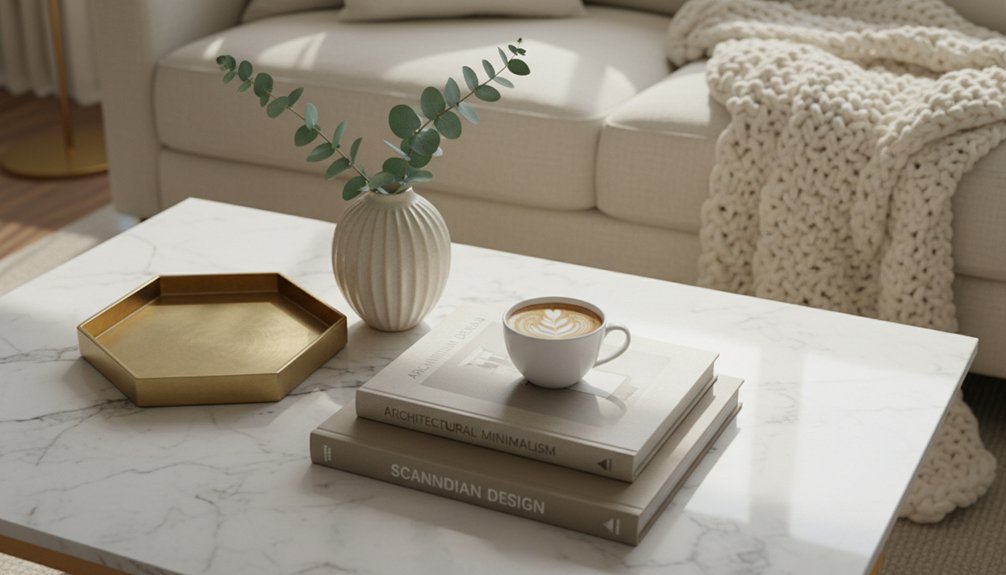
To style your coffee table effectively, start by stacking two to three books horizontally. This creates a solid base. Next, add a decorative tray to hold smaller items like coasters or matches, which helps keep the table organized. Incorporate objects of varying heights, such as placing tall candles next to shorter sculptures, to enhance visual depth.
Include different textures, like pairing smooth metal candle holders with rough natural fiber accents, to create contrast. Choose two to three colors from your existing throw pillows, rug, or wall color to ensure that the coffee table arrangement feels cohesive.
Leave some empty space on the table to prevent overcrowding while ensuring that the table remains functional for everyday use. This approach allows for a balanced look that is both stylish and practical.
The following sections will guide you on how to modify your coffee table arrangement based on different room sizes and specific occasions.
Layer Books, Trays, and Decorative Objects on Your Coffee Table
To create an attractive coffee table, focus on layering for visual height. Start with two to three coffee table books stacked horizontally. Choose books of varying sizes to enhance visual interest.
Next, introduce a decorative tray to organize your table’s surface. This tray will contain smaller items, helping to prevent clutter. Place objects of differing heights within the tray. For example, add candles, small sculptures, or fresh flowers on top of your book stacks. This arrangement creates dimension and draws the eye upward.
Remember to leave some empty space on your coffee table. Overcrowding can make the space feel chaotic instead of curated. Keep your design intentional and focused. Additionally, consider maintaining clear pathways around your coffee table to ensure easy movement and accessibility.
Mix Heights, Textures, and Sizes for Visual Balance
Creating a visually appealing coffee table display requires attention to three key design principles: height variation, texture diversity, and size grouping.
First, adjust the heights of your objects. Taller items should stand prominently, while shorter pieces provide balance. For example, place a tall vase next to a low stack of books. This height contrast guides the eye across the display.
Next, mix textures to enhance visual interest. Combine smooth ceramics with rough, natural materials like wood or stone. For instance, set a polished ceramic bowl atop a textured woven runner. This blend creates a dynamic look that invites touch and exploration.
Finally, group items by size to form cohesive clusters. Place smaller decorative items together, such as candles or figurines, while larger objects like books or trays anchor the arrangement. Aim for groups of three to five items for optimal visual balance.
Avoid overcrowding the table, as too many items can create chaos. Instead, leave some space for functionality and breathing room. Each piece should serve a purpose, contributing to the overall aesthetic and usability of the coffee table. Incorporating solid wood furniture can add durability and warmth to your design, enhancing the overall atmosphere of the space.
Layering Different Object Heights
When you arrange objects on your coffee table, varying the heights of those objects creates visual interest. This strategy encourages the eye to move across the display in a natural flow. Position taller items, such as vases or candles, next to shorter objects like small bowls or decorative boxes. This height variation prevents a flat or monotonous appearance.
Incorporate sculptural elements that add dimension, such as a tall decorative object alongside stacked books.
Think about your arrangement in three distinct levels: low, medium, and high. Ensure that the tallest piece doesn’t exceed one-third of your table’s width to maintain proportion. Use stacked books to elevate smaller items or incorporate pedestals and risers for additional height.
This layering technique ensures that each object stands out while still contributing to a cohesive and balanced display.
Combining Varied Material Textures
Incorporating varied materials into your coffee table display enhances visual appeal and tactile engagement.
Start by balancing smooth glass surfaces with rough natural fibers, and combine warm wood accents with cool metal finishes. This contrast forms a sophisticated arrangement that encourages interaction.
Texture Combinations for Coffee Table Displays
- Organic Warmth: Pair ceramic pieces with stone surfaces and incorporate fabric elements. This combination creates an earthy atmosphere that feels grounded and inviting.
- Modern Elegance: Use a mix of metal finishes, glass elements, and sleek wood accents. This combination brings a contemporary sophistication that suits modern design aesthetics.
- Eclectic Charm: Layer various materials, including natural fibers, ceramics, and different metal finishes. This approach adds personality and a unique flair to the display.
Each material contributes distinct visual weight and character.
Begin with three different textures and adjust according to your room’s existing finishes and your personal style preferences.
Remember to maintain balance and harmony in your selection to achieve a cohesive look.
Grouping Items by Scale
To create a visually appealing coffee table arrangement, include three distinct size variations: a tall item, a medium-height item, and a low-profile piece. Select a tall element, like a vase or candlestick, that reaches one-third of your table’s length. Choose a medium-height item, such as a stack of books, and finish with a low-profile piece, like a decorative bowl. This combination adds depth and prevents visual monotony.
When arranging items, ensure you consider the proportions relative to your coffee table’s dimensions. A large sculpture can overwhelm a small table, while small objects may get lost on a larger surface. Use odd numbers when grouping items, as three or five objects create a more dynamic look.
Position the tallest item slightly off-center, and arrange the smaller pieces around it to achieve visual balance.
Pull Coffee Table Colors From Your Sofa, Rug, and Walls
Creating a cohesive look involves connecting coffee table décor to the room’s existing colors. This connection ensures that your centerpiece complements the overall design. Start by examining your sofa, rug, and walls to identify colors that will harmonize your space.
Match Accent Pillows****: Choose coffee table accessories that match the color of your throw pillows. This creates an immediate sense of unity in the room.
Echo Rug Patterns: Select décor items that incorporate one or two shades from your area rug. This strategy ties the coffee table to the flooring, reinforcing the room’s aesthetic.
Incorporate Wall Tones: Use objects in shades that are lighter or darker than your wall color. This will create depth and maintain a consistent color scheme.
Aim for two to three colors that repeat throughout your coffee table arrangement. This approach ensures visual flow while avoiding an overly coordinated look. Additionally, consider the principles of traditional styles as they can provide inspiration for selecting colors and textures that enhance your centerpiece.
Style Coffee Tables for Entertaining vs. Daily Family Use
How you style your coffee table should adapt to whether you’re hosting guests or managing everyday family activities.
When you entertain, focus on essentials like decorative trays, candles, and fresh flowers that enhance visual appeal. Keep the surface mostly clear to provide adequate space for drinks and appetizers. Arrange everything to look polished and intentional, ensuring that your guests feel welcomed.
For entertaining, keep your coffee table mostly clear with just a few polished essentials that welcome guests without crowding their space.
For daily family use, prioritize functionality. Place a catchall basket for remote controls on the table, keep coasters within easy reach, and use a small tray for frequently used items. Leave enough space for homework, snacks, and beverages.
While you can still include decorative elements, choose durable and practical items that can withstand daily use.
Adjust your styling approach based on your lifestyle needs throughout the week. When hosting, create an inviting atmosphere. When managing family life, ensure that everything serves a purpose while still looking cohesive.
This balance allows you to enjoy both entertaining and everyday living without sacrificing style or function.
Adapt Your Coffee Table Setup for Small or Large Spaces
When selecting and styling a coffee table, the size of your room plays a crucial role in determining the best options. Small spaces require designs that maximize utility without crowding the area. Use glass or acrylic tables to maintain a sense of openness, or opt for nesting tables that can be easily stored when not in use.
In contrast, larger rooms can accommodate more substantial furniture pieces that enhance the space’s functionality and aesthetic appeal.
Small Spaces
For small spaces, choose round or oval coffee tables that lack sharp corners to ensure safety and comfort.
Keep the styling minimal by displaying just one or two carefully chosen decorative items. This approach prevents clutter and maintains a streamlined look.
Medium Spaces
In medium-sized rooms, rectangular coffee tables work well.
Incorporate layered styling by arranging books and decorative objects on the table. This setup allows for both functionality and visual interest, striking a balance that complements the room’s dimensions.
Large Spaces
For large areas, consider oversized coffee tables.
Alternatively, group multiple smaller tables together to create a dramatic focal point. This arrangement fills the space effectively while providing functional surfaces for drinks and décor.
Echo Your Living Room’s Style in Coffee Table Decor
Your coffee table decor should mirror the design of your living room to ensure a cohesive environment. For modern living rooms, incorporate sleek accessories such as geometric vases and metallic trays to match the overall aesthetic.
In traditional spaces, use classic books, ceramic pieces, and wooden accents to enhance the look. Bohemian rooms benefit from textured elements like woven baskets and vibrant pottery to create visual interest.
For Scandinavian designs, prioritize minimalist arrangements with neutral tones and natural materials to maintain simplicity.
To personalize your coffee table, include family photos, travel souvenirs, or handmade items that reflect your character. These personal touches create a warm atmosphere that invites guests while showcasing your individuality.
Strive for a balance between your room’s style and meaningful decorations that feel authentic to you. By focusing on these elements, you can ensure that your coffee table decor enhances the overall design of your living room.
Refresh Your Coffee Table Look Seasonally With What You Own
You can refresh your coffee table’s appearance for each season without spending money on new decorations. Rotate the items you already have to create a spring and summer atmosphere with lighter pieces, or use cozier elements to bring warmth during autumn and winter. This method allows for a seasonal transformation while staying within your budget.
To achieve a seasonal look, first identify the items you want to use. For spring and summer, consider lightweight materials such as pastel-colored vases, botanical prints, or seashells. For autumn and winter, incorporate darker hues like deep reds or browns, along with textured elements such as knitted throws or candles.
Place your chosen items in a way that highlights their unique features. For instance, position a vase of fresh flowers at the center to draw attention, then arrange smaller decorative objects around it. This balance creates visual interest and maintains a cohesive look.
Limitations may arise if you have a small coffee table. In that case, prioritize fewer, larger items that make a statement rather than cluttering the space with multiple smaller decorations.
For practical application, plan to swap out your decorations every few months. Set a reminder to refresh your coffee table at the start of each season. This approach not only keeps your space looking current but also allows you to enjoy the items you already own.
Spring and Summer Vibes
As temperatures rise and daylight hours extend, you can easily refresh your coffee table for the spring and summer seasons without investing in new décor.
Focus on creating arrangements with branches from your yard or fresh garden flowers in clear vases. Use your existing items to bring in brighter, lighter colors that embody the season.
Transform your coffee table for warmer months:
- Replace heavy textiles with light linens – Remove winter throws and add airy fabrics in whites, pastels, or coral tones to reflect the season’s vitality.
- Display fresh citrus in decorative bowls – Place lemons, limes, or oranges in bowls to provide vibrant color and refreshing scents that enhance the atmosphere.
- Rotate in seashells or smooth stones – Incorporate natural elements collected from previous vacations to evoke a coastal, relaxed feel in your space.
These straightforward changes create a seasonal ambiance that’s both approachable and budget-friendly.
Autumn and Winter Warmth
When autumn and winter arrive, coffee table décor should reflect the cozy atmosphere of the season. Replace bright floral arrangements with warm-toned elements. Use amber glass vases, wooden bowls, and copper accents to create a warm aesthetic.
Drape cozy blankets over your sofa to enhance the inviting feel of the space. Incorporate scented candles that feature fragrances like cinnamon, vanilla, or pine to elevate the seasonal ambiance.
Natural elements also add to the cozy theme. Use pinecones, dried branches, or small pumpkins as decorative pieces. Opt for deeper color palettes that include burgundy, forest green, or burnt orange to reinforce the seasonal vibe.
Stack coffee table books that focus on fall or winter themes to add interest. Swap lightweight decorative items for heavier materials like stone or dark metal to ground the space.
These specific adjustments transform your coffee table into a welcoming area, perfect for gatherings during cold weather.
Rotate Existing Decor Items
Before making any new purchases for your coffee table, take stock of your existing decor items to refresh your space seasonally. Each season, you may find that items you haven’t used in a while can create a fresh look. This practice not only saves you money but also keeps your living area lively and inviting throughout the year.
Three Practical Ways to Rotate Decor:
- Seasonal Storage: Organize your decor by season. For example, store summer decorations like seashells and beach-themed items when autumn arrives. Bring them back out the following summer. This method allows you to maintain a seasonal aesthetic without cluttering your space.
- Color Scheme Rotation: Change your color scheme to match the seasons. During winter, incorporate warm metallics, such as gold and bronze, to create a cozy atmosphere. As spring arrives, swap those out for brighter ceramics and pastel colors to reflect the fresh energy of the season.
- Collection Alternation: Vary the types of items you display based on the time of year. In colder months, focus on candles to create warmth and ambiance. When the weather warms up, replace candles with fresh flowers to bring in a touch of nature and vibrancy.