
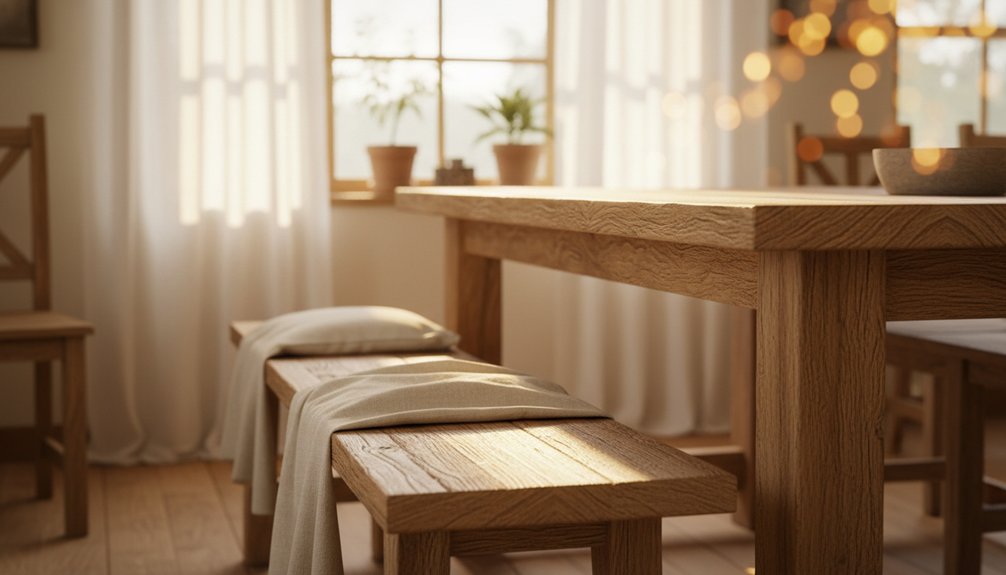
Rustic furniture adds warmth to your home through its raw wood textures and natural finishes. This type of furniture features distressed surfaces that celebrate imperfections. For instance, pine and oak woods provide durability while showcasing prominent grain patterns. Reclaimed timber introduces unique character, reflecting its history and previous life.
To achieve aged finishes, manufacturers utilize techniques like wire brushing and hand scraping. These methods simulate authentic wear and enhance the wood’s natural appeal. Pairing rustic wood with earthy fabrics such as linen and wool creates a cohesive look.
Warm lighting complements the textures and adds to the inviting atmosphere. Mixing rustic furniture with bohemian or industrial elements can create stunning interiors. This blending requires careful color coordination and attention to scale to maintain a unified design.
While rustic furniture is versatile, it works best in settings that allow its natural qualities to shine. Avoid overly modern or sleek designs that clash with the organic feel of rustic pieces. Focus on creating a welcoming environment that highlights the beauty of natural materials.
What Makes Furniture Rustic: Natural Wood and Raw Textures
Raw textures significantly enhance rustic furniture design. Craftsmen prioritize surfaces that showcase the wood’s natural feel, often opting for minimal finishing. Many rustic pieces feature rough-hewn edges or hand-carved details that emphasize skilled craftsmanship.
Organic shapes dominate rustic furniture, allowing the wood’s natural contours to dictate form instead of rigid geometric designs. When selecting rustic furniture, you choose to highlight nature’s beauty. The materials maintain their original state, providing warmth and character that mass-produced alternatives lack.
Rustic furniture celebrates wood’s natural contours and organic forms, delivering authentic warmth that factory-made pieces simply cannot replicate.
Each piece carries the unique marks of its natural origin, making it distinct and full of character. For instance, a rustic dining table may exhibit visible knots and grain patterns, demonstrating its authenticity. The table’s hand-sanded finish preserves the wood’s texture while ensuring durability.
Similarly, rustic chairs often feature irregular shapes that contribute to their charm and comfort. Rustic furniture can have limitations, such as sensitivity to moisture or temperature changes, which can cause warping. Therefore, proper care and placement are essential to maintain their integrity.
Rustic pieces may not suit every interior style, so consider your overall design theme when integrating them into your space. In summary, raw textures and natural materials define rustic furniture, providing unique and warm additions to any home. Additionally, the choice of solid wood furniture ensures durability and a long lifespan, making each piece a worthwhile investment.
Each piece represents nature’s beauty through its craftsmanship and character, making it a worthwhile investment for those who appreciate authentic design.
Best Woods for Rustic Furniture: Pine, Oak, and Reclaimed Timber
Understanding which woods are suitable for rustic furniture helps you make informed purchasing decisions.
Pine provides an affordable option, with a durability rating that works well for many rustic applications. Pine features prominent grain patterns and a warm honey color. While pine is softer than hardwoods, making it more susceptible to dents, this characteristic can enhance its rustic charm over time as it develops a patina.
Oak offers versatility, available in both red and white varieties. Each type has distinct grain textures that contribute to a rustic aesthetic. Oak‘s hardness ensures longevity, making it a strong choice for furniture that withstands daily wear and tear.
Reclaimed timber stands out due to its unique character. This wood comes from sources such as barn wood, old fence posts, and salvaged beams. Each piece carries the story of its previous life, showcasing weathered surfaces, nail holes, and varied patina. Choosing reclaimed timber supports sustainability while adding a one-of-a-kind appearance to your furniture.
When selecting wood for your rustic furniture, consider your budget, the durability you need, and the specific aesthetic you desire. Additionally, ensure that your furniture pieces are arranged to maintain clear pathways for comfortable movement throughout your space.
Aged and Weathered Finishes for Rustic Furniture Character
Applying aged and weathered finishes to rustic furniture enhances its character and depth, which new wood can’t achieve. These techniques transform ordinary wood into pieces that exude charm and a sense of history. To create this aged look, I use distressing methods such as wire brushing. This method opens the wood grain and adds texture, making the surface feel more authentic.
Next, I incorporate chain marks and hand-scraping to simulate real wear patterns. For color, I select stains in gray, white, or brown tones that replicate natural weathering caused by sun and moisture exposure. I begin the finishing process by applying a base coat. After that, I sand the edges and high-wear areas to expose the underlying wood. This layering technique results in furniture that possesses genuine rustic appeal, perfect for enhancing farmhouse interiors and infusing warmth into any space.
Limitations exist when applying these techniques. Not all wood types accept stains and finishes the same way, and some may not hold up as well under distressing methods. I focus on hardwoods, as they tend to respond better to aging techniques. For example, oak and pine are commonly used for their durability and ability to showcase finish layers effectively. Additionally, understanding traditional furniture styles can help inform the selection of rustic pieces that harmonize with the overall design.
In my experience, achieving the desired aged look can take time, often requiring multiple steps and careful attention to detail. Each piece of furniture becomes unique through this process, reflecting a story of its own.
Farmhouse Rustic Furniture: Distressed Wood and Barn Doors
Farmhouse rustic furniture incorporates distressed wood and barn doors to create a unique aesthetic rooted in agricultural heritage. Distressed finishes showcase specific imperfections, such as nail holes, saw marks, and worn edges, which highlight authentic craftsmanship.
Barn doors have transitioned from simple sliding entryways to versatile furniture components, appearing in cabinets, entertainment centers, and room dividers.
Consider these key features of farmhouse rustic furniture:
- Reclaimed barn wood offers distinctive grain patterns and natural weathering that enhance the character of each piece.
- Wrought iron hardware like handles and rolling tracks adds to the authentic farmhouse style, providing durability and visual appeal.
- Neutral color palettes consisting of grays, whites, and natural tones complement the distressed finishes, creating a cohesive look.
- Mixed textures combine rough-hewn wood with smooth metal elements, adding depth and interest to each design.
Investing in farmhouse rustic furniture means selecting timeless pieces that blend functionality with nostalgic charm.
This furniture not only serves practical purposes but also tells the story of rural craftsmanship and heritage.
Mixing Rustic Furniture With Bohemian and Industrial Styles
You can create a stunning interior by blending rustic furniture with bohemian and industrial elements, but achieving the right balance requires careful attention to detail.
Start by selecting a color palette that harmonizes rustic wood tones with vibrant bohemian hues and sleek industrial grays.
Next, layer textures to enhance visual interest. Use reclaimed wood furniture to provide warmth, and add metal accents such as steel lighting fixtures or iron shelving for an industrial touch. Incorporate patterned textiles, like woven throws or embroidered cushions, to bring in the bohemian vibe.
When combining these styles, avoid overwhelming the space with too many contrasting elements. Instead, focus on a few key pieces from each style to create a cohesive look.
For instance, pair a rustic wooden dining table with industrial metal chairs and bohemian-inspired tableware to maintain clarity in design.
Limit the use of overly ornate decorations that don’t fit any of the three styles. Stick to clean lines and simple forms, which will allow each element to stand out without competing for attention.
Balancing Contrasting Design Elements
Mixing rustic furniture with bohemian and industrial styles creates a visually engaging interior. To achieve harmony, focus on selecting materials that complement each other while maintaining balance.
Start by using rustic pieces as foundational elements. Then, layer in bohemian textiles and industrial accents in a strategic manner.
Essential tips for balancing contrasting design elements:
- Limit your color palette to three main hues to avoid visual clutter. This keeps the space cohesive and enhances each style.
- Use texture consistently across different styles. For example, pair a rough-hewn wooden table with soft, patterned bohemian throws to unify the look.
- Maintain consistent scale by selecting furniture and decor that are similar in size. For instance, choose a large rustic dining table and pair it with appropriately sized industrial chairs.
- Create focal points that highlight one dominant style. For example, designate a corner for a bold industrial light fixture to draw attention without overwhelming the rustic elements.
When mixing distinct aesthetics, trust your instincts and adjust individual pieces until the space feels cohesive and true to your style.
Remember that blending different designs should reflect your personal taste while ensuring functional and aesthetic balance.
Texture Layering Techniques
When you layer textures in a room, you create a dynamic and inviting environment. Start with rough-hewn wood furniture to establish a rustic base. Pair this with smooth metal accents, like stainless steel or brushed nickel, to add a contemporary touch. Incorporate soft fabric elements, such as cotton or velvet throw pillows, to create contrast and warmth.
Layer textiles effectively by placing woven throw blankets over leather sofas. Use linen curtains to soften windows, and complement them with jute rugs on the floor. This combination adds depth and interest through diverse materials—select distressed wood tables, hammered metal light fixtures, and plush cushions that harmonize with each other.
Incorporate natural elements by using raw wood alongside polished concrete or exposed brick. This blend enhances the organic feel of rustic furniture while introducing a modern edge. Limit your textures to three or four distinct types in each room. This strategy prevents visual clutter and allows each material to shine, contributing to the overall design.
Avoid overwhelming combinations. Stick to textures that work well together to maintain a cohesive aesthetic. For example, pairing a reclaimed wood coffee table with a smooth leather armchair creates a balanced look. Ensure that every texture you choose serves a purpose and contributes to the desired atmosphere.
Color Palette Coordination Tips
Rustic furniture features earthy tones such as browns, tans, and grays. These colors adapt well to both bohemian and industrial color schemes.
To create color harmony, pair rustic pieces with warm jewel tones in bohemian settings or cool metallics in industrial spaces. This coordination enhances the mood throughout the rooms.
Bohemian Coordination
Combine rustic wood with terracotta, mustard yellow, and deep burgundy. This combination adds warmth to a bohemian space.
Industrial Coordination
Match weathered furniture with charcoal, slate blue, and copper accents. This pairing introduces an edgy contrast in industrial environments.
Neutral Connections
Use cream and beige as connecting colors between styles. This strategy prevents visual clutter and creates a smooth transition.
Accent Colors
Incorporate small pops of contrasting colors through textiles and accessories. These accents energize the overall aesthetic without overwhelming the main palette.
To ensure cohesive spaces, limit your color palette to three primary colors and one accent shade. This approach maintains focus and clarity throughout your design.
Rustic Furniture in Cottage, Country, and French Provincial Rooms
Rustic furniture naturally complements cottage, country, and French Provincial design because these styles prioritize natural materials and handcrafted details.
Cottage-style rooms feature weathered wood furniture, distressed finishes, and simple farmhouse tables that foster a cozy, lived-in feel. In contrast, French Provincial design incorporates rustic elements like carved wooden armoires, ladder-back chairs, and exposed beam accents that provide warmth while maintaining an elegant countryside aesthetic.
When selecting rustic furniture for these styles, focus on pieces that enhance the overall theme. Choose weathered wood for cottage rooms to evoke a sense of history. For country designs, select sturdy farmhouse tables that can withstand daily use. In French Provincial settings, opt for intricately carved items that add sophistication without sacrificing comfort.
Consider the limitations of rustic furniture as well. Ensure that the pieces you choose fit the scale of your room. Oversized furniture can overwhelm a small space, while tiny pieces may get lost in a larger room. Pay attention to color palettes as well; rustic furniture often works best with earthy tones that complement the surrounding decor.
Cottage Style Rustic Elements
Cottage-style interiors create a warm, inviting atmosphere by combining rustic furniture with a cozy aesthetic. Weathered wood pieces serve as fundamental elements, showcasing natural imperfections and time-worn character.
These interiors prioritize simplicity while integrating carefully selected vintage accents, including distressed sideboards, farmhouse tables, and reclaimed wood shelving.
Key cottage-style rustic elements include:
- Painted finishes: Soft whites, creams, and pastels enhance airiness while emphasizing wood grain.
- Mixed materials: Wood, wicker, linen, and ceramic combine to add textural depth and visual interest.
- Functional storage: Open shelving, hutches, and benches provide practical storage solutions while maintaining style.
- Casual arrangements: Furniture placement encourages relaxed gatherings, ensuring everyday usability.
To achieve an authentic cottage atmosphere, layer these elements thoughtfully. Each rustic piece grounds the space while maintaining the lighthearted charm that defines cottage design.
Focus on selecting furniture and accents that harmonize with the overall aesthetic, ensuring a cohesive and inviting environment.
French Provincial Wood Accents
French Provincial design blends rustic charm with refined elegance and craftsmanship. This style emphasizes natural wood textures, sophisticated curves, and ornate details in furniture.
You’ll typically see pieces crafted from weathered oak, walnut, or fruitwood that highlight the grain’s beauty. Provincial decor incorporates specific carved motifs such as flowers, shells, and scrollwork. These carvings add visual interest while maintaining a rustic foundation.
To integrate these elements into your home, choose armoires with distressed finishes or dining tables featuring turned legs. Authenticity matters, so prioritize quality construction and time-worn patinas.
French Provincial wood accents enhance country-style homes by adding a touch of subtle refinement. These accents create inviting spaces that balance comfort with cultured aesthetics.
When selecting furniture, ensure it embodies the characteristics of French Provincial design to achieve the desired atmosphere in your home.
Arranging Rustic Furniture With Textiles and Warm Lighting
To create an inviting rustic room, focus on solid wood furniture, natural textiles, and warm lighting. Solid wood pieces serve as the foundation, while textiles and lighting enhance comfort and ambiance.
A rustic room thrives on three essentials: sturdy wood furniture, natural fabric layers, and lighting that wraps the space in warmth.
Choose natural fabrics like linen, wool, and cotton in earthy tones. Layer throw blankets on sofas and incorporate textured pillows to add warmth and comfort.
Select lighting fixtures that complement your rustic theme. Wrought iron chandeliers, Edison bulbs, and lantern-style pendants work well with natural wood finishes.
Here are specific actions to enhance your rustic space:
- Place table lamps with burlap or canvas shades on rustic wood side tables. This adds a cozy touch and provides functional lighting.
- Lay woven area rugs beneath seating arrangements to define conversation areas and add texture underfoot.
- Install dimmer switches to control lighting intensity throughout the day, allowing you to adjust the atmosphere as needed.
- Hang quilts or vintage textiles on walls to create visual interest and celebrate craftsmanship.
Avoid overly modern lighting fixtures, as they can clash with rustic aesthetics. Focus on consistency in materials and colors to maintain a cohesive look.