
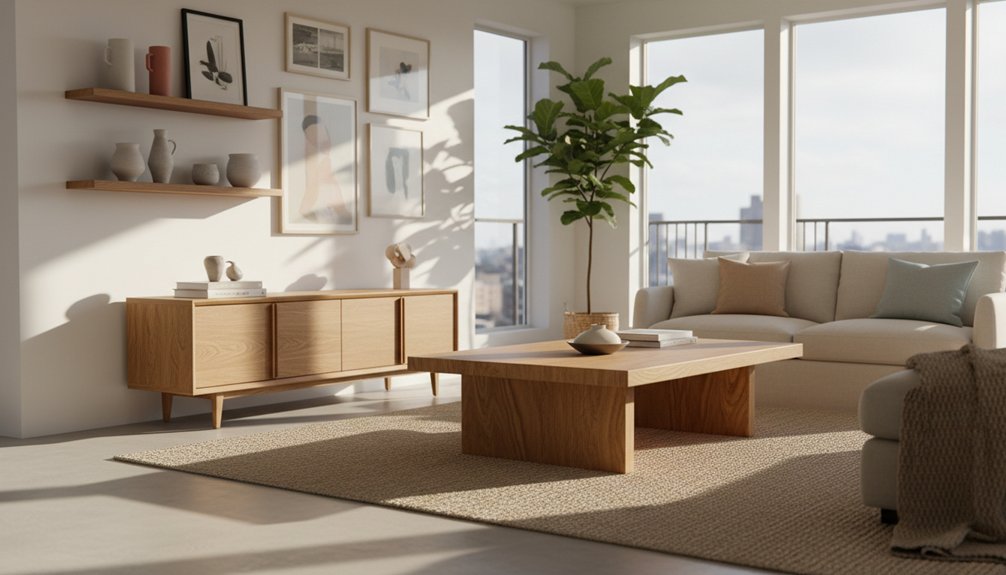
To modernize oak furniture effectively, choose light oak for small spaces and dark oak for larger rooms. Pair oak furniture with metal accents, glass elements, and bold upholstery to enhance its contemporary look. Paint walls in deep jewel tones, such as emerald or sapphire, or opt for warm gray neutrals to complement oak’s natural warmth. Avoid orange-toned finishes and matching furniture sets, as they can create outdated aesthetics.
Place oak pieces strategically in open-plan layouts to define different zones without overcrowding the space. For example, use a light oak coffee table to anchor a seating area while maintaining an airy feel. Incorporate dark oak cabinets in dining areas to add depth and richness.
Consider specific color combinations that elevate oak’s appearance. Pair light oak with navy blue or mustard yellow accents, while dark oak works well with deep reds or charcoal grays. Stick to these guidelines to ensure that your oak furniture remains modern and stylish.
Why Oak Furniture Looks Dated (And How to Fix It)
Oak furniture, while durable and valuable, often appears outdated due to design trends from the 1980s and 1990s. Many pieces from that era feature orange-toned finishes, heavy carving, and bulky proportions. These characteristics contribute to a dated aesthetic.
The thick, golden varnishes on these items give them a honey-colored look that doesn’t resonate with modern design preferences.
To modernize oak furniture, start by refinishing it with contemporary finishes. Choose natural, whitewashed, or gray-toned stains to achieve a lighter appearance. These finishes align with current design trends.
Next, update hardware by replacing outdated brass handles with brushed nickel or matte black options. This simple change can significantly enhance the overall look.
Finally, balance oak furniture with modern décor elements. Incorporate sleek lighting fixtures and minimalist accessories to create visual contrast. This approach helps prevent the space from feeling trapped in the past and brings a fresh perspective to the room. Additionally, consider using natural wood finishes that highlight the inherent beauty and grain patterns of oak, further enhancing its modern appeal.
Choose Light or Dark Oak Based on Your Room Size
When selecting oak furniture, the room’s dimensions determine whether to choose light or dark oak.
Light oak works effectively in small spaces because light oak reflects natural light and creates an open atmosphere. Light oak furniture enhances compact rooms by making them feel more spacious and preventing a cramped feel. Light oak pairs well with white walls and neutral color schemes, which further enhances the perception of space.
Dark oak functions best in larger rooms where it adds warmth and sophistication without overwhelming the space. Dark oak furniture fits well in expansive areas that may feel cold or empty, creating a cozy environment.
However, dark oak should be avoided in small rooms since it absorbs light and can make the space feel smaller. Always consider your room’s square footage before deciding on the finish. Additionally, maintaining at least 30 inches of clearance for walkways ensures comfortable movement and enhances the overall functionality of the space.
Where to Place Oak Furniture in Open-Plan Layouts
Open-plan layouts require careful furniture placement to create defined zones while ensuring a smooth flow throughout the space. Use oak furniture as effective dividers to establish specific areas. For example, place a solid oak dining table between the kitchen and living area to create a clear boundary.
Position an oak console table behind the sofa to separate conversation areas while keeping them visually connected.
To effectively zone open spaces, position oak bookcases perpendicular to the walls instead of flat against them. This arrangement forms distinct rooms within the larger area without obstructing natural light.
Anchor each zone with matching oak pieces—such as side tables in the living area and a desk in the workspace—to maintain a cohesive look and clearly define the purpose of each section.
Avoid overcrowding the space; too much furniture can make the area feel cramped. Stick to essential pieces that enhance functionality without hindering movement. Additionally, incorporating traditional styles in your oak furniture selection can add timeless sophistication to the overall design.
Pair Oak With Metal, Glass, and Upholstery That Pops
Oak furniture enhances natural warmth when combined with metal, glass, and vibrant upholstery. To elevate oak’s appeal, incorporate sleek metal accents that contrast the organic wood grain with industrial finishes. This combination creates a balanced aesthetic that highlights both materials.
Next, focus on upholstery choices that provide bold colors or patterns. Select fabrics that introduce visual interest without overshadowing the oak’s inherent beauty. For instance, a bright velvet chair can serve as a focal point while maintaining harmony with oak tables or cabinets.
When mixing these materials, ensure that the metal accents aren’t overly dominant. Choose finishes that complement the oak, such as matte black or brushed nickel. This restraint helps maintain the warmth of the wood while still creating an engaging visual contrast.
Carefully consider the proportions and scale of each piece. For example, large oak furniture can pair well with slender metal side tables. This balance will create a cohesive look throughout the space.
Incorporate glass elements, like a coffee table or shelving, to add lightness. Glass can amplify the warm tones of oak while maintaining an airy feel. Ensure that glass pieces don’t overpower the oak but rather enhance its presence.
Metal Accent Pairing Tips
Metal accents significantly enhance the appearance of oak furniture. Different metal finishes yield unique atmospheres in your space. For example, brushed nickel and chrome provide a sleek, modern look. In contrast, brass and copper introduce warmth that pairs well with oak’s natural hues. Black metal offers bold contrasts, allowing oak pieces to stand out prominently.
When selecting metal accents, first assess your existing hardware. Match your lamp bases, picture frames, and curtain rods to your chosen metal finish to create a cohesive design. You don’t have to replace everything at once; starting with three matching pieces in the same room can establish a unified look.
Mixing metals is possible, but limit it to two finishes to maintain visual clarity.
For practical application, consider using steel hairpin legs on oak benches or bronze drawer pulls on oak dressers. These small metal details can significantly impact the overall aesthetic of your furniture.
Bold Upholstery Color Choices
Vibrant upholstery colors enhance oak furniture by adding personality and energy. For example, jewel tones like emerald green, sapphire blue, and ruby red create striking contrasts against the warm grain of oak. These bold fabric choices elevate simple oak chairs and benches into eye-catching pieces.
When mixing patterns, consider geometric prints for a contemporary look that pairs well with oak tables. Floral designs can soften the masculine feel of oak, making the overall space more inviting. Mustard yellow and burnt orange cushions work well to complement oak’s golden undertones. Alternatively, deep charcoal or navy upholstery adds a touch of sophistication.
The key to successful upholstery selection is to choose colors that enhance the natural beauty of oak rather than clash with it. This approach creates a balanced, modern, and inviting space that showcases the oak’s character while integrating vibrant textiles.
Wall Colors and Accents That Make Oak Look Expensive
You can enhance the look of your oak furniture by selecting the appropriate wall colors and accents. The choice of wall color influences the overall aesthetic of oak in your space. Deep jewel tones, warm gray neutrals, and well-planned accent walls each play a critical role in showcasing the elegance of oak.
Deep jewel tones, like emerald green or sapphire blue, create a rich backdrop that highlights the warmth and grain of oak. These colors draw attention to the intricate details of the wood, making it appear more luxurious. For example, pairing a dark green wall with a light oak table can create a striking contrast that elevates the furniture’s visual appeal.
Warm gray neutrals provide a sophisticated, understated backdrop that complements oak’s natural tones. A soft warm gray wall can make oak furniture look more refined and modern. For instance, a warm gray living room paired with oak shelving creates a cohesive and stylish design.
Strategic accent walls can also enhance oak furniture. Choosing one wall to paint a bolder color while keeping the others neutral can create a focal point that draws the eye. For example, a navy-blue accent wall behind an oak dining set can make the table and chairs stand out, adding depth to the room.
In summary, to make oak look more expensive, select wall colors and accents that contrast and complement the wood’s natural beauty. Avoid light pastels or overly bright colors, as these can clash with oak and diminish its elegance.
Focus on deep jewel tones, warm gray neutrals, and thoughtfully placed accent walls to achieve a sophisticated look.
Deep Jewel Tone Pairings
Rich jewel tones effectively enhance oak furniture, transitioning its appearance from dated to sophisticated. For instance, emerald green walls create a striking contrast with honey-toned oak pieces, making them stand out while adding elegance to your space.
Sapphire blue serves as a calming backdrop that enhances the golden undertones in lighter oak finishes, creating a cohesive look. Deep amethyst purple pairs well with red oak, emphasizing its natural reddish hues and adding depth to the design.
Color psychology significantly impacts these pairings. Jewel tones convey a sense of luxury and depth, making oak furniture look more expensive. Navy backgrounds provide a gallery-like atmosphere that elevates the visual appeal of oak. Ruby red accents in throw pillows or artwork complement the warm spectrum of oak, tying the room together.
When balanced with neutral textiles and strategic lighting, these bold colors enhance the overall design without overwhelming the space.
To summarize, using rich jewel tones with oak furniture transforms the room, enhances the wood’s warm colors, and creates an elegant atmosphere. The combination of specific colors like emerald green, sapphire blue, and amethyst purple effectively highlights oak’s natural beauty, providing a sophisticated and inviting environment.
Neutral Warm Gray Backdrops
Warm gray walls serve as a practical and versatile choice for interior design, especially when paired with oak furniture. These neutral shades enhance the natural warmth of oak without clashing with its honey undertones.
By using warm gray as a backdrop, you create a balanced visual environment while maintaining a cozy atmosphere.
When working with warm gray, consider these actionable approaches:
- Select greige tones, which are gray-beige hybrids that have subtle brown undertones. This choice complements oak furniture effectively.
- Incorporate cream or ivory accents through throw pillows and curtains. These lighter colors will contrast nicely against the warm gray walls, adding dimension.
- Layer various shades of gray to create depth in the space. Different gray tones can add interest without overwhelming the overall design.
- Use brass or gold hardware to enhance the warmth within the room. Metallic accents can draw attention to oak furniture while maintaining a cohesive look.
This neutral palette allows oak pieces to stand out as focal points, providing a sophisticated foundation for your design.
Following these guidelines helps achieve an elegant, cohesive appearance that feels both modern and inviting.
Accent Wall Color Combinations
Strategic color placement can effectively transform ordinary oak furniture into a premium design feature. To achieve this, select accent wall textures that enhance oak’s natural grain. Deep navy or charcoal gray creates a sophisticated contrast, making light oak pieces stand out clearly.
Pairing forest green accent walls with medium-toned oak adds richness without overwhelming the space. Terracotta or rust tones enhance oak’s warm undertones, creating visual interest while maintaining harmony in the room.
When using contrasting colors, balance the intensity effectively. Apply dark accent colors to a single focal wall while keeping the remaining walls neutral. This strategy prevents the room from feeling cramped and crowded.
Incorporate textured finishes, such as matte paint or subtle wallpaper, to add depth and elevate the perceived value of your oak furniture through intentional design choices.
Style Oak Furniture for Minimalist and Scandinavian Rooms
Natural oak furniture fits well in minimalist and Scandinavian interiors due to its grain patterns and clean lines.
Oak provides warmth that complements the cool, neutral color schemes common in these styles. The wood’s grain offers texture without clutter, aligning with minimalist principles.
To create a Scandinavian-inspired space, you should:
- Select furniture with tapered legs and simple shapes. This choice prevents the room from feeling overcrowded.
- Combine light oak furniture with white walls and soft gray accents. This combination enhances the Nordic aesthetic.
- Limit decorative items to functional objects such as ceramic vases and woven baskets. This keeps the focus on simplicity.
- Choose pieces with hidden storage. This feature helps maintain uncluttered surfaces.
Oak Furniture Mistakes That Scream Old-Fashioned
Oak furniture can enhance contemporary spaces when styled appropriately, but specific design choices can make your home appear outdated. Avoid pairing oak furniture with old-fashioned patterns, such as busy florals or ornate damask fabrics. These patterns clash with oak’s natural simplicity and create a cluttered look. Excessive ornamentation, like heavy carvings, bulky turned legs, or elaborate scrollwork, can also make your space feel dated.
Instead of using matching furniture sets, which can feel rigid, mix oak pieces with different materials and styles. Overcrowding your rooms with dark, heavy oak furniture can create a cramped atmosphere. Ensure there’s breathing room between furniture pieces and balance darker oak tones with lighter elements to maintain a modern aesthetic.
These adjustments can help oak furniture elevate your contemporary home rather than date it.