

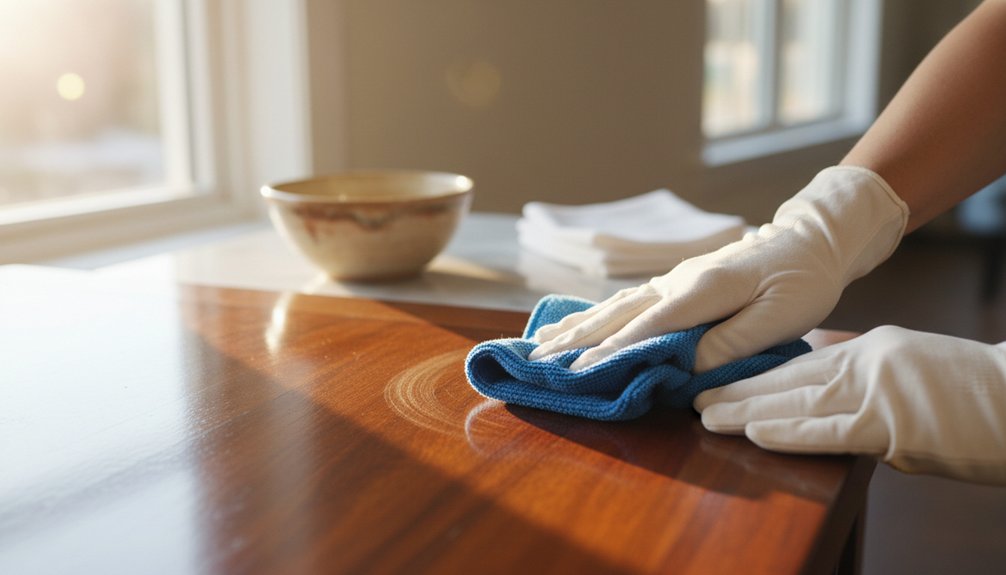
To clean solid wood furniture, dust the surface weekly with a microfiber cloth. Move the cloth along the wood grain to prevent scratches. For deeper cleaning, mix one tablespoon of mild dish soap with two cups of warm water. Dampen a soft cloth in the solution, ensuring it is wrung out thoroughly, and wipe the furniture following the grain. Immediately dry the surface with a clean towel to avoid moisture damage.
To remove water rings, apply a small amount of mayonnaise or a baking soda paste directly to the affected area. Alternatively, use an iron-and-towel method: place a clean towel over the ring, then gently iron over the towel for a few seconds. This should lift the moisture out of the wood.
Apply wood polish every three to six months to maintain the finish and protect the wood. Regular polishing helps to prevent wear and keeps the furniture looking fresh.
This guide provides specific techniques for maintaining solid wood furniture effectively while highlighting the importance of routine care and specific cleaning methods.
Identify Your Wood Type and Finish Before You Clean
Identifying your wood type and finish is crucial before you clean wooden furniture. Different wood types, such as oak, maple, or cherry, require specific cleaning methods to avoid damage. For instance, oak can handle more moisture compared to softer woods like pine, which can warp or stain easily.
Understanding the type of finish on your furniture is equally important. Common finishes include polyurethane, lacquer, shellac, oil, and wax. Each finish reacts differently to cleaning products. For example, polyurethane is durable and water-resistant, while shellac can be damaged by alcohol-based cleaners. Oil finishes require different care compared to wax finishes, which can be easily stripped away by harsh chemicals.
To identify your wood type, check furniture documentation or test an inconspicuous area with a small amount of water. If the wood absorbs the water quickly, it may be a softer wood.
For finishes, a simple spot test can reveal how your furniture responds to different cleaners. This precaution helps prevent costly mistakes and ensures that your furniture maintains its appearance for years. Additionally, solid wood furniture is known for its durability and unique grain patterns, making it essential to use the right cleaning methods to preserve its character.
Essential Cleaning Supplies for Solid Wood Furniture
To maintain your solid wood furniture effectively, you need specific cleaning supplies. These supplies must be gentle on the wood while efficiently removing dirt and grime. Gather these essential items before starting your wood care routine.
Proper wood furniture care starts with gathering the right supplies—gentle yet effective tools that protect while they clean.
Essential supplies you’ll need:
- Microfiber cloths: Use these soft, lint-free cloths to wipe down furniture surfaces. Microfiber cloths capture dust and dirt without scratching the wood or leaving any residue behind.
- Mild dish soap: Mix a few drops of mild dish soap with warm water to create a gentle cleaning solution. This solution effectively removes buildup without damaging the finish of the wood.
- Distilled water: Use distilled water instead of tap water for cleaning. Distilled water prevents mineral deposits from forming on wood surfaces, which can occur with regular tap water.
Consider keeping commercial wood cleaners, polishes, and furniture wax as optional supplies. Assess your furniture’s specific needs before deciding to use these products.
Dust Wood Furniture Without Scratching the Surface
Dusting solid wood furniture requires a specific approach to prevent scratches and maintain a smooth finish. Regular dusting prevents dirt buildup and keeps the wood looking its best.
Start by using a microfiber cloth. This type of cloth effectively captures dust without scratching the surface. Avoid using rough materials like paper towels or old rags, as they can scratch the wood.
When dusting, follow the natural grain of the wood. Move the cloth in the same direction as the grain to avoid creating visible scratches. This technique preserves the finish and enhances the wood’s appearance.
Use a gentle touch when dusting. Pressing too hard can lead to scratches. Instead, let the cloth do the work of collecting dust.
If you encounter sticky residue or stains, avoid harsh scrubbing tools or abrasive cleaners. Instead, lightly dampen the microfiber cloth with water or a wood-safe cleaner. Wipe the area gently and dry it immediately to prevent water damage.
By following these steps—using a microfiber cloth, following the wood grain, and applying gentle pressure—you can effectively dust your solid wood furniture without causing scratches.
Regular maintenance keeps your furniture looking beautiful for years to come.
Choose Soft Cleaning Cloths
Choosing the right cleaning cloth is essential for protecting your wood furniture‘s finish from scratches and damage. The type of fabric you select directly impacts the safety of your furniture during cleaning. You should opt for materials that won’t leave lint or cause surface scratches while you clean.
Here are the best cloth options for wood furniture:
- Microfiber cloths effectively trap dust without scratching the surface. Use them for routine cleaning without the need for chemical cleaners.
- Soft cotton cloths, like old t-shirts or flannel, are great for gentle dusting and polishing. They provide a soft touch while effectively removing dust.
- Cheesecloth is a lightweight fabric ideal for applying oils or waxes to wood surfaces. Use it for finishing touches to enhance your furniture’s shine.
Avoid using paper towels, abrasive sponges, or any rough materials. These items can scratch the finish on your furniture and leave permanent marks that are difficult to fix.
Dust With Grain Direction
When you dust solid wood furniture, always wipe along the grain of the wood. This approach prevents microscopic scratches from forming over time. The grain consists of the natural lines and patterns visible on the wood’s surface. By moving your cloth in the same direction as these lines, you respect the wood’s structure, ensuring that the finish stays intact. This method is crucial for maintaining the furniture’s appearance.
Use gentle and consistent pressure when dusting. You don’t need to scrub hard to remove dust. Light, steady strokes along the grain effectively lift dust particles without harming the wood surface. If you come across stubborn spots, dampen the cloth slightly instead of applying excessive force.
Following these techniques regularly will keep your wood furniture looking its best for years.
Avoid Abrasive Cleaning Tools
Avoiding abrasive cleaning tools is crucial for maintaining the finish on wood furniture. Many common cleaning tools can harm your furniture, leading to scratches and damage.
Focus on gentle cleaning techniques to preserve your investment.
Do not use these cleaning tools on wood furniture:
- Steel wool or scouring pads scratch the finish and expose raw wood.
- Stiff-bristled brushes create permanent scratches on the surface.
- Paper towels with rough fibers leave residue and can damage the finish.
Instead, use microfiber cloths, soft cotton rags, or lambswool dusters to clean wood furniture effectively. These materials lift dust without causing damage.
If you’re uncertain about a cleaning tool, test it on a small, hidden area to ensure safety. This method helps maintain your furniture’s appearance and longevity.
Deep Clean Solid Wood: The Complete Process
Over time, solid wood furniture collects dirt, oils, and grime that regular dusting can’t remove. A deep clean restores the furniture’s natural beauty and follows sustainable practices to protect the wood and the environment.
To start, mix a solution of mild dish soap and warm water. Dampen a soft cloth with this mixture, wring it out thoroughly, and wipe the surface of the furniture, following the wood grain. Avoid saturating the wood, as excess moisture can cause warping or damage.
After cleaning, dry the surface promptly with a clean towel to prevent moisture retention. Once the surface is dry, apply a high-quality wood conditioner or polish. This step adds moisture back into the wood and provides protection against cracking.
Regular deep cleaning of your furniture every three to six months will help maintain its appearance and longevity. Keep in mind that using harsh chemicals or abrasive tools can damage the finish of solid wood.
Always test any new product on a hidden area before applying it to the entire piece. This ensures you won’t inadvertently harm the furniture. By following these steps, you can keep your solid wood furniture looking its best while adhering to sustainable care practices.
Remove Water Rings and Stains From Wood Furniture
Water rings and stains often appear on solid wood furniture due to wet glasses, spills, or humidity. Quick action removes these water rings and prevents permanent damage.
Moisture sitting on wood for extended periods can penetrate the finish and cause deeper issues.
To effectively remove water rings, follow these methods:
- Mayo or Petroleum Jelly Treatment: Spread a thin layer of mayonnaise or petroleum jelly over the water ring. Allow the treatment to sit overnight. Wipe clean using a soft cloth to remove any residue.
- Baking Soda Paste: Combine equal parts baking soda and non-gel toothpaste to create a paste. Apply the paste to the water ring and gently rub it in circular motions. Wipe away the paste with a damp cloth.
- Iron Method: Place a clean towel over the water ring. Use a warm iron briefly on top of the towel. This method helps to draw moisture out of the wood finish and can diminish the appearance of the stain.
To prevent future stains, consistently use coasters and placemats under drinks.
Immediately wipe up spills to protect the wood finish and maintain the furniture’s appearance.
Common Wood Types and Their Specific Cleaning Needs
Different wood species require specific cleaning techniques based on their unique properties.
Each wood type has distinct characteristics that determine the most effective and safe cleaning approach for long-lasting beauty.
Oak wood cleaning involves using a damp cloth to wipe along the grain since the open grain structure collects dirt.
After cleaning, immediately dry the surface to prevent moisture absorption.
Maple wood maintenance requires gentle handling.
This wood features a tight, closed grain that resists dirt but is prone to scratches.
Use minimal moisture and soft cloths to avoid damaging the surface.
Cherry wood care focuses on avoiding harsh chemicals.
Cherry wood darkens over time due to age and sunlight exposure, so it’s essential to use gentle cleaners that won’t accelerate discoloration.
Pine wood cleaning demands the lightest touch.
As a softwood, pine can easily dent, so use the mildest cleaning solutions to protect its surface from damage.
Seal and Protect Your Wood Furniture After Cleaning
After cleaning your solid wood furniture, you must seal and protect it to preserve its appearance and enhance its longevity. The sealing process involves three key steps:
1. Select a Sealant: Choose a sealant compatible with your specific wood type. For example, oil-based finishes work well with hardwoods like oak and maple, while water-based finishes are suitable for softer woods like pine.
2. Apply the Sealant: Use a clean brush or cloth to apply the sealant evenly across all surfaces of the furniture. Ensure you cover every nook and cranny to prevent moisture from seeping in.
Follow the manufacturer’s instructions for the recommended number of coats, usually one to three, allowing adequate drying time between each application.
3. Dry Completely: Allow the sealant to dry fully before using the furniture. This drying period can range from a few hours to a full day, depending on the type of sealant used and environmental conditions like temperature and humidity.
Following these steps creates a protective barrier that shields your furniture from moisture, stains, and daily wear.
Choose the Right Sealant
Selecting the right sealant requires understanding your furniture’s finish and its intended use. Each sealant type serves a specific purpose, impacting both the protection level and visual appearance of your furniture. Here’s how to choose the appropriate sealant based on practical application:
- Use Polyurethane for High-Traffic Furniture: Apply polyurethane when you need durable protection for frequently used items like dining tables and desks. This sealant creates a hard, moisture-resistant barrier that withstands daily use.
- Choose Paste Wax for Decorative Pieces: Opt for paste wax when working with decorative furniture that sees light use. This sealant provides a traditional finish that’s easy to apply and can be repaired without hassle.
- Select Oil-Based Finishes for Occasional Use: Use oil-based finishes on furniture that experiences infrequent use. These finishes penetrate deeply into the wood, enhancing the natural grain while offering moderate protection.
Always match your sealant with your furniture’s existing finish.
Before applying any product, test it on a hidden area to ensure compatibility and to achieve the desired results.
Apply Protection Evenly
Once you select the right sealant for your furniture, the application process significantly impacts its effectiveness over time.
Begin by applying a thin, even layer with a clean, lint-free cloth. Ensure you work in the direction of the wood grain to prevent streaks and achieve consistent coverage. Avoid oversaturating the surface, as too much product can result in sticky spots or uneven finishes.
When using furniture polish, employ circular motions to buff the surface until you achieve a shine. For protective wax, spread the wax evenly across all surfaces, including legs and edges, to ensure complete coverage.
Follow the manufacturer’s drying instructions before buffing with a soft cloth. Applying multiple thin coats enhances protection compared to a single thick application. This method ensures uniform coverage and long-lasting protection for your furniture.
Allow Proper Drying Time
Properly drying your furniture after applying protective products is crucial for achieving the best results. Furniture may feel dry shortly after application, but it needs sufficient time to cure fully.
Following specific drying techniques prevents sticky residues and ensures maximum protection for your wood surfaces. Controlling humidity is essential for achieving ideal curing times.
To ensure effective drying, follow these guidelines:
- Wait 24 to 48 hours before placing any objects on treated surfaces. Curing requires this time, regardless of how the surface feels.
- Keep the room temperature between 65-75°F and maintain moderate humidity levels to promote even drying across the protective layer.
- Ensure proper ventilation by opening windows or using fans to circulate air. Avoid directing airflow onto wet finishes, as this can disturb the curing process.
These precautions help protect your investment and significantly extend the lifespan of your furniture.
How Often Should You Clean Solid Wood Furniture?
To keep solid wood furniture in top condition, clean it regularly. Dust your furniture weekly using a soft, lint-free cloth. Regular dusting prevents dirt buildup that can harm the finish over time.
For deeper cleaning, evaluate how often you use each piece and the environment it’s in. High-traffic furniture—like dining tables and living room couches—needs a thorough cleaning every month. In contrast, furniture that sees less use, such as guest room pieces, can go two to three months between cleanings.
To maintain the wood’s beauty, polish your furniture every three to six months. Inspect for damage quarterly and address any spills immediately. If your home has pets, children, or high humidity, increase your cleaning frequency accordingly.
You can tell when your furniture needs cleaning by checking for signs like dullness, sticky residue, or visible grime on surfaces.