

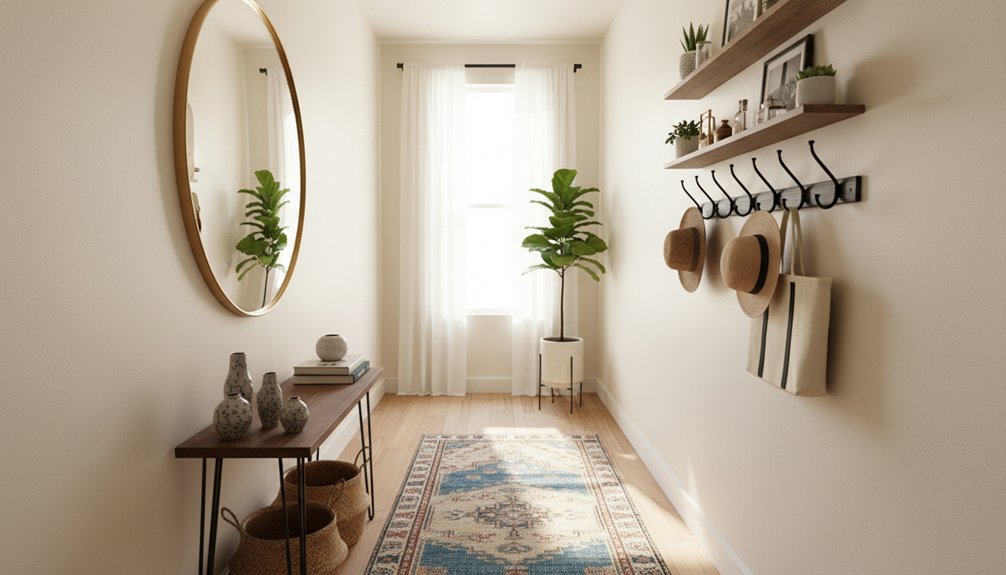
To optimize your narrow hallway, measure the width at several points and ensure at least 36 inches of clearance for comfortable movement. Select slim console tables or benches that have a depth of 10-14 inches to fit snugly against the walls. Install wall-mounted hooks with 6-8 inches of spacing between them, and add floating shelves at varying heights to maximize vertical space. Use durable materials, such as hardwood or powder-coated metal, to withstand daily wear and tear. Position furniture thoughtfully to maintain an open feel in the hallway.
Next, explore lighting solutions and mirror placements that can visually expand the space. Use wall sconces or overhead fixtures to brighten the area without taking up floor space. Place mirrors strategically to reflect light and create the illusion of depth, making your hallway feel larger than it is. By focusing on these specific strategies, you can effectively enhance the functionality and aesthetics of your narrow hallway.
Measuring Your Hallway: Dimensions That Determine Furniture Fit
To find the right furniture for a narrow hallway, start by measuring the hallway accurately. Measure the width at several points—beginning, middle, and end—because walls may not be straight. Record the width from baseboard to baseboard.
Also, measure any obstacles like radiators, light switches, or door frames that might reduce usable space. Additionally, measure the hallway’s length and ceiling height. Keep these measurements accessible when shopping.
When selecting furniture designed for hallways, focus on options that are 10 to 16 inches deep. Ensure your furniture dimensions match your measurements while leaving at least 36 inches of clearance for comfortable passage. This clearance allows safe movement and prevents congestion in the hallway. Avoid furniture that exceeds these dimensions to maintain a functional and visually appealing space. Consider using multi-functional items that can maximize storage and usability in tight areas.
Slim Console Tables and Benches for Tight Entryways
When you furnish a narrow hallway, selecting the right console table or bench directly impacts functionality and organization. Focus on pieces with a depth between 10 to 14 inches to ensure they don’t obstruct foot traffic while still offering necessary surface space and storage options. Ideal choices integrate slim designs with practical features, such as drawers, shelves, or hidden compartments, to utilize every inch effectively.
To maximize space in tight entryways, prioritize console tables and benches that fit snugly against walls. These pieces should provide enough surface area for keys, bags, or decorative items while maintaining clear walkways. Look for models with built-in storage solutions like drawers that can hold small items and keep the space tidy.
Consider the limitations of narrow hallways when selecting furniture. Avoid bulky items that overwhelm the area and create clutter. Instead, seek out streamlined designs that add style without compromising movement. Additionally, choosing solid wood furniture made from durable materials can enhance longevity and withstand everyday wear.
For practical examples, a console table measuring 30 inches wide, 12 inches deep, and 36 inches high can serve as a functional entryway piece. Alternatively, a bench with similar dimensions, featuring a lift-top for storage, can offer seating while keeping shoes and other items out of sight.
Ideal Console Table Dimensions
Finding the right console table for a narrow hallway requires specific measurements to ensure functionality and accessibility. Aim for a depth of 10-14 inches to provide enough walkway clearance.
With standard hallway widths at 36 inches, maintaining at least 24 inches of open space allows for comfortable movement. For height, set your console table between 28-32 inches to align with standard furniture proportions.
When selecting a console table style, consider your hallway layout. Position the table against the wall, avoiding door swings and high-traffic areas.
Always measure your available space twice before making a purchase. Account for any baseboards and wall outlets that may affect placement. A width range of 30-48 inches typically suits most narrow hallways.
If storage is a priority, look for tables that incorporate built-in storage solutions to maximize utility without sacrificing space.
Space-Saving Bench Styles
Benches provide essential seating and storage solutions in narrow hallways. Lift-top benches conceal shoes and accessories while maximizing vertical space. Wall-mounted floating benches eliminate floor clutter, creating an open feel in compact areas. Current trends emphasize slim bench profiles that measure 12-15 inches deep, preventing obstruction of traffic flow.
Benches equipped with built-in hooks make it easy to hang coats and bags directly above the seating area. Innovative designs feature pull-out drawers hidden beneath cushions, allowing for organized storage of items. Compartmentalized interiors help users categorize belongings effectively.
Corner benches capitalize on angular spaces that often go unused, providing additional seating solutions. Open shelving beneath benches offers quick access to frequently used items while maintaining visual airiness in the hallway.
Limitations do exist; overly bulky benches can disrupt movement in narrow spaces. It’s important to choose models that align with the dimensions of your hallway to ensure functionality.
Multi-Functional Storage Features
Slim console tables serve as practical solutions for narrow hallways by providing surface space and storage without taking up too much room.
These tables optimize your hallway by incorporating built-in storage, ensuring that clutter remains out of sight and enhancing the functionality of tight spaces.
Key Multi-Functional Storage Features to Consider:
- Hidden compartments beneath the tabletops store everyday items like keys, mail, and other personal belongings, allowing for easy access when you need them.
- Pull-out drawers efficiently organize smaller accessories such as sunglasses, pet leashes, and charging cables, keeping everything in its place and easy to find.
- Lower shelves can hold decorative baskets that hide shoes, scarves, and seasonal items.
This setup not only keeps the space tidy but also adds a stylish touch to your entryway.
Wall-Mounted Hooks, Shelves, and Cubbies That Save Floor Space
When you manage a narrow hallway, wall-mounted storage solutions help you keep the floor space clear and organized.
First, install hooks at a height that provides easy access while keeping items off the ground.
Next, utilize floating shelves to maximize vertical wall space; these shelves can hold decorative items, books, or everyday essentials.
Additionally, consider multi-level cubbies to efficiently use wall area; these cubbies create separate storage sections for different items, allowing for better categorization. Incorporating functional design principles in your hallway can enhance both usability and aesthetics.
Strategic Hook Placement Tips
To maximize vertical space in a narrow hallway without cluttering the floor, focus on strategic hook placement.
Understand the different types of hooks and their specific functions. Single hooks are ideal for hanging individual coats, while multi-prong hooks can accommodate bags and accessories.
Follow these placement strategies to optimize your hallway:
- Install hooks at varying heights – Mount hooks at 65 inches for adult coats and at 40 inches for children’s items. This ensures that storage is accessible for everyone in the household.
- Space hooks 6-8 inches apart – Position hooks with this distance to prevent overcrowding. This spacing allows items to hang freely without touching, which helps reduce wrinkles and keeps the area organized.
- Position hooks near entryways – Place hooks within arm’s reach of your door. This location provides convenient access for individuals entering or leaving the home, making it easier to grab or hang items quickly.
Floating Shelves Maximize Space
Floating shelves enhance hallway storage by providing designated spots for keys, mail, and decorative items. Choose materials like wood for warmth or metal and glass for a modern look. Install shelves at eye level to ensure easy access to frequently used items.
Arrange multiple shelves at staggered heights to optimize vertical space in narrow hallways without creating a cluttered appearance.
For effective decorative shelf arrangements, balance functionality and style. Place a small bowl for keys next to a framed photo or a plant to keep items organized and visually appealing. This method effectively transforms otherwise unused wall space into practical storage solutions while maintaining an open feel in your hallway.
When planning your floating shelves, remember to avoid overcrowding. Limit the number of items on each shelf to prevent visual clutter. Use clear containers for smaller items to maintain organization and enhance the overall aesthetic.
Multi-Level Cubby Storage Solutions
Multi-level cubby systems provide a practical solution for organizing narrow hallways. These units combine hooks, shelves, and compartments into one vertical structure. With these wall-mounted systems, you can efficiently store shoes, bags, keys, and everyday essentials without using up floor space.
Key Benefits of Multi-Level Cubbies:
- Maximize Wall Space: Floor-to-ceiling designs utilize vertical wall space that often remains empty in narrow hallways. This design helps you make the most of limited areas.
- Customize Storage: Adjustable compartments allow you to tailor the cubby organization to fit your specific storage needs. You can easily rearrange the compartments to accommodate different items.
- Easy Access: Open-front cubbies enable quick access to frequently used items. You can grab your keys or bag without dealing with doors, saving time during busy mornings.
When you install multi-level cubby systems, you transform your hallway into a functional space that efficiently accommodates your family’s belongings.
These units help maintain order while ensuring that essential items are always within reach.
Multi-Purpose Narrow Hallway Furniture for Extra Storage
Storage ottomans provide hidden compartments for organizing shoes, accessories, or seasonal items while serving as a comfortable seat for putting on footwear.
Models with lift-top lids or pull-out drawers effectively utilize vertical space, keeping your hallway tidy and uncluttered.
Compact cabinets equipped with fold-down desks create functional workstations when needed.
These units easily tuck away to maintain clear pathways in narrow hallways.
Look for cabinets that combine hooks, shelves, and enclosed storage in a slim profile to maximize utility without occupying unnecessary space.
Console tables with drawers and lower shelves offer display space on top while concealing everyday items below.
These multi-purpose storage solutions help you make the most of every inch in your hallway.
When choosing these products, consider the balance between storage capacity and the overall footprint in your living space.
Durable Materials That Withstand Scuffs and Daily Wear
Hallway furniture faces daily contact from bags, shoes, keys, and foot traffic. Selecting durable materials is essential for maintaining appearance and functionality over time. Choose materials that resist scratches and wear to ensure long-term use.
Durable materials withstand the constant wear of daily hallway traffic, preserving both beauty and function for years to come.
1. Hardwood with Durable Finishes****: Select hardwoods like oak, maple, or walnut, and apply polyurethane or lacquer finishes. These coatings protect surfaces from daily scuffs and scratches, extending the life of your furniture.
2. Metal Frames with Powder Coating****: Utilize steel or aluminum for furniture frames. Powder coating provides a tough surface that resists chipping and rust, ensuring your hallway furniture remains sturdy and visually appealing despite heavy use.
3. Resilient Fabrics for Seating**: Opt for performance fabrics such as microfiber, leather, or vinyl-coated textiles for upholstered items. These materials repel stains and clean easily**, maintaining their appearance without showing wear patterns.
These material choices require minimal maintenance and protect your investment.
Arranging Furniture to Make Narrow Hallways Feel More Open
To create a more open atmosphere in narrow hallways, position furniture strategically. Start by placing furniture against the walls, which maximizes walking space. For example, position a slim console table on one side of the hallway rather than centering it. This keeps pathways open for easy movement.
Next, arrange taller furniture, like bookshelves or plants, at the end of the hallway. This draws the eye forward and adds depth to the space. Avoid clustering furniture in one area, which can create bottlenecks. Instead, distribute furniture evenly throughout the corridor to maintain a smooth flow.
Utilize wall space by mounting hooks and shelves vertically. This approach keeps floor space clear while still providing storage options. Ensure there’s at least thirty-six inches of clearance in the hallway. This width allows for comfortable passage and ensures the space remains functional and visually appealing.
Lighting and Mirror Tricks That Expand Small Hallway Spaces
Proper lighting and mirror placement can significantly enhance the perception of space in narrow hallways.
Combining ambient lighting with strategically positioned mirrors allows you to maximize the feeling of openness in these tight areas. Reflective surfaces actively distribute light, which creates an illusion of increased width and depth.
Three Essential Techniques for Lighting and Mirrors:
- Install wall sconces along the walls at regular intervals to brighten dark corners and reduce shadows. This lighting technique helps eliminate the cramped feeling often associated with narrow hallways.
- Position large mirrors directly across from windows or other light sources. This setup doubles the natural light that enters the space and visually expands the hallway, making it appear wider.
- Use LED strip lighting along baseboards or ceiling edges. This method adds depth perception and offers a subtle way to guide movement through the hallway without overwhelming the space with light.
To achieve the best results, ensure that reflective surfaces remain clean and free from obstructions.
Layer multiple light sources at varying heights to create a sense of dimension, further enhancing the openness of your narrow hallway.