

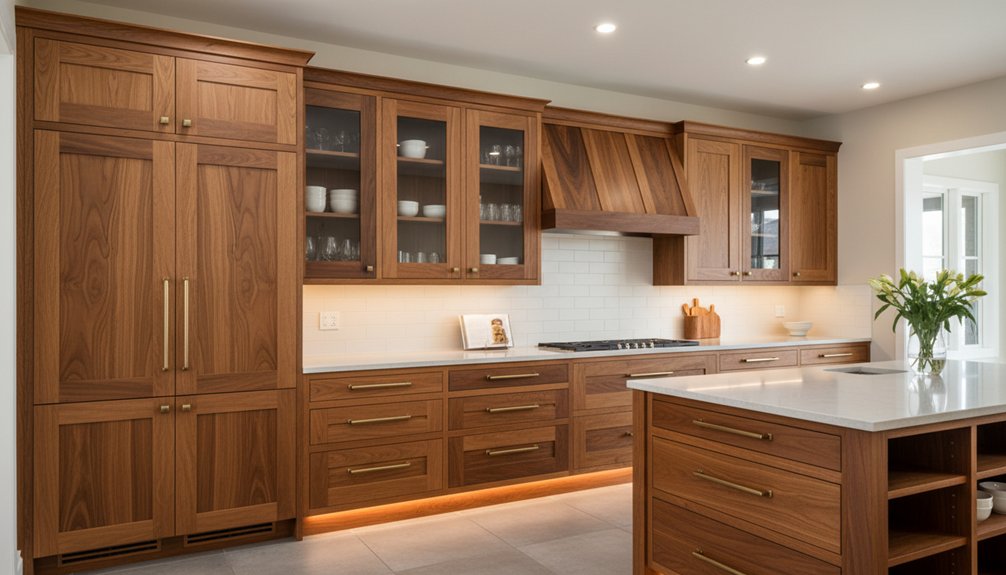
Solid wood kitchen cabinets provide superior durability compared to particle board options. Standard base cabinets measure 34.5 inches in height and 24 inches in depth. Wall cabinets come in three height options: 30, 36, or 42 inches. You will select from three main door styles: Shaker, which offers a versatile look suitable for both farmhouse and modern designs; flat-panel, which fits minimalist aesthetics; and raised-panel, which delivers a classic, traditional elegance.
In terms of wood species, Oak, Maple, and Cherry each have distinct characteristics. Oak provides durability with a Janka hardness rating of 1,300, making it resistant to wear. Maple, with a hardness of 1,450, is highly scratch-resistant, perfect for busy kitchens. Cherry, at a hardness of 950, offers an elegant appearance but is softer and may require more care. Each wood type suits different room sizes and lighting conditions, which I can help you evaluate based on your specific kitchen environment.
When selecting cabinets, consider how your choices impact functionality and aesthetics. For example, Shaker doors can blend well in various styles, while flat-panel designs highlight simplicity. You’ll also want to assess lighting; lighter woods like Maple can brighten a space, while darker woods like Cherry can add warmth. Let’s discuss how these factors align with your kitchen layout and design preferences.
Why Solid Wood Kitchen Cabinets Outlast Particle Board and MDF
When you select kitchen storage cabinets, the material choice impacts their lifespan. Solid wood cabinets offer unmatched durability. Solid wood resists moisture damage and maintains structural integrity for decades.
In contrast, particle board cabinets swell and crumble when exposed to humidity. Similarly, MDF cabinets also break down under stress and moisture.
The longevity of kitchen cabinets relies on the material’s ability to withstand daily use. Solid wood handles the weight of dishes and endures repeated opening and closing without warping or breaking.
You can refinish solid wood multiple times, which extends its lifespan significantly. On the other hand, particle board and MDF can’t be sanded down or restored effectively. This restoration capability makes solid wood the superior investment for your kitchen. Additionally, solid wood furniture can be refinished multiple times, enhancing its aesthetic appeal over the years.
Measuring Your Kitchen: Standard Solid Wood Cabinet Dimensions
Before purchasing solid wood kitchen cabinets, measure your kitchen space accurately. Standard base cabinets measure 34.5 inches in height, and with countertops, they reach 36 inches. Wall cabinets come in three height options: 30, 36, or 42 inches.
Ensure that you consider cabinet depth for functionality; base cabinets typically have a depth of 24 inches, while wall cabinets are usually 12 inches deep. These dimensions help you open doors and drawers comfortably.
Standard cabinet depths—24 inches for base units and 12 inches for wall units—ensure comfortable access to doors and drawers.
Next, measure your kitchen layout to determine which cabinet sizes fit best. Measure wall lengths, ceiling heights, and the space between appliances accurately.
Make sure to account for windows, doorways, and electrical outlets in your measurements. Write down each measurement in detail and double-check them to avoid mistakes.
If standard dimensions don’t fit your space perfectly, consider custom solid wood cabinets. Custom options provide flexibility and can be tailored to meet your specific kitchen requirements. Additionally, maintaining a clearance of at least 30 inches of clearance can enhance movement and accessibility throughout your kitchen space.
Freestanding vs. Built-In Solid Wood Cabinets: Pros and Cons
Choosing between freestanding and built-in solid wood cabinets directly impacts your kitchen’s functionality and design.
Freestanding cabinets provide flexibility, allowing you to move them to different locations or take them with you when you relocate. You typically spend less on installation for freestanding cabinets because they don’t require professional mounting or custom fitting. This makes replacing them easier if you decide to refresh your kitchen’s look.
In contrast, built-in cabinets maximize storage space by fitting precisely into available areas, including corners and awkward spaces. Built-in cabinets create a seamless, custom appearance, which can enhance your home’s value. These cabinets stay firmly attached to walls, offering superior stability for heavy items. However, the trade-off for their benefits is higher installation costs and permanent placement.
Your decision should reflect your priorities: choose freestanding cabinets for flexibility and ease of replacement, or select built-in cabinets for optimized storage and a tailored kitchen design. Understanding various furniture styles will help you make an informed choice.
Each option has its advantages and limitations, and understanding them will help you make an informed choice.
Shaker, Flat-Panel, and Raised-Panel Cabinet Door Styles
When you choose cabinet doors for kitchen storage, focus on three main styles: Shaker, flat-panel, and raised-panel. Each cabinet door style significantly influences your kitchen’s overall look, whether you prefer a traditional or modern design.
Shaker doors feature a simple, clean aesthetic with a recessed panel, making them versatile for various styles. Flat-panel doors have a sleek, minimalist appearance, which fits well in contemporary kitchens. Raised-panel doors, on the other hand, add depth and detail, often suited for more classic designs.
Understanding these cabinet door styles allows you to match them with appropriate wood species. For Shaker doors, popular choices include maple and birch due to their smooth finishes. Flat-panel doors often use plywood or MDF, which provides a clean surface for paint or veneer. Raised-panel doors typically utilize hardwoods like oak or cherry, enhancing their detailed features.
When selecting cabinet doors, consider the overall style of your kitchen and your budget. Each style has its strengths and limitations, so evaluate what works best for your space.
For example, Shaker doors are generally more affordable and easier to maintain than intricate raised-panel designs. Knowing these details ensures you make an informed decision that aligns with your aesthetic preferences and practical needs.
Defining Each Door Style
Each cabinet door style contributes unique characteristics to your kitchen through specific design and construction features. Understanding these styles allows you to select the best fit for your space, influencing both aesthetics and functionality.
Shaker doors consist of a flat center panel framed by a simple border. This design creates clean lines, making shaker doors suitable for both traditional and modern kitchens.
Flat-panel doors feature a completely smooth surface without raised elements. This design offers a sleek and contemporary look, commonly used in minimalist kitchen styles.
Raised-panel doors include a center panel that projects outward from the frame. This design provides dimensional depth and adds a classical elegance that works well in more formal settings.
Each door style employs different joinery techniques and wood profiles, which result in variations in:
- Shadow lines and surface depth
- Visual weight and overall presence
- Light reflection patterns
- Levels of decorative complexity
- Formality of design
These variations impact how each style integrates into your kitchen environment. For example, shaker doors may create a cozy, inviting feel, while flat-panel doors enhance a modern, streamlined appearance.
Understanding these distinctions helps you make an informed decision tailored to your kitchen’s design goals.
Visual Appeal and Aesthetics
When selecting cabinet door styles for your kitchen, consider how each style visually impacts the overall design.
Shaker doors provide versatility, fitting well with both farmhouse and modern minimalism. Their clean lines suit neutral colors like white, gray, or natural wood finishes.
If you prefer a sleek look, flat-panel doors offer a contemporary aesthetic that pairs well with bold colors and high-gloss finishes. These doors prioritize a streamlined appearance without decorative elements.
Raised-panel doors contribute traditional elegance through their three-dimensional profiles. The depth and shadowing of these doors enhance classic design trends and work beautifully with rich wood stains or painted finishes.
Each cabinet door style significantly alters your kitchen’s visual atmosphere, so align your choice with your design goals and personal taste.
Best Wood Species Options
Choosing the right wood species for cabinet doors directly influences durability and appearance. Understanding the characteristics of each wood species allows for informed decisions in cabinet manufacturing. Each wood type presents distinct grain patterns, hardness levels, and color variations that fit various cabinet styles.
Here are five solid wood options commonly used for cabinets:
- Oak: Oak provides exceptional strength and showcases distinctive grain patterns. This species is ideal for high-traffic kitchens due to its durability.
- Maple: Maple offers a smooth texture and a consistent appearance. It resists dents and scratches, making it a practical choice for cabinets that endure daily use.
- Cherry: Cherry wood delivers rich warmth that deepens beautifully over time. Its natural aging process enhances its color and character, making it a popular choice for elegant kitchen designs.
- Hickory: Hickory features dramatic grain patterns that create bold visual impact. This species is one of the hardest domestic woods, making it suitable for cabinets in active households.
- Walnut: Walnut exhibits luxurious dark tones that add sophistication to any space. Its natural beauty and durability make it a premium choice for custom cabinet projects.
When selecting wood for cabinet construction, evaluate both sustainability and aesthetics.
Hardwoods like maple and oak effectively resist daily wear. In contrast, softer woods may show dents and wear more readily. Your wood species choice plays a crucial role in how your cabinets perform over the years.
Single Door, Double Door, or Glass-Front Display Cabinets
When you choose a cabinet for your kitchen, consider the door style, as it affects both how you use the space and how it looks.
Single door cabinets fit well in narrow areas. They allow quick access to frequently used items, making them ideal for small kitchens or limited storage situations.
Single door cabinets maximize narrow spaces while providing quick access to everyday essentials in compact kitchens.
Double door cabinets offer a wider opening, which is useful for storing larger items like mixing bowls and small appliances. These cabinets provide more storage capacity within a single unit, making them a practical choice for kitchens with ample space.
Glass-front display cabinets enhance standard cabinets by allowing you to showcase your best dinnerware or collectibles. The transparent panels keep your items visible and dust-free, transforming your kitchen storage into a decorative feature.
When selecting a cabinet, think about your storage needs and the layout of your kitchen. Identify the items you plan to store and how often you’ll need to access them. This will guide you in making an informed decision on the cabinet style that best meets your requirements.
Oak vs. Pine vs. Maple vs. Cherry: Choosing Your Wood Species
When selecting wood for kitchen storage cabinets, prioritize understanding the differences in strength and longevity among oak, pine, maple, and cherry. Each wood species possesses unique characteristics that influence durability and cost.
Let’s compare these four types based on hardness ratings and pricing to help you make an informed decision.
Oak provides exceptional strength and durability, making it a preferred choice for high-traffic areas. Its hardness rating is about 1,300 on the Janka scale, which means it resists dents and scratches well. Expect to pay between $3 to $8 per board foot for oak.
Pine offers a softer alternative with a Janka hardness rating around 690. This softness makes pine easier to work with but less resistant to wear over time. Pine typically costs between $2 to $5 per board foot, making it a budget-friendly option for kitchen cabinets.
Maple stands out for its hardness and smooth grain. With a Janka rating of approximately 1,450, maple is durable and suitable for kitchen environments. You can expect to pay around $3 to $7 per board foot for maple.
Cherry showcases a beautiful reddish hue that deepens with age. While it has a hardness rating of about 950, cherry balances aesthetics with decent durability. The price for cherry ranges from $5 to $10 per board foot, reflecting its premium quality.
Durability and Hardness Comparison
The durability of kitchen storage cabinets relies heavily on the wood species chosen. Understanding Janka hardness ratings helps you select materials that perform well over time. The Janka hardness test measures wood’s resistance to denting and wear; higher ratings signify stronger wood.
When analyzing durability, focus on these hardness ratings:
- Maple scores 1,450, making it highly resistant to daily wear and tear.
- Oak follows with a score of 1,290, providing excellent durability for busy kitchens.
- Cherry measures 950, offering a balance of moderate hardness and attractive aesthetics.
- Pine scores 380, which means it’s more susceptible to scratches and dents.
Your wood choice directly impacts how well your cabinets endure years of use. Maple and oak withstand heavy cookware and frequent door openings better than cherry and pine.
Pine is suitable for decorative areas with lighter use, while cherry strikes a balance between durability and beauty.
Cost and Availability Factors
When selecting wood species for your kitchen cabinets, your budget plays a crucial role. Pine offers the most economical choice, with prices starting lower than hardwood options, making it suitable for cost-conscious projects.
Oak serves as a solid mid-range selection, delivering good durability and value for its price. Maple and cherry are priced at a premium due to their enhanced qualities and visual appeal.
Availability varies among wood types. Oak consistently remains in stock at lumber suppliers, ensuring easy access. Cherry’s availability, however, can change based on seasonal harvests, which may limit options.
Pine benefits from extensive cultivation, providing a reliable supply throughout the year. Maple is generally available, but higher-grade options can come at a steeper cost.
Regional factors can also impact pricing. Sourcing wood locally often reduces transportation expenses, making it a more affordable choice.
Exotic wood species or specialty cuts will significantly raise your overall investment compared to standard domestic woods. Understanding these factors can help you make informed decisions for your kitchen cabinet project.
Hand-Painted vs. Stained Finishes for Solid Wood Cabinets
Choosing between hand-painted and stained finishes for solid wood kitchen cabinets involves clear considerations. Hand-painted finishes allow for full color customization and can effectively conceal wood grain, providing a sleek, modern appearance. In contrast, stained finishes maintain the natural wood grain while enhancing its depth and character.
When deciding on your finish, consider these essential factors:
- Warmth: Stained finishes create inviting and cozy atmospheres, perfect for traditional kitchen designs.
- Sophistication: Hand-painted cabinets add a crisp, modern elegance, suitable for contemporary spaces.
- Authenticity: Stains highlight natural wood grain, connecting you to organic materials and showcasing craftsmanship.
- Expression: Custom paint colors enable you to express your personal style and vision in your kitchen.
- Timelessness: Both hand-painted and stained finishes provide durability and long-lasting beauty when properly cared for.
Your decision should focus on your desired aesthetics, maintenance requirements, and overall kitchen design goals.
Analyze how each finish aligns with your vision to make a well-informed choice.
Matching Solid Wood Cabinets to Your Kitchen Layout and Color Scheme
When you match solid wood cabinets to your kitchen’s layout and color scheme, focus on three main elements: cabinet wood tone, architectural features, and natural lighting. Start your process by determining the dominant color palette in your kitchen. For instance, light woods like maple work well in small spaces because they reflect light and create an airy feel. In contrast, darker woods such as walnut can add a sense of elegance and sophistication to larger kitchens.
Next, consider the kitchen layout. Traffic flow is crucial; position cabinets to allow easy movement and access to windows and appliances. This ensures functionality while enhancing the aesthetic appeal of the space.
Here’s a breakdown of various wood types and their suitability for different kitchen environments:
| Wood Type | Best Room Size | Lighting Requirement | Style Match | Color Pairing |
|---|---|---|---|---|
| Cherry | Medium-Large | Moderate-High | Traditional | Warm neutrals |
| Maple | Small-Medium | Low-Moderate | Contemporary | Cool tones |
| Oak | Any | Any | Rustic | Earth tones |
| Walnut | Large | High | Modern | Monochrome |
| Pine | Small-Medium | Moderate | Cottage | Pastels |
Choosing the right wood type requires attention to room size and lighting. For medium to large kitchens with moderate to high lighting, cherry wood pairs well with warm neutrals. In small to medium kitchens with low to moderate lighting, maple complements cool tones effectively.
Oak fits into any kitchen size and lighting condition, thanks to its versatility and rustic charm, and it pairs beautifully with earth tones. In larger, well-lit spaces, walnut stands out with a modern look, especially when matched with monochrome colors. Finally, for a cozy cottage style in small to medium kitchens, pine works well with pastel shades.
Keep in mind that not every wood type will suit every kitchen. Consider the kitchen’s overall style and the existing architectural features. Ensure your cabinet placement enhances the room’s functionality while aligning with the chosen color scheme. By focusing on these key elements, you can create a cohesive and inviting kitchen space.
Preventing Warping and Cracking: Solid Wood Cabinet Care in Humid Kitchens
Humidity presents a significant risk to solid wood cabinets, leading to expansion, warping, and cracking. To safeguard your investment, focus on proper sealing and humidity control. Use a high-quality finish on all cabinet surfaces, including the interiors. Keep indoor humidity levels between 35-50% by utilizing dehumidifiers or air conditioning systems.
Protect solid wood cabinets from humidity damage through proper sealing, quality finishes, and maintaining indoor humidity levels between 35-50%.
To protect your cabinets, implement these specific practices:
- Wipe up water spills immediately to stop moisture from penetrating the wood grain.
- Install exhaust fans near sinks and cooking areas to minimize steam accumulation during cooking.
- Check cabinet seals annually and reapply the finish to any worn areas to maintain protection.
- Avoid placing cabinets directly next to heat-producing appliances like dishwashers or refrigerators, as they can create excess moisture and heat.
- Monitor humidity levels with a hygrometer throughout the year to ensure they remain within the ideal range.
Regular maintenance of your solid wood cabinets prevents costly repairs and preserves their appearance for decades.
Focus on these tasks consistently, and your cabinets will withstand the challenges of a humid kitchen environment.