

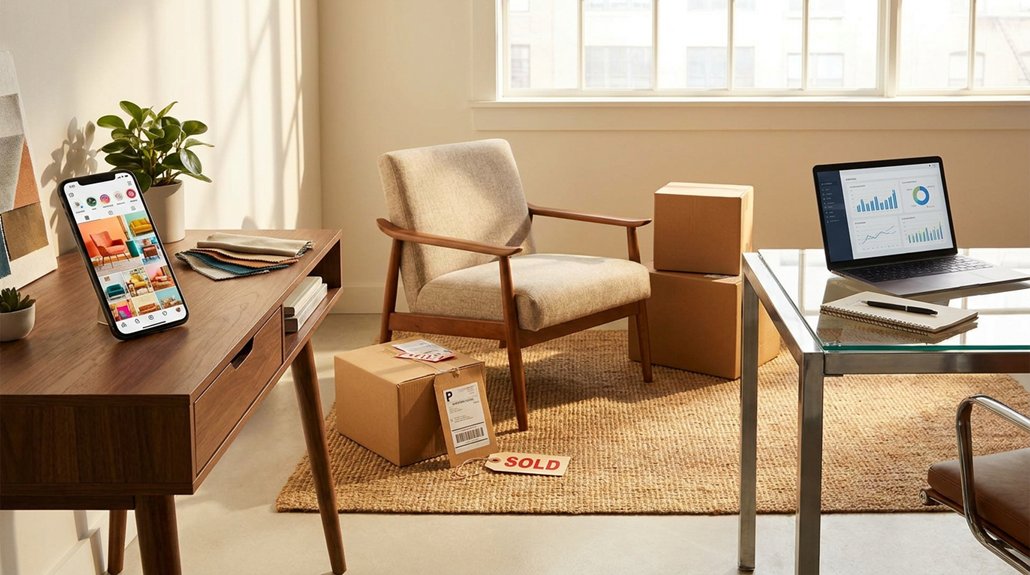
We’ve tested both Instagram and Facebook Ads for furniture dropshipping. Instagram drives higher engagement and influences mid-funnel decisions. However, Facebook typically delivers better and more scalable return on ad spend (ROAS), especially for high-ticket furniture items.
Instagram Reels, user-generated content (UGC), and influencer posts effectively generate clicks and add-to-cart actions. Facebook’s precise targeting and varied ad formats convert cold traffic into buyers more efficiently.
The most effective strategy combines both platforms. Use Instagram to warm up audiences and then leverage Facebook to close sales. This two-step approach maximizes overall ROAS.
Instagram Drives Engagement
Instagram captures attention with engaging visuals and interactive content. Reels and UGC encourage users to explore products and increase interest. Influencer partnerships amplify reach and create authentic connections with potential customers.
Facebook Converts Cold Traffic
Facebook excels in converting users unfamiliar with your brand into buyers. Its targeting options allow you to reach specific demographics effectively. Varied ad formats, such as carousel ads and dynamic product ads, encourage users to make purchases.
Combine Both Platforms for Best Results
Using Instagram to build interest and Facebook to drive conversions leads to optimal results. First, generate awareness and engagement on Instagram. Then, retarget those warm audiences on Facebook to close sales. This method combines the strengths of both platforms for maximum impact.
Limitations and Considerations
Instagram may not always produce direct sales, especially for lower-priced items. Facebook may struggle with engagement compared to Instagram. Adjust your strategy based on the performance of each platform to ensure you achieve the best ROAS for your furniture dropshipping business.
By following this structured approach, you can effectively utilize both Instagram and Facebook Ads to enhance your furniture dropshipping efforts.
Instagram vs Facebook: Which Drives Better Furniture ROAS?
When selling furniture, Instagram generates better engagement at the top of the sales funnel. Instagram’s visual formats, such as room makeovers, carousels, and Reels, achieve higher engagement rates, including thumb stops and saves.
Influencer partnerships on Instagram can boost click-through and add-to-cart rates, especially during key shopping periods like Black Friday or back-to-college.
Conversely, Facebook typically delivers stronger last-click Return on Ad Spend (ROAS). Facebook’s extensive demographic targeting, interest categories, and lookalike audiences convert cold traffic effectively, particularly for higher-priced furniture items.
Our analysis shows that Facebook video ads and collection ads, when combined with customer testimonials, reduce buyer hesitation and lower the cost per purchase. Additionally, the durability of solid wood furniture can be emphasized in marketing materials to highlight long-term value to potential buyers.
Key Takeaways
- Instagram excels in engagement: Use visually appealing formats to attract initial interest.
- Facebook drives conversions: Leverage detailed targeting to convert interested buyers into customers.
- Seasonal strategies matter: Utilize influencer marketing on Instagram during peak shopping times for greater impact.
Limitations
While Instagram is effective for brand awareness, it may not convert as efficiently for high-ticket items as Facebook.
Additionally, Facebook’s effectiveness can diminish without strategic targeting and retargeting efforts.
Practical Applications
To maximize furniture sales, allocate ad spending based on the stage of the customer journey.
Use Instagram for initial engagement and Facebook for final conversions.
Monitor performance metrics closely to adjust strategies based on real-time data.
Why Furniture Dropshipping Needs a Different Ad Playbook
Furniture dropshipping requires a tailored advertising strategy due to high ticket prices, bulky logistics, and extended buying cycles. Unlike apparel or beauty products, furniture represents significant commitments. Therefore, our advertising approach must address specific buyer hesitations and increased consideration.
Market Analysis and Audience Segmentation
Conducting thorough market analysis and segmenting audiences based on data is crucial. We analyze furniture trends, income levels, and life events—such as moving or renovating—to understand consumer behavior. This analysis informs our spending strategy before scaling. By aligning ad formats with consumer journeys, we utilize room mockups, 3D views, and user-generated content (UGC) to mitigate buyer risk and address questions like “Will this fit my space and style?”
| Strategic Lever | Importance for ROAS |
|---|---|
| Visual storytelling | Enhances perceived value, reduces doubt |
| Seasonal promotions | Captures spikes in market intent |
| Branding strategies | Justifies premium pricing, increases LTV |
Visual Storytelling Increases Perceived Value
Utilizing visual storytelling effectively enhances perceived value. High-quality images and videos of furniture in realistic settings help customers imagine the product in their own spaces. This approach lowers buyer doubt and increases conversion rates. Additionally, creating distinct zones in open layouts can showcase how different furniture pieces work together in a cohesive design.
Seasonal Promotions Capture Intent
Implementing seasonal promotions captures spikes in consumer intent. For example, targeting advertisements around back-to-school or holiday seasons can drive significant traffic. These promotions align with consumers’ purchasing behaviors during specific times, maximizing our advertising effectiveness.
Branding Strategies Justify Premium Pricing
Developing strong branding strategies justifies our premium pricing. Establishing a recognizable brand builds trust and increases customer lifetime value (LTV). Consistent messaging and quality visuals reinforce our brand’s reliability, making customers more willing to invest in higher-priced items.
Choosing Instagram vs Facebook Ads for Furniture Sales
When deciding where to allocate ad dollars for selling higher-ticket furniture, analyze market research data. Identify age, income, and device usage to determine where potential buyers engage most.
If data shows younger, design-focused shoppers, prioritize Instagram for its visual content and high engagement. If the target audience consists of older homeowners or families, allocate more budget to Facebook due to its wider reach and community-oriented behavior, which typically yields better Return on Ad Spend (ROAS).
Align Platform Choice with Content Strategy
Choose content that matches the platform. For Instagram, create visually appealing room scenes, utilize user-generated content (UGC), and partner with influencers. Incorporating traditional styles into your visual content can also enhance appeal to a broader audience.
Sync these creatives with seasonal trends, such as holiday hosting or back-to-college promotions, to enhance relevance and engagement. For Facebook, focus on detailed product information, customer reviews, and retargeting campaigns based on customer feedback to drive conversion.
Test Niche Targeting on Both Platforms
Implement niche targeting strategies on both Instagram and Facebook. Target interests like interior design, home renovation, and new homeowners.
Monitor performance metrics closely. Shift budget toward the ad sets and platforms that deliver lower Cost Per Acquisition (CPA) and higher Customer Lifetime Value (LTV). Avoid focusing solely on cheaper clicks; prioritize ads that convert into sales.
Limitations and Considerations
Be aware of platform limitations. Instagram may not effectively reach older demographics, while Facebook may struggle to engage younger audiences.
Tailor your strategy to each platform’s strengths to maximize ad effectiveness. Use analytics to track performance, adjusting strategies as necessary to align with real-time data.
Instagram Ads for Furniture: Pros, Cons, ROAS
Instagram ads drive significant sales for furniture dropshipping when treated as a visual showroom supported by data. We prioritize visual storytelling through short Reels, carousels, and lifestyle images to create a “lived-in” feel for our furniture. We then measure how Instagram engagement translates into adds-to-cart and purchases.
Pros of Instagram Ads for Furniture
Instagram ads allow for precise targeting of audience demographics. We identify potential customers based on interests and behaviors, enabling effective retargeting of users who engage with our content.
Collaborating with influencers helps showcase our furniture in appealing settings, enhancing brand visibility. A strong brand identity and positive customer testimonials increase click-through rates, which lowers our cost per acquisition.
Seasonal campaigns, like “back-to-college” or “holiday hosting,” often yield higher engagement and sales.
Cons of Instagram Ads for Furniture
Creative fatigue occurs quickly with Instagram ads. Frequent changes in ad formats can raise our cost per thousand impressions (CPM).
Achieving a strong return on ad spend (ROAS) necessitates constant testing of elements like hooks, thumbnails, user-generated content (UGC), and placement strategies.
By refreshing our creatives weekly and discontinuing underperforming ads, we can realistically achieve 3–5x ROAS on effective ad sets.
Facebook Ads for Furniture: Pros, Cons, ROAS
Facebook ads for furniture dropshipping focus on structured testing, audience scaling, and conversion tracking throughout the sales funnel. Advertisers can segment audiences based on demographics like age, income, and life events. This segmentation allows for matching furniture trends with specific intent signals.
Facebook’s platform enables A/B testing of ad formats, including image, video, carousel, and collections. Advertisers can quickly adjust budgets to favor ad sets that show higher conversion rates.
To ensure effective scaling, we rely on data analysis, not assumptions:
- Relief: Analyzing competitor spending reveals weaknesses, allowing us to bid more effectively in those areas.
- Control: We align seasonal promotions with targeted high-intent audiences, avoiding random impressions that don’t convert.
- Security: Customer feedback and return on ad spend (ROAS) data confirm which offers maintain profit margins.
- Pride: Brand storytelling in ad copy and headlines encourages one-time buyers to become repeat customers.
The main challenges include rising cost-per-thousand impressions (CPMs), creative fatigue, and variability during the learning phase.
However, disciplined testing practices help maintain a positive ROAS.
Ad Creatives That Sell Furniture on Instagram vs Facebook
Ad Creatives That Drive Furniture Sales on Instagram and Facebook****
Achieving strong Return on Ad Spend (ROAS) on Instagram and Facebook requires more than just targeting; it requires creatives designed for how users interact with each platform.
Instagram prioritizes vertical video and Reels that showcase furniture in real-life settings. User-generated content, quick before-and-after transformations, and influencer collaborations effectively engage the audience. Native-looking creatives outperform traditional ads, emphasizing brand authenticity rather than heavy branding.
On Facebook, the approach shifts slightly. Lifestyle images still play a role, but ads can include detailed elements like problem-solution copy, comparison carousels, and collection ads that showcase furniture sets, bundles, and financing options.
Combining static images with short-form videos can boost engagement, especially when aligning with seasonal trends such as holiday decorations, back-to-school setups, or summer patios.
Across both platforms, we conduct A/B testing on hooks, angles, and motion elements. We identify low-click-through rate (CTR) creatives and eliminate them, reallocating budget to the most effective visuals.
This method ensures that our spend focuses on top-converting ads.
Targeting and Retargeting on Meta for Better Furniture ROAS
When we scale furniture dropshipping on Meta, effective targeting and retargeting directly impact our cost-per-thousand impressions (CPMs) and overall profitability.
We begin with precise audience segmentation, focusing on home décor shoppers, recent movers, and high-intent website visitors. Next, we create custom audiences based on specific actions: view-content, add-to-cart, and initiate-checkout events. We then expand our reach by developing lookalike audiences to discover similar buyers at scale.
To ensure our strategies yield results, we concentrate on four key emotional triggers that align with our data-driven approach:
- Conversion tracking reveals which audience segments generate actual sales, allowing us to optimize our targeting.
- Retargeting strategies effectively convert “almost buyers,” reducing our cost per acquisition (CPA).
- Engagement metrics by ad placement provide insights that help us quickly eliminate underperforming ads.
- Creative testing tailored to each audience segment’s preferences enhances our control over campaign outcomes, addressing varied styles and price sensitivities.
Budget Split for Furniture Ads on Instagram vs Facebook
Budget Allocation for Furniture Ads on Instagram and Facebook
Our budget allocation for Instagram and Facebook focuses on data-driven decisions. We implement a 50/50 split between the two platforms for the first 7 to 10 days. This approach allows us to gather data that informs future budget adjustments.
We monitor key performance metrics such as ROAS (Return on Ad Spend), cost per purchase, and click-through rate for each platform. If Instagram shows a 30% higher ROAS but has a slightly higher cost per click (CPC), we prioritize budget allocation to Instagram. Revenue efficiency is more important than simply finding cheaper traffic.
Adjusting Ad Spend Based on Performance
We follow strict guidelines for reallocating ad spend based on performance metrics. If one platform achieves a 20% to 30% higher ROAS over a stable week, we shift 10% to 20% of the budget daily towards that platform. This allows us to capitalize on successful campaigns while maintaining balance.
We limit any single platform’s budget to approximately 70% of the total spend. This cap prevents overexposure and reduces the risk of creative fatigue.
Maintaining a Performance-Driven Approach
Campaign Structures That Make Furniture Ads Profitable
We build our advertising structure based on data insights:
1. Prospecting: We segment audiences by room type—living room, office, bedroom—and layer in specific interests.
We conduct extensive creative testing and closely monitor performance metrics to identify effective strategies.
2. Mid-Funnel: We retarget website visitors and social media engagers.
We use higher ad frequency caps and proof-driven creatives, guided by competitor insights and customer reviews to enhance engagement.
3. Bottom-Funnel: We implement dynamic product ads with precise conversion tracking.
We create abandoned-cart follow-up flows and promote limited-time offers that align with seasonal trends to drive immediate sales.
4. LTV / Upsell: We target past buyers with curated bundles and complementary furniture pieces.
We focus on optimizing return on ad spend (ROAS) and encouraging repeat purchases.
Across all tiers, we separate Instagram and Facebook placements.
We monitor cost per thousand impressions (CPM), click-through rate (CTR), and ROAS.
We allocate budgets strategically to maximize performance in the highest-yield segments.