

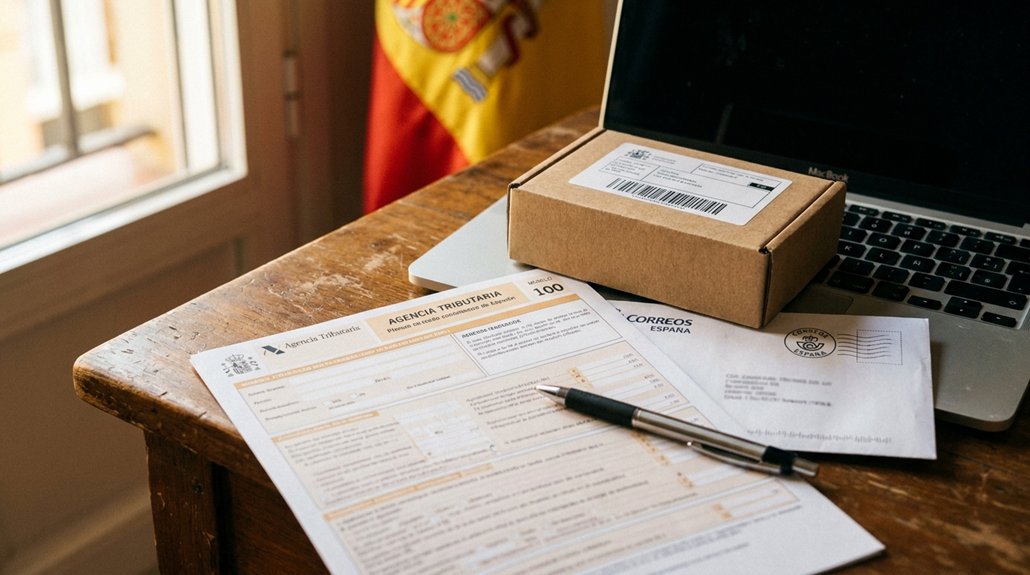
If you operate a dropshipping business in Spain, you must register as an *autónomo* or establish a company. Obtain a tax identification number (NIF) immediately. You are responsible for collecting and remitting 21% VAT on each sale. File quarterly VAT returns using Modelo 303. Your tax obligations also include paying corporate income tax or personal income tax (IRPF), depending on whether you operate as a company or an individual.
Non-compliance with these tax regulations can lead to audits and penalties from the Agencia Tributaria. Ensure that you maintain accurate records of all transactions to support your tax filings.
Registering Your Business
To begin, register as an *autónomo* or create a company. Your registration determines your tax obligations and filing requirements. Secure your NIF to legally operate your business.
Collecting and Remitting VAT
Collect 21% VAT on every sale you make. This tax applies to both domestic and international customers. Remit the collected VAT to the tax authorities during your quarterly filings.
Filing Quarterly Returns
File Modelo 303 every quarter to report your VAT activity. This form details your sales, VAT collected, and any deductions. Completing this accurately prevents issues with the Agencia Tributaria.
Paying Income Tax
Determine whether you need to pay corporate income tax or personal income tax (IRPF) based on your business structure. Calculate your taxable income accurately to ensure correct payment amounts.
Consequences of Non-Compliance
If you fail to comply with tax regulations, be prepared for audits and potential penalties. The Agencia Tributaria actively monitors businesses, and maintaining compliance is crucial to avoid fines.
By understanding these obligations and taking action, you can manage your dropshipping business in Spain effectively.
Is Dropshipping Considered a Business in Spain?
Yes, dropshipping is classified as a business activity in Spain. If you operate a dropshipping business, you must register as a self-employed worker (*autónomo*) or establish a company, depending on your preferred business structure.
To operate legally, you must register with the Spanish Tax Agency (Agencia Tributaria) and obtain a tax identification number. Additionally, you must register with Spain’s Social Security system to ensure compliance with local regulations.
Registering with Spain’s Tax Agency and Social Security system is essential for legally operating a dropshipping business.
Spain treats dropshipping like any other commercial enterprise. You’re responsible for collecting and paying taxes, filing returns, and maintaining accurate financial records. Failing to meet these obligations can lead to penalties, so it’s crucial to understand your responsibilities from the beginning.
Moreover, you need to consider specific constraints. For instance, if your annual revenue exceeds a certain threshold, you may face different tax rates or additional reporting requirements. Always keep track of your income to stay compliant.
Spain’s Key Taxes That Apply to Dropshipping Operations
When you operate a dropshipping business in Spain, you must understand three key taxes: Value Added Tax (VAT), Corporate Income Tax, and Personal Income Tax.
Value Added Tax (VAT): VAT applies to the sale of goods and services. You collect VAT from customers at the point of sale and then remit that collected amount to the Spanish tax authority.
Ensure you register for VAT if your sales exceed the threshold set by the Spanish government.
Corporate Income Tax: If your dropshipping business operates as a corporation, you’ll pay Corporate Income Tax on your profits. The standard rate is 25%, but newly created companies benefit from a reduced rate of 15% for the first two years.
Keep accurate records of your income and expenses to calculate your tax liability correctly.
Personal Income Tax: If you operate as a sole trader, you’ll pay Personal Income Tax on your business income. The tax rates are progressive, ranging from 19% to 47%, depending on your income level.
You must file annual income tax returns and keep detailed records of your sales and expenses for tax purposes.
Understanding these taxes is crucial for compliance and effective financial management in your dropshipping business.
Keep updated on any changes in tax regulations to avoid penalties.
Value Added Tax (VAT)
Value Added Tax (VAT) is a crucial aspect of dropshipping in Spain. As a dropshipper, you must understand that Spain’s standard VAT rate is 21%. You also need to know that reduced rates of 10% and 4% apply to specific goods and services.
You are responsible for collecting VAT on sales made to Spanish customers and remitting it to the tax authorities. To comply with VAT regulations, you must register for a VAT number, file periodic returns, and keep detailed records of all transactions.
Failure to comply can lead to significant penalties, making it essential to stay on top of your VAT obligations.
Some goods may qualify for VAT exemptions. Check the categories of products you sell to see if they fall under these exemptions. For instance, certain food items and medical supplies often have reduced VAT rates.
Understanding these details can help you avoid unnecessary costs and ensure compliance.
Corporate Income Tax
Corporate Income Tax (CIT) directly impacts your dropshipping business operations in Spain. If you operate as a corporation, Spain imposes a standard CIT rate of 25% on your taxable income. Newly established companies benefit from a reduced rate of 15% during their first two profitable years.
To calculate your taxable income, subtract allowable corporate deductions from your total revenue. These deductions encompass essential business expenses, including supplier costs, shipping fees, marketing expenses, and platform fees.
You must file your CIT return annually using Form 200. Payments are due within 25 days after the six-month period following your fiscal year-end.
Keeping your financial records organized simplifies the filing process and ensures compliance.
Personal Income Tax
If you operate your dropshipping business as a sole proprietorship in Spain, you must pay Personal Income Tax (IRPF) on your earnings instead of Corporation Tax (CIT).
IRPF rates range from 19% to 47%, depending on your annual income level. To minimize your tax burden, manage your personal finances to stay in a lower tax bracket.
You must report your dropshipping profits through the annual tax return, known as the *Declaración de la Renta*. This process involves detailing your income and expenses related to your business.
IRPF allows you to deduct legitimate business expenses, such as shipping costs, platform fees, and marketing expenses. These deductions will directly lower your taxable income.
Before you start operating under this tax structure, you must register as an *autónomo* (self-employed worker) with Spain’s Social Security system.
Failure to register can lead to penalties and complications with your tax obligations.
Do Spanish Dropshippers Need to Register for VAT?
Do Spanish Dropshippers Need to Register for VAT?
Spanish dropshippers must register for VAT (IVA) as soon as their business operations begin. This registration is not optional; it is a legal requirement that ensures compliance with Spanish tax laws.
| Condition | VAT Requirement |
|---|---|
| Selling to Spanish customers | Must register for IVA |
| Selling to EU customers | OSS registration applies |
| Selling outside the EU | Standard IVA rules apply |
When a dropshipper sells to customers in Spain, they must register for IVA before making their first sale. This registration allows them to charge the correct VAT rate and fulfill their tax obligations.
For sales to EU customers, dropshippers need to register for the One-Stop Shop (OSS) scheme. This simplifies VAT reporting across EU countries, allowing dropshippers to handle their VAT obligations in one place.
For sales outside the EU, dropshippers must follow standard VAT rules. They may not need to charge VAT, but they should understand the tax implications for their target markets.
Tax compliance is critical. Spanish dropshippers must file quarterly VAT returns and ensure they charge the correct VAT rate on their sales. Failure to register can lead to penalties from the Spanish Tax Agency (Agencia Tributaria).
How to Charge and Collect VAT on Dropshipping Sales
Once you register for VAT in Spain, you must charge the correct VAT rate on your dropshipping sales. For most goods, the VAT rate is 21%. You should include the VAT in your product prices or add it during the checkout process. Ensure that your invoices clearly display the VAT amount collected.
At the end of each tax period, you must remit the collected VAT to the Agencia Tributaria, Spain’s tax authority. Keep accurate records of all sales and VAT collected. This helps you prepare your VAT returns efficiently.
If you sell products that are exempt from VAT or have reduced rates, you must identify those items clearly. You can’t charge the standard 21% VAT on these sales. Understanding these distinctions will help you avoid compliance issues.
For example, if you sell a product priced at €100, you must add €21 for VAT, bringing the total to €121. When you issue the invoice, break down the price and show the VAT separately. This practice maintains transparency and meets tax authority requirements.
Always stay updated on VAT regulations, as changes can affect your compliance responsibilities. Regularly check the Agencia Tributaria website for the latest information on VAT rates and regulations specific to your dropshipping business.
VAT Registration Requirements
Steps for Charging and Collecting VAT on Dropshipping Sales in Spain
Complete VAT Registration
To charge and collect VAT on dropshipping sales in Spain, you must start with VAT registration.
Submit Form 036 to the Spanish Tax Agency (AEAT) to officially register your business for VAT purposes.
Ensure you fill out all required sections accurately to avoid delays in processing.
Understand Compliance Requirements
Next, familiarize yourself with the compliance requirements for dropshipping sales.
You need to track transaction values meticulously.
Issue proper VAT invoices for every sale.
Maintain accurate records of all transactions to support your VAT filings.
Neglecting these requirements can lead to compliance issues.
File Regular VAT Returns
Finally, file your VAT returns regularly.
Depending on your sales volume, you’ll file either quarterly or monthly.
Report the VAT you have collected and pay any amounts owed to AEAT by the deadline.
Missing deadlines can result in penalties, so stay organized and proactive.
Charging VAT Correctly
Charge VAT Correctly on Dropshipping Sales
Complete your VAT registration to charge VAT accurately on your dropshipping sales. Spain’s standard VAT rate is 21%. Apply reduced rates of 10% and 4% for specific product categories. Ensure your invoices reflect these rates accurately.
When you sell to Spanish customers, add VAT directly to the product price. For sales to VAT-registered businesses in other EU countries, you may not charge VAT. Always verify the customer’s VAT number before applying any exemptions.
Maintain detailed records of every sale, including the applied VAT rate. Accurate documentation supports you during tax audits and ensures compliance with the Agencia Tributaria, Spain’s tax authority.
Understand VAT Rates
Identify the correct VAT rate for each product category. Use the standard 21% rate for most goods.
Apply the 10% rate for items like certain food products and the 4% rate for basic necessities. Ensure your invoices clearly show the relevant VAT rate.
Verify Customer VAT Numbers
Check each VAT-registered customer’s number before applying exemptions. Use the EU’s VIES system to validate VAT numbers.
Failing to verify can lead to incorrect VAT charges and potential fines.
Keep Detailed Sales Records
Document every transaction meticulously. Record the sale date, product details, VAT rate applied, and total amount charged.
This practice protects your business during audits and ensures compliance with tax laws.
Maintain Compliance with Tax Authorities
Stay updated on changes in VAT regulations. Regularly review your invoicing practices to ensure they comply with the Agencia Tributaria’s requirements.
Non-compliance can lead to penalties and interest on unpaid taxes.
Collecting and Remitting VAT
Collecting and remitting VAT requires precise actions: charging VAT on sales and transferring that tax to the Agencia Tributaria. Implementing strong VAT compliance practices prevents penalties. Track each transaction meticulously and file returns either quarterly or monthly.
| Step | Action | Deadline |
|---|---|---|
| Charge VAT | Add 21% to the sales price | At point of sale |
| Record transactions | Log all sales and purchases | Ongoing |
| Claim Tax Deductions | Deduct input VAT paid | During filing |
Claiming tax deductions on business expenses, such as supplier invoices, reduces your overall tax burden. Submit your VAT return using Modelo 303. Maintaining accurate records ensures you remit the correct VAT amount and remain compliant with Spanish tax law.
Step-by-Step Actions
- Charge VAT: Add 21% to the sales price at the point of sale. This ensures you collect the correct amount from customers.
- Record Transactions: Log all sales and purchases continuously. This ongoing practice helps maintain accurate records for VAT calculations.
- Claim Tax Deductions: Deduct input VAT paid during your filing period. This action lowers your tax liability effectively.
Practical Considerations
Accurate record-keeping is essential. If records are incomplete, you may miscalculate the VAT owed, leading to penalties. Ensure that every transaction is documented, including receipts and invoices.
Filing Requirements
Use Modelo 303 to submit your VAT return. This form ensures that you report the collected VAT and any deductions accurately. Missing deadlines or submitting incorrect information can result in fines or increased scrutiny from tax authorities.
Limitations
Be aware that not all expenses qualify for VAT deductions. Familiarize yourself with specific exclusions, such as certain personal expenses, to avoid claiming deductions incorrectly.
Conclusion
Collecting and remitting VAT involves systematic actions: charging VAT, recording transactions, and claiming deductions. Focus on accuracy and compliance to navigate the complexities of VAT effectively.
Importing Stock From Outside the EU: What Spanish Dropshippers Owe in Tax
When you import products from suppliers outside the EU, such as China or the United States, you incur import duties and VAT upon their arrival in Spain. Understanding customs regulations is crucial to prevent unexpected expenses and delays. Spain’s customs authority determines these charges based on the product’s declared value, type, and origin.
Import Duties and VAT
Import duties apply based on the product category and country of origin. For example, electronics might incur higher duties than textiles.
Most imported goods are subject to VAT at a rate of 21%. This VAT is calculated on the total value of the goods, including shipping and duties.
Accurate Customs Documentation
Ensure that customs documentation accurately reflects the product values and descriptions. Incorrect information can lead to shipment holds or fines.
For instance, if you undervalue a product to save on duties, customs might seize the shipment, resulting in significant delays and potential losses.
Consequences of Non-Compliance
Failing to comply with customs regulations disrupts your business operations.
Customs authorities may hold your shipment, impose fines, or return goods to the sender. These actions can halt your sales and damage your reputation.
Practical Steps for Compliance
To navigate these challenges effectively, follow these steps:
- Research Product Categories: Determine the specific import duties for each category.
- Calculate Total Costs: Include import duties and VAT in your pricing strategy.
- Prepare Accurate Documentation: Ensure all values and descriptions are correct to avoid issues at customs.
How the OSS Scheme Works for EU Dropshipping VAT
Understanding the OSS Scheme for EU Dropshipping VAT
The One Stop Shop (OSS) scheme streamlines VAT compliance for businesses selling goods across multiple EU countries. Instead of registering for VAT in each country, you register once in Spain. You then report all EU sales through a single quarterly return. This consolidation reduces administrative work and lowers compliance costs, making cross-border selling simpler.
Benefits of the OSS Scheme
The OSS scheme has clear advantages. You collect VAT at the local rate applicable to each customer. You then submit one consolidated payment to Spain’s tax authority. Spain distributes these funds to the respective countries, simplifying the payment process.
One consolidated VAT payment to Spain — distributed automatically to each relevant EU country.
Challenges of Implementing OSS
However, using the OSS scheme presents challenges. You must accurately track each customer’s location to apply the correct VAT rate. Errors in this tracking can lead to incorrect reporting.
Incorrect reporting can trigger audits or penalties from multiple jurisdictions, increasing your compliance risk.
Conclusion
How Dropshipping Income Gets Taxed in Spain
Understanding Dropshipping Income Tax in Spain
Dropshipping income in Spain gets taxed based on your legal structure—either as an individual or a business. Knowing this helps you manage your tax liabilities effectively.
Tax Obligations for Sole Traders
Sole traders (autónomos) pay personal income tax (IRPF) on their net profits. The tax rates range from 19% to 47%, depending on income levels.
You calculate your taxable income by subtracting allowable business expenses, such as supplier costs and platform fees, from your total revenue. This means that the more you can deduct, the lower your taxable income.
Tax Obligations for Limited Companies
Limited companies (S.L.) face corporate tax (Impuesto de Sociedades) at a standard rate of 25%.
Like sole traders, limited companies can deduct business expenses to determine their taxable profits. Proper record-keeping is essential to maximize these deductions and minimize tax exposure.
Tax Obligations for Non-Residents
Non-residents earning income through Spanish dropshipping operations might encounter withholding taxes.
These taxes depend on international agreements and can vary based on the country of residence. Non-residents should consult tax professionals to navigate these complexities effectively.
Importance of Choosing the Right Legal Structure
The choice between being a sole trader or forming a limited company significantly impacts your overall tax burden.
A sole trader may face higher personal income tax rates, while a limited company benefits from a lower corporate tax rate. Understanding these distinctions allows you to plan your business structure wisely from the outset.
In summary, managing dropshipping income taxes in Spain requires careful consideration of your legal status.
Each structure has specific tax implications, and knowing how to calculate your taxable income accurately can save you money in the long run.
Tax Mistakes That Trigger an Agencia Tributaria Audit
Avoiding tax mistakes is critical for keeping your dropshipping business off the Agencia Tributaria’s audit list. Common errors, such as under-reporting income, missing VAT filings, and maintaining poor records, can trigger audits.
| Common Mistakes | Audit Triggers |
|---|---|
| Under-reporting income | Income discrepancies detected |
| Missing VAT filings | Irregular tax submission patterns |
| Poor record-keeping | Unverifiable transaction histories |
Always report your total earnings, including income from foreign suppliers. File VAT returns on time and maintain detailed invoices for each transaction. The Agencia Tributaria cross-references information from banks and third-party platforms. Therefore, accurate reporting is not just advisable; it is essential for compliance and to avoid penalties.
Common Mistakes Lead to Audit Triggers
Under-reporting income leads to income discrepancies. Missing VAT filings result in irregular tax submission patterns. Poor record-keeping creates unverifiable transaction histories. Each of these mistakes increases the likelihood of an audit by the Agencia Tributaria.
Compliance Requires Accurate Reporting
Report all income accurately to avoid discrepancies. Submit VAT returns by the deadline to prevent irregularities. Keep comprehensive records for every transaction to ensure verifiability. These actions protect your business from audits and penalties.
Consequences of Inaccurate Reporting
Inaccurate reporting can lead to significant penalties. For example, failing to report €10,000 in income could result in fines and additional taxes owed. Missing a VAT filing deadline can also incur late fees and interest on unpaid taxes.
Best Practices for Record-Keeping
Maintain organized records of all transactions. Store invoices and receipts digitally for easy access. Regularly reconcile your sales records with bank statements to catch discrepancies early. These practices strengthen your compliance posture and reduce the risk of audits.
Records and Filings Every Spanish Dropshipper Must Maintain
Keeping accurate records and timely filings is essential for compliance as a Spanish dropshipper. Solid record keeping protects your business during audits and ensures adherence to tax regulations. Maintain organized financial documentation throughout each tax period.
Core Records to Maintain
- Sales Invoices: Store every customer invoice. Each invoice must include the VAT collected and the transaction date.
- Supplier Invoices: Keep all purchase records from suppliers, both domestic and international. This includes invoices for every item purchased.
- Quarterly VAT Returns (Modelo 303): File these returns on time every quarter. Missing deadlines can lead to penalties.
Additionally, retain bank statements, proof of payments, and annual income declarations. The Agencia Tributaria may request documentation from the past four years, so begin organizing your records systematically from day one.
Importance of Timely Filings
Timely filings prevent issues with tax authorities. Submitting your VAT returns late can incur fines.
Submitting VAT returns late invites unnecessary fines—stay ahead of deadlines to keep tax authorities satisfied.
Stay on top of deadlines by marking them on your calendar.
Financial Documentation Retention
Organize financial documentation in a manner that allows easy access. Use folders for different types of records—sales, purchases, and tax filings.
This organization aids in quick retrieval during audits.
Consequences of Poor Record Keeping
Neglecting record keeping can result in hefty fines and complications with the Agencia Tributaria.
Ensure that all records are complete and available for review.
Conclusion
Effective record keeping and timely filing are crucial for your success as a Spanish dropshipper.