

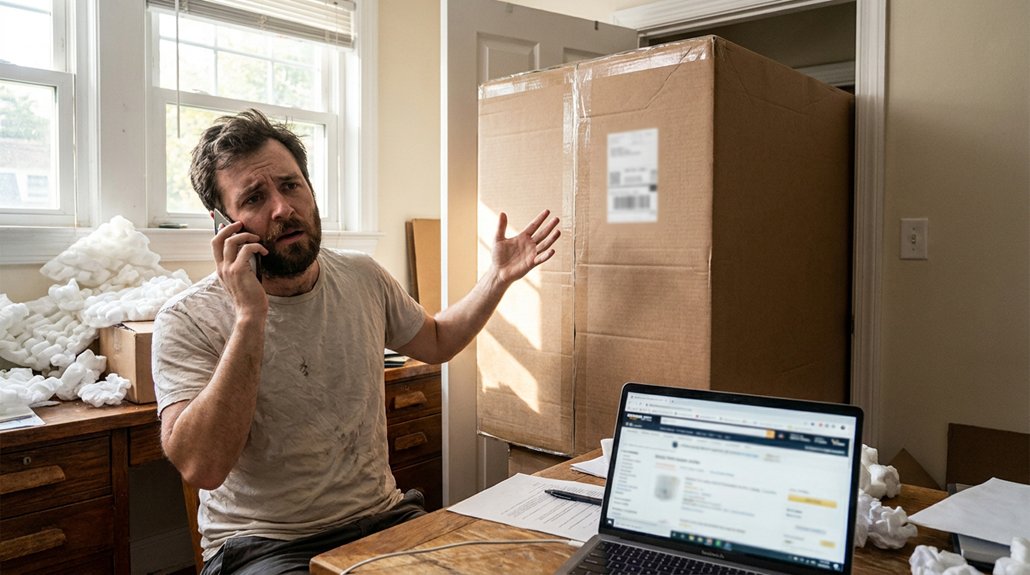
Handling Amazon Returns for Bulky Furniture as a Dropshipper
To effectively manage Amazon returns for bulky furniture, we align Amazon’s return policies with each supplier’s terms. We calculate freight and restocking costs for each SKU to identify items where return costs significantly impact margins.
Next, we establish a clear workflow. First, we approve return requests. Then, we schedule freight pickups. After pickup, we verify damage by taking photos and documenting proof of delivery (POD) notes. Based on the recovery value, we decide whether to issue a refund, provide a replacement, or offer a discount.
We also track return data meticulously. We categorize returns by ASIN, supplier, and reason code. This tracking helps us identify patterns, enabling us to reduce avoidable returns. By analyzing this data, we can optimize our return process and improve overall efficiency.
In cases where return costs exceed expected margins, we flag these items for review. This proactive approach allows us to adjust our inventory strategy, ensuring we maintain healthy profit margins while managing customer expectations.
Understand Amazon and Supplier Return Rules
Before we accept or deny bulky furniture returns, we must align Amazon’s return policies with our suppliers’ terms. This alignment is critical because discrepancies often arise. We start by documenting Amazon’s return timelines for heavy or oversized items, including restocking rules and refund requirements.
We then compare these details directly with each supplier’s policies regarding damaged returns and buyer’s remorse returns. We specifically look for requirements around photo proof and shipping cost responsibilities.
We create a matrix that organizes Amazon’s policies in columns and supplier policies in rows. Each field in the matrix tracks maximum return days, allowable reasons for return, required documentation, and potential fees. This matrix helps us identify risk areas, such as when Amazon allows a 30-day return window while a supplier limits returns to 7 days.
Next, we assess financial risk by calculating average item prices, two-way freight costs, and packaging expenses. By analyzing past return rates, we estimate the liability associated with each SKU.
We then layer in financial risk, combining item price, two-way freight, packaging costs, and historical return rates
We flag items where the expected return costs surpass our target profit margins. This process helps us make informed decisions regarding furniture returns.
Set Clear Amazon Furniture Return Expectations on Listings
Clearly outline who pays for return shipping based on the scenario: the seller covers costs for defective or damaged items, while the buyer covers costs for returns due to buyer’s remorse.
Place this information where buyers will see it: in bullet points, the Product Description, and a dedicated “Returns & Packaging” section in A+ content.
Quantify details to help customers anticipate effort and cost, including box counts, approximate weight, and any applicable restocking fees.
Align pre-sale and post-sale customer communication templates with the listing language to avoid contradictions.
Monitor return-related keywords in reviews and messages to identify confusion points.
Update wording as needed to minimize disputes and prevent costly carrier misclassifications. Additionally, consider highlighting the durability of solid wood furniture, as it can reassure customers about their purchase’s quality.
Map Your Amazon Furniture Return Workflow Step by Step
A reliable Amazon furniture return operation requires a clear workflow that details each step from the customer’s initial return request to the final handling of the item. We approach the return process systematically, treating each phase like a production line where every action is defined, timestamped, and monitored.
1. Initiation
The customer initiates a return on Amazon. We log the case, tag the SKU, and send an automated message confirming eligibility. This message includes required photos and packaging criteria.
2. Coordination
After validating the return, we measure the weight and dimensions of the item. We select the appropriate carrier and service level, generate shipping labels, and provide the customer with pickup or drop-off options.
Simultaneously, we notify the supplier or third-party logistics (3PL) provider.
3. Resolution
Once tracking indicates the item is in transit, we pre-approve potential outcomes based on the item’s condition. Upon receiving the item, we conduct a scan and compare it with submitted photos, carrier data, and warehouse notes.
We then finalize the outcome—whether it’s a refund, replacement, or further action—and communicate the resolution to the customer.
Limitations
We acknowledge that some returns may be complicated by missing parts, excessive damage, or incorrect shipping. These edge cases require additional review and may delay the resolution process.
Examples
For instance, a customer decides to return a sofa. They initiate the return process, and we log the case within minutes.
After measuring the sofa, we choose a carrier that can pick it up within 48 hours and notify the customer. Upon receiving the sofa, we complete the return within 24 hours, ensuring a swift refund or replacement. Additionally, maintaining at least 36 inches of space between furniture pieces during transport can help prevent further damage.
Build an Amazon Furniture Return Policy That Protects Profits
Our return policy establishes clear financial boundaries to protect profits. We define cost thresholds, which include outbound freight, inbound return freight, inspection handling, repackaging, and disposal.
We calculate total recovery value and subtract these costs. If the remaining value falls below a target margin of 15–20%, we prioritize replacement or partial refunds over physical returns.
Tiered Return Rules
High-Ticket Items: We implement stricter return windows, require mandatory photos, and perform condition checks before approving returns. This minimizes losses on high-value products.
Mid-Range Items: We offer a standard 30-day return window. If the return results from buyer remorse, we charge a restocking fee of 15–20%. This fee helps recover some costs associated with the return process.
Low-Value or Damaged Items: We process a “refund without return” if the shipping costs exceed 40–50% of the item’s value. This policy reduces unnecessary return logistics for low-value items.
Restocking and Discounts
We clearly outline when to charge restocking fees and when to waive them. For example, we charge restocking fees on mid-range items but waive them for defective products.
We also provide discounts as an alternative to returns when appropriate. This approach encourages customer satisfaction while protecting profit margins.
Consistent Listing Language
We align Amazon listing language with our return policies. This ensures customers understand the return process and associated costs upfront.
Consistent messaging prevents misunderstandings and sets clear expectations.
Conclusion
This structured return policy balances customer satisfaction with profit protection. Additionally, understanding traditional furniture styles helps anticipate potential issues related to returns and customer expectations.
Work With Suppliers to Handle Amazon Furniture Returns
Coordinate Return Handling with Suppliers
We convert the return process for bulky furniture into a controlled, measurable system. Our aim is to streamline supplier communication, adhere to Amazon policies, and manage return logistics effectively. This ensures that every furniture return follows a predictable workflow and cost structure.
Document Responsibilities
We document who pays for freight, repackaging, and restocking in different scenarios. This information becomes part of the SKU, listing, and Standard Operating Procedures (SOPs). Our team always knows the financial responsibilities without guessing.
Establish Response SLAs
We define specific time limits for suppliers. Suppliers must approve Return Merchandise Authorizations (RMAs), issue return labels, and confirm receipt within set timeframes. We track compliance using a shared spreadsheet or Customer Relationship Management (CRM) system.
Create Cost Matrices
We pre-negotiate return fees based on weight, dimensions, and reason codes, distinguishing between buyer’s remorse and defects. We review these fees quarterly to ensure they remain competitive and relevant.
Implement Data Feedback Loops
We send monthly reports to suppliers that detail defect rates and return statistics. This data helps suppliers identify issues with packaging and quality control, allowing them to make improvements that decrease avoidable returns over time.
Address Limitations
We recognize that some scenarios may deviate from our established processes, such as returns due to extreme damage or unusual circumstances. We address these edge cases on a case-by-case basis, ensuring that our system remains flexible while maintaining control.
Handle Freight Pickups, Refusals, and Damaged Furniture
Handling Freight Pickups
Freight pickups require structured processes to minimize costs and avoid errors. First, we document each shipment with details like the carrier, PRO number, accessorials, and delivery notes. This documentation establishes a baseline for freight logistics costs and liability.
For pickups, we request photos of the item, ensure repackaging is done properly, and pre-assign the return address, either to the supplier or a consolidation point. Next, we schedule a carrier window and share preparation instructions with the buyer.
We also require confirmation of bill of lading details to prevent reweigh or reclassification fees.
Managing Delivery Refusals
Delivery refusals need clear categorization to streamline processing. We determine if the refusal is due to “customer remorse” or a “carrier issue” by reviewing POD notes and timestamps.
Depending on this assessment, we route the unit for either return processing or claim filing.
Addressing Damaged Furniture
For damaged furniture, we require time-stamped photos to document the damage. We also note exceptions directly on the POD.
After assessing the damage, we estimate the salvage value. Our options then include filing a claim with the carrier, offering discounted keep-it options to the customer, or arranging for retrieval of the damaged item.
Limitations and Constraints
In handling pickups, refusals, and damaged items, we face limitations such as carrier availability and specific return policies from suppliers.
Not all damaged furniture qualifies for claims, depending on the extent of damage and shipping conditions. Clear communication and thorough documentation are essential to navigate these challenges effectively.
Track Amazon Furniture Returns and Fix Costly Patterns
Track Amazon Furniture Returns to Reduce Costs
To manage trends in Amazon furniture returns, we must convert them into measurable data. We need a structured return tracking system that links each Return Merchandise Authorization (RMA) to its respective SKU, ASIN, supplier, carrier, and reason code. We’ll conduct weekly and monthly reviews of dashboards to identify which products and logistics processes are underperforming.
- Centralize Data: Compile returns reports from Amazon and merge them with supplier invoices and freight bills. Normalize fields such as dimensions, weight, reason for return, photos, and outcomes.
- Run Cost Analysis: Assign every return’s freight, restocking, disposal, and refund costs to the specific SKU. Identify items where the net margin becomes negative due to typical return rates.
- Implement Fixes: For SKUs with high return costs, enhance product listings with accurate dimensions, color representations, and clear assembly instructions. Adjust packaging specifications, consider switching carriers, or remove consistently problematic SKUs from the catalog.
After implementing these changes, we’ll re-measure the impact. We’ll validate whether our interventions successfully reduce return frequency and associated costs.