

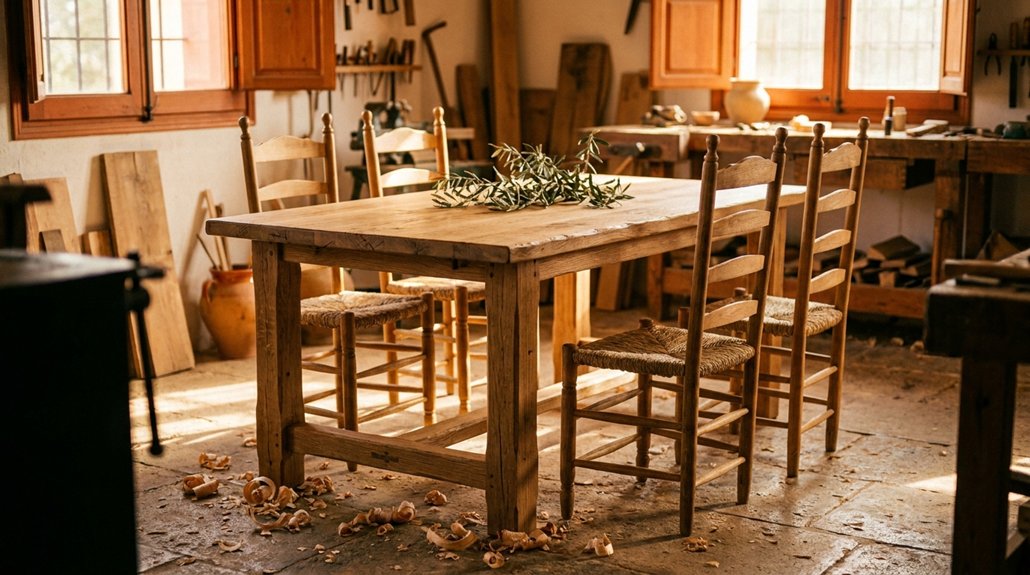
Spain’s handmade wooden furniture showcases a rich tapestry of regional craftsmanship. Craftsmen in Spain create pieces using materials like Castilian dark oak, which features intricate carvings. Artisans also draw inspiration from Andalusian Moorish geometric patterns, adding unique flair to each item.
You can find sturdy Basque designs that offer robustness and longevity, while light Mediterranean pine pieces provide a more airy aesthetic. Each type of handmade wooden furniture delivers durability and customization options that factory-made items simply cannot match. For example, a well-constructed oak table can last for generations with proper care.
To maintain the quality of handmade wooden furniture, you should regularly dust surfaces to prevent dirt buildup. Conditioning with wood polish every few months helps preserve the finish and grain. If scratches or wear occur, refinishing can restore the furniture to its original beauty.
If you want to make informed decisions about Spanish handmade furniture, understanding these care practices and the craftsmanship involved is essential. Each piece is not just furniture; it’s a testament to the skill and dedication of Spanish artisans.
The Most Beloved Handmade Wooden Furniture Styles in Spain
Spain has a long history of handmade wooden furniture, with distinct styles representing various regions. Traditional Castilian furniture features dark oak and walnut. Craftsmen carve intricate details into these pieces, emphasizing rustic charm.
Spain’s rich woodworking heritage shines through Castilian furniture, where dark oak and walnut meet intricate, rustic craftsmanship.
Andalusian furniture incorporates Moorish influences, showcasing geometric patterns and rich inlays. Catalonian craftsmen focus on clean lines and modern elegance. They blend contemporary design with skilled craftsmanship to create functional pieces.
Mediterranean-style furniture uses lighter woods, like pine, to produce airy, coastal-inspired designs. Basque artisans prioritize durability, crafting sturdy, functional pieces built for generations.
Each style reflects the diversity of Spain’s regional cultures and woodworking traditions. For example, Castilian furniture often suits traditional Spanish homes, while Catalonian designs appeal to modern tastes. Additionally, the use of solid wood materials ensures that these furniture pieces not only look beautiful but also provide lasting durability.
Whether you seek ornate traditional pieces or sleek contemporary options, Spanish handmade wooden furniture provides choices that cater to various preferences and interior spaces.
How Each Spanish Region Puts Its Own Stamp on Wood Furniture
Spain’s regional furniture styles reflect distinct cultural identities shaped by local craftsmanship. Each region influences wood selection and decorative motifs, showcasing their unique heritage.
In Catalonia, craftsmen use dark oak to create heavy frames with Gothic-inspired details.
Castile artisans focus on bold geometric patterns, incorporating Moorish elements into their designs.
In Andalusia, woodworkers emphasize ornate carvings that highlight the region’s rich Islamic influence.
The Basque Country prioritizes durability, producing sturdy, minimalist furniture.
In Valencia, makers prefer bright colors and intricate painted finishes, adding vibrancy to their pieces.
These regional styles carry significant cultural meaning. Each design narrates the history, beliefs, and daily life of its region. Understanding these distinctions enhances appreciation for Spanish woodworking traditions. Additionally, measuring your space is crucial for ensuring that each piece fits harmoniously within its environment.
The Best Spanish Woods and Why Artisans Prefer Them
When you examine Spanish handmade furniture, the choice of wood directly influences both quality and appearance. Spanish artisans predominantly use oak, chestnut, walnut, and olive wood. Each type of wood possesses distinct characteristics that cater to various furniture designs.
Spanish oak provides strength and durability, making it ideal for heavy-use items like tables and chairs. Chestnut wood offers a warm hue and beautiful grain patterns, which artisans often select for cabinets and shelving. Walnut wood stands out for its rich color and fine texture, commonly used in fine furniture and decorative pieces. Olive wood features unique swirls and patterns, making it a popular choice for smaller items, such as utensils and decorative bowls.
Artisans prefer these woods not only for their aesthetic qualities but also for their availability across Spain’s diverse regions. Each region offers specific wood types, which influences local craftsmanship. For instance, northern Spain is rich in oak forests, while southern regions provide abundant olive trees.
In summary, the choice of wood in Spanish furniture directly impacts its quality and style. Oak, chestnut, walnut, and olive wood each serve specific purposes, enhancing the utility and beauty of the final product. Additionally, understanding the major design families aids in appreciating how these materials fit into broader furniture trends.
Understanding these relationships helps both artisans and consumers appreciate the craftsmanship involved in creating handmade Spanish furniture.
Popular Spanish Wood Types
Spanish artisans prioritize specific wood types to produce durable, functional furniture. Spanish Oak provides strength with distinct grain patterns, making it suitable for tables and chairs. Cedar offers moisture resistance, which is essential for crafting wardrobes and storage pieces that withstand humidity and insect damage. Walnut adds rich, dark tones that enhance decorative furniture designs. Each wood type presents unique benefits that align with various furniture requirements.
| Wood Type | Key Benefit | Common Use |
|---|---|---|
| Spanish Oak | Strong grain pattern | Tables, chairs |
| Cedar | Moisture resistance | Wardrobes, storage |
| Walnut | Rich dark tone | Decorative furniture |
Selecting the right wood type directly influences furniture longevity and aesthetic appeal. Understanding the characteristics of Spanish Oak, Cedar, and Walnut helps you make informed decisions when purchasing furniture. Each wood type serves distinct purposes, ensuring you choose the best material for your specific needs.
Why Artisans Choose Them
Spanish artisans don’t choose wood types randomly. They select specific materials that meet the requirements of their craft. Each wood type serves a purpose based on durability, workability, and cultural significance. This choice supports both traditional and modern furniture-making techniques.
Why Spanish Craftsmen Prefer Certain Woods
Spanish craftsmen prioritize specific woods because each type offers distinct advantages.
- Oak resists moisture and warping. This property makes oak ideal for producing long-lasting furniture.
- Chestnut carves easily. Artisans use chestnut to create detailed decorative elements in their work.
- Walnut provides rich, dark tones. Craftsmen appreciate walnut for enhancing the visual quality of finished pieces.
- Pine remains lightweight and affordable. This characteristic allows artisans to produce high volumes of furniture without compromising quality.
These wood choices reflect a deep cultural connection. Spanish woodworking traditions link modern craftsmen to centuries-old practices. Selecting the right wood ensures structural integrity and authentic regional character in every piece created.
Limitations and Constraints
Not every wood type is suitable for all projects. For example, while pine is economical, it lacks the durability of oak for heavy-use furniture. Understanding these limitations helps artisans choose the appropriate wood for specific applications.
Practical Application
Choosing the right wood directly impacts the quality of the finished product. Spanish artisans leverage the unique properties of each wood type to create functional, aesthetically pleasing furniture that honors their heritage.
This process reflects a commitment to craftsmanship and cultural tradition.
How to Match Handmade Wooden Furniture to Your Interior Style
Matching Handmade Wooden Furniture to Your Interior Style
Matching handmade wooden furniture to your interior style requires careful planning and attention to detail. Start by assessing the color scheme of your space. Choose wood tones that enhance your walls, floors, and existing décor.
For example, light woods such as pine work well in neutral or Scandinavian-inspired interiors, while dark woods like walnut fit better in traditional or moody settings.
Next, evaluate texture. Smooth, polished furniture suits minimalist designs, while rough-hewn or carved pieces contribute richness to rustic or bohemian spaces.
Consider the scale of the furniture as well. Large furniture pieces dominate spacious rooms, whereas smaller items are ideal for compact areas.
Finally, align the design details of your furniture with your overall style. Opt for clean lines to complement modern aesthetics or choose ornate carvings to match classic interiors.
Each of these factors plays a critical role in creating a cohesive and harmonious living space.
Practical Steps to Match Handmade Wooden Furniture
- Assess Color Coordination: Identify the dominant colors in your room. Match furniture wood tones to these colors for a unified look.
- Evaluate Texture: Choose textures that either contrast or complement your existing furnishings. This adds visual interest and depth.
- Consider Scale: Measure your space before selecting furniture. Ensure larger pieces fit comfortably while allowing for movement in spacious areas.
- Align Design Details: Review the style of your current décor. Select furniture that either aligns with or enhances your design theme.
What Sets Handmade Wooden Furniture Apart From Factory-Made?
When you select handmade wooden furniture, you receive a piece crafted by a skilled artisan. Artisans focus on precise joinery and meticulous finishing, ensuring durability and quality. In contrast, factory-made furniture relies on machines and assembly lines, which prioritize speed over quality. This often leads to the use of lower-grade materials and less sturdy construction. Handmade wooden furniture showcases a level of craftsmanship that mass-produced items can’t replicate. Each handmade piece reflects the artisan’s expertise and attention to detail, resulting in unique characteristics that enhance its value.
Handmade wooden furniture stands out because artisans invest time and skill in every piece. They use traditional techniques that have been refined over years, ensuring that every joint and finish meets high standards. Factory-made furniture, however, often sacrifices these standards for efficiency. This difference in manufacturing processes directly impacts the overall quality and longevity of the furniture.
The materials used in handmade wooden furniture also contribute to its distinction. Artisans typically source high-quality, sustainable wood, allowing them to create pieces that not only look better but also last longer. Factory-made furniture often relies on composite materials or lower-grade wood, which can compromise strength and aesthetics.
In practical terms, handmade wooden furniture provides specific advantages. The craftsmanship involved means that each piece can be customized to fit individual preferences, whether in size, design, or finish. Factory-made options usually come in standard sizes and styles, limiting personalization. This customizability allows handmade furniture to better meet the specific needs of a home or office.
Additionally, handmade wooden furniture tends to appreciate in value over time due to its craftsmanship and quality materials. Factory-made furniture, on the other hand, typically depreciates quickly, as mass production leads to oversaturation in the market. For those looking to invest in furniture that will stand the test of time, handmade options are often the smarter choice.
Unique Craftsmanship Differences
Unique Craftsmanship Differences in Handmade Wooden Furniture
Handmade wooden furniture in España emphasizes skill, intention, and quality, setting it apart from factory-made alternatives. Each piece reflects artisan techniques that have been passed down through generations. Craftsmen choose specific wood types, joinery methods, and decorative styles based on regional influences.
Hand-Cut Joinery Ensures Strength
Hand-cut joinery connects pieces of wood more effectively than machine-drilled fasteners. Craftsmen take precise measurements and cut joints that fit snugly, resulting in stronger, longer-lasting furniture.
This method allows for natural movement in the wood, reducing the risk of cracks over time.
Artisan Techniques Adapt to Wood’s Character
Craftsmen adapt each piece to highlight the wood’s natural grain and character. They select wood based on its unique qualities, ensuring that each item showcases its inherent beauty.
This adaptability creates one-of-a-kind pieces that can’t be replicated in a factory setting.
Regional Influences Shape Style
Regional influences from Catalonia, Andalusia, and Castile define the stylistic traditions of handmade furniture. Craftsmen incorporate local designs, materials, and techniques into their work, resulting in furniture that reflects the culture and history of its origin.
This connection to place adds value and authenticity to each piece.
Custom Finishing Produces Rich Surfaces
Craftsmen apply hand-made stains and oils to finish each piece, enhancing the wood’s appearance and durability.
This custom finishing process results in richer, longer-lasting surfaces compared to factory finishes. The application of these finishes requires skill and attention to detail, ensuring that each piece is protected while showcasing its beauty.
In summary, handmade wooden furniture in España stands out because of its unique craftsmanship. Hand-cut joinery provides strength, artisan techniques highlight the wood’s character, regional influences shape styles, and custom finishing creates lasting beauty.
Each piece is a testament to the care and skill of the craftsmen who create it.
Quality Over Mass Production
Quality Over Mass Production in Furniture Making
Handmade wooden furniture prioritizes quality and durability over speed and volume. When you invest in handmade furniture, you acquire pieces designed to last decades instead of just years. Artisans focus on inspecting every joint, cut, and finish. This attention ensures each item meets high standards for craftsmanship.
Mass-produced furniture typically uses lower-quality materials and shortcuts. These decisions weaken structural integrity, leading to a shorter lifespan. In contrast, handmade furniture employs solid wood and reliable construction methods. These techniques ensure that the furniture withstands daily use effectively.
Artisans often practice sustainability by sourcing responsibly harvested wood. They also minimize waste during production. These practices significantly reduce environmental impact while delivering high-quality products.
Ultimately, handmade wooden furniture provides better value through stronger construction and a commitment to craftsmanship. Mass-produced options can’t match this level of quality.
Why Handmade Wood Furniture Lasts Longer and Holds Its Value
Handmade wooden furniture lasts longer than mass-produced items because skilled craftsmen select high-quality solid wood. This choice prevents the use of cheaper materials like particleboard or MDF, which degrade faster.
A well-made piece not only stays functional but also retains its aesthetic appeal over many years. Investing in handmade furniture means recognizing its potential to hold or even increase in value over time.
Here’s how handmade wood furniture consistently outperforms factory-made options:
- Strong joinery techniques like dovetail and mortise-and-tenon provide lasting connections that resist wear.
- Solid wood construction manages moisture and temperature fluctuations, ensuring durability.
- Repairable surfaces allow for refinishing, making furniture last longer without needing full replacement.
- Timeless designs maintain market appeal, increasing resale value or making them suitable for inheritance.
Handmade wooden furniture provides a reliable investment that can serve multiple generations.
Daily Cleaning and Conditioning Routines for Wood Furniture
Caring for handmade wooden furniture daily preserves its beauty and structural integrity. Start by removing dust. Use a soft, lint-free cloth to wipe surfaces gently. Dust buildup scratches wood finishes over time, so do this daily. Microfiber cloths effectively trap dust without spreading it. Avoid rough materials that can damage delicate wood grain.
Next, condition your furniture. Apply a quality wood polish every one to two weeks. Wood polish protects surfaces, restores natural shine, and prevents drying or cracking. Always apply polish in the direction of the wood grain using circular motions. Follow the product instructions to avoid buildup.
Regular care keeps your handmade furniture looking exceptional and structurally sound for years. Limitations include avoiding excessive moisture and harsh chemicals, which can damage the wood. If you notice any sticky residue or dullness, reduce the frequency of polish application.
Daily maintenance combined with periodic conditioning ensures longevity and beauty in your wooden pieces.
How to Repair and Restore Wood Furniture in Spain
Repairing and Restoring Wood Furniture in Spain
Handmade wooden furniture in Spain often develops scratches, dents, and worn finishes over time. You can restore this furniture using specific refinishing techniques and essential restoration tools. Here’s a straightforward list of what you need:
Handmade wooden furniture in Spain develops wear over time, but the right tools and techniques can restore its original beauty.
- Sandpaper and sanding blocks smooth scratches and prepare surfaces for refinishing.
- Wood fillers and putty repair deep dents and cracks effectively.
- Stains and varnishes match the original color and protect the wood.
- Brushes and buffing pads apply and blend finishes evenly for a professional look.
Start the Process: Clean the surface thoroughly to remove dust and grime. This ensures better adhesion for fillers and finishes.
Sand the Surface: Begin with coarser sandpaper to address deeper scratches. Gradually move to finer sandpaper for a smooth finish. This progression helps prepare the wood for staining and sealing.
Apply Fillers: Use wood fillers to fill in cracks and dents. Allow the filler to dry completely before sanding it down to match the surrounding wood.
Stain and Finish: Apply stain in thin layers. Allow each layer to dry fully before applying the next. This method ensures a uniform color and prevents streaks.
Once the stain is set, apply the varnish for protection.
Final Touches: Use brushes and buffing pads to apply the varnish evenly. This step enhances the furniture’s appearance and durability.
Limitations: Avoid using water-based products on oil-finished wood, as they can damage the finish. Also, be cautious with heavy sanding on antique pieces, as this can remove valuable patina.
Where to Find Authentic Handmade Wooden Furniture in Spain
To find authentic handmade wooden furniture in Spain, focus on local markets, artisan workshops, and verified online platforms. Each option offers distinct advantages for quality and authenticity.
Explore Local Markets
Local markets in cities like Madrid, Seville, and Barcelona regularly feature skilled craftsmen who sell handmade wooden furniture directly.
You can examine each piece closely and engage with the artisans, allowing you to ask questions about the craftsmanship and materials.
Look for markets that host artisans regularly, as they often showcase unique, locally made items.
Visit Artisan Workshops
Artisan workshops in regions like Castilla y León and Galicia are reliable sources for high-quality wooden furniture.
Dedicated woodworkers in these areas maintain traditional craftsmanship and often offer custom pieces tailored to your specifications.
Visiting these workshops allows you to see the production process, understand material choices, and directly discuss your needs with the artisans.
Use Verified Online Platforms
Online platforms can connect you with Spanish artisans selling handmade wooden furniture, but you must verify their credentials.
Check for detailed product descriptions, wood sourcing information, and customer reviews.
Look for artisans who provide clear information about their processes and materials.
Buying directly from these makers ensures that you receive genuine handmade furniture instead of mass-produced items.