
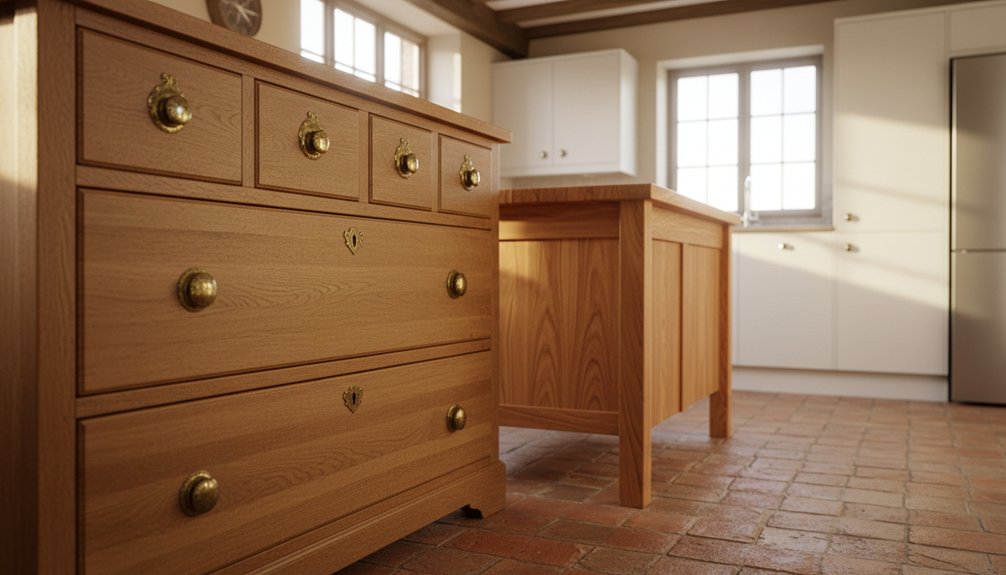
Freestanding solid wood kitchen furniture lasts significantly longer than fitted MDF units. Solid wood cabinets typically endure for 50 to 60 years, while MDF units generally need replacement after 10 to 15 years. This longevity means you save money over time because you can repair or replace individual pieces without the need for a complete kitchen renovation. Additionally, you can take your solid wood furniture with you when you move, offering flexibility that fitted units lack.
Solid wood resists moisture and daily wear effectively. In contrast, MDF tends to swell and chip easily, leading to more frequent repairs or replacements. You can install freestanding cabinets yourself within a weekend, allowing for quick adjustments to your kitchen layout as needed. This setup also enables you to mix and match different styles, creating a personalized kitchen appearance that develops character over the years.
In summary, choosing solid wood furniture for your kitchen provides durability, cost savings through easy repairs, and the ability to customize your space.
Solid Wood Kitchen Cabinets Last 40+ Years Longer Than Fitted MDF Units
When you select kitchen furniture, prioritize durability. Solid wood cabinets last between 50 to 60 years, while fitted MDF units last only 10 to 15 years. This significant difference in longevity is due to solid wood’s natural ability to resist moisture, temperature fluctuations, and daily wear and tear.
In contrast, MDF swells when it encounters water and chips easily at the edges, leading to the need for frequent replacements.
Maintenance also varies greatly between these two materials. Solid wood requires annual oiling, and you can easily sand down minor scratches. On the other hand, MDF needs careful handling to avoid serious damage from spills or impacts, which can lead to costly replacements.
While solid wood cabinets have a higher initial cost, they represent a long-term investment, as they outlast multiple MDF replacements. Choosing freestanding solid wood cabinets is the more economical option in the long run due to their extended lifespan. Additionally, solid wood furniture can be refinished multiple times, allowing it to maintain its functionality and aesthetic appeal for decades.
Why Freestanding Kitchen Furniture Costs Less Over Time
Freestanding kitchen furniture costs less over time compared to fitted units. When a specific cabinet in a fitted kitchen breaks, you typically face the need to replace the entire set because manufacturers often discontinue styles and finishes. This scenario leads to higher expenses for homeowners.
In contrast, freestanding pieces allow for individual repairs or replacements. You can replace only the broken item, which means you only pay for what needs fixing rather than an entire kitchen overhaul. This cost-effective approach is especially important for homeowners looking to manage long-term expenses.
For example, if a freestanding cabinet develops a fault, you can easily find a similar replacement or repair that one unit. This flexibility saves time and money, allowing you to maintain your kitchen without major disruptions. Moreover, freestanding furniture often offers a variety of styles and finishes that can be easily matched or updated over the years, keeping your kitchen looking fresh without significant investment.
Additionally, freestanding kitchen furniture typically involves straightforward assembly and disassembly. When you move, you can take these pieces with you, further extending their value. In contrast, fitted kitchens are usually built-in, making relocation impractical and costly. This aspect highlights the long-term financial advantages associated with freestanding options.
Repair Versus Replace Costs
Maintaining kitchen furniture over its lifetime involves understanding the costs associated with repairs and replacements. Freestanding solid wood furniture typically incurs minimal repair costs. When a drawer breaks or a hinge fails, you can easily fix these individual components without affecting the entire kitchen setup.
In contrast, fitted cabinets often necessitate complete section replacements because they function as integrated systems. These replacement costs can escalate quickly, sometimes reaching thousands of pounds.
Solid wood furniture is repair-friendly. You can sand down scratches, restain surfaces, and replace hardware without needing professional assistance.
Fitted units, however, are made from materials like particleboard and melamine. These materials deteriorate permanently when damaged. For instance, water damage severely impacts built-in cabinets and can spread to adjacent units, compounding repair issues.
Longevity Saves Money
Freestanding kitchen furniture offers significant long-term savings compared to fitted units. Over decades, you’ll replace fitted kitchens multiple times, while solid wood freestanding pieces maintain their functionality. This durability leads to real financial benefits.
Here are the specific savings you can expect:
- Avoid the need for replacements: With freestanding furniture, you won’t incur costs for new kitchens every 10 to 15 years.
- Decrease waste disposal expenses: Using fewer discarded units reduces the costs associated with removal and landfill fees.
- Boost your property’s value: Quality freestanding furniture enhances the appeal of your home during resale.
Investing in durable kitchen furniture not only benefits the environment but also eliminates recurring costs associated with modern replacements.
When you choose pieces designed to last over 50 years, your initial investment pays off through decades of dependable service.
In practical terms, freestanding furniture offers a sound economic choice for homeowners looking to save money over time.
Move House and Take Your Kitchen With You
Investing in freestanding kitchen furniture allows you to create a portable kitchen that you can easily move to different homes. Freestanding pieces provide kitchen mobility that fitted units lack. You can disassemble your cabinets, load them onto a moving truck, and reinstall them in your new kitchen. This adaptability safeguards your investment, ensuring you don’t lose thousands of dollars in cabinetry during a move.
Freestanding kitchen furniture maximizes space efficiency. You can rearrange pieces to fit various room layouts. For example, a dresser that occupied one wall in your old kitchen can be repositioned in a different location in your new kitchen. Instead of starting over with each relocation, you adapt your existing furniture to suit your new space.
Freestanding furniture also allows for customization. You can mix and match different pieces to create a layout that works best for your cooking and dining needs. This flexibility can lead to a more functional kitchen that meets your lifestyle requirements, whether you’re in a small apartment or a larger home. Additionally, maintaining at least 30 inches of clearance is vital for facilitating movement, ensuring your kitchen remains accessible and user-friendly.
However, there are limitations to consider. Some freestanding pieces may not fit all kitchen styles, and you may need to sacrifice some aesthetic cohesion for practicality. Additionally, the durability of freestanding furniture can vary, so it’s important to choose high-quality materials that will withstand frequent moves.
Mix Farmhouse and Modern Styles With Freestanding Pieces
You can create an impressive kitchen by combining rustic farmhouse pieces with modern elements using freestanding furniture. Select specific rustic items, like a weathered wooden dining table, and pair them with sleek modern elements, such as a stainless steel island.
Ensure that your wood finishes, like oak or pine, complement the contemporary finishes, like polished chrome or glass. For example, a vintage hutch can enhance the charm of the space while a minimalist cart can provide practicality, creating a balanced aesthetic.
Focus on the textures: the roughness of reclaimed wood can contrast beautifully with the smooth surfaces of modern appliances. When choosing colors, opt for a cohesive palette that allows both styles to coexist without clashing.
Limit the number of competing elements; too many styles can create visual chaos. Instead, aim for three to four key pieces that embody both farmhouse warmth and modern sleekness.
Consider functionality as well. Ensure that the freestanding pieces serve a purpose in your kitchen layout, like a farmhouse sink paired with contemporary fixtures. This not only enhances the workflow but also maintains the aesthetic harmony of the space. Additionally, incorporating traditional furniture styles can create a timeless appeal that enhances the overall design.
Blend Old and New
Freestanding kitchen furniture allows you to blend rustic charm with contemporary elegance effectively. This combination results in a kitchen that’s both functional and stylish.
For example, you can use an antique dresser as a pantry; this piece retains its historical charm while you integrate modern stainless steel appliances for practicality.
Consider these specific combinations for your kitchen design:
- Pair a vintage wooden baker’s rack with minimalist floating shelves to maximize storage while keeping a streamlined look.
- Use a reclaimed wood island alongside modern waterfall countertops to create a stunning focal point that balances warmth with sleekness.
- Combine a classic farmhouse table with industrial pendant lighting to enhance the dining area with a touch of modern flair.
This approach allows you to preserve family heirlooms while adding necessary modern conveniences. You aren’t limited to one design style, enabling your kitchen to evolve with your personal tastes.
Freestanding pieces offer flexibility, allowing you to rearrange or replace items as your inspiration changes.
This method encourages a harmonious blend of old and new, making your kitchen a reflection of your unique style.
Choose Complementary Wood Tones
Mixing farmhouse and modern styles in your kitchen requires careful selection of wood tones. Start by determining your primary wood finish, such as warm oak for cabinets or cool walnut for shelving. Choose freestanding furniture that complements this base tone. Aim for a mix of light and dark woods to create visual interest. For example, pairing a rustic farmhouse table with sleek modern chairs in a similar undertone can enhance the overall design.
Identify shared characteristics like grain patterns or stain depths to unify different pieces. This allows you to incorporate vintage hutches alongside contemporary islands while maintaining a cohesive aesthetic. Ensure that the wood tones work together rather than compete, as this strategy creates a harmonious and intentional look. Avoid using mismatched tones, as they can disrupt the design flow.
When selecting specific pieces, focus on how each wood tone interacts with others in the space. For instance, using a medium-stained wood for the island can balance darker cabinets while adding warmth.
Solid Wood Develops Character While Fitted Units Deteriorate
Fitted kitchen units show significant wear after only a few years. Solid wood freestanding furniture, however, gains value over time. The development of patina on solid wood creates uniqueness, as scratches and dents become part of the furniture’s story instead of reasons for replacement.
Solid wood furniture provides warmth and character that mass-produced options lack. Natural oils enhance the wood’s grain patterns, resulting in a deeper color. Minor imperfections contribute authenticity, making each piece more appealing rather than appearing damaged. Over time, solid wood furniture can become a family heirloom, adding sentimental value.
In contrast, fitted units often suffer from issues like peeling veneers, broken hinges, and faded finishes, which diminish their appearance and functionality.
Solid wood furniture maintains its structural integrity and gains character, making it a more reliable long-term investment.
Install Freestanding Kitchen Cabinets Yourself in One Weekend
Most homeowners can install freestanding kitchen cabinets in 48 hours without needing professional assistance. Freestanding cabinets don’t require precise measurements, plumbing adjustments, or advanced carpentry skills, making them easier to handle than fitted units.
Begin your project by measuring your kitchen space and marking the positions for your cabinets on the floor. Unpack each cabinet and inspect for any shipping damage. Position the cabinets against the walls, ensuring they’re correctly aligned. Adjust the cabinet feet until they’re level, which is crucial for stability.
If you want added security, use connector bolts to fasten the cabinets together. You don’t need to cut countertops or modify any existing structures during this process.
Repair Individual Pieces Instead of Replacing Entire Kitchens
Freestanding kitchen furniture allows you to repair or replace individual cabinets without any need for a complete kitchen overhaul. When a drawer breaks or a door gets damaged, you simply fix or replace that one piece.
In contrast, traditional fitted cabinets often require you to replace entire sections, which can lead to higher costs and longer repair times.
Repairing solid wood freestanding furniture is straightforward. You can sand out scratches, refinish surfaces, or replace hardware without hiring a professional. This do-it-yourself approach saves you money and extends the life of your furniture.
Here are the key benefits of using freestanding furniture:
- You can replace a single damaged cabinet without renovating the entire kitchen.
- You can apply restoration methods, like using wood filler and matching stains, to fix minor damage.
- You can upgrade individual pieces over time, allowing you to manage costs effectively.
This flexibility makes freestanding furniture a sensible long-term investment for your kitchen. You maintain control over repairs, avoid excessive costs, and keep your kitchen looking fresh without significant disruptions.
Rearrange Your Layout Whenever Your Needs Change
As your family expands or your cooking routines change, your kitchen layout must adapt. Freestanding furniture offers flexibility without the need for costly renovations. For example, you can reposition a work table closer to your stove during meal prep to enhance efficiency.
Once the cooking is done, move the table against the wall to free up floor space for family gatherings.
After meal preparation, reposition the table to create open space for family time and social interactions.
If you find that your dresser needs more natural light, simply relocate it near the window. This adaptability allows you to avoid being stuck with an outdated kitchen setup.
Unlike built-in units that remain fixed in place, freestanding pieces can be moved easily. When you move to a new home, your solid wood furniture can travel with you, ensuring that your preferred kitchen layout remains consistent regardless of the space.
This design approach encourages a customized cooking and dining experience tailored to your evolving needs. The goal is to maintain a practical and functional kitchen that supports your lifestyle changes.