

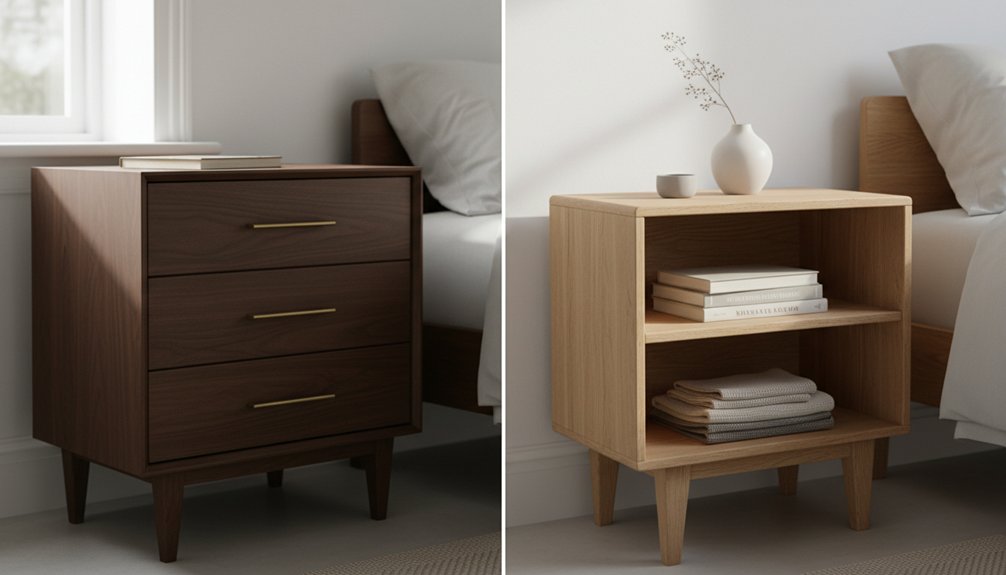
Bedside tables with drawers provide 40% more storage capacity than open shelves within the same footprint. This makes bedside tables with drawers ideal for storing medications, personal belongings, and skincare products securely and discreetly. In contrast, open shelves create an airy feel in smaller rooms and allow for quick access to items. However, open shelves require careful organization to prevent clutter from accumulating.
Drawers typically measure 4-6 inches in depth, accommodating bulkier items such as books or small electronics. Open shelves offer 8-12 inches of vertical space, making them suitable for displaying books and decorative objects. Understanding these dimensions helps you choose the right storage solution based on your needs.
When deciding between bedside tables with drawers and open shelves, consider your daily routines and the size of your bedroom. If you prioritize hidden storage for various items, bedside tables with drawers are the better choice. If you prefer quick access and a minimalist look, open shelves might serve you well. Analyzing these factors will help you determine which option aligns best with your lifestyle and space requirements.
Bedside Tables With Drawers vs Open Shelves: The Key Differences
When you decide between bedside tables with drawers and open shelves, you should focus on their specific benefits for bedroom storage.
Bedside tables with drawers offer enclosed storage. This design keeps items out of sight, protects them from dust, and maintains a clean look. Drawers are useful for storing personal items, medications, or anything you want to keep private.
Drawer-style bedside tables provide concealed storage that shields personal belongings from view while protecting them from dust accumulation.
In contrast, open shelves provide accessible display space. They allow you to showcase decorative objects, books, and everyday items. Open shelves can create an airy atmosphere in smaller rooms.
However, open shelves require regular cleaning and careful organization to prevent a cluttered appearance. Your decision should hinge on whether you value hidden storage or easy access to your belongings. Additionally, consider the space planning principles to ensure that your bedside table choice complements the overall layout of your bedroom.
Which Bedside Table Style Works for Your Bedroom and Lifestyle?
Choosing the right bedside table requires careful consideration of three key factors: your daily routines, available space, and your tidiness habits.
1. Identify Your Daily Routines: Assess what you do each morning and night. If you read before bed, look for a bedside table that has enough surface area for a lamp and a book.
If you use your phone as an alarm, ensure the table has space for a charging station.
2. Measure Your Space: Take accurate measurements of the area next to your bed. If your bedroom is small, a compact bedside table can save space.
If you have more room, you might prefer a larger table that can accommodate additional items, like a plant or decorative pieces.
3. Determine Your Tidiness Habits: Reflect on whether you keep your space organized or tend to accumulate clutter.
If you often leave items out, consider a bedside table with drawers to conceal clutter.
If you prefer a minimalist approach, an open shelf design might suit your style better, allowing easy access to your essentials. Additionally, think about the material of your bedside table, as solid wood furniture offers durability and aesthetic appeal that can enhance your bedroom’s ambiance.
Your Daily Routine Needs
How you start and end each day shapes your choice of bedside table features. Your nightly habits determine if you need drawer storage for essentials or prefer open shelves for easy access.
Morning readers need open shelves to keep books and reading glasses within arm’s reach. This setup allows for quick retrieval without fumbling through drawers when you’re still waking up.
Evening skincare enthusiasts require drawer space for organizing serums and moisturizers. Drawers protect these products from dust and light, which can degrade their effectiveness over time.
Tech users benefit from designated charging spots for devices. Drawers can conceal unsightly cords, while open shelves can accommodate charging stations for easy access.
Choose your bedside table’s storage configuration based on your specific routines. This practical approach ensures that your table meets your daily needs rather than simply matching your bedroom decor.
Bedroom Size Considerations
Your bedroom’s size significantly influences which bedside table dimensions will suit your space best.
In bedrooms smaller than 100 square feet, open shelves offer a lightweight design that helps prevent the room from feeling cramped. Typically, these shelves measure 12 to 18 inches in width, allowing more floor space for easy movement.
In contrast, drawer units, which generally measure 18 to 24 inches wide, work well in medium to large bedrooms where you have ample room to navigate.
To ensure comfort, maintain at least 24 inches of clearance between your bed and bedside table for easy access.
In tight spaces, optimizing your layout is crucial. Wall-mounted tables provide a solution by eliminating floor space usage entirely, while tall, narrow drawer units maximize vertical storage without taking up too much width on the floor.
Before purchasing, measure your available wall space to confirm that your chosen table will fit properly.
Personal Organization Habits
Understanding your personal organization habits helps you choose the right bedside table storage style. Different storage styles cater to distinct organization preferences, affecting how you manage your daily items.
Identify your organization pattern to select suitable storage:
- Visual organizers benefit from open shelves. These shelves allow you to see and access your items easily, making them ideal for those with a minimalist lifestyle. If you have fewer belongings, this style works well.
- Hidden storage enthusiasts prefer drawers. Drawers conceal personal items, medications, and miscellaneous objects. This storage style effectively reduces clutter and keeps your space tidy.
- Mixed-habit users should consider combination units. These units include both drawers and shelves, accommodating different organization styles in one piece of furniture.
Your daily routines and preferences for tidiness directly influence the storage configuration that enhances your bedroom’s functionality and appearance.
Choose the storage style that aligns with your habits to create a more organized space.
Storage Capacity: How Much Drawers vs Shelves Actually Hold
When you select between drawers and shelves for your bedside table, you must evaluate the actual storage capacity of each option. A drawer’s depth determines if you can store thick books or only flat items. In contrast, the height of a shelf limits how tall your belongings can be. Understanding the differences between stacking items vertically on shelves and organizing them horizontally in drawers allows you to match your storage choice to your specific bedside needs.
Drawers provide a more concealed storage solution, which is ideal for smaller, less frequently used items. For example, a standard drawer typically measures about 14 inches deep, 24 inches wide, and 6 inches high. This allows you to store several small books, magazines, or personal items. However, if you have larger items, such as thick novels, you may need to consider the drawer’s depth and ensure it can accommodate them.
Shelves, on the other hand, offer open storage that makes items easily accessible. A typical shelf height can range from 10 to 12 inches, allowing you to stack books vertically. If your collection includes taller items like lamps or decorative pieces, you may find that shelves provide the necessary height. However, excessive stacking can lead to instability, so it’s crucial to distribute weight evenly. Additionally, selecting furniture that complements your traditional styles can enhance both functionality and aesthetics in your bedroom.
Drawer Depth Measurements Matter
Most bedside table drawers measure between 3 to 6 inches deep. This depth directly affects your storage capacity. Knowing these measurements helps you select furniture that meets your storage needs.
Here’s how different drawer depths accommodate various items:
- 3-4 inches: These drawers hold flat items like notebooks, magazines, charging cables, and reading glasses.
- 4-5 inches: This depth fits paperback books, tablets, remote controls, and small skincare products.
- 5-6 inches: These drawers store thicker hardcover books, water bottles, larger electronics, and bulkier personal items.
Before purchasing a bedside table, measure your commonly used items. A drawer that’s too shallow forces you to stack items vertically, complicating access.
In contrast, deeper drawers allow better organization but may reduce the number of drawer levels.
Consider the balance between depth and accessibility when selecting your bedside table. Prioritize depth that accommodates your items while ensuring you can easily retrieve them.
Shelf Height Limits Items
Open shelves on bedside tables create vertical storage challenges due to their height limits. Most bedside shelves provide 8-12 inches of vertical clearance. This height accommodates items like books, glasses, and standard alarm clocks.
However, taller items such as tissue boxes or larger lamps can’t fit comfortably within these restrictions.
These height limitations influence your storage options. You can’t stack items beyond the available height, as the next shelf above creates a ceiling.
While open shelves improve item visibility and accessibility, they restrict you to objects that fit within the designated vertical space. If you require flexibility for varying item sizes, consider these height constraints before purchasing bedside shelves.
Vertical vs Horizontal Space
Drawers and shelves serve distinct purposes in storage solutions.
Drawers utilize horizontal space effectively, allowing you to store items from front to back. This method increases storage capacity, enabling you to fit 40% more items in the same footprint compared to shelves.
Shelves, on the other hand, depend on vertical organization, which provides visibility but restricts depth to 4-5 inches for easy access.
Here’s a breakdown of how drawers and shelves function:
- Drawers maximize depth – Drawers can hold items that are 6-8 inches deep, taking advantage of the entire space from front to back.
- Shelves prioritize visibility – Shelves display items at a glance but limit depth to 4-5 inches, which can reduce overall capacity.
- Drawer dividers create zones – Dividers in drawers help organize small items efficiently, making it easier to find specific items compared to open shelves.
When choosing between drawers and shelves, consider your storage needs.
Drawers provide more capacity but require extra time to search through items.
Shelves offer easier access but limit the number of items you can store due to their shallow depth.
How Drawers and Open Shelves Change Daily Bedroom Accessibility
When you reach for your phone at night or look for reading glasses in the morning, the type of storage on your bedside table impacts how quickly you complete these tasks.
Open shelves provide immediate access to items since everything remains visible and within reach. This design eliminates the need to open drawers, speeding up nighttime routines.
In contrast, drawers promote daily organization by keeping personal items secure and out of sight. You’ll find drawers useful when you want to hide medications, journals, or charging cables from view.
The key difference between these two storage types is speed versus tidiness. Open shelves prioritize fast access, while drawers emphasize organized concealment.
To decide which storage type best suits your routine, consider your specific morning and evening habits. If you often need quick access to items, open shelves may work better for you.
If you prefer a clutter-free appearance and don’t mind taking a moment to open a drawer, then drawers might be the right choice.
How Each Bedside Table Style Affects Your Bedroom’s Look and Feel
The style of your bedside table significantly impacts the overall atmosphere of your bedroom. This piece of furniture, positioned at eye level while you’re in bed, plays a crucial role in how your space feels.
Choosing between drawer-based designs and open shelf tables will directly affect your bedroom’s ambiance and showcase your personal style.
Different bedside table designs influence your space in specific ways:
1. Drawer-based tables maintain a clean look** by concealing personal items**. This design suits contemporary and traditional bedrooms that emphasize minimalism and uncluttered surfaces.
For example, a bedside table with two drawers can hide books, chargers, and other necessities, promoting a tranquil environment.
2. Open shelf tables introduce a casual vibe** by allowing easy access to displayed items. This design works well in bohemian or modern bedrooms where decorative objects**, like plants or books, enhance the room’s character.
For instance, a table with one or two open shelves can serve as a platform for your favorite reads or unique trinkets, adding a personal touch.
3. Combination designs provide versatility** by offering both concealed storage** and display options. This type of bedside table adapts to various bedroom themes, allowing you to showcase decorative items while keeping essentials out of sight.
A combination unit with one drawer and an open shelf can balance functionality and style effectively.
When selecting a bedside table, consider how visible storage will affect your room’s overall appearance.
The right choice will enhance your bedroom’s aesthetic and reflect your individual taste.
Combination Bedside Tables: Getting Drawer and Shelf Benefits Together
Combination bedside tables provide a practical solution for those needing both drawer storage and open shelving. These tables typically feature one or two drawers on top, along with one or two open shelves below. This design allows users to benefit from both concealed and visible storage.
Combination bedside tables enable users to store private items, like medications or journals, in the drawers while displaying books or decorative objects on the shelves. Here are some common configurations with their specific benefits:
| Configuration | Drawer Features | Best For |
|---|---|---|
| Two drawers + one shelf | Maximizes hidden storage | Ideal for clutter-prone spaces |
| One drawer + two shelves | Balances visibility | Perfect for display enthusiasts |
| One drawer + one shelf | Fits compact spaces | Great for small bedrooms |
These hybrid designs are especially useful for maintaining organization in your bedroom without compromising on aesthetics. When selecting a combination bedside table, consider the storage needs of your space and how the configuration aligns with your personal style.