

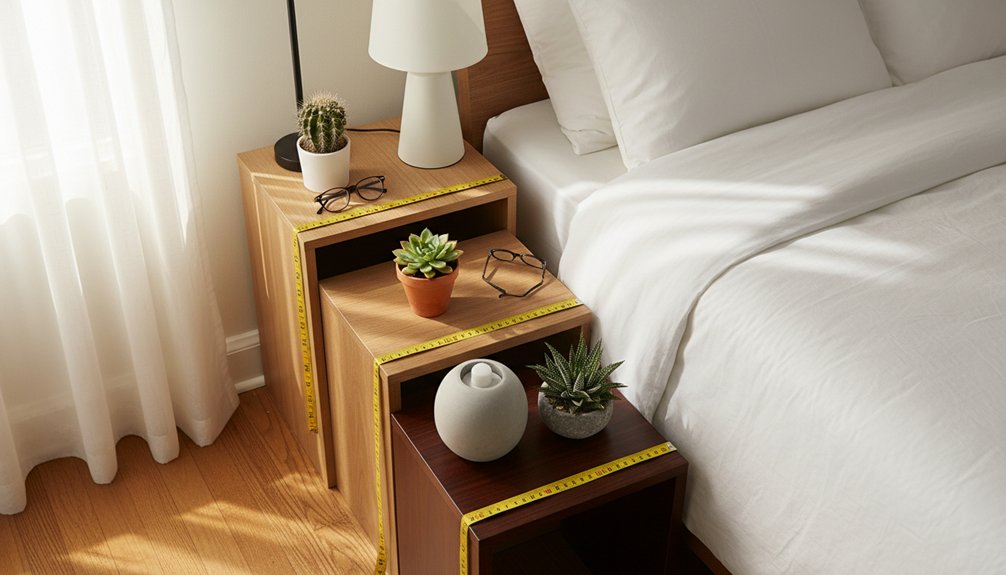
Standard bedside tables measure between 24-28 inches in height, 18-24 inches in width, and 12-18 inches in depth. When selecting a nightstand, match the height to the top of your mattress or keep it slightly lower for easy access while lying down. Before making a purchase, measure your bedroom space to ensure you have a minimum of 24 inches of clearance beside your bed, allowing for comfortable movement.
In small bedrooms, opt for compact tables that are 15-18 inches wide. For larger master suites, you can choose bedside tables that range from 24-30 inches in width. Understanding these dimensions helps you avoid common sizing mistakes and ensures you create a balanced and functional bedroom layout. Always prioritize the height and width of your bedside table to enhance both usability and aesthetics in your space.
What Size Should a Bedside Table Be? Standard Dimensions Explained
A bedside table typically measures between 24 and 28 inches in height. This range allows the table to align with the top of your mattress or sit within two inches above it. This height ensures you can easily reach your items while lying in bed.
For width, bedside tables generally range from 18 to 24 inches. This width provides sufficient surface area for essential items such as lamps, books, and phones. The depth of a nightstand usually falls between 12 and 18 inches, preventing the table from protruding too much into the room.
Different styles of bedside tables cater to varying space requirements. Compact floating shelves work well in smaller spaces, while multi-drawer units can offer additional storage. The material of the bedside table also influences its dimensions; for instance, solid wood tables often have exceptional durability compared to metal or glass designs.
When selecting a bedside table, consider your bed’s height and your personal preferences. Avoid tables that are too tall or too low, as this can hinder accessibility.
Ensure the table fits comfortably within your space while meeting your storage and surface needs.
Measure Your Space: Bedroom Dimensions You Need Before Shopping
Before purchasing a bedside table, measure your bedroom space accurately. Start by measuring the height of your mattress top. Your bedside table should be no more than two inches higher or lower than this height for optimal accessibility.
Next, measure the floor space on either side of your bed. Ensure you have at least 24 inches of clearance for comfortable movement.
Allow at least 24 inches of floor space beside your bed to ensure comfortable, unobstructed movement throughout your bedroom.
Evaluate your bedroom layout to determine the appropriate table width. In narrow rooms, choose compact designs to avoid crowding the space. In larger rooms, you can consider more substantial pieces.
Measure the distance between your bed and surrounding walls or furniture to ensure the bedside table fits well without blocking pathways.
These measurements will help you select a bedside table that complements your bedroom without creating cramped conditions or disrupting the flow of movement. Additionally, be mindful of maintaining clear pathways to enhance accessibility in your bedroom.
When you know your space, you can make informed decisions that enhance both functionality and aesthetics in your bedroom.
How to Match Nightstand Height to Your Mattress?
When you choose a nightstand, aim for a height that aligns with the top of your mattress or sits slightly below it. This alignment allows for easy access to items while you’re in bed. To determine the right height, measure the distance from your floor to the top of your mattress and select a nightstand that’s within 2-4 inches of that measurement.
Standard nightstand heights typically range between 24 and 28 inches. Adjustable nightstands offer flexibility for those who prefer customization.
If your mattress is particularly thick, such as a pillow-top or an extra-thick model, be mindful of the nightstand height you select. Additionally, platform beds are often lower than conventional bed frames, which means you’ll need a shorter nightstand.
To ensure the nightstand height is comfortable, sit on the edge of your bed. Your arm should comfortably reach the nightstand’s surface without any strain. If your arm rests naturally when extended, the height is likely appropriate for your setup.
Bedside Table Sizes for Small Bedrooms vs. Master Suites
When selecting nightstands for bedrooms, consider the size of the space. Small bedrooms require nightstands that measure 15-18 inches wide. This size maximizes floor space while still providing enough surface area for essentials.
Choose nightstands with slim profiles, ideally 12-15 inches deep, to avoid obstructing pathways. Wall-mounted or floating designs also create a sense of openness.
In contrast, master suites can accommodate larger nightstands measuring 24-30 inches wide. These nightstands can have deeper profiles of 18-20 inches. You can opt for multi-drawer units or nightstands with additional storage features, which help keep the space organized without creating congestion.
Master bedrooms typically allow for matching nightstands on both sides of the bed, enhancing symmetry.
In small bedrooms, however, you may need to place just one nightstand strategically to maintain functionality while allowing for movement.
Always measure the available space before making a decision to ensure the nightstand fits well and complements the overall layout. Additionally, selecting nightstands that reflect traditional furniture styles can enhance the overall aesthetic of your bedroom while providing practical functionality.
Why Your Nightstand Looks Wrong: 5 Sizing Mistakes to Avoid
Even after selecting the appropriate nightstand size for your bedroom, you may notice something feels off about the setup. This often stems from common sizing mistakes that disrupt visual balance and functionality.
First, position the nightstand close to the bed. Leaving too much space creates an awkward gap that makes it difficult to reach for items.
Second, ensure the nightstand width matches or closely aligns with the width of your mattress. A nightstand that’s significantly narrower than the mattress will appear disproportionate.
Third, consider the height of your bedding. Choosing a nightstand that’s too low or too high can add strain when you reach for items.
Fourth, check the drawer depth of your nightstand. If the drawers aren’t deep enough, your belongings won’t fit properly, leading to clutter.
Fifth, select a nightstand style that complements the scale of your bed. A mismatch in style and size creates visual tension and disrupts the overall aesthetic of the room.
Each of these mistakes can impact both the look and usability of your bedroom, making the space feel less cohesive and comfortable.