

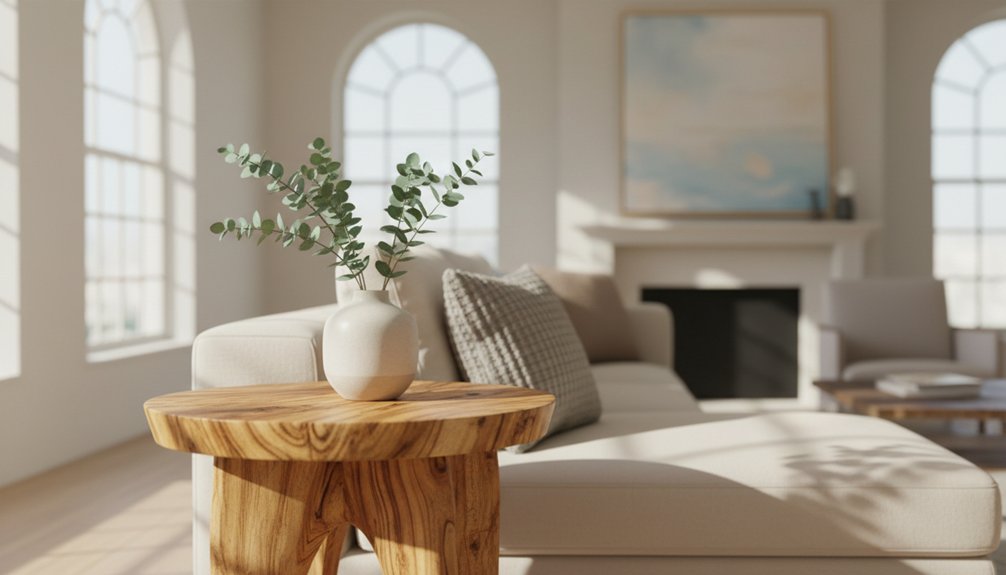
Transform your living room by incorporating solid wood accent furniture. Solid wood provides unmatched durability and showcases unique grain patterns that veneers cannot replicate. Measure your space to ensure proper fit; maintain 24-30 inches for walkways. Choose furniture that is proportionate to your room. Use a dominant wood finish for larger pieces and add contrasting accents to create visual interest. Position side tables 18-24 inches away from seating to ensure easy access to drinks and lamps. Consider multifunctional pieces, like storage benches, to maximize utility.
Next, we will discuss strategic placement techniques that enhance functionality and aesthetics, along with maintenance practices to protect your investment.
Why Solid Wood Outlasts Veneer and Particle Board
When you choose accent furniture, the materials directly impact the longevity of your pieces. Solid wood offers unmatched durability because it comes from whole timber sections. This quality allows solid wood to resist daily wear, scratches, and impacts much better than alternatives like veneer and particle board.
Solid wood’s superior durability stems from whole timber construction, outperforming veneer and particle board in resisting everyday wear and damage.
You can sand and refinish solid wood multiple times, which renews its appearance and extends its life.
In contrast, veneer has significant limitations. Veneer is made from thin layers of wood glued over particle board or plywood cores. When the veneer surface chips or peels, effective repair is nearly impossible.
Particle board deteriorates when exposed to moisture and can’t withstand much stress. While veneer and particle board may have lower initial costs, they’ll require replacement much sooner than solid wood.
Investing in solid wood means choosing a material that maintains its structural integrity for generations. Additionally, the unique grain patterns in solid wood contribute to its aesthetic appeal, making each piece a one-of-a-kind addition to your home.
Choose Accent Pieces Scaled to Your Room Size
Before purchasing accent furniture, measure your room’s dimensions accurately. A small side table that fits well in a showroom may dominate a compact living room, while a tiny accent chair could disappear in a larger space. Ensuring the correct proportions of your accent pieces is crucial; this way, they’ll enhance your room without making it feel cramped or empty.
For instance, if your living room measures 12 feet by 15 feet, consider a side table that’s around 18 inches in diameter; this size balances functionality without overwhelming the space. Conversely, in a room that’s 20 feet by 25 feet, you might opt for a larger accent chair that has a seat height of 18 inches and a width of 30 inches to maintain visual weight and presence.
When selecting accent furniture, always consider the scale relative to your overall room size. Avoid pieces that are too small, as they can lead to an unbalanced look. Similarly, avoid oversized furniture in smaller areas, as this can create a cramped atmosphere. By keeping these measurements in mind, your accent pieces will complement your room’s design effectively. Additionally, make sure to maintain at least 30 inches of clearance around your accent furniture to facilitate movement and ensure a comfortable flow throughout the space.
Measure Your Space First
To choose the right accent furniture for your living room, start by measuring the available space. Measure the length, width, and height of the areas where you want to place each piece of furniture. Record these measurements accurately.
Additionally, measure doorways and hallways to ensure that your new furniture can pass through them without issues.
When planning your space, allow at least 24 to 30 inches of walking space around each piece of furniture. This measurement ensures comfortable traffic flow in your living room.
Write down all your measurements and keep them accessible while shopping. A simple floor plan sketch can help you visualize how the accent pieces will fit in your space.
Accurate measurements prevent costly mistakes and ensure that your solid wood furniture complements the proportions of your room.
Balance Furniture Proportions Properly
To create a well-balanced room, measure your space first. Select accent pieces that fit the room’s scale. A large armchair can dominate a small living room, while small side tables may get lost in a spacious area. Ensure your furniture matches the room’s proportions to maintain visual harmony.
Choose furniture based on your room’s ceiling height. For standard eight-foot ceilings, opt for lower-profile furniture. In contrast, taller ceilings can accommodate larger pieces. For example, place a tall bookcase next to an overstuffed chair to effectively balance proportions.
Your main sofa influences your choice of accent furniture. If you have a substantial sectional, choose chunky end tables and a large coffee table to complement it. For smaller sofas, select delicate accent chairs and slim consoles. Mixing heights and widths creates visual interest while keeping the balance intact.
After arranging your pieces, step back and assess how they relate to each other visually.
Mix Light and Dark Wood Tones Without Clashing
Combining light and dark wood tones in your living room enhances depth and character when done correctly. To achieve this, distribute the contrasting wood finishes evenly throughout the space.
Start by selecting one dominant wood tone for larger furniture pieces, such as a coffee table or a sofa. Then, incorporate accent furniture in contrasting finishes, like a light oak side table next to a dark cherry wood console.
Mixing different textures also helps unify wood tones. For example, pair smooth, dark walnut with grainy, light oak to create visual interest. Choose upholstery and décor in complementary colors to connect the light and dark woods. For instance, a warm beige or soft gray can serve as a bridge between the two tones.
Consistent undertones across all wood pieces are crucial for cohesion. Make sure the undertones are either warm (like red or yellow) or cool (like gray or white).
Avoid mixing wood finishes that have conflicting undertones, as this can create visual dissonance. By following these guidelines, you can successfully mix light and dark wood tones without clashing. Additionally, incorporating traditional styles into your selection can enhance the overall aesthetic appeal of your living space.
Place Accent Tables Where You’ll Actually Use Them
To maximize the functionality of your accent tables, position them in areas where they’re easily accessible. Place accent tables in high-traffic zones where family members frequently gather, ensuring they’re within arm’s reach of seating. This setup allows for convenient use, whether for placing drinks, books, or decorative items.
Consider the natural flow of movement in your living room. Position accent tables to enhance this flow instead of obstructing pathways. For example, place a table next to a sofa or chair, allowing users to easily access it while seated.
Avoid placing tables in corners or areas that require awkward stretching or reaching, as this limits their usefulness.
High-Traffic Area Placement
Strategic placement of accent tables makes them essential for everyday use. Position accent tables near seating areas to provide convenient spots for drinks, remotes, and books.
In high-traffic zones, prioritize durability by selecting solid wood construction to resist bumps and daily wear. Place a console table behind your sofa to create a functional landing area for keys and mail.
Consider an end table between recliners for easy access from multiple seats. Choose finishes that resist fingerprints and match existing furniture to maintain a cohesive look.
Ensure you leave at least 30 inches of clearance to avoid blocking walkways and allow comfortable movement. Accent tables should enhance convenience while avoiding obstacles in frequently traveled paths.
Functional Reach Zones
When setting up your living room, place accent tables 18 to 24 inches away from seating. This distance allows for easy access to drinks, remotes, and books while promoting comfort.
Consider your dominant hand when positioning side tables next to chairs and sofas; this ensures that you can reach items without awkward stretching.
Test each table location by sitting in your furniture and simulating daily tasks. A well-positioned accent table serves as an extension of your seating, reducing the need to stand up repeatedly for small items.
Avoid placing tables outside the 18 to 24-inch range, as this can lead to discomfort and inconvenience. By following these guidelines, you create a functional, user-friendly living space.
Room Flow Considerations
To optimize the placement of accent tables in your living room, position them outside high-traffic zones. Avoid placing tables where foot traffic flows, as this can create obstacles.
Strategically select locations based on your room’s layout. For example, an accent table next to your reading chair provides a practical space for books and beverages. Similarly, a table near the sofa offers easy access to remotes and magazines.
Prioritize your furniture arrangement when determining table locations. Identify walking paths between doorways, seating areas, and frequently used spaces.
Place accent tables along walls or in corners where they remain accessible without interrupting movement. This approach ensures solid wood accent tables serve both functional and aesthetic purposes while maintaining a natural flow in daily activities.
Side Tables That Hold Drinks, Lamps, and Books
Side tables function as practical surfaces that enhance living room design. They provide accessible spots for drinks, lamps, and books within arm’s reach of seating areas, such as sofas and chairs. During movie nights or casual gatherings, side tables hold drinks securely and prevent spills on upholstery.
Side tables keep drinks, lamps, and books within easy reach while protecting your furniture from spills during gatherings.
Additionally, they support various lamp styles, from modern LEDs to traditional designs, ensuring adequate ambient lighting.
Solid wood side tables combine durability with a timeless look. Homeowners can stack books on lower shelves or place them directly on the surface, making reading materials easily reachable.
When selecting a side table, ensure its height aligns with the sofa arm for comfortable access. Choose dimensions that fit your space while allowing for smooth traffic flow throughout the room.
Avoid overcrowding the area with oversized tables, as this can obstruct movement. Instead, look for tables that complement your existing furniture and maintain a cohesive aesthetic.
Consider the table’s weight capacity when placing heavy items, such as large books or decorative objects, to ensure stability.
Footstools That Work as Seating and Storage
Footstools provide essential seating and storage solutions for living spaces. They serve as extra seating for guests while discreetly storing items such as blankets, magazines, and remote controls. This dual functionality helps maintain a tidy room without sacrificing comfort.
When selecting a footstool, consider the following options:
- Hinged-top ottomans – These designs feature a cushioned top that lifts to reveal a spacious storage compartment. Use them to store items out of sight while providing extra seating.
- Tufted square designs – These footstools add texture and elegance to your décor. They can also serve as alternative coffee tables, offering a surface for drinks or books.
- Round padded styles – Round footstools soften the corners of a room and provide comfortable perching spots for guests. Their shape encourages social interaction in seating arrangements.
- Wooden frame versions – These footstools showcase craftsmanship with visible joinery and natural grain patterns. Use them to add a touch of rustic charm to your space.
Match the footstool’s wood finish to your existing furniture to create a cohesive look.
Position footstools near sofas for practical use or place them as standalone accent pieces throughout your living room. This strategic placement enhances both function and aesthetics, ensuring your space remains organized and inviting.
Storage Benches That Hide Clutter Along Walls
Storage benches effectively utilize awkward wall spaces by providing functional storage while also enhancing room aesthetics. These benches serve as practical solutions for concealing everyday items, making them ideal for entryways, areas beneath windows, and along empty walls. They are particularly beneficial for storing items like blankets, magazines, and seasonal decorations.
| Location | Storage Type | Best Use |
|---|---|---|
| Entryway | Lift-top compartment | Store shoes, bags, and accessories |
| Window area | Cushioned seat with bins | Keep books, throws, and pillows |
| Empty wall | Sliding door panels | Hide toys, games, and electronics |
| Hallway | Open cubby system | Organize baskets and decorative boxes |
| Corner space | Hinged lid design | Store seasonal décor and linens |
Select storage benches made from solid wood for long-lasting durability. These benches can withstand daily use and maintain their appearance over time. When choosing a bench, consider how much storage you need and the specific items you plan to store, ensuring that the design fits your space effectively.
Layer Linen and Leather Textures With Wood Grain
Combining linen, leather, and wood textures enhances the visual appeal of your living room. The natural grain of solid wood furniture serves as a warm base. Pairing wood with soft linen and sleek leather creates balance and sophistication.
Here’s how to layer these textures effectively:
- Add linen cushions to leather sofas. This action softens the leather’s firmness and provides a contrasting texture.
- Set wooden side tables beside upholstered chairs. This arrangement introduces material variety and enhances functionality.
- Drape linen throws over wood benches. This technique adds comfort to the seating while incorporating soft textiles.
- Position leather ottomans alongside wooden coffee tables. This pairing mixes textures for a functional and stylish look.
Start with your wooden furniture as the foundation. Gradually introduce linen and leather elements to avoid overwhelming the space.
This method ensures that each material enhances the overall aesthetic, creating a cohesive and inviting living area.
Protect Solid Wood From Scratches and Water Rings
Solid wood furniture enhances your living space but requires protection to prevent daily damage. To safeguard against scratches, apply a scratch-resistant finish specifically designed for wood surfaces. This finish creates a protective barrier that resists wear from keys, pets, and household items.
To combat moisture, use water-repellent coatings that prevent water rings from forming under glasses and cups. Follow the manufacturer’s instructions closely to ensure effective application. Additionally, utilize coasters, placemats, and felt pads under decorative items to provide extra protection.
Protect wood furniture from moisture damage by applying water-repellent coatings and using coasters, placemats, and felt pads under items.
Regularly dust your wood surfaces with microfiber cloths. This practice removes abrasive particles that could cause scratches. In the event of spills, immediately wipe them up with a soft, dry cloth to avoid moisture damage.
Plan to reapply protective treatments at least once a year to keep your furniture in excellent condition and to prolong its lifespan.