
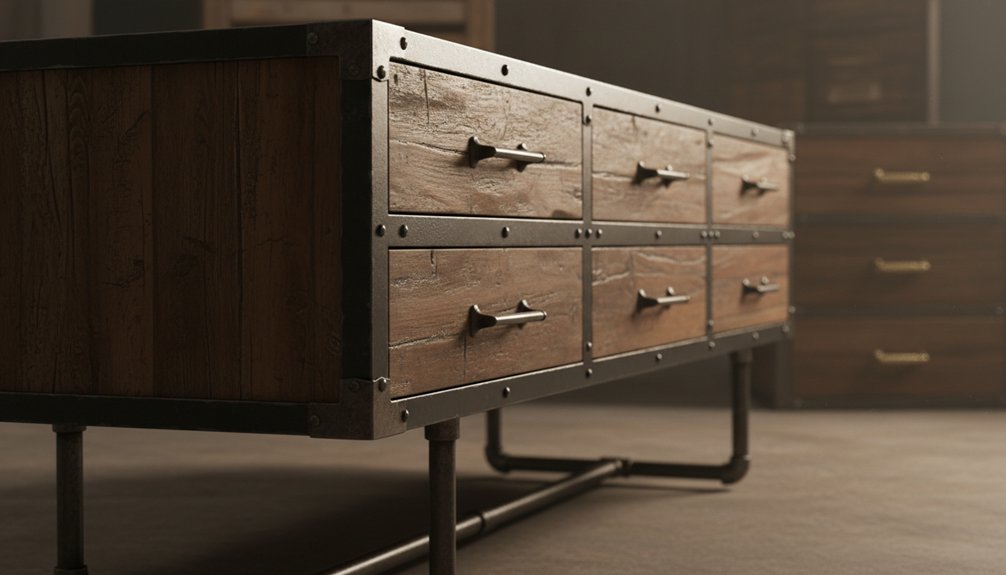
Industrial style furniture focuses on using raw materials such as steel, iron, and aluminum alongside reclaimed wood to craft functional and authentic pieces. Exposed welds, rivets, and unfinished metal surfaces contribute to a unique aesthetic that evolves with time. Metal frames ensure durability, while reclaimed wood adds warmth, balancing the cold industrial lines. Techniques like wire brushing and chemical treatments are applied to enhance the vintage look of these materials.
In practice, I select high-quality metals and woods to create sturdy furniture. Each piece combines elements for both function and style, ensuring that the materials work together effectively. For example, a coffee table may feature a steel base with a distressed wood top, providing both strength and visual appeal.
When designing, I integrate soft textiles and Edison bulb lighting to soften the overall look of the space. Neutral colors help to create an inviting atmosphere, allowing the industrial elements to showcase their manufacturing heritage without overwhelming the environment.
Limitations exist in industrial style furniture; for instance, some customers may prefer smoother finishes or lighter materials, which can detract from the raw aesthetic. However, by sticking to the core principles of industrial design, I can create unique pieces that resonate with those who appreciate this style. Ultimately, the goal is to produce furniture that embodies both durability and character, reflecting the story of the materials used.
Raw Metal Materials That Define Industrial Furniture
Industrial furniture relies heavily on metal components, specifically steel, iron, and aluminum, which provide strength and distinctive character. These metals form the essential structural elements that define industrial designs. Raw metal finishes expose the material’s natural beauty through visible welds, rivets, and unrefined surfaces. These authentic details draw attention and showcase the methods used in furniture construction.
Durability distinguishes industrial furniture from traditional options. Metal frames resist wear and damage more effectively than wood. This durability ensures that industrial furniture can withstand daily use for many years. Manufacturers frequently leave metals untreated or apply minimal coatings to maintain the industrial look. This practice highlights imperfections like oxidation and patina, giving each piece a unique character that evolves over time.
In practical terms, the choice of raw metals directly impacts the design and longevity of industrial furniture. Steel is often used for its strength, while aluminum provides lightweight options. Iron frames can create a rugged aesthetic, making them popular in various designs.
Wood and Metal Combinations in Industrial Furniture Design
When combining wood and metal in industrial furniture, the design achieves a balance of warmth and strength. This combination allows wood textures to soften the harsh lines of metal frames, making the furniture more inviting.
For instance, using reclaimed wood alongside steel not only adds an authentic industrial look but also ensures functionality. Metal components provide durability, allowing the furniture to withstand daily wear, while wooden surfaces offer comfort and visual appeal.
Common examples of effective wood and metal combinations include wood tabletops supported by metal bases, shelving units featuring wood planks with metal brackets, and seating options that pair metal frames with wooden seats.
Metal bases with wood tops, bracketed shelving, and frame seating exemplify how these materials unite form with function in industrial design.
These pairings leverage the strengths of both materials, ensuring sturdy construction from metal while showcasing the natural beauty and warmth of wood. It’s important to note that not every wood type pairs well with every metal finish. For example, lighter woods like pine may not hold up well with heavy, dark metals in high-traffic areas.
Choosing the right combination is crucial to maintaining the aesthetic cohesion and structural integrity of the piece.
Polished vs. Brushed Metal Finishes for Industrial Pieces
When selecting metal finishes for industrial furniture, consider how each finish impacts both appearance and maintenance.
Polished metal finishes create reflective surfaces that enhance light and add a sophisticated touch to spaces. However, these finishes easily show fingerprints, scratches, and smudges, requiring regular cleaning to maintain their aesthetic.
Brushed metal finishes, on the other hand, feature subtle linear patterns that effectively mask imperfections. These finishes offer durability against daily wear and tear, making them a practical choice for high-traffic areas. The matte surface of brushed finishes requires less maintenance and pairs well with raw industrial elements.
When deciding between polished and brushed finishes, think about your lifestyle and design objectives. For areas with heavy foot traffic, brushed metals provide a functional solution. In contrast, polished metals serve as eye-catching statement pieces in more formal environments.
To achieve a balanced look, consider incorporating both finishes throughout your space. This approach enhances visual interest while ensuring that your industrial furniture remains appealing and manageable over time.
Distressed Wood and Patina Finishes for Industrial Furniture
Creating distressed wood and patina finishes can turn new industrial furniture into pieces that exhibit the character of decades-old warehouse or factory items. You need to learn specific techniques to achieve these authentic weathered looks.
For instance, use wire brushing to create texture by removing surface fibers from the wood. Chain distressing involves using a heavy chain to create dents and scratches, mimicking wear over time.
Chemical treatments can speed up the aging process by reacting with the wood’s surface, producing a patina that looks genuinely aged. After achieving the desired look, applying a protective sealant is crucial. The sealant preserves the patina and prevents further deterioration. This step ensures that the vintage character remains intact while protecting the furniture from moisture and wear.
When working with these techniques, keep in mind that not all wood types respond the same way to distressing methods. Softwoods may show wear differently than hardwoods, so adjust your approach accordingly. Understanding wood type characteristics can significantly influence your distressing process.
Always test your methods on scrap pieces before applying them to your final project to ensure the results meet your expectations.
Achieving Authentic Weathered Looks
To achieve an authentic weathered look on industrial furniture, you need to apply specific techniques that mimic years of natural aging. Start by unevenly sanding wood surfaces to create natural wear patterns. Focus on edges and high-contact areas to enhance realism.
Next, mix vinegar and steel wool to develop textures that resemble oxidation. After that, apply multiple layers of stain in different colors. Once the stain dries, distress the surface with chains, hammers, or wire brushes to add depth.
For metal components, combine salt and hydrogen peroxide to speed up rust formation in targeted areas. This method allows for controlled rust patterns that enhance the industrial aesthetic. Additionally, use chemical patinas to achieve aged effects on copper or brass.
These techniques help transform new materials into pieces that genuinely look vintage and industrial. Avoid shortcuts, as rushing through these processes can lead to unrealistic finishes. Each method requires patience and careful execution.
For example, allow stains to fully dry before distressing; otherwise, you risk damaging the finish. Pay attention to detail, and ensure each step builds on the previous one to create a cohesive final piece. By mastering these techniques, you can consistently produce authentic weathered looks that add character to your furniture.
Protective Sealants for Patina
To protect your authentic weathered finishes, use appropriate sealants that maintain the aged appearance of your work. The goal of patina preservation is to select sealants that don’t alter the visual characteristics of oxidized metal and distressed wood surfaces. Clear matte sealants are the best choice for this purpose.
Choose from three effective sealant types: water-based polyurethane, paste wax, and specialized metal lacquers. Water-based polyurethane provides long-lasting protection without yellowing, making it suitable for high-traffic furniture.
Paste wax is a traditional option that’s simple to reapply and enhances the depth of patina finishes. For metal accents, clear lacquer spray forms a thin protective layer, preserving the authentic weathered look.
Apply sealants in thin, even layers using soft brushes or lint-free cloths. Ensure you allow sufficient drying time between applications to maximize protection. Avoid applying too thickly, as this can lead to a glossy finish that detracts from the intended patina effect.
Industrial Furniture Styling Ideas for Modern Living Spaces
Transform your home with industrial furniture by balancing raw materials with comfortable living elements.
Start by pairing metal-framed furniture with soft textiles like leather sofas or plush rugs. This combination creates a warm atmosphere. Use exposed materials such as brick walls and concrete floors alongside natural wood furniture to enhance the industrial look.
Install Edison bulb lighting fixtures to provide ambient illumination while enhancing the overall warehouse aesthetic.
Combine industrial elements with modern aesthetics by using clean lines and neutral color palettes. Place metal shelving units against white walls to display books and decorative items effectively.
Use rolling carts as mobile storage solutions in kitchens or living rooms to maintain functionality and accessibility. Avoid overcrowding spaces; industrial design thrives on openness.
Layer textures with throw pillows, blankets, and area rugs to soften the harder industrial features.
Keep in mind that the balance of comfort and functionality is crucial in industrial design. Strive for a cohesive look by repeating key materials and colors throughout the space.
Ensure that each piece serves a purpose, whether it’s for storage or decoration, to maintain clarity and coherence in your design.
Room-by-Room Industrial Furniture Placement and Proportions
To optimize furniture placement in your industrial-style home, begin with precise room measurements.
In the living room, position a metal-framed sofa eight to ten feet away from the TV wall. Ensure there’s a minimum of three feet of walking space around all furniture edges to facilitate movement.
For the dining area, select a table that fits proportionally within the space. Maintain a distance of 36 inches between the table edges and any walls to ensure comfortable access.
In the bedroom, choose a bed frame that aligns with the room’s dimensions. A king bed requires at least 120 square feet of space for proper placement and movement around it.
For your home office, place the industrial desk near natural light sources to enhance productivity. Maintain a clearance of 42 inches behind the chair to allow for easy movement. Incorporating raw materials into your design will enhance the industrial aesthetic and create visual interest.
Following these guidelines will help you create functional and visually appealing spaces in your home.
Adding Rustic and Mid-Century Accents to Industrial Spaces
Industrial spaces can retain their character while feeling warm and inviting. To achieve this, introduce rustic and mid-century elements that contrast with raw materials.
Start by incorporating natural wood furniture, such as reclaimed wood dining tables or vintage sideboards. These pieces soften the hard surfaces of metal and exposed brick.
Next, select vintage lighting fixtures that provide warmth. Look for pendant lights or floor lamps with Edison bulbs that enhance the industrial aesthetic while adding a cozy glow.
Layer in textiles, such as woven rugs or soft throw pillows, to create comfort in seating areas.
Combining these elements results in a balanced environment where the industrial structure coexists with inviting accents. Avoid excessive use of cold materials; instead, focus on a few key rustic or mid-century items that draw the eye and invite relaxation.
Limit the use of overly modern or sleek decor that could detract from the warmth you aim to achieve.
By strategically selecting each piece, you can create a cohesive design that maintains the industrial feel while incorporating warmth and character.
Prioritize items that complement each other, ensuring that your space feels thoughtfully curated rather than cluttered.
Blending Wood With Metal
Blending wood with metal creates functional industrial furniture that enhances interior spaces. I work with various materials every day, and I find that incorporating wood elements into metal structures adds warmth and character. This combination softens the industrial look while still highlighting its modern edge.
Using reclaimed wood paired with metal frames can create striking contrasts that showcase each material’s unique properties.
Here are some effective wood-metal combinations I recommend:
- Attach walnut or oak tabletops to sturdy steel pipe legs for a robust surface.
- Use reclaimed barn wood for shelving, supported by black iron brackets for a rustic touch.
- Construct live-edge wooden benches with powder-coated metal bases for a contemporary finish.
Mixing wood finishes and metal tones adds depth and visual interest to your pieces. Light woods like ash or maple pair well with darker metals, while rich mahogany works beautifully with brushed steel.
However, keep in mind that not all combinations will work. For example, very light woods may not provide enough contrast against lighter metals, leading to a washed-out look.
Always consider the overall aesthetic you want to achieve when selecting materials.
In my experience, focusing on these combinations can help you create stunning pieces that not only serve a purpose but also enhance your living space.
Vintage Lighting Fixture Selection
Vintage lighting fixtures significantly enhance industrial spaces by adding character and warmth that complements raw metal and wood elements. When selecting these fixtures for your space, prioritize vintage bulb types to achieve the desired effect. Edison bulbs with exposed filaments deliver an authentic industrial vibe while providing adequate illumination. These bulbs work well with metal pendant shades and cage-style fixtures, creating a cohesive look in your design.
Incorporate retro styles like pulley lights, gooseneck lamps, and factory pendants to introduce historical elements to modern interiors. Choose fixtures made from brass, copper, or weathered metal to emphasize the industrial aesthetic. Mixing various fixture heights and styles can create visual interest and depth in your room.
Authentic vintage pieces typically show patina and wear, which enhances their charm rather than detracts from it.
Prioritize quality when choosing vintage fixtures, as poorly made replicas may not withstand daily use. Ensure that the electrical components meet modern safety standards to avoid potential hazards.
Warm Textiles and Finishes
To enhance the comfort of industrial design, integrate warm textiles and natural finishes. Layer different materials like wool throws, leather cushions, and linen curtains to create a welcoming atmosphere.
These textiles provide contrast to metal and concrete surfaces while improving comfort levels. Choose warm colors such as rust, caramel, and burnt orange to complement the gray and black tones of industrial furniture.
Here are specific applications of textiles:
- Select upholstered seating in cognac leather or charcoal fabric to soften the look of metal chair frames.
- Incorporate area rugs with geometric patterns to define spaces and minimize sound echo from hard floors.
- Utilize window treatments made from natural fibers to filter harsh light and increase softness.
Your choice of textiles can transform stark industrial pieces into inviting, livable environments.
Mix textures intentionally to add depth without overwhelming the design. Focus on the relationship between textiles and industrial elements to achieve a balanced and comfortable space.
Quality Sources for Industrial Furniture and Raw Materials
When you decide to invest in industrial furniture, your main focus should be sourcing authentic pieces and reliable raw materials.
Local salvage yards provide reclaimed wood beams, metal pipes, and vintage fixtures that are ideal for DIY projects. Online platforms like Etsy and 1stDibs feature artisans who specialize in handcrafted industrial furniture, allowing you to purchase unique items.
Salvage yards and online artisan marketplaces offer authentic reclaimed materials and handcrafted pieces perfect for distinctive industrial furniture projects.
Architectural salvage stores carry authentic factory carts, metal shelving units, and reclaimed machinery parts that can enhance any industrial space.
You can also explore sustainable sourcing options through companies that prioritize upcycled materials from decommissioned warehouses and factories.
Home improvement stores stock new metal pipes, steel brackets, and industrial hardware necessary for custom builds. Antique shops and estate sales often yield vintage stools, metal lockers, and other unexpected finds that can add character to your setup.
Before making any purchase, always verify that the materials meet safety standards. Inspect for structural integrity to ensure that the items will last and perform as expected.