

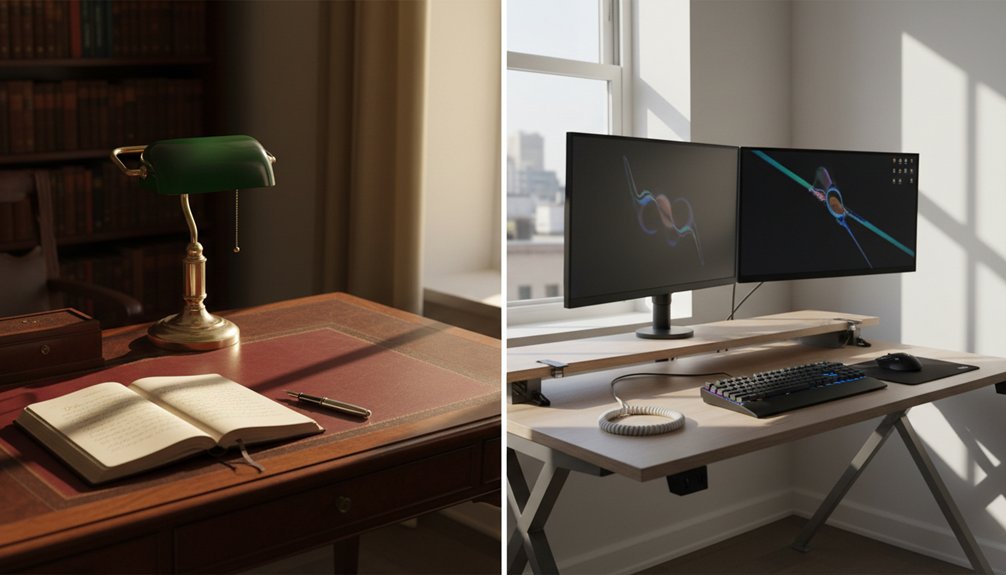
You need a writing desk if you primarily work with notebooks, letters, or engage in light laptop use. Writing desks typically measure between 48 to 60 inches wide and 18 to 24 inches deep. These desks feature minimalist designs, which can easily blend into various home or office environments.
In contrast, you should choose a computer desk if you regularly use multiple monitors, gaming equipment, or require effective cable management. Computer desks generally exceed 60 inches in width and range from 24 to 30 inches in depth. They often come equipped with built-in tech features, such as keyboard trays and monitor arms, which enhance ergonomics for extended computer work sessions.
When making your decision, consider your primary tasks. If you primarily write or take notes, a writing desk will suffice. If you engage in tasks that require more screen space or complex setups, a computer desk is more appropriate. Additionally, think about the available space in your home or office. A writing desk can fit into tighter areas, while a computer desk generally requires more room. Finally, assess your preference for aesthetic simplicity versus the need for ergonomic technology support.
Writing Desk vs. Computer Desk: Size, Features, and Purpose Compared
When selecting between a writing desk and a computer desk, you must consider their distinct designs and functions. A writing desk typically measures around 30 inches in height and 48 to 60 inches in width, providing a compact, flat surface ideal for tasks like note-taking or writing letters. Writing desks usually emphasize aesthetics with classic styles that blend into home décor.
In contrast, a computer desk generally has larger dimensions, often exceeding 60 inches in width, to accommodate multiple devices. Computer desks frequently incorporate features such as keyboard trays, cable management systems, and monitor stands. These components help maintain an organized workspace and support ergonomic use, reducing physical strain during long hours of computer work.
Writing desks primarily serve individuals who engage in minimal tasks requiring little space, such as correspondence or sketching. Computer desks cater to users who need to manage various devices, including laptops, printers, and external hard drives. Additionally, choosing the right desk dimensions can significantly impact your overall workspace efficiency and comfort.
Depth and Workspace: How Much Surface Area Do You Need?
Desk depth significantly impacts your available workspace. Writing desks generally measure 18-24 inches deep. This depth provides adequate surface area for notebooks, pens, and a laptop.
In contrast, computer desks are deeper, typically measuring 24-30 inches. This additional depth accommodates monitors, keyboards, and other necessary peripherals comfortably.
Evaluate your workspace needs before selecting a desk. If you primarily use a single laptop, a writing desk with a shallower depth suffices. However, if you require dual monitors or additional equipment, choose a computer desk for the extra depth.
Consider your daily desktop items. Writing tasks usually need minimal surface area, while a computer setup with speakers, external drives, and document holders requires more space.
Measure your equipment dimensions and add six inches for effective workspace organization. This extra space prevents overcrowding and enhances productivity. Additionally, choosing a desk made of solid wood furniture ensures durability and adds aesthetic appeal to your workspace.
Cable Ports, Keyboard Trays, and Monitor Arms: Tech Features Compared
Writing desks focus on traditional paper-based work, while computer desks cater to modern technology with specialized components.
Computer desks feature cable management systems that include grommets and channels, which keep wires organized and out of sight. These desks also incorporate pull-out keyboard trays, allowing users to type with proper wrist alignment, which is crucial for comfort during extended use.
In contrast, writing desks don’t support these features because they’re intended for tasks that don’t involve technology.
Computer desks often accommodate monitor arms, enabling users to adjust the height and angle of their screens. This ergonomic design significantly reduces neck and eye strain during long hours of work.
For individuals using multiple screens or various peripherals, computer desks provide the necessary infrastructure for efficient setup. Writing desks are less suitable when users require these technological enhancements. Additionally, the design of traditional furniture styles often prioritizes aesthetics over functionality, making them less compatible with modern tech needs.
Which Desk Fits Your Tasks: Writing, Multi-Monitor Work, or Creative Projects?
Your daily tasks dictate the type of desk you need for your workspace. If you primarily engage in traditional writing or reading, choose a minimalist writing desk. A clean surface and minimal features on this desk will help reduce distractions and enhance your focus.
On the other hand, if you spend your time gaming or using multiple monitors, select a computer desk designed for that purpose. The computer desk should have a wider surface area to accommodate your equipment. Look for desks that feature cable management systems to keep cords organized and structural support to handle heavier devices like monitors and gaming consoles.
When making your decision, consider the limitations of each desk type. A minimalist writing desk may not provide enough space for multiple monitors, while a computer desk may not suit the aesthetic of a dedicated writing space.
Always align your desk choice with your daily activities to ensure maximum productivity.
Minimalist Writing Desk Setup
To determine which desk style fits your work needs, focus on your primary tasks. If you write or read frequently, consider a minimalist writing desk. Minimalist writing desks have clean lines and simple surfaces, lacking built-in storage or complex features. This straightforward design reduces visual distractions and helps you concentrate on your tasks.
You only need essential items on a minimalist writing desk: a lamp for lighting, a notebook for jotting down ideas, and a pen holder for organization. This setup keeps your workspace tidy and everything within arm’s reach, fostering a calm environment.
A minimalist desk typically occupies less space, making it easy to position near windows or in smaller rooms. These desks are ideal for writers, students, and anyone who values a straightforward workspace.
Additionally, minimalist writing desks tend to be more affordable than larger computer desks which include additional features and storage options.
Multi-Monitor Gaming Workstation
Gaming and multi-monitor setups require specific desk dimensions and features to optimize performance. Select a desk that’s at least 60 inches wide to easily fit multiple monitors. Ensure the depth of the desk is a minimum of 30 inches to provide appropriate viewing distances for your screens.
Arrange monitors for gaming ergonomics by positioning your primary screen at eye level and angling secondary displays slightly inward. This setup minimizes neck strain and improves focus during gaming sessions.
Incorporate desks with built-in cable management systems to efficiently organize the cables from multiple monitors, gaming peripherals, and RGB lighting. A sturdy desk surface is crucial to support the weight of multiple screens and equipment. Look for desks with reinforced frames and weight capacities exceeding 200 pounds to prevent sagging or instability during intense gaming.
Avoid desks that lack sufficient width or depth, as they limit your ability to arrange screens comfortably. Choose options with adjustable height settings if you prefer a standing desk setup, but ensure they still meet the minimum dimensions for stability.
Small Apartments vs. Dedicated Home Offices: Matching Desk to Space
When selecting between a writing desk and a computer desk, the size of your workspace directly influences your choice. Small apartments have space constraints that necessitate compact furniture solutions. A writing desk typically measures around 30 inches in width, making it suitable for tight spaces. You can position a writing desk against a wall or in a corner without overwhelming the area.
For small apartments with limited space, a compact 30-inch writing desk offers an ideal solution without overwhelming your room.
In contrast, a computer desk often requires a minimum width of 48 inches to accommodate monitors, keyboards, and cable management systems, making it less ideal for small apartments.
Dedicated home offices have different space requirements. A full-sized computer desk provides sufficient surface area for multiple devices and accessories, enhancing productivity. You can set up L-shaped or U-shaped desks in these spaces to optimize workflow.
Before making a purchase, measure your available area to ensure the desk fits comfortably and allows for easy movement around the workspace.
Writing Desk or Computer Desk: 4 Questions to Make Your Decision
Which desk type best suits your work needs? Before making a decision, consider these four practical questions.
First, identify your primary work activity. If you mainly write by hand or sketch, choose a writing desk. If your tasks involve computer use, opt for a computer desk equipped with cable management features.
Second, assess how many hours you plan to spend at this desk. If you work long hours, prioritize desks with ergonomic designs, such as adjustable heights and optimal monitor positioning to support your posture.
Third, determine what equipment you need the desk to accommodate. Computer desks typically include built-in keyboard trays and designated CPU storage. Writing desks tend to offer simpler surfaces without these additional features.
Fourth, evaluate your writing style and equipment requirements. Writers using laptops can manage with minimal infrastructure, while those utilizing multi-monitor setups need more robust options to support their workflow.