

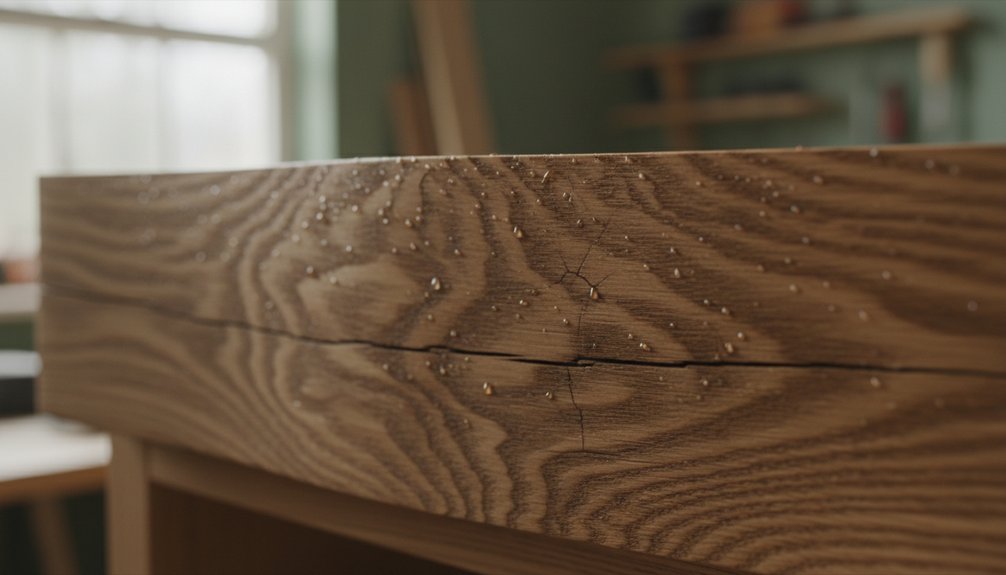
Your wood furniture absorbs and releases moisture from the air. When indoor humidity levels drop below 30% or rise above 50%, the wood expands and contracts unevenly. This movement generates internal stress, causing cracks along the grain, warped panels, loose joints, and splitting.
During winter, heating systems can dry out the air in just a few hours. This rapid moisture loss can lead to surface cracks forming overnight. To protect your furniture’s structural integrity, maintain indoor humidity levels between 40% and 45%. Utilizing humidifiers or dehumidifiers can help achieve this balance.
Understanding seasonal humidity patterns is crucial. In winter, when heating systems run frequently, the air becomes drier. In contrast, summer often brings higher humidity levels. By monitoring and adjusting humidity accordingly, you can prevent permanent damage to your wood furniture before it occurs.
Why Wood Furniture Cracks, Warps, and Splits in Dry Air
When indoor humidity levels drop below 30 percent, wood furniture loses moisture through its pores and surfaces. This moisture loss causes the wood fibers to shrink and contract, resulting in internal stress within the furniture.
As dry air continues to extract moisture, different sections of the wood shrink at different rates. The outer surfaces dry more quickly than the inner core, creating tension that can lead to splits in the wood.
You will see cracks forming along the grain, joints becoming loose, and panels warping. This contraction, driven by dry air, makes wood furniture susceptible to lasting damage.
Unlike humid conditions that cause wood to expand, the rapid moisture loss in dry environments poses significant risks to structural integrity. The natural movement of wood can become problematic when humidity changes happen too quickly or too drastically.
Wood’s natural expansion and contraction becomes destructive when humidity shifts occur too rapidly or drastically.
To protect your wood furniture, maintain indoor humidity levels between 30 and 50 percent. Use humidifiers during dry spells and avoid placing furniture near heating vents or drafty windows to minimize moisture loss.
Regularly check joints and surfaces for signs of cracking or warping, and consider applying wood conditioner to help retain moisture in the wood. Additionally, understanding the importance of wood type characteristics can aid in selecting furniture that withstands humidity fluctuations better.
The Ideal Humidity Range for Wood Furniture Protection
Maintaining the right humidity level protects wood furniture and extends its life. Experts recommend keeping indoor humidity between 30% and 50% throughout the year, with 40% to 45% being optimal. This specific range allows wood to expand and contract minimally, which reduces stress on joints and finishes.
To control humidity effectively, monitor moisture levels in rooms with valuable furniture using a hygrometer. During winter, heating systems can dry out the air. In this case, running a humidifier adds necessary moisture to maintain the recommended humidity levels.
Conversely, during humid summer months, using a dehumidifier or air conditioning helps remove excess moisture from the air.
Proper management of humidity is essential for protecting your furniture investment. Consistent humidity levels prevent seasonal fluctuations that can lead to cracking, warping, and joint separation.
7 Warning Signs Your Furniture Has Humidity Damage
Recognizing humidity damage early is crucial for preserving your wood furniture. You should look for three primary categories of warning signs: surface changes, structural issues, and finish deterioration. Identifying these signs allows you to act quickly and prevent minor damage from escalating into costly repairs or replacements.
Surface Changes: Inspect your furniture for any changes in the surface appearance. You may notice warping, swelling, or discoloration.
These surface alterations indicate that moisture has penetrated the wood, which can lead to more severe damage.
Structural Issues: Examine the joints and joints of your furniture. If you see gaps or if drawers become difficult to open and close, the humidity has likely compromised the structural integrity.
These issues can escalate if not addressed promptly, potentially requiring extensive repairs.
Finish Deterioration: Check the protective finish on your furniture. If you observe peeling, cracking, or a cloudy appearance on the surface, the finish has likely degraded due to excessive moisture.
Addressing this deterioration quickly will help maintain the appearance and durability of your furniture.
Visual Surface Changes
Wood reacts visibly to moisture fluctuations, making it essential to monitor furniture surfaces for signs of damage. When moisture gets trapped under the finish, you’ll see white or cloudy spots on the surface. These spots indicate that humidity has breached the protective coating.
If you notice dark water rings or blotches, this suggests deeper moisture penetration that’s affecting the wood itself.
Additionally, a dull or hazy appearance where the finish used to shine signals that excess humidity has compromised the integrity of the surface treatment.
Warped veneer that’s lifting or bubbling serves as another clear warning sign of moisture issues. Furthermore, color changes in the wood, with some areas appearing lighter or darker, reveal uneven moisture absorption patterns across the piece.
To maintain the quality of your furniture, regularly check for these visual indicators. Address any issues promptly to prevent structural damage and preserve the wood’s appearance.
Structural Integrity Issues
Humidity damage poses a serious risk to the structural integrity of wood furniture. When wood absorbs moisture, it expands. This expansion leads to mechanical problems that can jeopardize both stability and lifespan.
Look for these indicators of structural damage:
- Joint issues: Check for loosening or separation at joints. If drawers stick, doors fail to close, or you see gaps between connected pieces, the joints may be compromised.
- Warping: Inspect surfaces for warping. If tabletops no longer sit flat or cabinet doors twist, the wood has likely warped due to humidity.
- Cracks: Look for splitting or cracking. Deep fissures running through the wood grain weaken the entire furniture piece and signal a need for attention.
- Fastener problems: Monitor fasteners like screws and nails. If these components pull away from the wood, it indicates that the surrounding material is expanding and contracting repeatedly.
Address these structural problems quickly. Ignoring them can lead to more severe damage, often requiring professional restoration services.
Regularly check your furniture for these signs to maintain its integrity and longevity.
Finish and Coating Damage
Humidity damages furniture finishes long before it affects the wood beneath. When moisture seeps through the coating, you’ll notice cloudy patches or a milky appearance.
Different finish types respond differently to humidity. Lacquer becomes brittle and cracks, while polyurethane forms bubbles or peels at the edges. Oil-based finishes turn sticky in high humidity. These signs indicate that the protective layer is compromised, which means your furniture’s defense is failing.
Water rings appear as white or dark circles where moisture remains on the surface too long. You may also see the finish separating from the wood, leading to raised spots or blisters.
Rough patches can develop as the coating degrades. Identifying these issues early can prevent deeper wood damage and save you from costly repairs. Regularly inspect your furniture for these signs to maintain its condition and longevity.
How Central Heating and Air Conditioning Harm Wood Furniture
Your HVAC system can damage wood furniture by affecting moisture levels and temperature stability.
Central heating reduces humidity in winter, which causes wood to dry out and crack. Air conditioning in summer can create rapid temperature changes that also harm wood.
To protect your wood furniture, maintain indoor humidity levels between 30% and 50%. Additionally, avoid sudden temperature shifts by using a humidifier in winter and a dehumidifier in summer.
Regularly monitor these conditions to ensure your furniture remains in good condition.
Rapid Moisture Loss Issues
Modern HVAC systems cause rapid moisture loss in wood furniture, leading to significant damage that traditional humidity changes don’t create.
Unlike natural drying, which occurs over weeks, HVAC systems can remove moisture within hours. This quick change overwhelms wood’s ability to adapt, resulting in serious issues.
When HVAC systems operate continuously, wood furniture experiences the following rapid effects:
- Joints separate because wood shrinks faster than glue can hold.
- Surface cracks form overnight during winter heating cycles.
- Veneer panels bubble or peel away from their backing.
- Drawers stick or gaps appear between boards as wood shifts.
Temperature Fluctuation Damage
Temperature swings from central heating and air conditioning can damage wood furniture.
When you heat your home during winter, you raise the temperature and lower humidity levels. This combination causes wood to release moisture quickly, which can lead to problems.
In summer, air conditioning creates cold temperatures that can shock the wood’s cellular structure. Over time, these repeated cycles weaken wood fibers, increasing the risk of cracking and warping.
The constant expansion and contraction of wood from temperature changes affects moisture absorption patterns. You may observe that joints loosen and finishes develop stress marks.
To protect your wood furniture, maintain consistent indoor temperatures between 60-80°F.
Avoid placing furniture near heating vents, radiators, or air conditioning units because direct exposure can intensify damage.
Ideal Indoor Humidity Levels
Wood needs specific humidity levels to stay stable and undamaged. Maintain indoor humidity between 30% and 50% throughout the year to protect solid wood furniture. This range prevents wood from absorbing too much moisture in humid months and prevents over-drying during winter.
To maintain proper humidity control:
- Use a humidifier to add moisture when heating systems dry out your home in winter.
- Operate a dehumidifier during humid summer months to remove excess moisture from the air.
- Monitor humidity levels with a hygrometer placed in your main living area to ensure they stay within the ideal range.
- Position furniture away from heating vents and air conditioning units to avoid extreme localized conditions that can harm the wood.
Central heating and air conditioning systems can disrupt wood’s natural humidity balance.
These systems create rapid humidity swings that cause wood to expand and contract. Over time, this cycle leads to cracks, warping, and joint failure in furniture.
Using Humidifiers and Dehumidifiers to Protect Wood Furniture
Maintaining consistent humidity levels in your home is crucial for preserving the integrity of your wood furniture. Wood expands when it absorbs moisture and contracts when it dries out, leading to potential damage if humidity fluctuates too much. To control indoor moisture effectively, invest in the right equipment.
Different types of humidifiers serve specific purposes. Evaporative humidifiers distribute moisture throughout the entire home. Ultrasonic humidifiers operate quietly and are better suited for individual rooms. Steam vaporizers quickly add moisture to the air, particularly useful during dry winter months.
In humid climates or damp spaces, dehumidifiers become essential. Dehumidifiers prevent excess moisture that can cause wood to swell, warp, or develop mold. Place dehumidifiers in basements or areas where humidity consistently exceeds 60% to protect your furniture.
Use a hygrometer to monitor your home’s humidity levels. Activate humidifiers when humidity drops below 30% and run dehumidifiers when it rises above 60%.
This proactive approach effectively safeguards your wood furniture investment and helps maintain its condition over time.
How Seasonal Humidity Changes Affect Your Furniture Year-Round
As seasons change, wood furniture undergoes expansion and contraction due to fluctuating humidity levels. This movement can compromise the furniture’s structural integrity. To maintain your pieces, monitor humidity levels regularly and make seasonal adjustments.
Spring: During spring, humidity levels rise. Wood absorbs moisture, causing it to expand. This expansion can lead to tight-fitting drawers and doors, making them difficult to open and close.
Summer: In summer, humidity reaches its peak. The heightened moisture content maximizes wood expansion, which stresses joints and can lead to issues like veneer bubbling. Monitor humidity closely to prevent damage.
Fall: As fall arrives, moisture levels decrease. Wood begins to contract, which can create gaps in joints. Inspect your furniture regularly to identify any potential gaps and address them before they worsen.
Winter: In winter, humidity drops to its lowest point. This leads to maximum shrinkage in wood, resulting in cracked panels and separated joinery. Use humidifiers to maintain a stable humidity level and reduce the risk of damage. Implementing humidity control strategies can be vital for preserving the integrity of your wood furniture.
To protect your furniture year-round, adjust your humidity control strategies every season. This approach helps maintain optimal conditions and prolongs the life of your wooden furniture.
Wood Species That Resist Humidity Damage Best
Wood species vary significantly in their ability to withstand humidity changes. Teak wood resists moisture effectively, making it ideal for humid environments. Its natural oils repel water, which prevents warping and damage, and this is why many manufacturers choose teak for outdoor furniture.
White oak demonstrates strong durability among hardwoods. Its tight grain structure minimizes moisture absorption, resulting in less swelling and splitting compared to other woods.
Mahogany also performs well in fluctuating humidity due to its stable cellular structure, which helps maintain its shape over time.
Cherry and walnut provide moderate resistance to humidity but aren’t as durable as teak or oak. If you live in areas with significant humidity swings, selecting furniture from these resilient species can help reduce seasonal movement and significantly extend the lifespan of your furniture.
Choosing the right wood species for your environment is crucial for maintaining the integrity of your furniture. Prioritize woods like teak, white oak, and mahogany for better performance in humid conditions.
Furniture Placement and Finishing Tips to Minimize Moisture Problems
Selecting moisture-resistant wood species only partially protects your furniture from humidity damage. You must also arrange your furniture strategically and apply protective coatings to create a complete defense against moisture.
Position furniture away from humidity sources to minimize warping and cracking. For example, keep furniture at least two feet away from heating vents and radiators. Avoid placing pieces directly against exterior walls, as condensation often forms there. Maintain distance from humidifiers, aquariums, and kitchen appliances, which can introduce excess moisture. Additionally, pull furniture away from windows that experience temperature fluctuations to prevent damage.
Strategic furniture placement is your first line of defense—keep pieces at least two feet from heat sources and exterior walls.
Apply quality protective coatings, such as polyurethane, lacquer, or wax, to seal wood surfaces. These finishes create moisture barriers that prevent water absorption while allowing the wood to breathe. Traditional furniture styles often require careful maintenance to preserve their beauty over time, including protection against humidity.
Reapply these coatings every few years, particularly on high-use surfaces, to ensure ongoing protection. By focusing on strategic furniture placement and consistent finish maintenance, you can significantly extend your furniture’s lifespan and reduce the risk of moisture-related problems.
Maintenance Schedules to Keep Wood Furniture Stable Long-Term
Regular maintenance is crucial for preserving wood furniture. Establish a maintenance schedule based on your home’s humidity levels. For stable environments, inspect your wood furniture every three months and apply care products twice a year.
In homes with fluctuating humidity, conduct monthly inspections and apply conditioning products as needed.
Use quality furniture polish or conditioning oils specifically designed for wood. These products replenish moisture lost during dry periods and help maintain the finish.
Clean any spills immediately to prevent water damage, as prolonged exposure can cause significant harm.
Inspect joints and hardware annually. Tighten loose screws to prevent movement from causing permanent damage.
Keep a record of any changes you observe in your furniture, as this documentation helps you adjust your maintenance schedule for optimal protection.