

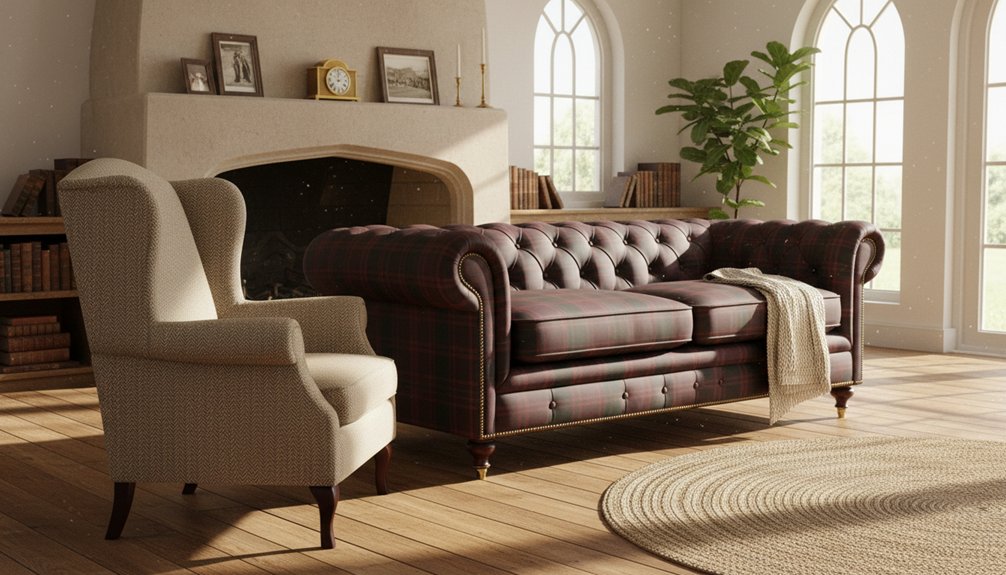
Tartan and tweed upholstered furniture brings Scottish heritage into modern homes using durable, visually appealing fabrics. Tartan features bold geometric patterns and works well for accent chairs, while tweed offers a textured surface that suits sofas and ottomans. Both fabrics resist wear and fading: tartan effectively hides stains, and tweed contributes warmth to contemporary spaces. These fabrics pair well with leather, metal, and glass, allowing for striking contrasts when limited to one or two pieces in a room. This guide details the selection, styling, and maintenance of these timeless materials.
Selecting Tartan and Tweed Upholstered Furniture
Choose tartan and tweed for their durability and aesthetic appeal. Consider tartan’s patterns for accent chairs to add visual interest, and select tweed for sofas and ottomans for a cozy texture. Both fabrics hold up well over time, making them ideal choices for high-traffic areas. Avoid using these fabrics in overly bright or sunny rooms, as prolonged exposure may cause fading.
Styling Tartan and Tweed in Your Space
Incorporate tartan and tweed into your design scheme effectively. Limit the number of upholstered pieces to one or two per room to maintain balance. Pair tartan accent chairs with a neutral sofa, or combine a tweed ottoman with leather seating. This creates a harmonious look that enhances the room’s overall design. Avoid overcrowding the space with too many patterns, as this can create visual confusion.
Maintaining Tartan and Tweed Upholstered Furniture
Care for tartan and tweed to ensure longevity. Regularly vacuum upholstery to remove dust and debris, and spot clean stains promptly using a mild detergent and water. For deeper cleaning, consult a professional upholstery cleaner to handle the fabrics delicately. Avoid harsh chemicals that can damage the fibers. Set a maintenance schedule to keep your furniture looking its best over time.
By focusing on selecting, styling, and maintaining tartan and tweed upholstered furniture, you can successfully integrate these heritage fabrics into your modern home design.
Why Tartan and Tweed Add Character to Modern Interiors
Tartan and tweed fabrics enhance modern interiors by adding warmth and personality that solid colors fail to provide. These textiles transform simple furniture into eye-catching features that anchor living spaces effectively.
Tartan offers a variety of colorways, including traditional reds and greens, as well as contemporary neutrals. This variety allows you to select patterns that seamlessly integrate with your existing décor. The crisscross patterns create visual interest while maintaining a balanced look, particularly in smaller rooms.
Tartan’s diverse palette—from classic reds to modern neutrals—creates visual interest while maintaining balance in compact spaces.
Tweed provides unique textures through its woven construction. The fabric features subtle flecks and irregular patterns, which not only add depth but also help conceal wear better than smooth fabrics. This durability means your furniture retains a fresh appearance for an extended period.
Both tartan and tweed successfully bridge classic and contemporary design elements. They demonstrate that heritage fabrics can be effectively utilized in modern settings, enhancing both style and functionality. Additionally, incorporating distinct zones in open layouts can maximize the impact of tartan and tweed, creating inviting spaces that encourage interaction.
The Heritage and Craft Behind Tartan and Tweed
Tartan and tweed are two distinct fabrics with unique characteristics and historical significance rooted in Scottish textile traditions.
Tartan originated centuries ago, when Highland clans designed specific patterns to represent their families. Weavers intersected colored threads at right angles, creating recognizable checkered designs. Each clan had its own color combinations that symbolized its heritage and territory, allowing members to identify one another by their tartan patterns.
In contrast, tweed emerged in Scotland’s rural areas during the 18th century. Local weavers crafted tweed from wool to ensure durability against harsh weather conditions. The fabric likely derives its name from the Scottish word “tweel,” which refers to the twill weave.
Tweed features a textured surface and earthy tones that mirror the natural landscape of Scotland, making it practical for outdoor use.
Both tartan and tweed showcase exceptional craftsmanship, which is highly valued in contemporary upholstered furniture. Weavers today still use traditional techniques to create these fabrics, ensuring that their rich histories and distinctive qualities remain intact.
Understanding these differences is essential for anyone interested in Scottish textiles or looking to incorporate these fabrics into their projects.
What Makes These Fabrics Perfect for Upholstery
Tartan and tweed provide excellent durability for upholstered furniture. These fabrics resist wear, fading, and pilling, outperforming many synthetic options. The tight weave structure prevents snagging and helps maintain appearance, even in high-traffic areas.
Tartan and tweed’s color versatility allows them to fit various interior styles. Traditional patterns enhance classic décor, while contemporary colorways work well in modern spaces. The woven patterns also conceal minor stains and signs of everyday wear effectively.
Using tartan and tweed fabrics offers sustainability benefits. The wool content is biodegradable and renewable, ensuring that quality pieces remain functional for decades instead of just a few years. Investing in this upholstery means you won’t have to replace your furniture frequently. Additionally, solid wood furniture can complement the durability and aesthetic appeal of tartan and tweed upholstery, creating a harmonious blend of style and functionality.
Furthermore, natural fibers in these fabrics help regulate temperature, providing comfort year-round while minimizing reliance on heating and cooling systems.
Tartan vs Tweed: Choosing the Right Fabric for Your Space
When you choose between tartan and tweed for your furniture, consider how each fabric influences your room’s style. Tartan features bold, intersecting lines that create a structured, traditional appearance. In contrast, tweed offers a subtle, textured weave that provides a more relaxed, organic vibe.
Next, evaluate the durability of each fabric based on how much wear your furniture will experience. Tartan can withstand significant use, making it suitable for high-traffic areas. Tweed, while durable, may require more care due to its textured surface, which can trap dirt and dust over time.
Finally, think about maintenance. Tartan typically needs less upkeep, as its patterns can help conceal stains. Tweed might need more regular cleaning to keep its texture looking fresh. Additionally, incorporating fabrics like traditional styles can enhance the overall aesthetic of your space, blending heritage with modern design elements.
Visual Impact and Patterns
Tartan and tweed fabrics serve distinct purposes in furniture design, each offering unique visual effects and characteristics. Tartan features bold geometric grids with intersecting lines that create a commanding presence in any space. This pattern draws immediate attention and serves effectively as a focal point within a room. In contrast, tweed showcases irregular flecks and textures, which provide a subtler aesthetic. This fabric promotes visual harmony through its blended, interwoven tones, making it suitable for various design schemes without overwhelming existing décor.
| Aspect | Tartan | Tweed |
|---|---|---|
| Pattern Type | Geometric grids with perpendicular lines | Irregular flecks and textures |
| Visual Weight | Bold and commanding | Subtle and understated |
| Color Distribution | Distinct, separate color blocks | Blended, interwoven tones |
| Best For | Statement pieces, accent chairs | Sofas, versatile seating |
When selecting between tartan and tweed, consider the intended visual impact. Tartan fabric works well for statement pieces, such as accent chairs, where you want to create intentional contrast. Tweed fabric fits better for sofas and versatile seating options, where a refined texture enhances the overall design without drawing too much attention. Each fabric has its strengths and limitations, so assess your space and the effect you wish to achieve before making a decision.
Durability and Maintenance Needs
Tartan and tweed fabrics provide excellent durability for home use, but their maintenance requirements differ significantly.
Tweed features a tight weave that resists wear and staining effectively, making tweed suitable for high-traffic areas. You can expect tweed to withstand daily use without showing signs of wear.
In contrast, tartan‘s durability relies on its wool content and the quality of its weave; higher wool percentages lead to better resilience in tartan.
To maintain these fabrics, you should regularly vacuum both materials to eliminate dirt buildup. For minor spills, use a damp cloth with mild detergent to spot-clean the affected area.
When dealing with deep stains, professional cleaning is the most effective method for both fabrics. However, tweed usually requires less frequent professional cleaning compared to tartan.
Avoid using harsh chemicals and excessive water for both fabrics, as these can damage natural fibers and permanently alter their appearance.
Armchairs, Ottomans, and Headboards: Best Pieces to Upholster
Tartan and tweed fabrics work effectively on specific furniture pieces. Wingback and club armchairs display tartan checks and tweed textures well due to their large surface areas. These designs fit perfectly in study rooms and reading nooks, where comfort and style are essential.
Square or rectangular ottomans also benefit from heritage fabrics, as their shape highlights pattern symmetry. You can choose ottomans to serve as statement pieces or to complement existing upholstered furniture.
Upholstered headboards serve as another strong option in interior design. They create focal points in bedrooms while adding warmth and texture. Using tartan or tweed for headboards introduces eye-level patterning without overhauling an entire room.
Tartan and tweed headboards deliver bedroom character at eye level—maximum visual impact with minimal commitment to pattern throughout the space.
These three furniture types—armchairs, ottomans, and headboards—balance visual impact with practical application, making them ideal choices for upholstery projects.
Styling Heritage Upholstery in Contemporary Rooms
Integrating tartan or tweed upholstery into modern spaces creates a striking contrast that enhances both heritage and contemporary elements. When you select a plaid armchair, position it alongside sleek metal furniture and streamlined sofas to juxtapose traditional patterns against modern lines.
Limit the use of tartan or tweed to one or two pieces per room to maintain a clean aesthetic. Pair textured fabrics with smooth materials like leather, glass, or polished wood to create a balanced environment.
Use neutral color schemes for walls and larger furniture pieces, allowing the patterned upholstery to become the focal point of the room. Incorporate simple accessories that support this design without overwhelming the space.
Add contemporary art, geometric rugs, and modern lighting fixtures to complement the heritage fabrics, resulting in a cohesive look that feels both timeless and current.
Avoid overcrowding the room with too many heritage pieces, as this can create visual clutter. Instead, focus on the specific relationship between the tartan or tweed upholstery and the surrounding modern elements to achieve a polished finish.
Pairing Tartan and Tweed With Leather, Metal, and Linen
Tartan and tweed fabrics effectively contrast with smooth leather, sleek metal accents, and soft linen textiles. These materials enhance the visual appeal of furniture arrangements by balancing the heavy patterns of tartan and tweed with lighter textures and finishes.
For instance, pairing a tartan chair with leather upholstery creates a sophisticated look, while metal hardware on tweed upholstery adds a modern touch.
Understanding the specific ways these materials interact can guide your design choices. Leather enriches tartan by providing a polished contrast, while metal accents elevate the rustic charm of tweed.
When designing furniture, consider how these pairings can complement each other to create a cohesive arrangement.
Keep in mind that not all combinations will work seamlessly. For example, overly intricate metal designs may clash with the bold patterns of tartan, leading to visual chaos.
Focus on clean lines and subtle finishes to maintain harmony. By thoughtfully combining tartan and tweed with leather, metal, and linen, you can achieve a sophisticated and balanced aesthetic in your furniture designs.
Leather and Tartan Combinations
Pairing tartan with leather creates a visually appealing contrast that enhances both materials. The warmth of brown leather complements tartan patterns featuring reds, greens, and golds effectively. The texture of brown leather enriches the woven details of tartan without overshadowing it.
For example, position a leather wingback chair next to a tartan-upholstered sofa. Leather throw pillows also add a refined touch to tartan seating.
Black leather introduces a contemporary flair when combined with modern tartan designs that utilize simplified colorways. Cognac and tan leather adapt well to both classic and modern interiors, offering versatility.
To achieve a balanced look, ensure that one material dominates while the other acts as an accent. Avoid overwhelming the space by maintaining proportion between the leather and tartan elements.
For instance, choose a bold tartan pattern for a large area rug and complement it with subtle leather accents, like a small ottoman or side table. This approach creates a cohesive design that highlights both materials effectively.
Mixing Metals With Tweed
Metal accents enhance tweed upholstery by adding a modern touch while emphasizing its unique texture. For example, using brass nailhead trim creates a classic appearance on tweed armchairs, while incorporating chrome legs introduces a contemporary contrast. The rough texture of tweed pairs well with the smooth finish of metals, generating visual interest in interiors.
To effectively blend these materials, consider placing metal side tables next to your tweed sofa or selecting lamps with brushed nickel bases. These combinations work because the sleekness of metal balances the rustic nature of tweed. You can mix brass and chrome finishes to create depth without the need for perfect matches.
Ensure that the metal finishes complement the undertones of your tweed upholstery for a cohesive look. When choosing metal accents, be mindful of the overall color scheme. Pair gold-toned hardware with earthy tweeds to create warmth, or use silver accents with gray tweeds for a cooler aesthetic.
This attention to detail ensures that all elements support the primary focus on the tweed upholstery.
Caring for Your Tartan and Tweed Upholstery
Caring for tartan and tweed upholstery is essential to maintain its appearance and durability.
Vacuum your upholstery weekly with a soft brush attachment to remove dust and prevent dirt from settling into the fibers. For spills, immediately blot the area with a clean, dry cloth. Rubbing the fabric can damage the weave, so avoid that.
When deep stains occur, seek help from a professional upholstery cleaner, as they’ve specialized techniques to restore the fabric.
Applying fabric protection treatments helps repel liquids and resist stains, extending the life of your upholstery.
Rotate the cushions regularly to ensure even wear across all surfaces. Additionally, keep your tartan and tweed furniture away from direct sunlight to prevent fading and degradation of color.
Where to Buy Quality Tartan and Tweed Furniture
To buy quality tartan and tweed furniture, you must identify retailers that specialize in authentic pieces made from premium materials. Focus on the following options:
- Scottish heritage furniture makers provide traditional designs featuring genuine tartan patterns and authentic tweed textures. These makers often source their materials directly from Scotland, ensuring high quality and authenticity.
- High-end department stores stock curated collections from reputable upholstery brands. Browse their selections to find well-crafted furniture that meets your standards for durability and style.
- Custom furniture workshops offer bespoke pieces tailored to your specifications. You can select your preferred fabric patterns and receive a unique item designed to fit your space perfectly.
- Online specialty retailers present a broad range of tartan and tweed furniture, often with detailed product specifications. Review their offerings and compare various options from the comfort of your home.
- Antique shops showcase vintage furniture made with original heritage fabrics. You can often find unique pieces that add character to your space, but be sure to assess their condition carefully.
When you shop for tartan and tweed furniture, examine the fabric quality closely. Premium tweeds have a substantial feel and exhibit tight weaving patterns. Authentic tartans display crisp, well-defined color lines.
Always request fabric samples before purchasing to evaluate durability and texture firsthand. Reputable sellers will provide detailed information about fabric weight, composition, and origin. They should also offer guarantees on craftsmanship and materials, ensuring you receive a quality product.