

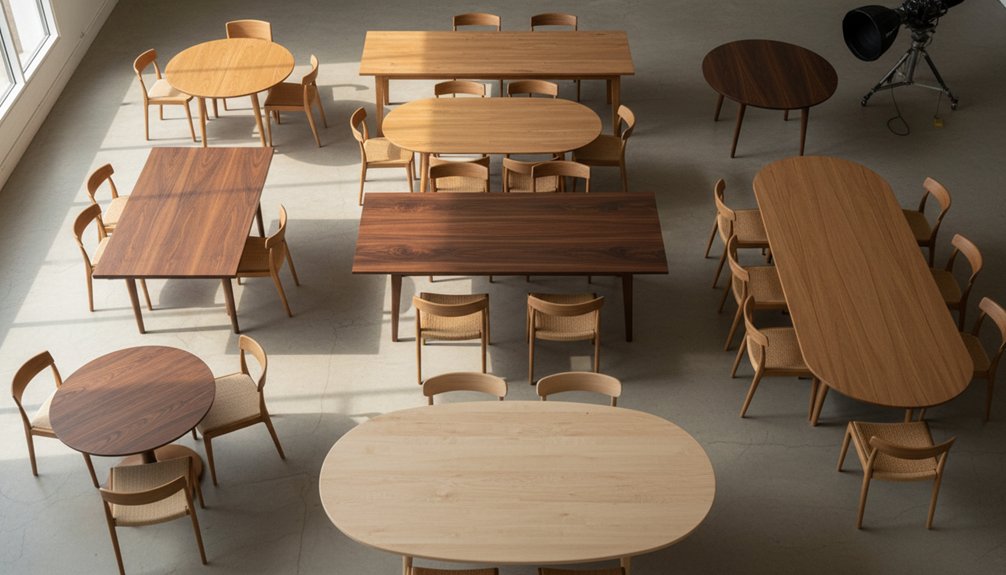
To choose the right solid wood dining table for your space, start by measuring your dining area. Ensure you allow at least 36 inches of clearance around the table for comfortable movement. Rectangular tables are the most popular choice; a table sized 36″x60″ can seat six people, while a 42″x72″ table can accommodate eight. For smaller spaces, round tables maximize seating and encourage conversation. Square tables are suitable for areas under 10×10 feet.
When planning seating, allocate 24 inches of table space per person to ensure a comfortable dining experience. Solid wood tables made from materials like oak, walnut, or mango wood provide various levels of durability. Selecting well-constructed pieces can ensure decades of use. The upcoming sections provide detailed guidance on matching your table dimensions with your room layout.
What Size Dining Table Fits Your Room? Measure First
Before selecting a solid wood dining table, measure your dining space accurately. Start by recording the room’s length and width. Ensure you account for at least 36 inches of clearance around the table. This space allows chairs to pull out comfortably and enables people to walk past without obstruction.
Next, analyze your room layout to determine suitable table dimensions. Identify the locations of doors, windows, and main traffic patterns. Document these measurements before shopping.
A table that appears ideal online may overwhelm a small room or seem insignificant in a larger space. Accurate measurements prevent costly mistakes and ensure your new dining table fits proportionally, facilitating comfortable use. Additionally, consider maintaining clear pathways to enhance movement and accessibility around your dining area.
Rectangular Dining Tables: Standard Sizes and Seating
Rectangular dining tables are the top choice for many homes because they provide efficient seating options and fit well into various room layouts. Knowing standard dimensions helps you choose the right table for your dining space and requirements.
A 36-inch by 60-inch rectangular dining table seats six people, with three guests on each long side. For larger gatherings, select a 42-inch by 72-inch table, which accommodates eight guests comfortably. If your needs require more seating, opt for a 48-inch by 96-inch table, which can seat ten to twelve people, depending on your seating arrangement.
The width of rectangular dining tables typically falls between 36 and 48 inches. This width allows enough space for place settings, serving dishes, and comfortable dining experiences.
The length of the table can start at 60 inches and can extend beyond 120 inches for more expansive dining rooms. Ensure you provide at least 24 inches of table space per person to promote a comfortable dining experience.
When selecting a table, remember that a table that’s too narrow may cramp guests, while one that’s excessively wide can hinder conversation. Always consider the dimensions of your dining area and the number of guests you expect to serve to choose the best rectangular dining table for your home. Additionally, selecting a table made from solid wood materials can enhance durability and aesthetic appeal.
Round vs Oval: When Curved Tables Work Better
Round and oval dining tables offer practical benefits over rectangular tables, especially in specific room layouts. These curved designs feature no sharp corners, which helps people navigate around the table more easily and improves traffic flow in tight spaces.
In smaller dining areas, round and oval tables efficiently maximize seating capacity, accommodating more guests than a similarly-sized rectangular table.
When choosing a dining table for a compact room, consider that round tables allow for better interaction among diners. Each person can engage in conversation without the barrier of a long edge, promoting a more inviting atmosphere.
Additionally, oval tables provide a similar benefit while offering a little more surface area for serving dishes or décor.
However, round and oval tables may not work in every scenario. For larger gatherings or formal settings, rectangular tables can offer more surface space for food and drink. They can also create distinct dining areas, which may be preferable for specific events.
In summary, round and oval dining tables enhance flow and maximize seating in small spaces, making them ideal for casual dining environments. Traditional furniture styles often include round and oval options that add timeless elegance to any dining area.
Evaluate your space and intended use to determine the best table shape for your needs.
Space Efficiency Benefits
When you manage a smaller dining area, curved tables provide distinct advantages over rectangular tables in terms of functionality and space efficiency. Curved tables eliminate sharp corners, which enhances movement around the table and minimizes the amount of floor space required for comfortable navigation. This design allows for more seating capacity in compact areas without making diners feel cramped.
Round and oval tables serve as versatile furniture, functioning as work surfaces during the day and dining spots at night. The curved edges of these tables foster a more intimate dining experience by bringing diners closer together. The continuous perimeter removes awkward corner seats, ensuring each guest has equal access to conversation and food.
This design efficiency makes curved tables particularly beneficial in apartments and smaller homes. Curved tables are particularly valuable when space is limited, allowing for comfortable dining arrangements that maximize seating while maintaining an open flow. They create an inviting atmosphere that enhances interactions among guests.
Traffic Flow Advantages
Rectangular tables are common in dining rooms, but curved tables like round and oval shapes improve traffic flow significantly in high-traffic areas. Curved tables eliminate sharp corners that can obstruct movement, making navigation easier around them. This feature is particularly useful in smaller dining spaces where space efficiency is crucial.
Curved tables create natural pathways around their edges. Users can easily pull out chairs and move between seats without the risk of bumping into corners. During gatherings, guests can move around curved tables with greater ease, enhancing the overall experience.
The seating arrangement on round and oval tables allows for better traffic flow. Without specific “head” positions, users can position chairs more flexibly based on space and guest numbers. This adaptability ensures that guests have comfortable access routes, facilitating a more enjoyable dining experience.
Square Dining Tables for Small Spaces Under 10×10 Feet
Square dining tables effectively utilize compact dining areas under 10×10 feet. These tables ensure that you can comfortably fit four people around a 36-inch square table, making them particularly suitable for small apartments and homes.
When you select a square dining table, consider models with drop-leaf extensions. These designs allow you to expand the table for guests and then fold down when not in use. Positioning these tables against walls or in corners can also create more walking space in your dining area.
For better legroom, choose tables with pedestal bases instead of traditional four-legged designs. Pedestal bases provide flexibility in chair placement and allow for extra seating during gatherings without the hassle of guests straddling table legs.
Limitations exist for square dining tables in very small spaces. If the area is too cramped, even a 36-inch table may feel crowded. Always measure your space before purchasing to ensure the table fits comfortably with enough room for chairs and movement.
Long Narrow Dining Rooms vs Square: Which Shape Fits Where?
Your dining room’s dimensions directly influence your choice of table shape. To determine whether a long narrow table or a square table suits your space best, you need to analyze your specific layout.
Room dimensions determine ideal table shape—analyze your specific layout before choosing between rectangular, square, or round dining tables.
Matching Table Shapes to Room Layouts:
1. Long Narrow Rooms – Use rectangular tables in these spaces. Rectangular tables align with the room’s length, maximizing seating without obstructing walkways.
For example, a table measuring 72 inches long can comfortably seat six people while leaving enough room to navigate around it.
2. Square Layout Rooms – Opt for square or round tables. These shapes maintain balance in square rooms and foster conversation among diners.
A round table with a 60-inch diameter can seat up to eight people, making it ideal for gatherings without creating an awkward distance between diners.
3. Multipurpose Spaces – Analyze traffic patterns when selecting your table. Long narrow tables placed against walls can free up floor space, allowing for movement during meals.
Conversely, centralizing a square table in a square room enhances the dining experience and promotes interaction.
Before making a purchase, measure your dining room carefully. Ensure that the chosen table fits comfortably and meets your functional needs without overcrowding the space.
Solid Wood Extending Tables: Real Space Gained by Size
When you have limited dining space, solid wood extending tables offer a practical solution that adapts to your needs. These tables utilize various mechanisms to change from compact everyday tables into larger surfaces for gatherings. Common systems include drop-leaf designs, butterfly leaves, and pull-apart mechanisms with removable inserts.
When you choose an extending table, you gain substantial seating capacity without sacrificing floor space. For example, a standard 60-inch table typically seats six people. When extended to 84 inches, it can accommodate eight to ten guests. This represents a 40% increase in surface area when needed.
The main advantage of using an extending table is the ability to maintain an open floor plan during everyday use while still having flexibility for entertaining guests.
Quality extending mechanisms ensure smooth operation and long-term durability. For instance, a well-constructed butterfly leaf can be opened and closed with ease, allowing for quick adjustments when guests arrive. This durability makes solid wood extending tables worthwhile investments for adaptable dining spaces.
Be aware that not all extending tables are the same. Some mechanisms may require more effort to operate, or may not be as stable when extended.
When selecting a table, consider the ease of use and the quality of the materials involved. Overall, solid wood extending tables provide a functional solution for anyone looking to maximize their dining space effectively.
The 24-Inch Rule: Elbow Room Each Diner Needs
After you select the right table size for your dining area, you must consider how much space each diner requires for a comfortable experience. The 24-inch rule establishes that each person needs 24 inches of table edge to enjoy their meal without feeling cramped. This measurement ensures that diners have enough elbow room and can move freely without disturbing those seated next to them.
The 24-inch rule ensures each diner has adequate elbow room and freedom of movement without disturbing neighboring guests.
When arranging seating, follow these spacing guidelines:
- Minimum Width: Assign 24 inches of table edge per person to ensure basic comfort during meals.
- Optimal Width: Aim for 26 to 30 inches of table edge per diner for a more spacious dining experience and ease in serving.
- Depth Requirement: Reserve 15 inches from the table edge inward for place settings and serving dishes.
These measurements directly influence your table’s capacity. For instance, a 72-inch rectangular table can comfortably accommodate six diners (three on each side).
However, trying to fit eight diners at the same table significantly reduces comfort and increases the chance of bumping elbows.
Understanding and applying these measurements will help you create a pleasant dining atmosphere for everyone.
Mango Wood vs Oak vs Walnut: Durability and Grain Compared
When selecting a dining table, you should compare mango wood, oak, and walnut based on durability and grain patterns.
Mango wood has a Janka hardness rating of about 1,200, making it moderately durable for everyday use. Oak, with a hardness rating of approximately 1,300 to 1,400, offers greater resistance to dents and scratches, which is beneficial for active households. Walnut ranks even higher, with a Janka rating around 1,010, providing a good balance of durability and aesthetic appeal.
Each wood species has distinct grain patterns that influence both appearance and structural integrity.
Mango wood features a unique, irregular grain that adds character, while oak displays a pronounced grain with visible rings, giving it a classic look. Walnut has a smooth, straight grain that can present a rich, dark color, enhancing the overall elegance of your dining space.
Understanding these differences helps you choose a table that matches your household’s activity level.
For instance, if you have young children, oak may be the best choice due to its durability. If you prioritize aesthetics and prefer a rich color, walnut could be the ideal option. By considering the specific properties of each wood, you can make an informed decision that aligns with your needs and style preferences.
Hardness and Impact Resistance
When selecting wood for dining tables, consider how each type holds up against dents and scratches. The Janka hardness test provides a reliable measure of a wood’s impact resistance, which is essential for everyday use.
Here’s how these woods rank in terms of hardness:
- Walnut scores 1,010 on the Janka scale. This rating indicates that walnut offers moderate protection against daily wear and tear.
- Mango wood has a Janka rating of approximately 1,070. This score shows that mango wood provides slightly better dent resistance than walnut.
- Oak ranks the highest with a Janka rating between 1,290 and 1,360. This superior hardness makes oak the best choice for high-traffic dining areas, as it can better withstand dropped utensils and impacts from dishes.
While oak offers the best durability, both mango wood and walnut are still suitable options for typical household use.
When choosing, weigh your aesthetic preferences against the practical needs for wear resistance.
Natural Grain Pattern Characteristics
When choosing a dining table, focus on the durability ratings and unique grain patterns of different wood species, as these factors significantly influence both longevity and aesthetics.
Oak wood provides bold grain lines and a strong texture that enhances the table’s visual appeal. When you touch an oak surface, the pronounced grain is noticeable, adding a tactile dimension to its beauty.
Walnut wood offers a rich, flowing grain with color variations that range from light brown to deep chocolate. This natural beauty makes walnut a popular choice for those looking for an elegant and sophisticated table. The subtle changes in color within the grain add depth and character to each piece.
Mango wood stands out with its irregular and dramatic grain patterns, featuring swirling designs and contrasting colors. Each board of Mango wood can present significantly different grain characteristics, ensuring that no two tables are alike.
The presence of darker streaks and mineral deposits in mango wood contributes to its unique charm.
When selecting your dining table, consider how the specific grain patterns of oak, walnut, and mango wood will fit with your current décor and personal style. Each wood species not only serves a functional purpose but also enhances your living space through its distinctive grain characteristics.
Longevity Under Daily Use
Understanding Wood Types for Daily Use: Durability and Maintenance****
Your dining table endures daily challenges from plates, utensils, spills, and general wear. Therefore, knowing how different wood types perform over time is essential for making a smart investment.
Durability Rankings for Extended Use:
- Oak withstands decades of heavy use. Oak’s dense grain resists moisture penetration effectively, which minimizes surface damage. To maintain its durability, wipe spills immediately and use coasters to prevent scratches.
- Walnut offers excellent longevity, but its darker surface makes scratches more visible. Regular care is crucial for walnut; maintain its appearance by using soft cloths for cleaning and applying oil finishes periodically.
- Mango Wood provides adequate durability for moderate use, but it dents more easily than hardwoods. To protect mango wood, always use protective placemats during meals to prevent damage.
Each wood type interacts differently with household conditions. Oak’s resistance to moisture helps it last longer in humid environments, while walnut’s natural oils offer some protection against minor spills.
Mango wood, on the other hand, requires more frequent maintenance to avoid warping in high humidity.
Why Solid Wood Dining Tables Last Decades Longer
When you choose a solid wood dining table, you’re investing in furniture that can last 30 years or more longer than cheaper options. Solid wood offers natural durability, making it resistant to daily wear and tear.
Unlike particle board or veneer tables, which can chip and peel, solid wood develops unique character over time. You can sand down scratches and refinish the surface several times, extending the table’s life significantly.
Solid wood tables can be sanded and refinished multiple times, transforming scratches into character while extending their lifespan for decades.
To ensure your table reaches its full potential, follow basic maintenance practices. Dust the surface regularly with a soft cloth and apply an appropriate wood polish every few months.
When constructed properly, solid wood doesn’t delaminate or separate at joints, maintaining structural integrity. The density of solid wood helps prevent warping and cracking, outperforming manufactured alternatives in longevity.
With minimal upkeep, your solid wood dining table can become a cherished family heirloom that lasts for generations.