
To choose the right solid wood cabinets for your space, start by measuring the area where you plan to install them. Ensure you have at least 30 inches of clearance around the cabinet for easy access. Standard cabinet dimensions typically range from 30 to 84 inches in height, 12 to 48 inches in width, and 12 to 24 inches in depth.
Select a solid wood type based on your needs. For durability, oak is a strong choice; for a more budget-friendly option, consider maple. Next, decide between freestanding cabinets, which offer flexibility in placement, or built-in cabinets, which provide a more permanent solution.
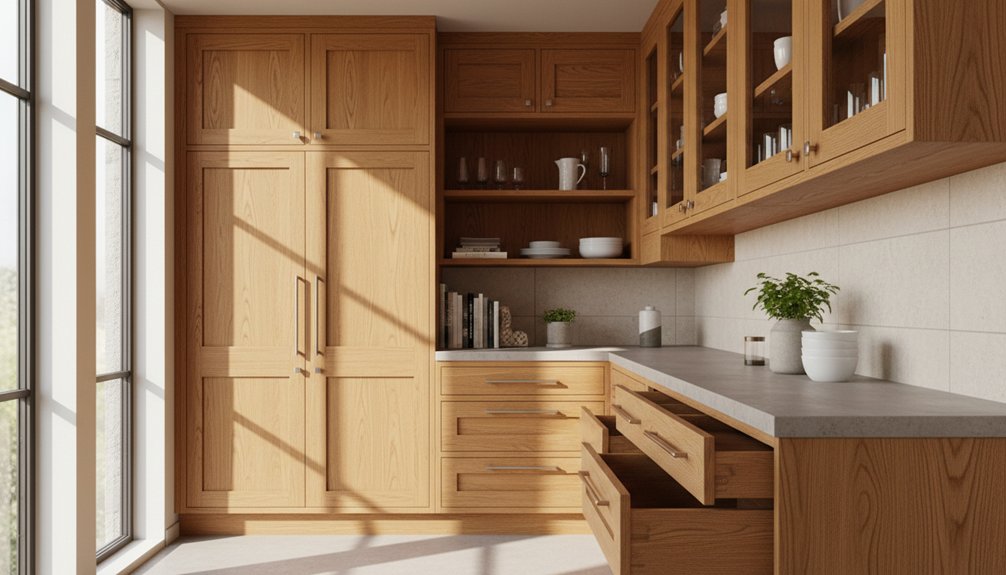
When considering door styles, closed doors help conceal clutter, glass doors showcase decorative items, and open shelving allows for quick access to frequently used items. Match the cabinet style and size to the scale of your room and overall decor. This approach will help you create an organized and visually appealing space that effectively addresses your storage needs.
Be mindful of limitations, such as available wall space or the need for additional support in certain areas. For example, if you have low ceilings, opt for shorter cabinets to maximize storage without overwhelming the room. By following these guidelines, you’ll find the right solid wood cabinets that fit your space and meet your storage requirements.
What Size Storage Cabinet Do You Need for Your Space?
To determine the right size for a storage cabinet in your space, start by measuring the available floor area and the wall space where the cabinet will go. Measure the height of the room, especially if you have low ceilings or other vertical limitations.
Choose a cabinet height that fits well; standard cabinets range from 30 to 84 inches tall. For width, consider options from 18 inches for compact models to 48 inches for larger units.
Standard storage cabinets typically measure 30 to 84 inches in height and 18 to 48 inches in width, accommodating various space requirements.
Next, assess what items you need to store. If you have bulky items, select a cabinet with wider shelves. For narrower spaces, opt for slimmer designs. Measure your doorways and hallways to ensure the cabinet can fit through them easily.
Lastly, leave sufficient clearance around the cabinet for easy access to doors and drawers. This ensures you can use the cabinet comfortably without creating tight spaces. Additionally, maintaining at least 30 inches of clearance around the cabinet will facilitate movement and accessibility in your space.
Following these steps will help you select a cabinet that meets your storage needs while fitting well in your chosen area.
Standard Storage Cabinet Dimensions: Height, Width, and Depth
Understanding standard cabinet dimensions is crucial for selecting solid wood storage that fits your needs. You’ll encounter three main measurements: cabinet height, width, and depth. Cabinet height ranges from 30 to 84 inches, depending on the cabinet type. Width usually spans from 12 to 48 inches, and depth commonly measures between 12 and 24 inches.
When you choose a cabinet, consider how these dimensions impact its fit in your space. For example, a 72-inch tall cabinet provides ample vertical storage, suitable for storing larger items, while a 30-inch cabinet works well in smaller areas. A cabinet width of 24 inches allows for more items to be stored side by side, while a narrower 12-inch cabinet is ideal for tight spaces. Additionally, a depth of 16 inches balances storage capability without protruding too far into the room. Solid wood furniture offers durability and can withstand the test of time, making it an excellent choice for storage solutions.
Be aware of limitations. A cabinet that’s too tall may overwhelm a small room, while one that’s too wide may not fit through doorways during delivery. Always measure your space before making a purchase to ensure the cabinet will fit properly.
Common Height Standards Explained
Storage cabinets come in three standard height categories: base cabinets, wall-mounted cabinets, and full-height cabinets. Base cabinets measure 34 to 36 inches tall. These cabinets work well in areas where you need easy access to countertop space.
Wall-mounted cabinets range from 12 to 42 inches in height. These cabinets provide flexible storage solutions above the floor. Full-height cabinets, also known as pantry cabinets, stand between 84 and 96 inches tall. These cabinets maximize vertical storage in your room.
Understanding these height categories helps you plan an effective storage layout. First, measure your ceiling height and consider the room’s proportions. Choose shorter cabinets for rooms with low ceilings. Select taller cabinets for spaces with higher ceilings and greater storage needs. Proper cabinet proportions ensure your storage solutions look balanced and function well in the space.
When selecting cabinets, consider your specific storage requirements. For example, if you store large kitchen appliances, a full-height cabinet may be ideal. If you need easy access to frequently used items, a base cabinet will work best.
Make sure to account for limitations, such as clearance around doors and pathways, to avoid overcrowding your space.
Optimal Width Measurements
When selecting the right cabinet width, understand that standard widths range from 9 to 48 inches, with increments of 3 inches. This variety allows you to create tailored storage solutions. The ideal cabinet width directly relates to your specific storage needs and the dimensions of the available space.
Narrow cabinets, measuring 9 to 18 inches, provide effective solutions for tight spaces such as laundry rooms and bathrooms. Wider cabinets, ranging from 36 to 48 inches, are better suited for kitchens and living areas where more storage is necessary. Always measure your space accurately before purchasing to ensure a proper fit.
Consider functionality and aesthetics when choosing cabinet width. A cabinet that’s too wide can dominate a small room, making the space feel cramped. Conversely, a cabinet that’s too narrow in a larger area can appear out of place. Aim to match cabinet width to the room’s scale to achieve balanced and visually appealing storage.
For example, in a small bathroom, a 12-inch wide cabinet can provide essential storage without overwhelming the space. In contrast, a 42-inch wide cabinet works well in an open kitchen, where it can integrate seamlessly with other elements.
Prioritize your specific requirements and the dimensions of your room to make the best cabinet width selection.
Depth Considerations for Spaces
To maximize storage in your cabinet while keeping your living space functional, choose a depth between 12 to 24 inches. Standard kitchen base cabinets measure 24 inches deep, whereas wall cabinets are typically 12 inches deep. Select the cabinet depth based on what items you plan to store and the cabinet’s location in your home.
For narrow hallways or tight spaces, opt for shallower cabinets to maintain clear walkways. In contrast, deeper cabinets are suitable for utility rooms or garages, where space is less of a concern. Measure your available floor space before making a purchase.
Additionally, factor in door swing clearance and the proximity to other furniture. A cabinet that’s too deep can crowd a room, while one that’s too shallow may not provide enough storage.
Aim for a balance that meets your storage needs without sacrificing comfort in your living area.
Solid Wood Storage Cabinets vs. Particle Board and Laminate
Choosing solid wood cabinets over particle board or laminate directly influences your storage solution’s durability, appearance, and long-term value.
Solid wood cabinets provide superior strength, resist damage effectively, and can be refinished multiple times throughout their lifespan. For example, solid wood cabinets can support heavy loads without sagging or breaking.
In contrast, particle board cabinets present significant disadvantages. Over time, moisture exposure leads to swelling and structural weakness in particle board. These cabinets can’t be refinished, which limits their lifespan, and they often fail at critical stress points, such as hinges and shelf supports.
Laminate cabinets serve as a middle option, offering decent moisture resistance and affordability. However, they lack the timeless appeal and longevity that solid wood cabinets provide.
While solid wood cabinets require a higher initial investment — typically ranging from $1,500 to $3,000 depending on size and craftsmanship — they deliver decades of reliable service and maintain their aesthetic quality. Additionally, the traditional furniture styles often utilize solid wood for their durability and classic beauty, making them a valuable investment for any home.
Storage Cabinet Door Styles: Closed, Glass, and Open Shelving
Which storage cabinet door style best suits your needs? Your choice impacts both functionality and appearance in your space. Solid wood cabinets come with three main door configurations, each tailored for specific purposes.
Selecting the right cabinet door style balances practical storage needs with the aesthetic vision for your space.
Door Style Options:
- Closed doors keep items completely concealed. Closed doors protect your belongings from dust and create a uniform look across your room. This style works well in areas where maintaining a tidy appearance is essential.
- Glass cabinet doors allow you to display decorative items and collectibles while still providing protection from dust. This style creates visual interest and makes it easier to find what you need quickly. Glass doors are ideal for living rooms or dining areas where showcasing items is important.
- Open shelving provides easy access to frequently used items. Open shelving reduces visual weight in smaller spaces and allows you to showcase attractive storage containers or decorative pieces. This style is great for kitchens or home offices where organization and accessibility are priorities.
When selecting your door style, consider the types of items you need to store and the layout of your room.
Combining different door styles can create a versatile storage solution that meets various needs.
Best Drawer Layouts for Storage Cabinets That Maximize Space
When planning the interior of your storage cabinet, selecting the right drawer layout is crucial for maximizing space efficiency. Deep drawers accommodate bulky items such as blankets or kitchen appliances, while shallow drawers are ideal for smaller objects that could easily get lost in larger compartments.
Combining different drawer heights within the same cabinet optimizes space usage effectively.
To enhance organization, install dividers or drawer organizers. These tools create designated zones within each drawer for specific items, reducing clutter and improving accessibility. Full-extension drawer slides allow you to access the contents at the back of the drawer, ensuring that no space goes to waste.
For vertical storage solutions, consider stacking multiple shallow drawers instead of using one deep drawer. This method increases accessibility, especially for flat items like papers, linens, or craft supplies. Stacking shallow drawers allows for better organization and quicker retrieval of items.
Avoid using solely deep drawers, as they can lead to disorganization. Stick with a mix of shallow and deep drawers to cover various storage needs.
Always measure your available space to determine the best drawer sizes and arrangements that fit your specific storage requirements.
Storage Cabinets for Bedroom Organization: What to Look For
Storage cabinets in bedrooms serve unique functions compared to those in kitchens or offices. When selecting a storage cabinet for your bedroom, focus on features that effectively manage clothing, accessories, and personal items.
Ensure the cabinet fits your bedroom layout and enhances your existing décor.
Prioritize the following key features:
- Adjustable shelving allows you to store a variety of items, ranging from folded sweaters to shoes, by adjusting the height as needed.
- Drawer dividers help you keep smaller accessories organized, such as jewelry, belts, and scarves, ensuring easy access and preventing tangling.
- Adequate depth ensures hangers fit comfortably within the cabinet, preventing garments from getting crushed against the back panel.
Select cabinets with smooth-gliding drawers and soft-close hinges. These features allow quiet operation during early mornings or late nights, minimizing disturbances.
Choose solid wood construction for durability; it offers timeless appeal and typically requires less frequent replacement than other materials.
Consider these specific features to enhance your bedroom storage solutions effectively.
Living Room Storage Cabinets That Hide Clutter Effectively
Your living room remains organized when you select storage cabinets that completely hide items from sight. Closed-door designs effectively conceal clutter compared to open shelving.
Position these cabinets in busy areas where clutter tends to gather, such as near entryways or next to seating. Utilize vertical space by choosing tall cabinets that reach the ceiling, maximizing storage without taking up valuable floor space.
When selecting cabinets, consider the following: aim for designs that provide ample storage while maintaining a cohesive look with your living room decor. Avoid cabinets that are too small or poorly designed, as they can exacerbate clutter rather than eliminate it.
Focus on cabinets with multiple shelves or compartments to ensure efficient organization.
Closed vs Open Storage
When clutter threatens your living room, you must decide between closed storage and open storage. Closed storage systems conceal items and create a streamlined look, while open storage systems allow for decorative displays. Understanding these storage options helps you choose the best solution for your space.
Closed storage cabinets keep everyday items out of sight. This design reduces visual clutter and creates a clean environment. Doors and drawers protect your belongings from dust, which simplifies maintenance.
Consider these factors when choosing your storage style:
- Clutter level: If your space is disorganized, closed storage can immediately hide miscellaneous items, creating a tidy appearance.
- Display preferences: If you want to showcase decorative pieces, open shelving allows you to highlight collections and personal items.
- Maintenance requirements: Closed cabinets require less frequent cleaning than open shelves, making them ideal for busy households.
Homeowners often use a combination of both storage types. Closed cabinets provide practical, concealed storage, while open shelves display decorative items and personal touches. This hybrid approach balances functionality and aesthetics.
Strategic Cabinet Placement Tips
When planning your living room layout, the placement of cabinets affects both functionality and visual flow. Position taller cabinets along walls where they’ll not block natural light or disrupt foot traffic. Place entertainment cabinets next to your TV and display cases near seating areas to enhance accessibility and enjoyment.
To ensure aesthetic balance, distribute storage evenly throughout the room. Avoid clustering cabinets on one wall, as this creates visual heaviness. Instead, maintain spatial harmony by arranging cabinets at varying heights, which adds visual interest while keeping frequently used items within easy reach.
Utilize corner cabinets to maximize often-wasted space and consider floating wall-mounted units to free up floor space, especially in smaller rooms. Flanking doorways or windows with matching cabinets creates a symmetrical appeal that enhances the overall design.
Avoid positioning cabinets in areas that obstruct movement or light. For instance, don’t place large cabinets in narrow pathways or directly in front of windows. Instead, focus on integrating cabinets that enhance both functionality and aesthetics, ensuring that all items remain easily accessible.
Maximizing Vertical Space Solutions
Maximize your vertical storage space with practical solutions that address clutter in your living room. Vertical storage cabinets, particularly tall solid wood cabinets, offer a way to utilize wall space effectively. These cabinets extend from floor to ceiling, allowing for ample storage without requiring additional floor space.
By implementing vertical solutions, you can create designated areas for books, electronics, and everyday items while keeping your living room open and inviting.
Here are effective strategies for maximizing vertical storage:
- Install floor-to-ceiling units to make use of every inch of wall height, filling otherwise unused space with functional storage.
- Stack modular cabinets to create customizable vertical configurations that adapt to your specific storage needs.
- Mount wall cabinets above existing furniture to effectively double your storage capacity without encroaching on floor space.
These vertical storage strategies are particularly beneficial in smaller living rooms where horizontal space is limited.
By choosing elegant solid wood doors, you can conceal clutter while enhancing your room’s aesthetic. This approach ensures that your living area remains organized and visually appealing.
Oak vs. Maple vs. Cherry vs. Walnut Storage Cabinets
When choosing a storage cabinet, consider the unique features of Oak, Maple, Cherry, and Walnut. Each wood type offers specific benefits that affect durability, appearance, and price.
Oak provides exceptional durability** with its strong structure and prominent grain patterns. Oak cabinets resist wear and moisture damage**, making them suitable for heavy-duty storage. If you need a robust cabinet that can withstand daily use, oak is a reliable choice.
Maple offers affordability**** while maintaining quality. Maple’s smooth, uniform grain accepts stains well, allowing for versatility in design. Additionally, maple cabinets resist scratches and dents, making them practical for families or high-traffic areas.
If you want a budget-friendly option without compromising on performance, maple is a smart selection.
Cherry enhances aesthetics with its warm reddish-brown tones that develop a rich patina over time. Cherry cabinets add a touch of elegance to any space, but they come at a higher price point.
If you prioritize style and are willing to invest, cherry cabinets will elevate your interior design.
Walnut delivers richness through deep chocolate hues and striking grain patterns. Walnut is the most expensive option among these four, but it stands out as a unique storage piece.
If you want a distinctive and luxurious cabinet, walnut is worth the investment.
Freestanding vs. Built-In Storage Cabinets: Which Fits Your Space?
When deciding between freestanding and built-in storage cabinets, consider specific aspects of your needs and space. Built-in storage maximizes your available space and integrates seamlessly into your home’s design, offering stability for heavier items since it’s mounted to the walls.
Evaluate Room Layout
Freestanding cabinets suit apartments and temporary living arrangements, allowing flexibility in placement. Built-in cabinets, however, work best in permanent homes where you have a clear idea of your storage needs.
Assess Budget Constraints
Freestanding cabinets generally have a lower initial cost since they don’t require professional installation. Built-in cabinets, while more expensive upfront, may provide better long-term value for those planning to stay in their homes for years.
Plan for Long-term Use
If you anticipate staying in your home for an extended period, investing in built-in cabinets can pay off. These cabinets can be customized to fit your specific storage requirements, ensuring both functionality and style.
Ultimately, your decision should reflect your space requirements and lifestyle. Choose the option that aligns with your current and future needs.