
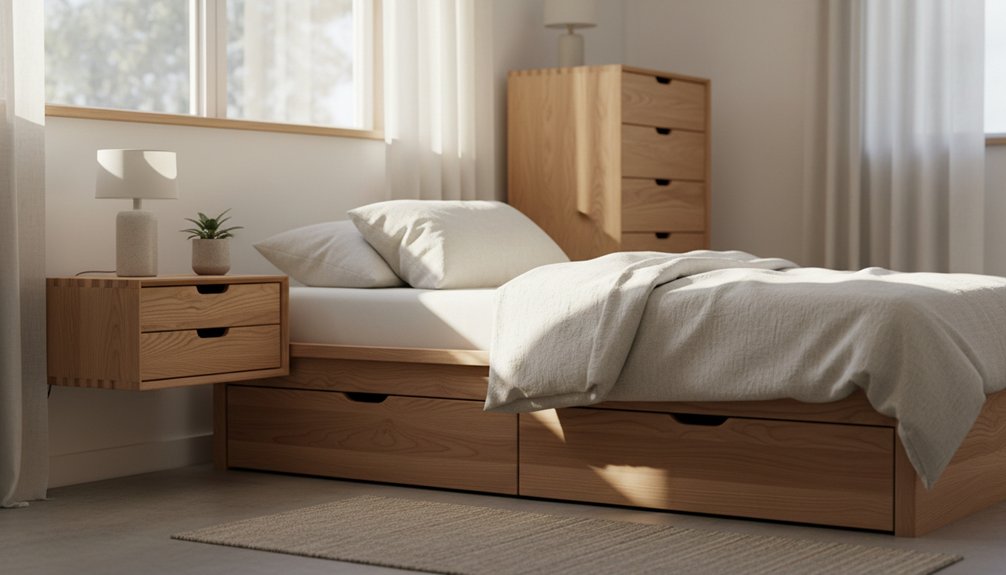
To maximize space in your small bedroom, select solid wood furniture that incorporates space-saving features. Start with a platform bed that includes built-in storage drawers. This design provides additional space for storing items without requiring extra floor area. Choose a platform bed that sits low to the ground to create the illusion of more height in the room.
Next, incorporate narrow nightstands or opt for wall-mounted alternatives. These options minimize the footprint on the floor and keep walkways clear, making the room feel more open. Use tall dressers to utilize vertical space effectively. Tall dressers offer ample storage without taking up too much floor space.
In addition, install floating shelves to display decor or store books. Floating shelves keep surfaces clear and draw the eye upward, enhancing the sense of space. When selecting finishes, consider light wood tones to open up the room visually. Light wood finishes reflect light and create a brighter atmosphere. If your bedroom has adequate lighting, dark wood finishes can add a sense of warmth and coziness.
Plan your layout carefully before making any purchases. Measure the dimensions of your space and the furniture to ensure everything fits comfortably. Create a layout that allows for easy movement around the room. When selecting multifunctional pieces, consider items like storage ottomans or benches that can serve as seating and provide hidden storage.
By focusing on solid wood furniture with smart design, you can maximize space and functionality in your small bedroom.
What Small Bedroom Furniture Needs to Do Well
When selecting furniture for a small bedroom, focus on functionality and efficiency. Each piece of furniture must serve a specific purpose without overwhelming the limited space available. Prioritize multifunctional items; for example, choose beds with built-in storage drawers that help keep clothing organized and accessible. Nightstands that can also function as desks provide additional workspace without requiring extra room.
Next, consider space-saving designs to make the most of every square foot. Look for furniture with slim profiles that don’t consume too much floor area. Wall-mounted shelves or desks can free up floor space while providing storage or work areas. Folding furniture, such as collapsible tables or chairs, can be tucked away when not in use, maintaining an open environment.
Maximize every inch with slim-profile pieces, wall-mounted solutions, and foldable furniture that disappears when not needed.
Ensure that the layout allows for easy movement throughout the room. Furniture placement should facilitate unobstructed pathways to essential areas, like the bed or closet. Properly chosen small bedroom furniture creates an organized, comfortable living space that accommodates daily routines efficiently. Additionally, using solid wood furniture can enhance durability and aesthetic appeal, making it a long-lasting investment.
Avoid bulky items that can restrict movement or make the room feel cramped. Instead, opt for lighter furniture that can be easily rearranged as needed. Stick to a cohesive aesthetic to maintain a sense of harmony, which can also help the space feel larger.
Measure First: Planning Your Layout Before You Buy
Before purchasing furniture, measure your bedroom accurately and create a detailed floor plan.
Start by measuring the room’s length, width, and ceiling height. Record the dimensions in feet or inches to maintain accuracy.
Next, identify and note the location of windows, doors, electrical outlets, and any permanent fixtures like built-in shelves or radiators.
Measure the width and height of doorways and hallways to ensure your new furniture can fit through these openings without issues.
This preparation allows for seamless movement around the room and ensures the new furniture integrates well within the space. Additionally, maintaining at least 30 inches of clearance for walkways is crucial to facilitate movement throughout the room.
Essential Room Dimension Guidelines
Before purchasing a bed frame or dresser, you must measure your bedroom accurately. Accurate measurements are essential for furniture planning and help avoid mistakes. Measure the length, width, and ceiling height of your room to ensure your selected furniture will fit.
Record these essential measurements:
- Wall dimensions – Measure each wall individually. Note the locations of windows, doors, and radiators, as these will impact where you can place furniture.
- Clearance zones – Maintain a walking space of 60-90cm around your bed. This space is necessary for comfortable movement in your bedroom.
- Door swing – Check that doors can open fully without hitting any furniture. This ensures accessibility and convenience.
These measurements establish a solid foundation for your furniture planning.
Creating Functional Floor Plans
Once you gather your room measurements, you need to create a functional floor plan. Start by sketching the bedroom’s outline on graph paper, including the locations of windows, doors, and built-in features. This method allows for better space optimization compared to guessing where to place furniture.
Cut out scaled paper rectangles that represent your solid wood furniture pieces, then move them around on your sketch. This process helps you quickly identify which furniture configurations work and which ones hinder traffic flow.
Digital room planning apps provide additional flexibility for testing various layouts without the physical effort of moving furniture. When planning your layout, consider access points such as how you’ll reach drawers, open wardrobe doors, and navigate around the bed.
A functional layout ensures that each piece of furniture serves its purpose while allowing comfortable circulation throughout your bedroom. By focusing on these specific aspects, you create an efficient and practical space tailored to your needs.
Doorway and Clearance Considerations
When purchasing bedroom furniture, two essential measurements often get missed: doorway width and clearance space. Measure your doorway width accurately because solid wood furniture typically can’t be disassembled. Most interior doors measure 30-32 inches wide, but some may be narrower.
Clearance space measurements to consider include:
- Pathway from doorway to furniture – Ensure you have 24-36 inches of space to move comfortably between your door and bed.
- Clearance for drawer and door openings – Check that dressers and wardrobes have at least 36 inches of space in front for full drawer extension.
- Bed access points – Keep a minimum of 24 inches on each side of the bed for making it and walking around.
These measurements help avoid costly returns and delivery issues. You’ll prevent situations where a beautiful solid wood wardrobe can’t fit through your bedroom door.
Platform Beds and Low-Profile Frames That Maximize Floor Space
When you deal with limited square footage, platform beds and low-profile frames provide a straightforward solution that optimizes your living space. These designs sit closer to the ground, making ceilings feel higher and rooms appear more open. Solid wood platform beds deliver strong support without needing a box spring, which reduces bulk under your mattress.
Low-profile frames measure between 5 to 12 inches in height, making them significantly shorter than traditional bed frames. This lower height allows for more visible wall space, enhancing the visual flow in your room. Many of these space-saving designs include built-in storage drawers within the platform base, enabling you to maximize functionality without needing additional furniture.
These streamlined frames fit seamlessly into various décor styles while providing practical benefits. Additionally, their minimalist nature aligns with contemporary design trends that emphasize functionality and simplicity.
While considering platform beds or low-profile frames, remember that their minimalist nature may not suit every design preference. Some individuals might prefer the aesthetic of elevated traditional frames.
However, if you prioritize maximizing floor space and functionality, platform beds and low-profile frames are solid choices.
Narrow Nightstands and Floating Bedside Alternatives
When you have limited floor space, traditional nightstands can create a cramped atmosphere in your bedroom. Narrow nightstands with slim profiles provide essential storage without occupying much room next to your bed. For an even more efficient use of space, wall-mounted bedside solutions eliminate floor contact, giving your room a more open and airy feeling.
Narrow nightstands maximize vertical space while minimizing horizontal footprint. These designs often include drawers or shelves for storing items like books, glasses, or charging cables. Many options come in widths of 12 to 18 inches, making them suitable for tighter spaces.
Wall-mounted bedside solutions offer a practical alternative, as they free up floor space entirely. These units attach directly to the wall, allowing for customizable heights and easy cleaning underneath. Most wall-mounted designs include a small shelf or drawer, perfect for keeping essentials within reach.
Both narrow nightstands and floating bedside solutions can accommodate specific limitations. For example, narrow nightstands may not fit larger lamps or bulky items, while wall-mounted options require proper wall support for installation.
Slim Profile Nightstand Options
A slim nightstand optimizes cramped bedrooms by providing necessary storage without using excessive space. These compact bedside tables typically measure 12-18 inches in depth, making them ideal for small rooms. Slim nightstand designs offer versatility while keeping the footprint minimal.
When selecting a nightstand, consider these space-saving features:
- Single drawer with open shelf: This design provides hidden storage in the drawer while offering display space below for books or decorative items.
- Vertical designs: Tall and narrow constructions maximize storage height and minimize the amount of floor space used.
- Tapered legs: Tapered legs create a visual lightness and make it easier to clean the floor underneath.
Choose solid wood construction for durability. These compact bedside tables endure daily use and maintain bedroom functionality without overwhelming limited square footage.
Opt for designs that complement your existing furniture and meet your practical storage needs.
Wall-Mounted Bedside Solutions
Wall-mounted bedside solutions maximize floor space while providing essential nightstand functionality. Install floating shelves or compact wall-mounted tables beside your bed to achieve a streamlined look. These solutions are particularly effective in small bedrooms where traditional nightstands can feel too large.
Wall-mounted shelves provide versatile storage for books, phones, and alarm clocks. These shelves don’t take up valuable floor space, allowing for more room to move around. You can install the shelves at any height that suits your needs for easy access from your mattress. Look for models that include built-in charging stations or small drawers for added convenience.
Use bedside lighting to enhance your wall-mounted setup. Swing-arm lamps or wall sconces can replace table lamps, conserving even more surface area. This combination of wall-mounted storage and efficient lighting ensures you have everything you need at hand while maintaining an open and uncluttered atmosphere in your bedroom.
Consider the limitations of wall-mounted solutions. Not all walls can support heavy items, so assess the wall structure before installation. Additionally, floating shelves may not work well for those who require more substantial storage. Ensure you choose options that meet your specific needs.
Tall Dressers and Wall-Mounted Storage for Vertical Space
Maximize vertical storage in small bedrooms with tall dressers and wall-mounted storage solutions. Tall dressers provide multiple drawers stacked high, which allows you to use vertical space efficiently without taking up valuable floor area.
Position tall dressers against empty walls to utilize space that would otherwise go unused.
Install wall-mounted storage above dressers and beds to complement your tall dresser. Consider these practical options:
- Floating shelves create display and storage areas when installed in staggered patterns. They allow you to showcase decor or store books and small items.
- Wall-mounted cabinets placed near the ceiling help store seasonal items and linens, keeping them out of the way but accessible.
- Pegboard systems with adjustable hooks enable you to customize your storage as your needs change, providing flexibility for various items.
Combining tall dressers with wall-mounted storage creates a comprehensive vertical storage system. This arrangement keeps the floor clear and ensures your belongings remain organized.
Remember to evaluate the weight capacity of your wall-mounted solutions to avoid overloading them. By applying these strategies, you create a functional and efficient storage environment in your small bedroom.
Storage Beds, Benches, and Dual-Purpose Pieces
Storage beds provide effective solutions for maximizing bedroom space by utilizing the area beneath the mattress for storage. These beds come equipped with built-in drawers or hydraulic lift mechanisms that allow easy access to spacious compartments. Homeowners can store bedding, seasonal clothing, or shoes, ensuring that every inch of the bedroom is utilized efficiently without increasing clutter.
Benches, when positioned at the foot of the bed, offer both seating and storage capabilities. Many designs include flip-top lids or pull-out drawers, creating a convenient space for extra blankets and pillows. In smaller bedrooms, ottoman-style benches are particularly useful, as they combine functionality with a compact design.
Multifunctional furniture enhances the practicality of small bedrooms. Nightstands with shelving provide space for books and personal items without occupying additional floor space. Desks that fold against walls create an office area when needed and disappear when not in use. Headboards with integrated bookcases offer a space-efficient way to store books and decorative items. Each of these pieces should maintain solid wood construction for durability and a timeless look.
While storage solutions like these are beneficial, homeowners should consider the limitations. For instance, storage beds may have weight restrictions based on their construction. Benches, while practical, may not fit in every bedroom layout. Understanding these constraints can help in selecting the right pieces for a specific space.
Light vs. Dark Wood: What Works in Compact Rooms
Wood color significantly impacts how we perceive space in a small bedroom. Light wood finishes, like pine, oak, and maple, create an illusion of a larger and more open area. These finishes enhance natural light reflection, making compact spaces feel airy and bright.
In contrast, dark wood finishes, while offering warmth and sophistication, can make small bedrooms feel cramped if not properly planned.
When selecting wood tones, consider the following:
- Light woods maximize brightness in spaces with limited natural light. They enhance the overall brightness and visually expand the room.
- Dark woods require sufficient lighting and light-colored walls to avoid a cramped feeling. Use dark wood in small bedrooms only if you have good artificial light sources.
- Mixed finishes create balance by pairing light bed frames with darker accent furniture, like nightstands. This approach introduces depth while preventing the room from overwhelming the senses.
Your choice of wood tone should reflect the room’s lighting conditions and the ambiance you wish to establish.
Always prioritize how wood color interacts with light to achieve the desired effect in your compact bedroom.