

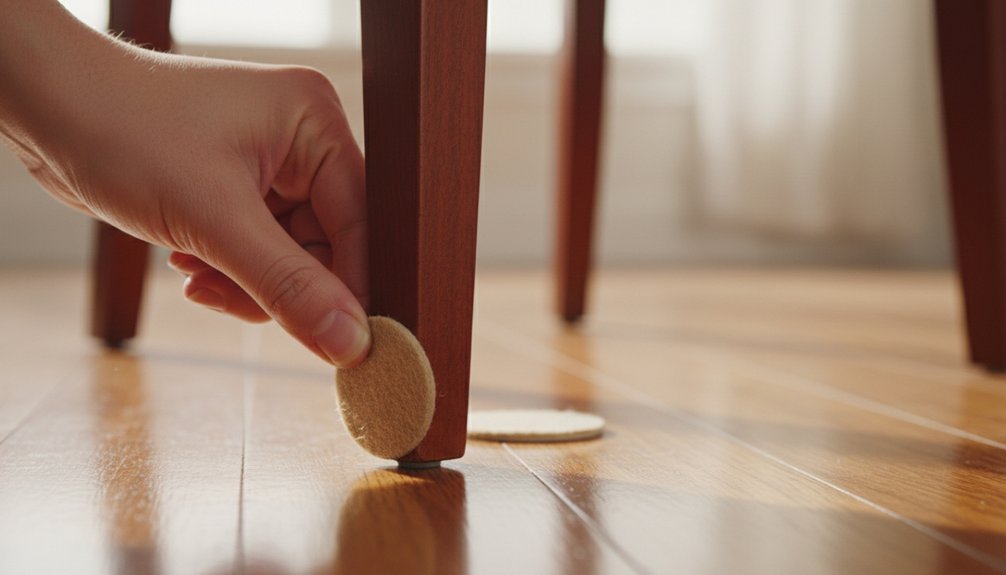
To effectively protect wood furniture from scratches, attach felt pads to the legs of each piece. Replace these felt pads every six to twelve months as they wear down to maintain their effectiveness. Use cork, fabric, or vinyl placemats under dishes to shield surfaces from scratches and heat damage. Always lift objects instead of dragging them across the wood to prevent scratches.
Position valuable wood furniture in low-traffic areas to reduce the risk of damage. Trim your pet’s nails every three to four weeks to minimize scratches caused by pet interactions. Apply furniture polish regularly to fill in minor scratches and maintain the finish.
During moves and renovations, keep furniture covered with blankets or protective wraps to avoid dings and scratches. Designate specific play zones for children far away from wooden furniture to minimize the risk of damage from toys and activities. By following these specific practices, you can significantly extend the life of your wood furniture and keep it looking its best.
Add Felt Pads and Bumpers to Wood Furniture Legs
Attaching felt pads or rubber bumpers to furniture legs effectively prevents scratches on wood floors. These pads act as a protective barrier, reducing damage when moving chairs, tables, or sofas.
To install felt pads, start by cleaning the bottom of each furniture leg to remove any dirt or debris. After that, peel off the adhesive backing from the felt pads and press them firmly onto each leg. For heavier furniture, opt for thicker pads or rubber bumpers to ensure durability.
Clean furniture legs thoroughly, apply self-adhesive felt pads with firm pressure, and use thicker pads for heavier pieces.
Replace worn pads every six to twelve months to maintain adequate protection. Regular replacement is crucial because worn pads lose their effectiveness, exposing your floors to potential scratches. Additionally, ensure that furniture positioning allows for enough space to prevent accidental contact with surfaces, which can also help in preserving your floors.
This simple task not only protects your wood floors but also helps preserve the condition of your furniture.
Use Placemats and Tablecloths to Protect Wood Surfaces
To protect wood surfaces like tabletops, desks, and counters, use placemats and tablecloths. Plates, cups, and hot dishes can scratch or damage wood furniture during meals and activities.
Place a placemat under each dining setting to create a protective barrier between dishes and the wood surface. Select placemats that match your room’s aesthetics and provide sufficient cushioning. For daily use, consider materials like cork, fabric, or vinyl as they effectively protect the surface.
During special occasions, cover the entire table with a tablecloth for added protection. Choose tablecloth materials based on your specific needs. Cotton and linen are durable options, while polyester resists stains and spills effectively. Incorporating protective oils can enhance the natural resistance of your wood furniture against moisture and scratches.
These simple additions prevent scratches and extend the lifespan of your wood furniture. Remember, consistent use of placemats and tablecloths is crucial for safeguarding your wood surfaces against everyday wear and tear.
Keep Wood Furniture Away From High-Traffic Areas
Position your wood furniture in low-traffic areas to minimize scratches and damage. High-traffic zones, such as hallways and entryways, face constant movement from people and pets. This frequent activity increases the chances of accidental bumps and scrapes that can harm your furniture’s finish.
Identify quieter spots in your home to place valuable wood items. Position these items against walls, in corners, or in rooms primarily used for relaxation. This approach protects your investment from daily wear and tear.
If you must place wood furniture in busier areas, ensure there’s adequate clearance space around each piece. This buffer zone prevents collisions and reduces the risk of damage.
Regularly assess your furniture placement to maintain its condition and longevity. Additionally, consider the traditional furniture styles that often require more careful placement and maintenance to preserve their beauty over time.
Lift Objects Instead of Dragging Them Across Wood
Dragging objects across wood furniture often scratches the surface. This action creates friction that damages the finish and the wood underneath. To prevent scratches, always lift objects completely off the surface before moving them. This approach protects your furniture effectively.
Developing this habit requires proper lifting techniques. You should ensure a firm grip to avoid dropping items during the process. Learning to lift instead of drag is worthwhile since it significantly reduces the risk of common scratches that occur during daily use.
In practical terms, when you need to move a heavy book or a decorative item, grasp it securely with both hands. Lift it several inches above the furniture surface, then reposition it in the desired location. This method minimizes contact with the wood and helps maintain its original condition.
Avoid common pitfalls, such as sliding heavy objects or using insufficient grip, which can lead to accidents or injuries. Always be mindful of the weight and size of the items you’re moving. If an object is too heavy, consider asking for assistance or using tools like furniture sliders designed for safe movement.
Why Lifting Prevents Damage
When you drag lightweight objects across wood furniture, friction occurs. This friction acts like sandpaper, gradually damaging the finish and creating scratches on the surface.
To prevent this damage, use proper lifting techniques. Lifting an object completely off the surface before moving it eliminates abrasive contact with the wood. This action helps preserve the finish and the underlying wood grain.
For heavy items, always seek lifting support from another person or utilize appropriate tools. This ensures safe control while keeping the object elevated.
The effort you put into lifting instead of dragging significantly extends the lifespan of your furniture. Clean lifts protect your investment and maintain the wood’s original beauty for many years.
Proper Lifting Technique Tips
Before lifting any object from wood furniture, assess its weight and size to decide if you can handle it alone. Use proper lifting techniques to protect your furniture and your back. Bend your knees, not your waist, and grip the object firmly with both hands. Keep the item close to your body while lifting straight up to avoid sliding across the surface.
| Step | Action | Purpose |
|---|---|---|
| 1 | Assess object weight | Prevent injury and damage |
| 2 | Clear lifting path | Ensure safe handling |
| 3 | Bend knees, grip firmly | Maintain control |
| 4 | Lift straight up | Avoid surface contact |
| 5 | Move away carefully | Complete safe transfer |
Using these safe lifting practices helps maintain your furniture’s finish for years.
Stop Pet Claws From Scratching Wood Furniture
Pets with sharp claws can damage wood furniture, but you can protect your pieces effectively. Regularly trim your pet’s nails every 4 to 6 weeks to keep their claws short, which minimizes the risk of scratches. Use protective furniture covers to create a barrier that shields wood surfaces from sharp claws.
Implement a consistent nail trimming routine, as this action directly reduces the potential for deep scratches on your furniture. Nail clippers or grinders designed for pets can help you achieve a clean cut. In addition, consider using soft nail caps that you can glue onto your pet’s claws; these caps provide a gentle way to prevent scratching.
Avoid using furniture polish or wax immediately after trimming, as this can create a slippery surface that may lead to accidents. Instead, allow your furniture to dry thoroughly after cleaning.
If your pet tends to scratch furniture despite these measures, redirect their behavior by providing scratching posts or pads. This action keeps their claws occupied and lessens the likelihood of damage to your wood pieces.
Regular Nail Trimming Routine
Establishing a consistent nail trimming schedule effectively protects your wood furniture from pet damage. Regular nail trimming prevents sharp claws from gouging surfaces when pets jump on or off furniture.
Most dogs require nail trimming every three to four weeks, while most cats need maintenance every two to three weeks. Start early to make the grooming process easier and to create positive associations with it.
Steps for effective nail trimming:
- Hold your pet’s paw: Grip your pet’s paw gently but firmly. Identify the quick, which is the pink area containing blood vessels, before you begin cutting.
- Use appropriate clippers: Select sharp, pet-specific clippers and position them at a 45-degree angle. This angle helps avoid splitting the nail, ensuring a clean cut.
- Reward your pet: After each successful trimming session, reward your pet immediately with treats and praise. This positive reinforcement encourages cooperation during future sessions.
Maintaining a consistent nail trimming schedule keeps nails blunt and significantly reduces scratching on your furniture.
Protective Furniture Cover Solutions
Nail trimming reduces scratch damage, but using physical barriers enhances protection for wood furniture.
Furniture slipcovers provide a reliable solution that protects surfaces from pet claws while preserving your home’s aesthetic. You can choose from various materials, such as durable canvas and soft microfiber, both of which resist pet hair and scratching. Waterproof barriers are particularly beneficial if your pets have accidents or bring in moisture from outside. These covers defend against liquid damage and claw marks effectively.
For quick and removable protection, place throw blankets on your pet’s favorite spots. For furniture pieces that experience high traffic, fitted covers with elastic edges stay securely in place.
Opt for machine-washable materials for easier maintenance, allowing you to clean pet hair and dirt effortlessly. By strategically using protective covers, you can save your wood furniture while ensuring comfort for your pets.
Protect Wood Furniture From Kids’ Toys and Activities
Kids’ toys and activities can easily damage wood furniture. To protect your investment, implement effective toy storage and establish clear activity boundaries. Organize play areas away from valuable wooden furniture. Teach children to use designated surfaces for crafts and games to minimize wear and tear on your wooden pieces.
Strategic toy storage and designated play zones are essential investments in preserving your valuable wood furniture from everyday childhood activities.
To protect wood furniture, use specific strategies:
- Place mats under play areas: Soft mats or blankets under building block zones prevent plastic pieces from scratching surfaces.
- Store wheeled toys properly: Keep toy cars and trucks in bins to prevent them from rolling across wooden coffee tables and end tables.
- Designate a play table for crafts: Use a specific table with a protective cover for arts and crafts to avoid stains and scratches on other furniture.
You can also install corner guards and edge protectors on vulnerable furniture edges.
Clearly communicate which furniture is off-limits for climbing or rough play. Reinforcing these boundaries consistently helps protect your wood furniture from wear and tear caused by children’s activities.
Apply Furniture Polish to Fill Minor Wood Scratches
Minor scratches on wood furniture are common due to everyday use, but applying furniture polish effectively addresses these surface issues. Furniture polish contains oils and waxes that fill shallow scratches, making them less noticeable and restoring the wood’s luster.
To use furniture polish for scratch repair, first clean the scratched area with a soft cloth to remove dust and debris. Next, apply a small amount of polish directly onto the scratch. Rub the polish into the scratch using circular motions. Allow the polish to sit for several minutes to penetrate the wood. Finally, buff the area with a clean cloth to enhance the shine. This method is one of the simplest ways to repair minor scratches on wood furniture.
For deeper scratches, specialized wood fillers or professional refinishing are necessary for effective repair. Regular application of furniture polish not only improves your furniture’s appearance but also provides a protective layer against future damage.
Cover Wood Surfaces During Moves and Renovations
When you move furniture or renovate your home, wood surfaces are at high risk for damage from bumps, scrapes, and impacts. Protecting these surfaces is crucial to avoid permanent harm during these activities.
Use furniture blankets to cushion tables, chairs, and cabinets. Wrap each piece completely and secure the blankets with packing tape or stretch wrap. For flat surfaces like tabletops and dressers, place cardboard sheets on top to prevent scratches.
Furniture blankets secured with packing tape and cardboard sheets provide essential protection for wood surfaces during moves and renovations.
Implement these protective measures:
- Wrap delicate carved legs with bubble wrap to guard against damage before covering with furniture blankets.
- Stack cardboard sheets between furniture pieces in moving trucks to minimize surface-to-surface contact.
- Cover floors with heavy-duty plastic sheeting and cardboard during renovations to protect items that can’t be moved.
Remove all protective materials promptly after completing your project to avoid trapping moisture or causing other issues.