

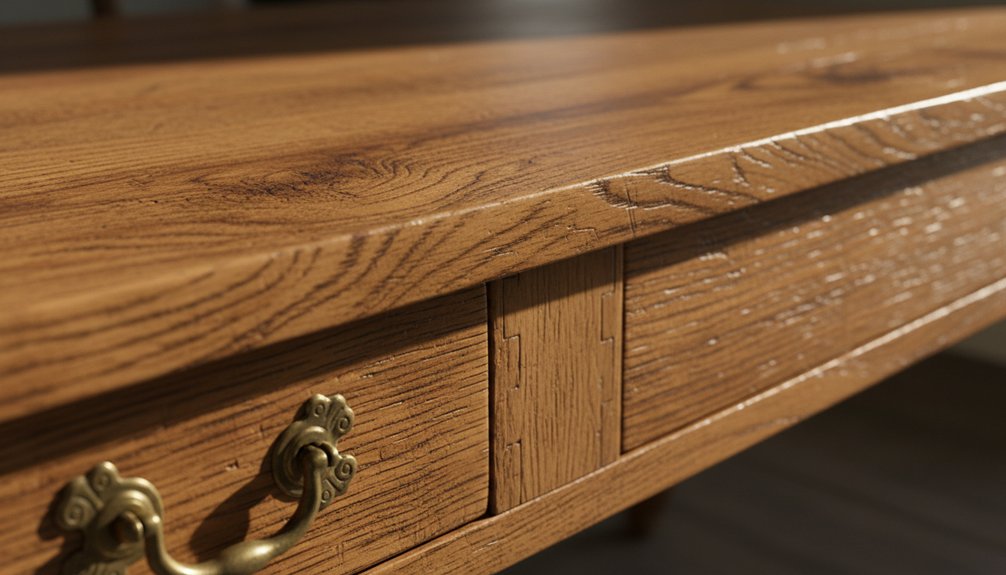
Oak furniture can last between 100 to 200 years when you provide proper care. This lifespan significantly exceeds that of softer woods like pine. Oak has a high Janka hardness rating, ranging from 1,290 to 1,360 lbf, which means it can resist scratches, dents, and moisture damage very well. Oak cabinets can survive from 150 to 300 years, while oak chairs typically endure for 50 to 100 years.
To maintain your oak furniture, you should keep indoor humidity levels between 40-45%. This helps prevent warping or cracking. Clean spills immediately to avoid moisture damage and staining. By understanding specific maintenance techniques, like using appropriate cleaning products and methods, you can effectively extend the life of your oak pieces. Additionally, recognizing wear patterns allows you to address issues before they become serious problems, maximizing the durability of your furniture.
Why Oak Furniture Outlasts Most Other Woods by Decades
Oak furniture outlasts other woods like pine, maple, or cherry due to its superior properties. Oak contains higher concentrations of tannins, which resist decay and insect damage. This natural resistance allows oak to maintain its integrity longer than softer woods, which can deteriorate significantly in just 15-20 years under normal use.
Oak’s exceptional density contributes to its longevity. Oak furniture withstands daily wear, moisture changes, and temperature fluctuations without warping or cracking. As a result, well-maintained oak pieces can last between 50 to 100 years, while pine furniture typically shows noticeable wear within two decades.
Oak also resists scratches and dents effectively. The tight grain pattern of oak deflects impacts that would permanently damage softer woods. Therefore, oak is an excellent choice for high-traffic areas where durability is crucial.
In practical terms, oak furniture provides long-term value and reliability that many other woods simply can’t match. This is supported by the fact that solid wood furniture is known for its durability and ability to endure daily wear over time.
How Long Oak Tables, Chairs, and Cabinets Actually Last
Oak furniture varies in lifespan based on its type and usage. An oak dining table can last between 100 and 200 years when you maintain it properly. This maintenance includes regular cleaning and keeping it away from excessive moisture.
Oak chairs typically last 50 to 100 years, but the joints might require tightening after many years of daily use. To keep oak chairs in good shape, check the screws regularly and reinforce connections when necessary.
Oak cabinets usually outlast both tables and chairs, often serving a family for 150 to 300 years. This longevity occurs because cabinets endure less stress from weight and movement.
The thickness of the wood significantly impacts durability. Solid oak pieces with robust construction last longer than those made with thin veneers.
Maintaining oak furniture well can turn it into a valuable family heirloom that can be passed down through generations.
What Oak Furniture’s Janka Rating Means for Durability
The Janka hardness test measures the force required to embed a small steel ball into wood, providing a clear indication of how well oak furniture will resist dents and scratches. For example, red oak scores 1,290 lbf (pounds-force), while white oak scores 1,360 lbf. These scores highlight the strong durability of oak compared to softer woods, like pine, which only scores 690 lbf.
| Wood Type | Janka Rating |
|---|---|
| White Oak | 1,360 lbf |
| Red Oak | 1,290 lbf |
| Pine | 690 lbf |
| Maple | 1,450 lbf |
The Janka rating of oak furniture indicates that it can handle daily use without showing damage quickly. Oak furniture resists impacts from dropped items, furniture movement, and general wear. This hardness makes oak an excellent choice for high-traffic areas, such as dining rooms and kitchens. Additionally, maintaining clear pathways in your living space allows you to enjoy your oak furniture’s durability without compromising movement and accessibility.
In practical terms, when you choose oak furniture, you are investing in pieces designed to withstand everyday challenges. The Janka rating signifies that oak will maintain its appearance and structural integrity longer than many other wood types, ensuring your investment remains valuable over time.
How Do Red Oak and White Oak Compare in Durability?
Red oak and white oak differ significantly in durability, which impacts their suitability for long-term furniture use.
Red oak has a porous grain structure that makes it more vulnerable to moisture and decay. In contrast, white oak features a closed cellular structure with tyloses, which serve as natural barriers against water penetration. This property makes white oak naturally water-resistant, making it a better choice for humid environments.
Additionally, white oak resists rot and insect damage more effectively than red oak.
While red oak accepts stains beautifully, enhancing its appearance, it’s important to consider the environment where your furniture will be placed.
For indoor furniture in climate-controlled areas, both red oak and white oak perform well. However, if you plan to place furniture in moisture-prone areas like basements or bathrooms, white oak’s superior water resistance offers distinct advantages.
Scratch and Dent Resistance of Oak Furniture
When you choose oak furniture, you’re selecting a material that excels in durability. Oak ranks high on the Janka hardness scale, which quantifies a wood’s ability to resist dents and scratches. This means that oak furniture can withstand daily impacts, scuffs, and bumps that occur in a typical home environment.
Oak’s natural hardness allows it to endure significant wear and tear without showing signs of damage. For example, an oak dining table can handle the constant movement of chairs and the occasional dropped utensils without denting. Similarly, oak dressers can resist the scratches that often come from daily use, such as sliding objects in and out of drawers.
However, it’s essential to note that while oak is durable, it isn’t completely impervious to damage. Heavy objects dropped from a height can still leave marks, and prolonged exposure to moisture can cause warping. Additionally, oak furniture’s resistance to scratches makes it a popular choice in traditional furniture styles that require both elegance and longevity.
Therefore, taking care of your oak furniture by cleaning spills promptly and using coasters can help maintain its appearance over time.
Oak’s Natural Hardness Rating
On the Janka hardness scale, white oak scores 1,360 pounds-force, and red oak scores 1,290 pounds-force. These ratings place both varieties among the hardest domestic hardwoods available. The Janka hardness test measures the force required to embed a small steel ball halfway into the wood’s surface. This test highlights the dense grain of oak, which contributes significantly to its hardness. The resulting surface exhibits natural resistance to daily wear and tear.
When comparing oak to softer woods like pine, which scores 870 pounds-force, or cherry, which scores 995 pounds-force, the differences in impact resistance become evident. Oak’s ability to withstand pressure and impacts makes it a preferred choice for furniture and flooring.
Additionally, various finishes can enhance oak’s protective qualities, providing extra layers that shield the wood from potential damage. This inherent hardness allows oak furniture to maintain its appearance over time, requiring less frequent refinishing compared to softer wood options.
In practical applications, choosing oak for furniture ensures durability and a long lifespan, making it a wise investment for high-traffic areas. The superior hardness of oak not only protects the furniture but also contributes to its overall aesthetic value, giving it a timeless appeal.
Protecting Against Surface Damage
Oak’s hardness rating of 1,360 on the Janka scale significantly enhances its scratch and dent resistance. This durability makes oak furniture suitable for high-traffic areas, where softer woods may not perform as well.
However, even oak can suffer from surface damage due to sharp objects or heavy impacts. To protect your oak furniture, use coasters for drinks to prevent water rings and placemats during meals to avoid scratches. Additionally, place felt pads under decorative items to provide extra protection.
For ongoing maintenance, dust your oak furniture regularly with a soft cloth to remove debris. Avoid using abrasive cleaners, as they can damage the finish and compromise the wood’s appearance.
How Humidity and Climate Affect Oak Furniture Lifespan
Oak furniture can last a long time, but environmental conditions significantly impact its lifespan. High humidity levels cause oak to absorb moisture, leading to expansion. In contrast, low humidity results in contraction. This constant cycle of expansion and contraction weakens joints and creates cracks, ultimately reducing the furniture’s functionality.
To maximize oak’s longevity, maintain indoor humidity levels between 40-45%. Climate changes, including sudden temperature shifts, also stress the wood and accelerate movement. If you live in an area with extreme seasonal changes, take extra precautions to protect your furniture.
Use a humidifier during the winter months to add moisture to the air and a dehumidifier in the summer to reduce excess humidity. Ensure oak furniture stays away from heating vents, radiators, and direct sunlight, all of which can lead to damage and shorten its lifespan.
Which Oak Furniture Pieces Wear Out First?
Not all oak furniture pieces experience wear at the same rate. The lifespan of each piece depends on how frequently you use it. Identifying which items wear out first allows you to focus on maintenance and anticipate restoration needs for your oak furniture.
Items that typically wear out first:
- Dining chairs wear out due to constant sitting and sliding. The weight-bearing stress affects joints and leg connections, leading to wobbling within 10-15 years of regular use.
- Coffee tables show signs of wear from daily use. Scratches, water rings, and surface damage occur from placing cups, remote controls, and feet on the surface.
- Desk chairs deteriorate faster than stationary chairs. The rolling mechanisms and swivel joints wear out quickly, especially with daily office use.
- Bed frames weaken over time due to weight pressure and movement. Slat supports and corner joints suffer from repeated stress, leading to instability.
Understanding these patterns helps you maintain your oak furniture effectively and plan for repairs when necessary.
How Oak Furniture Compares to Mango Wood and Other Hardwoods
When you select furniture, you should understand how oak wood compares to other hardwoods like mango wood. Oak wood usually scores higher on the Janka hardness scale, indicating greater resistance to dents and wear. This higher hardness means oak furniture typically withstands daily use better than mango wood.
Knowing these differences in density and durability helps you make a smarter investment for your home. For instance, oak’s Janka rating is around 1,290, while mango wood’s rating is about 1,100. This means oak is more resistant to damage from heavy items or active lifestyles. If you have children or pets, choosing oak furniture provides better long-term value.
Mango wood does have appealing characteristics, such as unique grain patterns and a lower cost. However, if you’re looking for furniture that endures heavy use over time, oak would be the better choice. Understanding these properties ensures you invest in furniture that meets your lifestyle needs.
Oak Versus Mango Density
Understanding wood density is crucial when selecting furniture that will endure over time. Oak wood has a density of 600-900 kg/m³, making it one of the hardest domestic woods. In contrast, mango wood has a density of 550-650 kg/m³, placing it in the medium-density category.
The higher density of oak results in furniture that resists dents, scratches, and moisture damage better than mango wood. This means oak furniture maintains its structural integrity longer, especially under heavy usage. For example, oak pieces can handle significant weight without compromising their shape, while mango wood may begin to show wear and tear sooner.
Choosing oak over mango wood means investing in furniture that will look good and perform well for decades. Oak furniture tends to retain its appearance and stability despite regular use, whereas mango wood may show signs of aging more quickly.
Understanding these differences helps you make an informed choice that aligns with your needs for durability and longevity.
Comparative Hardness Ratings
The Janka hardness test measures the resistance of wood to wear by determining the force required to embed a steel ball into the wood. This test provides specific values that allow for direct comparisons of hardness among different wood species.
For instance, red oak has a hardness rating of 1,290 lbf (pounds-force), while white oak has a slightly higher rating of 1,360 lbf. In comparison, mango wood has a lower hardness rating of approximately 1,070 lbf.
When evaluating oak against other hardwoods, oak maintains a mid-range hardness. Hickory surpasses both red and white oak with a hardness rating of 1,820 lbf, making it one of the hardest domestic hardwoods. Conversely, cherry wood falls below oak, with a hardness rating of 995 lbf.
These hardness ratings directly influence the durability of furniture, particularly its ability to resist dents and scratches. Higher hardness ratings correlate with better resistance to everyday wear, which is essential for furniture used in high-traffic areas.
Therefore, both red and white oak serve as practical choices for applications where durability is a priority.
Long-Term Wear Patterns
Long-Term Wear Patterns in Oak Furniture****
Oak furniture demonstrates unique long-term wear patterns that highlight its durability compared to softer hardwoods like mango wood. In my experience, oak furniture retains its structural integrity over decades while developing a natural patina that adds to its aesthetic appeal.
Recognizing these wear patterns can guide your furniture investment decisions effectively.
Common Long-Term Wear Patterns in Oak:
- Surface Scratches: Minor scratches on oak blend into the grain over time, adding character without diminishing its value.
- Joint Stability: Well-constructed oak joints maintain tightness for over 50 years, requiring minimal maintenance.
- Color Darkening: White oak undergoes a natural darkening process, transforming from a lighter hue to rich golden honey tones due to oxidation.
- Dent Resistance: Oak can withstand daily impacts better than mango wood, exhibiting significantly fewer compression marks.
To keep oak furniture looking its best, I recommend regular maintenance practices.
Dust your oak pieces weekly to prevent dirt buildup and apply wood polish every quarter to maintain its natural beauty and extend its lifespan.
Protecting Oak Furniture for a 100+ Year Lifespan
Proper maintenance of oak furniture is essential for ensuring its longevity, potentially exceeding 100 years. By integrating preventive maintenance practices, you can protect your investment and enhance its durability. Follow these straightforward tasks to keep your oak furniture in optimal condition.
| Maintenance Task | Frequency |
|---|---|
| Dust with a soft cloth | Weekly |
| Apply quality wax | Every 6 months |
| Check for loose joints | Annually |
| Schedule professional inspection | Every 5 years |
Keep oak furniture away from direct sunlight and heat sources, as these elements can warp and fade the wood. Always use coasters and placemats to prevent water rings and scratches on the surface. When spills occur, clean them immediately with a damp cloth, and ensure the area is dried thoroughly. These simple, consistent practices will help maintain the beauty and functionality of your oak pieces for generations.