

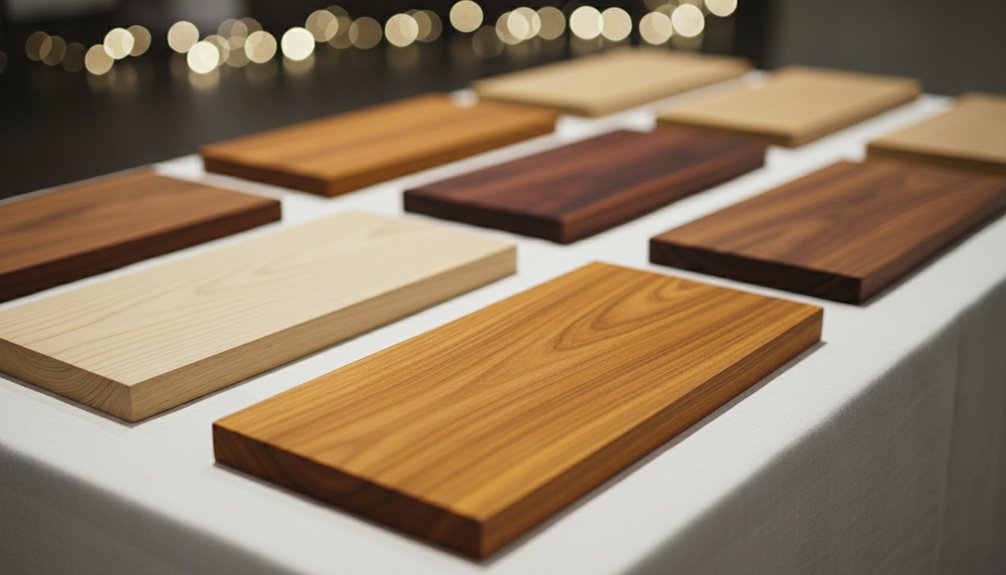
Mid-century modern furniture primarily utilizes four types of wood: teak, walnut, rosewood, and oak. Teak is the preferred choice due to its honey-colored hue, natural oils, and moisture resistance, making it a favorite among designers like Hans Wegner. Walnut provides a rich chocolate-brown color at a more affordable price point and works well in various design settings. Brazilian rosewood features dramatic grain patterns with purple undertones, adding visual interest to furniture pieces. Oak, commonly used in Scandinavian designs, offers warm honey tones, enhancing the overall aesthetic.
Each type of wood has unique grain patterns and durability, which are essential for achieving the mid-century modern look. Understanding the characteristics of these woods helps you make informed decisions when selecting furniture for your space. For example, if you prioritize moisture resistance, teak should be your choice. If cost is a concern, walnut serves as a great alternative without sacrificing style. Knowing these specifics allows you to tailor your furniture selection to your personal preferences and practical needs.
What Makes a Wood Authentic Mid-Century Modern?
Authentic mid-century modern wood choices include teak, walnut, rosewood, and oak. These species dominated furniture construction due to their durability and visual appeal. Teak, for instance, provides a rich, honey-colored hue, while walnut offers deep brown tones. Rosewood and oak also contribute to the aesthetic, each with unique grain patterns.
These woods accept oil finishes effectively, enhancing their natural beauty without masking it. This approach highlights the wood’s characteristics and aligns with the mid-century philosophy of prioritizing form and function. The focus on honest materials reflects the era’s commitment to traditional craftsmanship techniques and simplicity.
When selecting mid-century modern furniture, prioritize these wood types for authenticity. Avoid synthetic materials or low-quality substitutes, as they don’t embody the essence of this design style. Authentic pieces typically showcase the natural grain and color variations of these woods, ensuring each item is unique.
Teak: The Gold Standard of Mid-Century Modern Furniture
Teak wood became the preferred choice for mid-century modern furniture due to its distinct natural properties. This tropical hardwood contains natural oils that provide resistance to moisture, warping, and insect damage without needing chemical treatments. Designers like Hans Wegner and Finn Juhl selected teak for their iconic furniture pieces, which solidified teak’s status as the essential material of the mid-century modern era.
Teak wood’s durability allows furniture makers to create long-lasting pieces that withstand daily use. Manufacturers use teak to produce various furniture styles, including chairs, tables, and cabinets, all known for their elegant design and robust construction. The consistent quality of teak wood ensures that each piece maintains its aesthetic appeal over time.
When crafting furniture, artisans prioritize teak’s unique characteristics. They cut and shape teak to highlight its grain patterns and rich color, enhancing the visual appeal of the final product. This attention to detail results in furniture that not only serves a functional purpose but also acts as a statement piece in any home. Moreover, teak’s natural resistance to moisture allows it to be used in various settings, including outdoor furniture.
Despite its many advantages, teak wood does have some limitations. It can be more expensive than other hardwoods due to its scarcity and the sustainable harvesting practices required to maintain its availability. Additionally, while teak is naturally resistant to moisture, prolonged exposure to water can still damage the wood if not properly maintained.
Teak’s Natural Durability Properties
Teak wood is unique among furniture materials due to its natural oils and dense grain structure. These features provide teak wood with strong resistance to moisture, insects, and decay without the need for chemical treatments. As a result, teak furniture can endure for decades with minimal maintenance, making it a favored choice in mid-century modern design.
Teak wood has several important characteristics:
- Natural silica content repels termites and wood-boring insects, enhancing durability.
- High oil concentration prevents water absorption, reducing warping and extending the life of the wood.
- Tight grain pattern resists splitting and cracking, ensuring that the furniture remains intact over time.
When maintaining teak furniture, basic cleaning is usually sufficient to keep it in good condition.
However, it’s essential to consider teak sustainability. Prioritize purchasing furniture made from plantation-grown or reclaimed teak, rather than from endangered old-growth forests. This choice supports responsible forestry practices and ensures the longevity of teak resources.
Iconic Designers Preferred Teak
Teak wood offers exceptional durability and aesthetic appeal, which attracted influential furniture designers during the mid-century modern period. Hans Wegner designed the Wishbone Chair using teak for its warm tones and workability, creating a piece that balances comfort and style.
Arne Jacobsen utilized teak in his minimalist Danish designs, emphasizing clean lines and functional beauty. Finn Juhl crafted sculptural furniture that highlighted teak’s natural grain patterns, showcasing the wood’s unique characteristics. These designs, made from teak, became integral to mid-century modern style and are now found in homes and offices around the globe.
Designers value teak for its versatility; it effectively accommodates both clean lines and organic curves.
Today, the focus on teak sustainability has led manufacturers to source from responsibly managed forests. This practice ensures that classic teak designs can continue to be produced without compromising environmental integrity, preserving the wood’s prestigious legacy for future generations.
Walnut’s Warm Tones in Classic Mid-Century Modern Pieces
Walnut wood features rich, chocolate-brown hues that mid-century modern furniture makers frequently chose for its aesthetic appeal. This domestic hardwood serves as a cost-effective substitute for imported teak while offering the warm, sophisticated appearance that characterizes this design era.
Designers such as George Nakashima and Charles and Ray Eames recognized walnut’s natural beauty and incorporated it into their iconic furniture pieces, showcasing its versatility and charm.
Mid-century modern designers leverage walnut’s durability and workability to create lasting furniture. Walnut’s fine grain and rich coloration provide an elegant finish that enhances both functional and decorative pieces. For instance, dining tables crafted from walnut often feature a smooth surface and striking visual appeal, making them focal points in modern homes.
While walnut is a popular choice, it does have limitations. Its susceptibility to scratches and dents means that careful maintenance is necessary to preserve its appearance. Additionally, walnut can be more expensive compared to other domestic hardwoods, which may affect budget-conscious projects.
In practical applications, walnut wood is commonly used in furniture such as cabinets, chairs, and coffee tables. Manufacturers often select walnut for its ability to stain well, allowing for a variety of finishes that can suit different design aesthetics. Furthermore, walnut’s intricate carvings and luxurious upholstery complement the timeless sophistication found in traditional furniture styles.
Walnut’s Natural Color Depth
Walnut wood’s rich chocolate hues make it a top choice for mid-century modern furniture design. Walnut features a color spectrum that ranges from light tan sapwood to deep brown heartwood. This natural variation provides contrast that designers appreciate, eliminating the need for artificial staining.
When choosing walnut furniture, keep these advantages in mind:
- Natural walnut finishes require minimal treatment. This allows walnut’s inherent beauty to be front and center.
- Color deepens over time. Over the years, exposure to light enhances walnut’s tones, creating a richer appearance.
- Grain patterns are prominent. Each piece of walnut furniture showcases unique grain, adding texture and character.
Manufacturers focus on walnut sustainability through responsible forestry practices. Certified walnut sources ensure that this valuable wood remains available for future generations while preserving the integrity of mid-century design.
This commitment to sustainability also assures consumers of the ethical sourcing of their furniture.
Iconic Designers Using Walnut
Walnut’s unique characteristics have drawn the attention of influential furniture designers during the mid-century modern era. Designers created timeless pieces that defined mid-century aesthetics. These masters understood that walnut’s rich tones enhanced their geometric forms and organic shapes.
| Designer | Notable Walnut Pieces | Years Active |
|---|---|---|
| George Nakashima | Conoid chairs, slab tables | 1940s-1990s |
| Charles & Ray Eames | Lounge chair, storage units | 1940s-1970s |
| Hans Wegner | Wishbone chairs, credenzas | 1940s-1960s |
Designers chose walnut for its natural grain patterns, which complemented their minimalist designs. Today, walnut’s warm chocolate tones are featured in museums and high-end collections. These designers recognized walnut’s potential to create furniture that endures beyond temporary trends.
Rosewood’s Dramatic Grain in High-End MCM Furniture
Brazilian rosewood stands out as a top choice for mid-century modern (MCM) furniture design due to its unique visual characteristics and remarkable durability. This wood features a rich chocolate-brown hue complemented by purple undertones, creating striking patterns that enhance the aesthetic of furniture pieces.
Key characteristics of Brazilian rosewood include:
- The dense, oil-rich grain provides exceptional strength and natural water resistance, making it ideal for long-lasting furniture.
- The dramatic figuring showcases swirling patterns and varied color throughout each piece, ensuring that no two items are the same.
- The natural luster of Brazilian rosewood develops beautifully over time, eliminating the need for heavy finishing processes.
However, the increased demand for Brazilian rosewood during the MCM era raised significant sustainability concerns. Overharvesting led to strict international trade restrictions implemented by the 1990s.
As a result, authentic Brazilian rosewood is now primarily available in vintage furniture. Contemporary designers often rely on sustainable alternatives, such as Indian rosewood or walnut, to replicate the appealing aesthetics of Brazilian rosewood while adhering to environmental standards.
Oak’s Unexpected Place in Mid-Century Modern Design
Oak established a significant presence in mid-century modern (MCM) design, particularly through Scandinavian designers who valued its accessible beauty.
Oak’s warm honey tones and unique grain patterns appear in numerous Danish and Swedish designs from the 1950s and 1960s. Designers utilized oak to create furniture that aligned with the clean lines and functional principles of Scandinavian modernism. Unlike tropical hardwoods, oak’s abundant availability in Northern Europe made it a cost-effective option for mass production.
Designers leveraged oak’s versatility to craft a variety of pieces, including dining tables and credenzas, without compromising on durability. The strength of oak allowed for the creation of thin, tapered legs that are characteristic of MCM furniture while ensuring structural integrity.
This practical timber demonstrated that achieving an authentic mid-century aesthetic didn’t require the use of exotic materials. By prioritizing oak, Scandinavian designers effectively showcased how a locally sourced material could fulfill the functional and aesthetic demands of mid-century modern design.
Oiled vs. Lacquered: Choosing Authentic MCM Finishes
When selecting a finish for mid-century modern furniture, you primarily choose between oil and lacquer. Both finishes significantly affect the furniture’s appearance and maintenance requirements.
Key Differences Between Finishes:
- Oiled finishes penetrate the wood grain. They enhance the natural texture and warmth of the timber, resulting in a matte look. However, oiled finishes require periodic reapplication, typically every six months to a year, to maintain their appearance.
- Lacquered finishes create a protective surface layer. This finish provides a glossy, smooth appearance and requires minimal maintenance; regular dusting is usually sufficient to keep it looking good. However, lacquer can chip or scratch more easily than oil.
- Authenticity in finishes varies by manufacturer. Danish furniture makers often favored oiled finishes to emphasize an organic aesthetic, while many American brands opted for lacquered finishes, prioritizing durability and ease of care.
Your decision hinges on whether you prefer the warm, tactile quality of an oiled finish or the sleek, protective benefits of lacquer.
Consider the maintenance time you can commit and the look you want your furniture to have when making your choice.
Can Mango Wood Work in Mid-Century Modern Interiors?
Mango wood can successfully integrate into mid-century modern (MCM) interiors when you select the right furniture pieces.
Mango wood features warm golden-brown tones and subtle grain patterns, which complement the clean lines that define mid-century design. The natural color variations in mango wood add visual interest while maintaining a minimalist aesthetic.
Mango wood is also a sustainable choice. It’s sourced from fruit trees that no longer produce, which repurposes timber that would otherwise go to waste.
To align with MCM aesthetics, choose mango wood furniture with streamlined silhouettes and tapered legs. Avoid ornate carvings and bulky designs, as these don’t fit the signature simplicity and functionality of the mid-century modern style.
Combining Teak, Walnut, and Oak in One MCM Space
Mid-century modern spaces effectively incorporate multiple wood types, specifically teak, walnut, and oak. You can mix these woods without cluttering the visual experience. Teak, walnut, and oak work well together because they’ve shared grain patterns and complementary color tones.
To achieve a harmonious look, follow these practical guidelines.
Manage your wood distribution effectively:
- Choose one wood as the primary type – Select teak, walnut, or oak to make up 60% of your furniture. This choice creates a solid foundation for your space.
- Limit your wood types to two or three – Introducing additional wood varieties can lead to visual confusion, which undermines the clean aesthetic typical of mid-century modern design.
- Organize similar tones together – Position warmer woods like teak adjacent to each other. Keep cooler woods like oak in separate areas to maintain visual clarity.