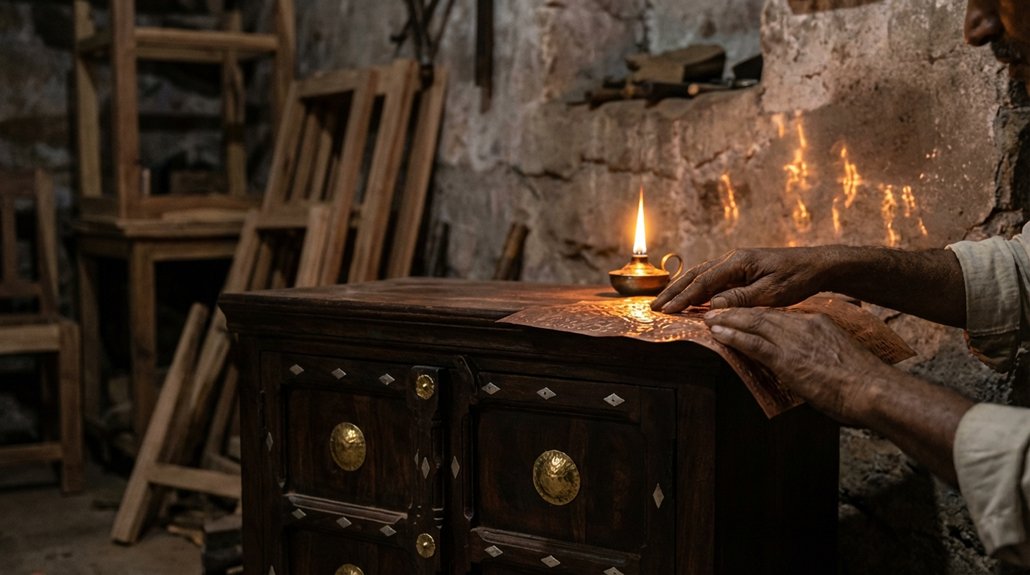
You can sell Rajasthan’s metal-clad furniture at premium prices due to its unique craftsmanship. Artisans hand-hammer brass, copper, and iron, preserving Mughal and Rajput techniques that mass-produced industrial décor cannot match. Each piece features detailed embossing, engraving, and geometric patterns, reflecting a heritage passed down through generations.
Brass furniture typically commands higher prices, appealing to buyers looking for luxury and authenticity. Antiqued iron pieces attract those interested in industrial glamour.
To connect with buyers, focus on luxury boutiques, trade shows, and interior designers. These channels target consumers who appreciate genuine craftsmanship. By emphasizing the uniqueness and authenticity of Rajasthan’s metal-clad furniture, you can effectively position these pieces in the market.
What Makes Rajasthan Metal-Clad Furniture Genuinely Unique?
Rajasthan metal-clad furniture is unique because it merges traditional Indian craftsmanship with durable metalwork. Local artisans apply techniques like hand-hammering, embossing, and engraving, which have been passed down through generations. These methods create intricate designs on metal sheets that machines can’t replicate.
Craftsmen in Rajasthan source materials such as brass, copper, and iron locally, ensuring quality from the outset. Each piece embodies the region’s artistic heritage, featuring geometric patterns and motifs influenced by Mughal and Rajput design traditions. This focus on craftsmanship creates functional furniture that also serves as a cultural artifact.
Rooted in local materials and centuries of tradition, each piece carries the soul of Rajasthan’s artistic heritage.
Many artisans dedicate years to perfecting their skills, which enhances the uniqueness of each item. You can find furniture pieces ranging from ornate cabinets to elegant tables, each telling a story of the region’s history. The attention to detail in these pieces often includes hand-carved embellishments that highlight the artisan’s commitment to quality.
Rajasthan metal-clad furniture stands apart from mass-produced options due to its craftsmanship and cultural significance. While modern manufacturing methods may produce uniform products, they lack the soul and history found in these handcrafted items. Investing in Rajasthan metal-clad furniture means choosing pieces that aren’t just functional but also rich in cultural narrative. Additionally, the craftsmanship involved in creating these pieces is akin to the traditional craftsmanship techniques that ensure longevity and quality in furniture design.
Brass, Copper, or Iron: Which Finish Commands the Highest Price
When you shop for metal-clad furniture, brass consistently commands the highest prices. Brass has a warm, golden appearance and requires skilled labor for application, making it a premium choice.
Iron pieces hold strong market value due to their durability and the increasing demand for industrial-style décor. In contrast, copper finishes generally fall between brass and iron in terms of price, influenced by regional trends and the quality of craftsmanship.
Brass finishes attract buyers with their aesthetic appeal and the complexity of the manufacturing process. Manufacturers often invest significant time in polishing and shaping brass surfaces, which increases production costs.
Iron finishes, while less visually striking than brass, appeal to consumers looking for robust and long-lasting furniture that fits the industrial style trend. This durability often translates into higher resale values, making iron a competitive choice in the market.
Copper finishes offer a unique look that lies between brass and iron. The market prices for copper can fluctuate based on local demand and the level of craftsmanship involved in producing the finish.
While copper may not always achieve the same high prices as brass, its distinctive color and patina can attract specific buyers. Understanding furniture sizing dynamics can help buyers make informed decisions when investing in metal-clad furniture.
To summarize, brass typically commands the highest prices due to its labor-intensive manufacturing process and appealing aesthetics. Iron maintains strong value through its durability and popularity in industrial design.
Copper often sits in the middle, with price variations influenced by craftsmanship and market demand. Understanding these dynamics can help buyers make informed decisions when investing in metal-clad furniture.
Brass Fetches Premium Prices
Brass consistently commands the highest prices among metal finishes used in furniture. Brass pricing reflects its visual appeal and strong market demand. Buyers associate brass’s warm, golden tone with luxury, making it the most sought-after option.
Artisans in Rajasthan workshops dedicate significant time to polishing and shaping brass, which raises labor costs.
Brass contains copper and zinc, two materials whose prices fluctuate in commodity markets. These fluctuations directly influence the final price of brass furniture. Demand remains strong among interior designers and collectors who prioritize aesthetics, often overlooking budget constraints.
When comparing brass to copper or iron finishes, brass pieces typically sell for 30 to 50 percent more. This price difference underscores brass’s premium status in the metal-clad furniture market.
Iron’s Surprising Market Value
Iron’s Market Value in Furniture Manufacturing
Iron’s market value has shifted significantly in recent years, reflecting increased demand for industrial-style interiors. This shift has led to competitive pricing across various iron finish types.
| Iron Finish Type | Average Price Range |
|---|---|
| Raw/Matte Iron | $200–$450 |
| Antiqued Iron | $400–$750 |
| Powder-Coated Iron | $350–$600 |
Antiqued iron furniture commands higher prices due to its craftsmanship. Workshops in Rajasthan use traditional hand-forging techniques to create unique pieces, which increases perceived value. Buyers often view iron’s durability as a practical long-term investment, enhancing its market strength.
As global demand for industrial-style furniture rises, iron’s role in the market becomes more prominent. Manufacturers should recognize iron’s potential when evaluating purchasing and design options.
Why Rajasthan Metal Work Fits the Industrial Glamour Market
Rajasthan’s metal-working tradition spans centuries, making it a prime source for industrial glamour furniture. Artisans in this region focus on creating pieces that blend raw, unpolished surfaces with intricate details. Their techniques result in furniture featuring visible hammer marks, riveted joints, and geometric patterns. These elements are essential to the industrial glamour aesthetic.
Rajasthan artisans primarily use iron, brass, and copper. Each material contributes to the unique balance of ruggedness and refinement in their pieces. When sourcing furniture for the industrial glamour style, Rajasthan offers authenticity that mass-produced items lack. Each handcrafted piece embodies generations of metalworking expertise, giving it a distinct history.
Buyers who appreciate character over perfection find this craftsmanship particularly appealing. Rajasthan’s workshops prioritize quality and detail in every item they produce. Artisans work meticulously to ensure that each piece reflects their heritage and skill. This dedication to craftsmanship sets Rajasthan apart as a leading destination for industrial glamour furniture. Additionally, the incorporation of raw materials in design enhances the overall aesthetic and aligns with contemporary trends.
Find the Buyers Who Never Ask for a Discount
Identify Luxury Buyers Who Don’t Seek Discounts
Luxury buyers inhabit specific markets. You can find them in high-end furniture boutiques, interior design showrooms, and curated online platforms like 1stDibs. These buyers prioritize quality and are willing to pay premium prices for exceptional products.
Design collectors frequent trade shows such as Maison & Objet and the Architectural Digest Design Show. They look for unique, handcrafted items with compelling stories. For example, Rajasthan metal-clad furniture meets their desire for distinctive pieces.
Networking with interior designers is essential. Designers often work with affluent clients and specify unique items for their projects. Building relationships with these professionals positions your products where serious buyers choose to shop.
When craftsmanship and authenticity are highlighted, price sensitivity decreases. Buyers who value quality are less likely to request discounts.
Focus on showcasing the unique attributes of your products to attract these discerning customers.
Sell the Craft Story, Not Just the Object
When I sell metal-clad furniture, I sell more than just a table or a cabinet. I sell the craftsmanship and history behind each piece. Customers connect with a product when they learn about the artisan’s skills, the techniques employed, and the traditions that influenced the design. I communicate this story in every listing, during showroom discussions, and in marketing materials.
Sharing the artisan’s background builds trust. For example, I explain how each piece is handcrafted using specific methods, like welding or metal finishing, which can take several days. I emphasize that every item reflects a unique blend of personal touch and cultural heritage. This narrative sets my work apart from mass-produced alternatives.
Customers appreciate knowing the time and effort invested in creating their furniture. When I highlight the sourcing of materials—like reclaimed metal or sustainably sourced wood—it reinforces the commitment to quality. I make sure to mention any certifications or awards that validate the craftsmanship.
I avoid generic statements about quality and instead focus on specifics. For instance, I describe the weight of a table or the durability of the finish. This clarity helps customers visualize the value of what they’re purchasing.
In the end, I ensure that every conversation and marketing effort supports the main goal: showcasing the story behind the metal-clad furniture. That connection leads to a deeper appreciation and a stronger desire to own a piece of art that carries history and craftsmanship.
Artisan Heritage Matters
The craft behind metal-clad furniture is as important as the furniture itself. Artisan techniques like hand-hammering, repoussé work, and intricate inlay create unique pieces that reflect skilled craftsmanship.
Buyers recognize that they’re investing in furniture made with expertise passed down through generations.
Cultural symbolism adds significance to each item. Rajasthani motifs, for instance, often represent specific meanings linked to local traditions, festivals, or historical stories. This context transforms the object into something more valuable.
You can convey this information through detailed product descriptions, certificates of authenticity, or short videos featuring the artisans.
Buyers appreciate transparency. When they know who crafted the furniture, how each piece was made, and why it holds value, their confidence in the purchase increases.
Clear communication about the craftsmanship and cultural significance enhances both perceived value and buyer satisfaction.
This approach not only connects buyers to the product but also honors the artisans’ work, ensuring that their skills and stories are recognized.
Storytelling Builds Connection
Storytelling transforms metal-clad furniture from a product into an experience. Sharing the origins of each piece connects customers to Rajasthan’s craft traditions. Explain who made the piece, which workshop produced it, and the techniques involved. This builds an emotional connection between the buyer and the artisan.
Include short histories with each product listing or packaging insert. Customers who understand a piece’s background value it more deeply and justify premium pricing. You sell not just furniture but a legacy of skilled craftsmanship and generational knowledge. This story influences customer choice over mass-produced alternatives.
Every piece of furniture tells a story. The artisan in Rajasthan uses traditional techniques passed down through generations. For example, a handcrafted chair may feature intricate metalwork created using methods that date back centuries. Each workshop has its own unique style, reflecting the local culture and craftsmanship.
Customers appreciate knowing the specifics of their purchase. When they learn about the artisan’s background and the workshop’s history, they feel a personal connection. This connection enhances the perceived value of the furniture, making them more willing to invest in a piece that carries a story.
Incorporating these narratives into your product listings reinforces the unique value of your furniture. Each description should clearly state the artisan’s name, the workshop’s location, and the techniques used. Avoid vague terms and ensure every detail supports the main message: this furniture isn’t just a product; it’s a crafted experience with a rich history.
Price Rajasthan Metal-Clad Furniture Without Leaving Money Behind
Price Rajasthan Metal-Clad Furniture Effectively
Pricing Rajasthan metal-clad furniture involves careful research and specific actions to ensure fair value. Start by analyzing current market trends to set a baseline price.
Metal type significantly influences price; for example, brass-clad furniture generally commands higher prices than iron-clad pieces.
Compare prices from various sources, including online retailers and local markets. Utilize auction results, dealer catalogs, and collector forums to gather accurate pricing information.
Inspect each piece thoroughly; examine joints, panels, and surfaces for quality and condition. Note that restoration work can either enhance or diminish value, depending on the quality of the craftsmanship.
If you import furniture from India, account for import duties as they affect the overall cost.
Understanding these factors allows you to make informed purchasing or selling decisions, ensuring you neither overpay nor undersell your valuable furniture.
Where to Sell Rajasthan Metal-Clad Furniture at Full Margin
Where to Sell Rajasthan Metal-Clad Furniture for Maximum Margin
Selling Rajasthan metal-clad furniture directly influences the profit margin you can achieve. Choosing the right selling channel allows you to maintain pricing control and minimize commission fees.
Online marketplaces like Chairish and 1stDibs cater to serious buyers who appreciate handcrafted furniture. These platforms expand your reach globally, which is beneficial if you lack a physical storefront. However, remember to account for seller fees when setting your prices, as these can affect your bottom line.
Trade shows provide another effective avenue for selling Rajasthan metal-clad furniture. Events such as High Point Market and ICFF connect you directly with interior designers, retailers, and collectors. Building relationships at these events can lead to repeat business and larger orders. By selling directly to these buyers, you eliminate middlemen and retain more of your profit.
Combining online marketplaces with trade show participation allows you to protect your margins while consistently growing your customer base.
Key Selling Channels
- Online Marketplaces: Choose platforms like Chairish and 1stDibs to reach high-end buyers. These sites attract individuals willing to pay top prices for unique pieces. However, factor in the seller fees to ensure your pricing remains profitable.
- Trade Shows: Attend events like High Point Market to interact directly with potential buyers. These shows allow you to establish personal relationships, which can lead to increased sales volume and fewer commission cuts.
Limitations and Considerations
Selling through online marketplaces incurs fees that can reduce your overall margin. Evaluate these costs against your selling price to maintain profitability.
Trade shows require upfront investment in booth space and travel, which may not yield immediate returns. Assess your budget before committing to these events.