

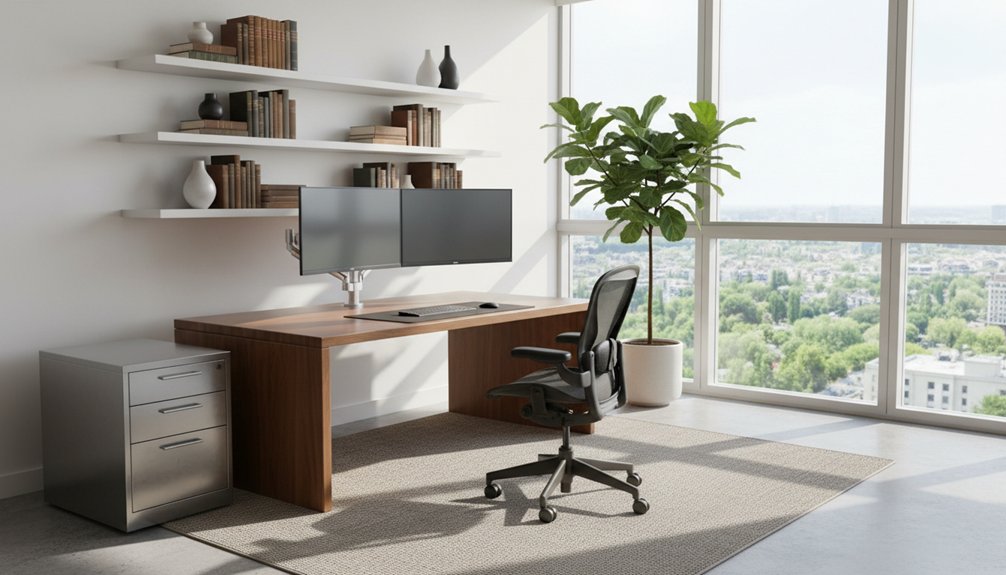
Your choices for home office furniture significantly impact your productivity and comfort during the workday. Start by measuring your workspace. Choose a desk that meets your needs; for example, select an L-shaped desk to maximize corner spaces or a compact rectangular desk for smaller areas. Invest in an ergonomic chair with lumbar support and adjustable height to reduce the risk of back pain.
Organize your workspace effectively. Use cable management systems to keep cords tidy, and implement file organizers to maintain an orderly environment. Consider vertical storage solutions to keep essential supplies within reach. Position your desk near windows to take advantage of natural light, which can enhance your focus and energy levels.
Evaluate whether a standing desk or a traditional desk setup suits your work style better. Standing desks can promote movement and reduce sedentary time, while traditional desks often provide a familiar workspace. The following sections will delve deeper into each of these elements to help you create an efficient home office.
Finding the Right Desk Size and Shape for Your Space
Determine Desk Size and Shape for Your Home Office
To find the right desk for your home office, measure your floor space first. Aim for at least 36 inches of clearance behind the desk to allow for chair movement. Choose desk dimensions that fit your work style: opt for larger surfaces if you use multiple monitors, or select compact desks for smaller spaces.
Start by measuring your floor space and ensuring 36 inches of clearance behind the desk for comfortable chair movement.
L-shaped desks utilize corner areas effectively, while rectangular desks work well against walls in traditional layouts. Before you buy, visualize your workspace flow by mapping out walking paths around the desk and other furniture. Maintain clear pathways to doors, windows, and storage areas to ensure accessibility.
Standard desk heights range from 29 to 30 inches, but adjustable desks can cater to different preferences and ergonomic needs. Additionally, desk dimensions should consider the overall workspace layout to facilitate productivity and comfort.
Calculate the desk’s footprint, factoring in any extensions or returns, to ensure it fits well within your designated area. By following these steps, you can avoid overwhelming your room while creating a functional workspace.
Ergonomic Chairs and Lighting That Support All-Day Work
When you work long hours at your desk, using an ergonomic chair is crucial for maintaining good posture and avoiding back pain. Choose a chair that offers lumbar support, adjustable seat height, and armrests that fit well with your desk height.
Ensure your feet rest flat on the floor and your thighs stay parallel to the ground. Using quality ergonomic support minimizes strain on your spine and shoulders during the entire workday.
To enhance productivity, proper lighting is just as important as having an ergonomic chair. Select adjustable lighting that reduces glare on your computer screen and provides enough brightness for reading documents.
Position your desk lamp to the side of your workspace to achieve this balance. Combine overhead lighting with task lighting for optimal illumination. Placing your desk near a window allows natural light to enter, which can help decrease eye fatigue over time.
Desk Organization Systems for Cables, Files, and Supplies
Tangled cables, scattered paperwork, and misplaced office supplies create a disorganized workspace that reduces productivity. Implementing desk organization systems allows you to maintain a focused and efficient work environment.
Cable management solutions, such as desk grommets, adhesive clips, and cable sleeves, effectively route power cords and data cables under your desk. These tools prevent tangling and minimize visual clutter while keeping connections easy to access. For instance, using cable sleeves can keep multiple cords bundled together, reducing the chances of damage and making it simple to find the right cable when needed.
For managing files, utilize desktop file holders, drawer dividers, and vertical organizers. These systems allow you to sort documents based on priority or project, ensuring quick retrieval. Clearly labeling each section helps you locate papers instantly.
Furthermore, incorporating dedicated compartments for pens, staplers, and notepads ensures that you can access supplies swiftly without searching through a cluttered desk. Multi-tiered desktop organizers maximize vertical space, allowing you to keep your workspace open and functional. Additionally, investing in solid wood furniture enhances both the durability and aesthetic appeal of your office setup.
When organizing your desk, remember that maintaining an orderly environment is crucial for enhancing your work efficiency. Focus on practical solutions that fit your specific needs and keep your workspace clean and organized.
Converting Bedrooms and Living Rooms Into Functional Offices
As remote work becomes more prevalent, many individuals need to convert spare bedrooms or sections of their living rooms into functional workspaces. This transformation requires careful planning to balance productivity with comfort.
For bedrooms, position your desk near windows to maximize natural light. Place the desk away from the bed to create a clear boundary between work and rest. Use compact furniture, like wall-mounted desks or corner units, to optimize space without overcrowding the room.
Position your workspace near natural light and away from sleeping areas to maintain healthy work-life boundaries in bedroom offices.
In living rooms, use room dividers, bookcases, or strategic furniture placement to create a designated workspace. Choose furniture that matches your existing décor while ensuring you have adequate storage and surface area for work tasks. This approach allows you to maintain the living room’s multi-purpose function while dedicating a portion of it for work.
When designing these spaces, consider factors like lighting, acoustics, and ergonomics to enhance your work experience. Additionally, incorporating Scandinavian design principles can help create a calming and functional environment for productivity. Avoid clutter by selecting only essential office supplies and equipment. This focus helps maintain an organized and efficient workspace, supporting productivity in your home environment.
Standing Desks vs. Traditional Desks: Which Fits Your Work Style
The choice between a standing desk and a traditional desk significantly affects your daily comfort, health, and productivity. Standing desks improve posture, reduce back pain, and increase calorie burning during your workday. Choose a standing desk if you prefer movement and wish to avoid the negative effects of prolonged sitting.
However, be aware that standing desks require an adjustment period, and high-quality anti-fatigue mats help reduce discomfort during long hours of standing.
Traditional desks offer stability for tasks that require precise hand positioning, such as graphic design or writing. Traditional desks are usually more affordable and familiar to most users, making them a popular choice.
Consider a convertible desk that allows you to switch between sitting and standing positions. This option provides flexibility, allowing you to boost productivity while accommodating your energy levels. You can alternate between positions based on the tasks at hand, preventing fatigue from either sitting or standing for too long.
Your work style will determine which desk option serves you best. If you often engage in tasks requiring stability, a traditional desk may be suitable.
If you prioritize movement and health benefits, a standing desk could be the right choice. Evaluate your workflow and preferences to make an informed decision.