
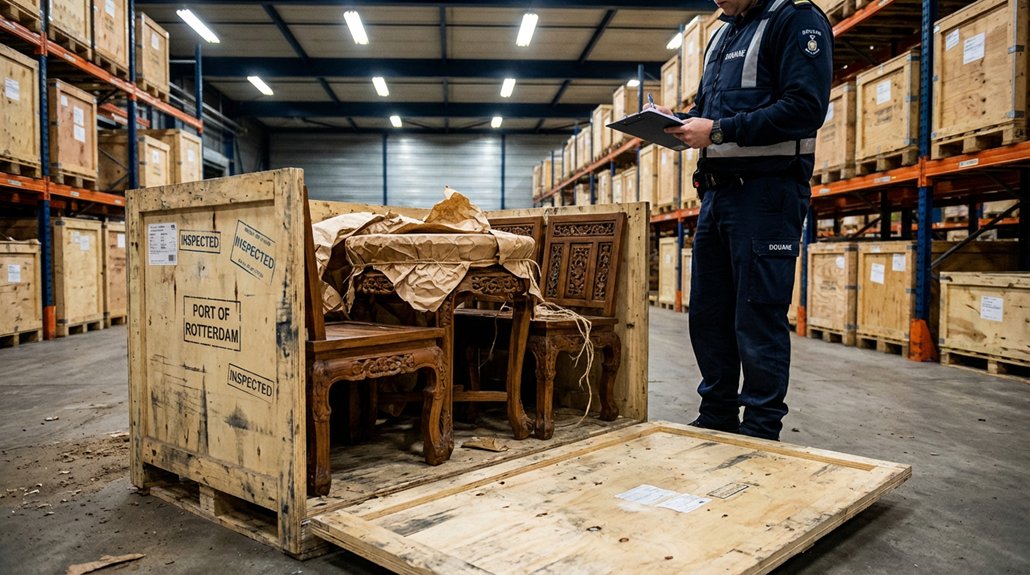
When you import Indian furniture to the EU, you must identify the correct HS code under Chapter 94 to determine your duty rate. Duty rates for furniture typically range from 0% to 5.6%, depending on the specific type of furniture. Each EU country applies its own VAT, which can vary between 17% and 27%. If your products meet the criteria, India’s Generalized System of Preferences (GSP) status may reduce or eliminate these duties.
Your final landed cost consists of shipping, insurance, duties, and VAT. Understanding these components helps you manage overall expenses effectively. Familiarize yourself with the HS codes and the specific furniture types that apply to your imports. Ensure you calculate all associated costs accurately to avoid unexpected expenses.
For example, if you import wooden chairs classified under HS code 9401, you may face a duty rate of 4%. If your destination country has a VAT of 20%, you’ll need to account for that in your pricing strategy.
Stay updated on changes to GSP eligibility and duty rates, as they can directly impact your budget. Managing these factors is essential for maintaining profitability in the EU furniture market. Focus on compliance and cost management to streamline your import process.
HS Codes for Indian Furniture: Finding the Right Classification
When you import Indian furniture into the EU, you must classify your products using Harmonized System (HS) codes. The HS code system is a standardized numerical framework that customs authorities globally use to identify goods.
Furniture classification primarily falls under Chapter 94 of the HS code system. For wooden furniture, use codes that start with 9403. For metal furniture, use 9401 or 9403, depending on its specific function.
Accurate classification is crucial; incorrect codes can lead to delays, fines, or missed duty exemptions. Some Indian furniture products may qualify for reduced tariff rates through the EU’s Generalized Scheme of Preferences (GSP).
Misclassifying furniture HS codes risks delays and fines — but correct classification may unlock GSP tariff savings.
To ensure you have the correct HS code, utilize the EU’s online TARIC database. Always confirm your classification with a licensed customs broker before shipping to avoid complications.
EU Import Duty Rates on Indian Furniture
When you import Indian furniture into the EU, you face duty rates ranging from 0% to 5.6%. The specific duty rate depends on the product’s HS code classification. For example, wooden bedroom and office furniture generally incurs a standard duty rate of 2.7%. In contrast, seating products like sofas and chairs can face higher rates, ranging from 2.7% to 5.6%. Understanding these specific duty rates helps you accurately calculate total import costs and prepare for expenses at customs.
Each type of furniture has its own HS code, which determines the applicable duty rate. For wooden furniture, the classification typically aligns with a 2.7% duty. For upholstered seating, you may find rates at the higher end of the spectrum, up to 5.6%. This variation underscores the importance of correctly identifying your product’s HS code to avoid unexpected costs.
Be aware that certain exceptions exist. For instance, specific handcrafted or antique items may qualify for lower rates or exemptions under EU trade agreements. However, not all furniture qualifies for these exceptions. Always verify the HS code before proceeding with your import to ensure compliance with EU customs regulations.
Standard Duty Rate Breakdown
The EU imposes three standard duty rates on furniture imported from India based on product categories. Wooden furniture incurs a 5.6% duty rate. Upholstered seating has a duty rate ranging from 5.6% to 6.7%. Metal furniture typically faces a lower duty rate of 2.7%.
To determine the applicable duty rate for specific products, importers must reference tariff classifications using Harmonized System (HS) codes. Each HS code uniquely categorizes furniture, essential for accurate duty calculations. Misclassifying products can lead to unnecessary delays, penalties, or overpayment of duties.
Some Indian furniture products may qualify for duty exemptions under the EU’s Generalized Scheme of Preferences (GSP). The GSP can significantly reduce or eliminate duties for eligible exporters. Therefore, verifying your product’s HS code before shipment is crucial to avoid unexpected costs.
To summarize, importers should follow these steps:
- Identify the furniture type.
- Check the corresponding duty rate.
- Use the correct HS code for classification.
- Explore GSP eligibility for potential duty reductions.
Product-Specific Duty Variations
Understanding Import Duty Rates for Indian Furniture in the EU
When importing furniture from India to the EU, you must account for specific import duty rates associated with each product type. These rates affect your total shipping costs and can vary significantly based on product classification.
| Furniture Type | Duty Rate | Duty Exemptions |
|---|---|---|
| Wooden Chairs | 5.6% | None currently |
| Metal Furniture | 2.7% | Partial exemptions apply |
| Bedroom Furniture | 0% | GSP eligible |
Import Duty Rates for Different Furniture Types
Wooden chairs incur a duty rate of 5.6%. This means that when you import wooden chairs from India, you will need to factor in this percentage of the total product cost as your duty expense. Currently, there are no exemptions available for wooden chairs, making the duty a fixed cost.
Metal furniture has a lower duty rate of 2.7%. For this category, you might qualify for partial exemptions, depending on specific conditions. It’s essential to check these conditions to potentially reduce your duty costs.
Bedroom furniture stands out with a duty rate of 0%. This category qualifies for duty exemptions under the EU’s Generalised Scheme of Preferences (GSP). Indian exporters who meet GSP criteria pay no import duties on bedroom furniture. To benefit from this exemption, ensure that your suppliers are compliant with GSP requirements.
Importance of Understanding Duty Rates
Understanding these specific duty rates helps you calculate your total import costs accurately before shipping. Knowing the duty rates allows you to avoid unexpected financial surprises when importing furniture. Each product classification directly impacts your bottom line, so it’s crucial to stay informed about the rates and exemptions applicable to the furniture you plan to import.
VAT on Indian Furniture Imports Into the EU
When importing Indian furniture into the EU, you must account for Value Added Tax (VAT). Each EU member state determines its own VAT rate, which ranges from 17% to 27%. You calculate VAT based on the total value of the furniture, shipping costs, and customs duties.
To avoid unexpected costs, familiarize yourself with the import regulations and compliance requirements for your specific EU country. Check if any VAT exemptions apply to your shipment; certain goods may qualify for reduced rates or exemptions.
Proper documentation is essential for customs clearance, so maintain all relevant invoices and shipping documents. This practice will facilitate smoother transactions and help you avoid delays.
Trade agreements between India and the EU can influence your VAT obligations, so stay informed on any changes. Regularly review market trends to adjust your pricing strategies accordingly, ensuring your costs remain competitive.
Finally, incorporate VAT into your logistics planning. Understanding how VAT affects your overall import costs will help you budget effectively and manage your expenses.
GSP and Duty Savings on Indian Furniture
Importing Indian Furniture into the EU: GSP and Duty Savings
When you import Indian furniture into the EU, you can reduce or eliminate customs duties using the Generalised Scheme of Preferences (GSP). The GSP applies to eligible goods that meet specific rules of origin. Your furniture must be sufficiently manufactured in India. To claim GSP benefits, you need either a valid GSS Form A or a Registered Exporter (REX) statement.
Understand GSP Eligibility
Confirm your furniture’s eligibility for GSP benefits. Ensure that the manufacturing process aligns with the origin rules. This step is crucial because non-compliance can lead to duty costs.
Calculate Duty Savings
Calculate your potential duty savings by comparing the standard EU duty rate with the reduced GSP rate. For example, if the standard duty rate is 5% and the GSP rate is 0%, you save 5% on the total customs value.
This calculation directly impacts your overall import costs.
Consider Limitations and Edge Cases
Be aware of limitations with the GSP. Not all furniture items qualify, and changes in manufacturing processes can affect eligibility.
Additionally, ensure your documentation is accurate; errors can delay your imports or disqualify you from GSP benefits.
Practical Steps to Implement GSP
- Verify Manufacturing: Check that your furniture meets the sufficient manufacturing criteria.
- Gather Documentation: Obtain the necessary GSS Form A or REX statement before shipping.
- Calculate Costs: Use the GSP rate to determine your savings prior to importing.
GSP Eligibility Requirements
To qualify for GSP benefits, Indian furniture exporters must meet strict eligibility requirements set by the EU. First, ensure your products fall within the specific product categories outlined by the GSP framework. Next, submit compliance documentation that proves your goods adhere to the origin rules.
India’s trade agreements with the EU allow you to access tariff preferences, but adhering to customs procedures is crucial for claiming these benefits. As an exporter, you must maintain accurate records and complete all necessary paperwork to support your application.
GSP eligibility also hinges on India’s overall compliance with EU labor and environmental standards. Understand these requirements to effectively navigate the process and reduce the risk of delays or duty miscalculations.
Proper preparation ensures you can ship furniture to EU markets smoothly and efficiently.
Calculating Duty Savings
Calculate Duty Savings for Your Furniture Shipments
Once you confirm your eligibility for the Generalized System of Preferences (GSP), you can calculate your duty savings. Start by finding the tariff classifications for your furniture in the EU’s Combined Nomenclature. Each classification has a duty rate, usually between 0% and 5.7% for furniture from India. Under GSP, you may qualify for lower rates or complete duty exemptions on eligible items.
To determine your savings, subtract the GSP rate from the standard duty rate. Then, apply that percentage to your shipment’s customs value. For instance, if you have a €10,000 shipment with a 5% standard duty rate and a 0% GSP rate, you save €500 on that shipment. If you multiply this savings across multiple shipments, the total savings can be substantial. Always check the current rates in the EU’s TARIC database before making any calculations.
Steps to Calculate Your Duty Savings
- Identify Tariff Classifications: Find your furniture’s tariff classifications to know the applicable duty rates.
- Determine Duty Rates: Note the standard duty rate and the GSP rate for each classification.
- Calculate Savings: Subtract the GSP rate from the standard rate. Apply this difference to your shipment’s customs value.
Example of Duty Savings Calculation
For a shipment worth €10,000:
- Standard Duty Rate: 5%
- GSP Rate: 0%
- Savings Calculation:
- Standard Duty: €10,000 x 5% = €500
- GSP Savings: €500 – €0 = €500
You save €500 on that shipment. If you ship multiple times a year, these savings add up quickly.
Limitations and Considerations
Be aware that not every product qualifies for GSP benefits. Always check eligibility criteria for your specific furniture items. Additionally, ensure your documentation is accurate before submission to customs to avoid delays or penalties.
Conclusion
Understanding duty savings is crucial for maximizing profits when importing furniture. By following these steps and keeping informed about current rates, you can effectively manage your shipping costs.
The True Landed Cost of Importing Indian Furniture
Understanding the True Landed Cost of Importing Indian Furniture
When you import Indian furniture into the EU, the purchase price doesn’t represent the full expense. The true landed cost includes all expenses incurred before the furniture arrives at your location. You must calculate every cost upfront to prevent unexpected budget overruns.
Total Landed Cost Components
Your total landed cost consists of several key components:
- Transport Costs: Calculate the expenses for moving the furniture from the Indian factory to your EU destination. This includes local transport within India and international freight charges.
- Shipping Insurance: Purchase insurance to cover potential damages or losses during transit. This protects your investment and ensures financial recovery in case of unforeseen issues.
- EU Customs Duties: Determine the customs duties based on the declared customs value of the furniture. These duties vary depending on the type of furniture and its materials, so verify the specific rates applicable to your products.
- Value Added Tax (VAT): Calculate the VAT applied after customs duties are added. The VAT rate can differ by EU country, so check the local regulations to ensure accurate calculations.
Calculating the Real Cost
Add these components together to find the total landed cost of your order. Knowing this figure helps you set competitive prices and maintain healthy profit margins.
Practical Implications
When you understand the true landed cost, you can make informed decisions about pricing and sourcing. This knowledge enables you to manage your budget effectively and anticipate any financial challenges that may arise during the import process.
Limitations to Consider
Keep in mind that currency fluctuations, changes in shipping rates, and evolving customs regulations can affect the total landed cost. Regularly review these factors to adjust your pricing strategy accordingly.
Anti-Dumping Duties That Can Affect Indian Furniture Imports
Anti-dumping duties directly impact the cost of importing furniture into the EU. The EU imposes these duties on specific imported goods that it determines are sold at unfairly low prices. These measures protect European manufacturers from unfair competition and help maintain market stability.
Currently, Indian furniture is not a primary focus of EU anti-dumping measures. However, it’s essential to confirm the current status before proceeding with any importation.
| Product Category | Anti-Dumping Risk | Action Required |
|---|---|---|
| Wooden chairs | Low | Monitor updates |
| Upholstered seating | Medium | Check regulations |
| Office furniture | Medium | Verify annually |
Always consult the EU’s Trade Defence database prior to finalizing any orders. Anti-dumping duties can change frequently and significantly affect your landed costs. Staying informed will help you avoid unexpected expenses and ensure compliance with EU regulations. Additionally, understanding proper furniture sizing can help you make informed decisions when selecting products for import.