

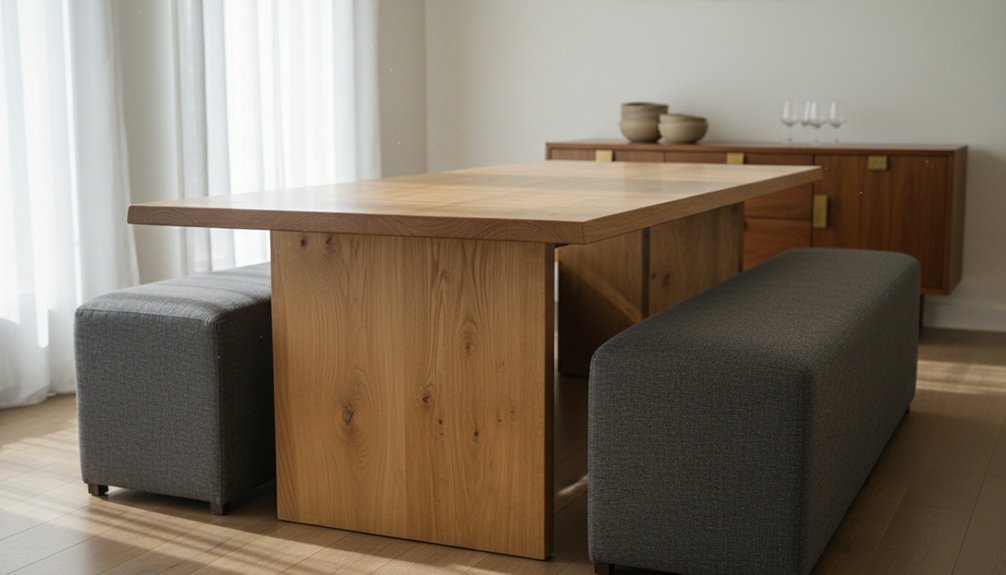
To ensure comfortable movement around your dining table, maintain at least 36 inches of clearance on all sides. Use rectangular tables in longer rooms to optimize space, round tables in square areas to facilitate conversation, and extending tables to accommodate varying guest counts. Solid wood tables provide a warm, inviting atmosphere, while glass tables deliver a sleek, modern look. For seating, select chairs with seat heights between 18 and 20 inches and ensure they have supportive backrests to enhance comfort during extended meals.
To organize your dining essentials, incorporate sideboards equipped with cabinet doors and drawers. These storage solutions help manage dishes and linens effectively while minimizing clutter in your dining area. The upcoming sections will outline strategies to enhance the functionality of your dining space while ensuring it meets your everyday needs.
How Much Space You Actually Need Around a Dining Table
Planning your dining room layout requires careful consideration of the space around your dining table. Ensure you allow at least 36 inches of clearance on all sides of the table. This space permits people to walk behind seated diners without interrupting their meals.
Allow a minimum of 36 inches clearance around your dining table for comfortable movement behind seated guests.
If your dining area has serving stations or buffets, increase this clearance to 42-48 inches to facilitate movement.
When placing your dining table, account for door swings, traffic patterns, and the proximity of nearby furniture. Measure your dining room carefully before purchasing a table. A table might fit within your room’s dimensions, but if it leaves little walking space, it creates an uncomfortable dining experience.
Consider chair extensions when pulled out; they typically add 24-30 inches to your table’s footprint. Adequate spacing around your dining table enhances the dining experience, allowing guests to move freely and comfortably. Additionally, maintaining a minimum of 30 inches of clearance around your dining area ensures smooth traffic flow and an inviting atmosphere.
Prioritize this spacing to transform your dining area from cramped to inviting.
Dining Table Shapes: Rectangle, Round, or Square?
Choosing the right shape for your dining table directly impacts the functionality and flow of your dining area.
Rectangular tables fit longer rooms and accommodate more guests, making them ideal for large families. They remain the most popular choice because they can be positioned against walls when space is limited.
Round tables foster conversation as everyone faces the center, making them suitable for smaller, square rooms. Additionally, round tables are safer for homes with children because they lack sharp corners.
Square tables work well in compact spaces, providing an intimate setting for four people.
Understanding these advantages helps you select a dining table shape that aligns with your room dimensions and lifestyle requirements. Incorporating functional design principles into your choice can further enhance the overall atmosphere of your dining space.
Wood, Glass, or Metal: Which Dining Table Lasts Longest?
Each material has its advantages. When selecting a dining table, consider your lifestyle, cleaning habits, and design preferences to make an informed decision. Additionally, solid wood furniture can provide a warm and inviting atmosphere that complements any dining space.
Dining Chairs That Stay Comfortable Through Long Meals
When selecting dining chairs, prioritize comfort for both quick meals and lengthy gatherings. Designing chairs with ergonomic features, quality cushioning, and adequate back support directly impacts how long guests feel at ease. A well-crafted chair encourages guests to stay longer and enjoy their time at the table.
Start with the ergonomic design. Chairs should promote good posture by aligning the spine properly. Look for chairs with contoured seats that support the natural curve of the body. This design reduces strain during extended use.
Next, consider the quality of cushioning. High-density foam provides a solid foundation while maintaining comfort over time. A chair with at least two inches of thick cushioning ensures guests won’t feel discomfort during long dinners.
Back support is crucial for comfort. Chairs should feature a backrest that supports the lower back, preventing fatigue. A backrest height of about 15 to 20 inches from the seat, angled at 100 to 110 degrees, promotes relaxation and support.
Limitations exist in terms of materials and styles. Some materials, like hard plastics, may cause discomfort over long periods. Avoid chairs that lack proper cushioning or back support, as they can lead to a hurried dining experience.
For practical examples, a dining chair with a seat height of 18 to 20 inches and a width of 16 to 20 inches accommodates most body types comfortably. Aim for a chair weight limit of at least 250 pounds for durability.
Ergonomic Design Features Matter
Ergonomic features significantly impact dining chair comfort during extended meals. Dining chairs should support the natural curve of your lower back, which prevents strain and discomfort for guests.
Choose chairs with contoured backrests that align with the spine’s shape to enhance lumbar support. The depth of the seat is crucial; it should adequately support the thighs without pressing against the back of the knees, ensuring proper circulation.
Armrests must be positioned at an optimal height to reduce shoulder tension while dining. Some modern dining sets offer adjustable heights, allowing customization for different users, which can enhance comfort across various body types.
Additionally, pay attention to seat cushion density. Firm cushions tend to maintain their shape better than softer options, providing consistent support throughout a two-hour dinner party.
Seat Cushion Material Options
Several cushion materials provide specific advantages for dining chairs, ensuring long-lasting comfort. When choosing cushion fabrics, consider options like leather, microfiber, and performance textiles, which resist stains and wear effectively. Each material impacts durability and maintenance differently, influencing your selection process.
| Material Type | Key Benefits |
|---|---|
| Memory Foam | Conforms to body shape, distributes weight evenly |
| High-Density Foam | Maintains structure, resists flattening over time |
| Down Alternative | Offers soft feel, possesses hypoallergenic properties |
Understanding filling types allows you to choose the appropriate support for your seating. Memory foam conforms to the body, providing personalized comfort while retaining heat. High-density foam delivers firm support and maintains its shape for years. Down alternative offers a plush seating option without allergen concerns. Select your filling type based on the desired comfort level and match it with a durable fabric.
Performance fabrics, when combined with quality foam, create dining chairs that remain comfortable even during long dinner gatherings. For instance, using a high-density foam core wrapped in a stain-resistant upholstery can enhance both comfort and longevity. Consider the specific needs of your dining space to ensure your cushion materials provide the right balance of durability and comfort.
Proper Back Support Solutions
Lumbar support enhances dining chair comfort by preventing discomfort during long meals. Choose chairs with curved backrests that align with the spine’s natural curve, particularly in the lower back. This design feature stops slouching and minimizes strain while eating or conversing.
Chair height significantly impacts overall comfort. Ensure your feet rest flat on the floor and your knees are bent at a ninety-degree angle. When combined with effective lumbar support, the right chair height helps maintain the spine’s natural alignment.
Opt for chairs with contoured backs that reach at least the shoulder blades. Both solid wood and padded backrests are effective, provided they’ve a slight backward angle. This combination promotes good posture effortlessly during extended gatherings.
Avoid chairs that lack lumbar support or have a flat backrest, as these can lead to discomfort and poor posture. Consider your specific needs, like back pain history or height, when selecting a chair.
Regularly assess your seating arrangement to ensure all elements work together to support your posture while dining.
Sideboards and Buffets That Hide Dining Room Clutter
Sideboards and buffets act as essential storage solutions that help maintain an organized dining room. These furniture pieces serve dual purposes: they provide storage for dining items while enhancing the overall décor of the space.
Sideboards blend practical storage with stylish design, making them indispensable for creating both functional and beautiful dining spaces.
You can find a wide range of sideboard options, including traditional wooden designs and modern minimalist styles with sleek lines.
When choosing the right sideboard for your dining room, focus on these key features:
- Cabinet doors hide dishes, linens, and serving pieces, keeping them out of sight.
- Drawers store silverware, placemats, and smaller dining accessories in an orderly manner.
- Open shelving allows for the display of decorative items while keeping frequently used items easily accessible.
- Surface tops offer additional space for serving food during meals and gatherings.
Select a sideboard that fits your dining room’s size and storage requirements. Measure your available wall space accurately before making a purchase to ensure the piece will fit properly and function as intended.
Keep in mind that overly large sideboards can overwhelm a small dining area, while too-small options may not provide adequate storage.
Extending Tables That Grow When Guests Arrive
When you host dinner parties or family gatherings, an extending table provides the flexibility to accommodate varying guest numbers without sacrificing daily living space. These tables adjust from compact sizes for everyday use to spacious dining surfaces for larger gatherings. You can choose between drop-leaf tables that fold down when not in use, butterfly leaf tables with hidden center extensions, or modern sliding tables that pull apart to create additional space.
Extending tables are ideal for smaller dining rooms because they prevent overcrowding. For example, you can seat four people comfortably during regular meals and expand the table to seat eight or more when guests arrive. Most extending tables have smooth gliding systems that allow for easy adjustments, even when you’re setting up alone.
Look for tables with solid construction and stable locking mechanisms to ensure that your table remains sturdy, regardless of its size.
When choosing an extending table, consider the materials used in its construction. Solid wood tables offer durability and aesthetic appeal, while engineered wood options may provide a more budget-friendly choice.
Check the extension mechanism; some tables require minimal effort to expand, while others may need more time to set up. Prioritize ease of use, especially if you frequently host gatherings.
Additionally, be aware of the limitations of extending tables. Some designs may not fully support heavy dishes or multiple serving platters when expanded.
Always check the manufacturer’s specifications regarding weight limits and dimensions. This understanding helps you select the right table for your space and ensures it meets your hosting needs effectively.