

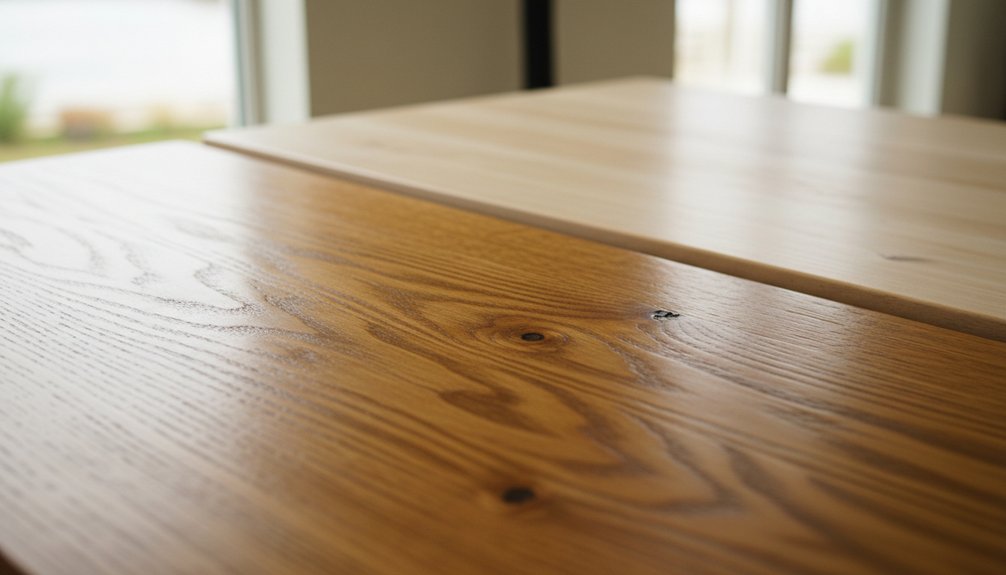
Oak furniture provides several advantages over maple, which can significantly impact your choice when selecting materials for your home or business. First, oak features distinct grain patterns with prominent rays that enhance visual appeal. Second, oak is known for its durability, lasting between 50 to 100 years with proper care.
Third, oak’s high tannin content offers superior moisture resistance, naturally protecting the wood from decay and insect damage. Fourth, oak has a higher Janka hardness rating of 1,360 pounds per square foot, making it more resistant to dents and scratches.
Fifth, oak requires less maintenance compared to maple, which can save time and effort in the long run. Sixth, oak furniture typically offers better long-term value, as its durability leads to reduced replacement costs over time.
These benefits make oak a practical choice for those seeking long-lasting and visually appealing furniture. Each advantage reinforces oak’s position as a reliable option in furniture manufacturing.
Superior Grain Patterns and Visual Appeal
Oak wood features a distinct grain pattern that differentiates it from other types of wood, particularly maple. The grain of oak includes prominent rays and swirling lines, which provide each piece of furniture with a unique aesthetic appeal. This visual interest makes oak furniture popular among buyers who prefer a bold look.
When crafting tables, chairs, or cabinets, the pronounced texture of oak adds depth and character that enhances the overall design. Oak’s varied grain allows for flexibility in style; it complements both traditional and contemporary designs. You can apply a dark stain to achieve a classic appearance, or leave it natural for a more modern feel.
In contrast, maple has a fine and uniform grain that lacks the visual impact of oak. If you want furniture that stands out and makes a statement, oak’s natural patterns offer distinctive beauty that maple can’t match.
Enhanced Durability and Longevity
Oak furniture consistently outlasts maple furniture in both hardness and wear resistance.
Oak’s tough structure effectively resists dents and scratches, making it a solid choice for high-traffic areas in your home. The dense cellular makeup of oak provides excellent protection against daily impacts and heavy use.
Oak’s dense grain structure shields against dents and scratches, making it ideal for busy households requiring furniture that withstands constant use.
Oak furniture offers several practical benefits:
- Longevity: Oak pieces can function well for 50 to 100 years when cared for properly.
- Moisture Resistance: Oak naturally resists water damage better than maple, protecting your furniture from spills and humidity.
- Easy Maintenance: With its durable finish, oak furniture requires less upkeep over time.
This combination of durability and low maintenance means that when you choose oak, you invest in furniture that endures for decades while needing minimal effort to keep in good condition.
Better Resistance to Moisture and Warping
Oak furniture offers better resistance to moisture and warping compared to maple.
Oak’s tight, dense grain structure acts as a barrier that minimizes water penetration, making it suitable for humid environments or areas with temperature fluctuations.
The high tannin content in oak adds an extra layer of protection against moisture damage.
This combination of factors results in oak exhibiting superior dimensional stability.
As a result, oak furniture is less likely to warp, crack, or swell when exposed to changing environmental conditions, unlike maple.
This durability makes oak a practical choice for anyone looking for long-lasting furniture in challenging climates.
Oak’s Dense Grain Structure
Oak wood has a unique dense grain structure that provides significant advantages over softer woods like maple. The tightly packed fibers in oak create a robust barrier against environmental damage. This means that oak furniture withstands daily wear and tear better than furniture made from maple.
The dense grain structure of oak leads to several practical benefits:
- Increased durability: The compact fibers in oak resist scratches, dents, and impacts more effectively than the softer fibers in maple.
- Better moisture resistance: The dense grain forms a natural seal that prevents water from penetrating the wood, reducing the risk of expansion or damage.
- Attractive visual character: The distinct grain patterns of oak give furniture a unique look that improves as the wood ages.
You will see oak’s durability in high-traffic areas where furniture experiences constant use. The natural density of oak means you’ll spend less time on refinishing and repairs, making it a practical choice for long-lasting furniture.
Natural Tannin Protection
Oak wood offers distinct advantages over maple, particularly due to its natural tannins.
These tannins provide oak with superior moisture protection, helping to prevent warping and damage. When oak wood absorbs moisture, the tannins create a barrier that slows down water penetration. This feature allows you more time to clean spills before any lasting damage occurs.
In practical terms, this makes oak a better choice for furniture in areas with fluctuating humidity, such as bathrooms and kitchens. Oak furniture maintains its shape and integrity better than maple under these conditions.
Additionally, the natural preservatives in oak resist mold and mildew more effectively than those in maple.
Dimensional Stability Advantages
Oak’s moisture resistance and dimensional stability distinguish it from maple in practical terms.
Oak maintains its shape better than maple when exposed to humidity changes. This stability arises from oak’s cellular structure, which absorbs moisture more effectively than the denser structure of maple.
Here are the key dimensional advantages of oak:
- Oak experiences 15-20% less movement during seasonal humidity changes, which helps keep furniture intact.
- Joinery remains tighter in oak, reducing gaps when temperatures fluctuate.
- Oak maintains precise tolerances in drawer fits and door alignments, ensuring functionality.
When you choose furniture for humid environments or spaces with inconsistent conditions, oak’s predictable behavior is crucial.
Maple tends to expand and contract more, which can cause joints to loosen over time. Oak’s reliable performance ensures that your furniture retains its structural integrity for many years.
More Versatile Staining and Finishing Options
When you choose wood furniture, the wood type significantly influences your staining options.
Oak has an open grain structure that accepts stains easily, allowing you to achieve a variety of color intensities, from light honey to deep espresso. You can achieve consistent results with different staining techniques on oak.
In contrast, maple has a tight grain that often leads to blotchy patches because it absorbs stain unevenly. If you work with maple, you’ll likely need to use wood conditioners and apply multiple layers to get a uniform color.
Additionally, oak responds well to various finishing options. You can use oil-based polyurethane, lacquer, or wax finishes on oak without issues.
The porous nature of oak allows these products to penetrate effectively, providing durable protection. By using oak furniture, you can customize the finish to match your décor without worrying about unpredictable results.
The ease of staining and finishing oak makes it a more practical choice for achieving your design vision.
Higher Tannin Content for Natural Preservation
Oak wood contains a higher natural tannin content compared to maple wood. Tannins serve as organic compounds that protect wood from moisture damage, fungi, and insects.
This means that oak furniture stands up better to environmental stressors because the higher tannin levels provide natural resistance to decay. As a result, oak furniture lasts longer and requires fewer chemical treatments for preservation.
In practical terms, when you choose oak over maple, you’re opting for a material that inherently protects itself, ensuring durability and longevity in your projects.
What Tannins Do Naturally
Tannins serve as a natural defense mechanism in oak wood, protecting it from decay, insects, and moisture damage. These compounds create an environment that deters organisms that can harm the wood, significantly extending the lifespan of your oak furniture without the need for additional chemical treatments.
Here’s how tannins provide natural preservation for oak furniture:
- Tannins repel insects by producing bitter-tasting compounds that deter wood-boring beetles and termites from infesting the wood.
- Tannins prevent rot by inhibiting the growth of fungi and bacteria that can decompose the wood fibers.
- Tannins resist moisture with water-repellent properties that help reduce warping and splitting of the wood.
In comparison, maple wood contains significantly fewer tannins, making it more susceptible to these threats.
Oak has built-in protection against decay and pests, allowing your furniture to maintain its structural integrity for longer periods without the need for harsh chemicals or frequent treatments.
Oak’s Superior Tannin Levels
Oak has a tannin content of approximately 8-10% by weight, significantly higher than maple’s 1-3%. This difference in tannin levels impacts furniture quality. Higher tannin content in oak provides better protection against decay, fungi, and insect damage compared to maple.
Consequently, oak furniture tends to last longer and resist deterioration over time. The elevated tannin levels also enhance moisture resistance. Oak furniture can withstand humid conditions without warping or rotting, making it suitable for various environments.
This durability is particularly beneficial for high-traffic areas and outdoor settings, where furniture faces more wear and tear. Choosing oak means you’re investing in furniture that maintains its structural integrity longer.
The natural preservative properties of oak reduce the need for chemical treatments, offering a more environmentally friendly option for your home. Overall, oak’s superior tannin levels deliver clear advantages in durability and longevity for your furniture needs.
Protection Against Decay Organisms
Oak wood contains natural chemicals that create a challenging environment for decay-causing organisms, including bacteria, fungi, and wood-boring insects. The high concentration of tannins in oak provides significant resistance to decay, which makes it a more reliable option compared to maple.
When you select oak furniture, you choose wood that naturally protects itself against deterioration. This inherent fungal protection allows your furniture to maintain its structural integrity for decades without the need for chemical treatments.
Here’s what oak’s natural preservation offers:
- Extended lifespan – Oak furniture resists rot and insect damage much longer than maple furniture.
- Reduced maintenance – You won’t have to apply preservatives or stress about premature decay.
- Better value – Oak’s natural durability results in furniture that can last for generations.
Oak’s built-in defense system makes it a superior choice for long-lasting furniture investments.
Greater Structural Strength and Load-Bearing Capacity
When you choose furniture that must support heavy weights over time, oak proves to be a better option than maple.
Oak’s density measures 1,360 pounds per square foot on the Janka hardness scale, which results in superior load-bearing capacity. This density prevents oak furniture from sagging or warping when it holds heavy items like books, electronics, or kitchen appliances.
The cellular structure of oak provides strong structural integrity, making it suitable for tables, chairs, and shelving units that endure constant use.
In contrast, hard maple measures lower on the hardness scale at about 1,450 pounds per square foot.
Oak’s strength ensures that your furniture will retain its shape and function, even after years of daily use, securing your investment for the long haul.
Improved Resistance to Dents and Scratches
Oak furniture outperforms maple furniture in maintaining its appearance due to its superior resistance to dents and scratches.
The higher hardness rating of oak on the Janka scale indicates that oak wood can better withstand impacts, protecting it from the everyday wear and tear that affects softer woods like maple.
This enhanced durability means that oak furniture retains its fresh look longer, making it an excellent choice for high-traffic areas in your home.
When you choose oak, you invest in furniture that stands up to daily use while minimizing the visible signs of damage.
Oak’s Superior Hardness Rating
Oak offers significant durability advantages over maple for home furniture. The Janka hardness rating of oak measures 1,290 pounds-force, which is higher than red maple’s rating of 950. This rating indicates how well oak resists wear from everyday use.
The hardness of oak leads to practical benefits for your home:
- Oak furniture endures heavy foot traffic and frequent use without showing significant wear.
- Toys and pet claws have less impact on oak surfaces, resulting in fewer visible scratches.
- Homeowners save money on repairs and refinishing due to oak’s resilience.
When you choose oak furniture, you select pieces that retain their appearance over time, even with regular bumps and scrapes. This durability makes oak an excellent choice for high-traffic areas in your home.
Impact Resistance Comparison
Oak wood provides superior impact resistance compared to maple wood. The dense grain structure of oak absorbs and disperses the force of impacts more effectively.
When you drop an object on oak furniture, the tight grain pattern helps minimize visible dents. This means oak furniture maintains a better appearance over time than maple.
In practical comparisons, oak consistently performs better than maple in impact tests. This difference is particularly evident in high-traffic areas where furniture endures daily wear.
Oak furniture resists scratches and dings better, resulting in a longer-lasting appearance. Consequently, choosing oak for your furniture translates to a more durable investment, especially for busy households.
Long-Term Durability Benefits
Oak furniture outlasts maple furniture in both durability and cost-effectiveness over time. The dense grain structure of oak resists wear and tear better than softer woods like maple. As a result, oak furniture maintains its original finish longer, reducing the need for refinishing or replacement.
The maintenance of oak furniture is straightforward.
- Surface scratches: Oak’s hardness means that everyday accidents cause minimal damage, preventing deep gouges.
- Dent resistance: Heavy impacts on oak leave less visible damage compared to the softer surface of maple.
- Finish longevity: Protective coatings adhere better to oak, which enhances their durability and lifespan.
You will find that oak furniture retains its showroom appearance for decades, while maple may show signs of aging much sooner. This durability preserves your investment and lowers long-term ownership costs.
More Prominent Figure and Character Markings
When you look closely at oak furniture, you see that the wood showcases bold grain patterns and unique natural markings. Oak wood contains distinctive rays, knots, and medullary patterns, which add visual depth to each piece. These character variations ensure that every furniture item is one-of-a-kind, meaning no two pieces are identical.
The pronounced grain lines in oak contribute texture and dimension, significantly enhancing the overall aesthetics of the furniture.
In contrast, maple wood presents a more uniform appearance with subtle grain patterns. While some homeowners may appreciate maple’s smooth look, others often feel it lacks character. The prominent markings in oak highlight the tree’s growth history, providing a narrative that maple doesn’t convey.
These natural features in oak catch light differently throughout the day, creating dynamic visual interest that enriches your home’s décor.
Better Value and Long-Term Investment
Oak furniture offers significant long-term value that goes beyond its initial cost. When you invest in oak, you’re making a decision that will pay off over time.
Investing in oak furniture is a smart financial decision that delivers lasting value well beyond your initial purchase.
For example, while maple furniture may appear to be a similar option at first glance, oak’s superior durability means you’ll replace it less often, resulting in savings down the line.
Financial benefits of oak furniture include:
- Oak furniture maintains a higher resale value because of its classic look and strong reputation.
- Oak requires low maintenance costs since it doesn’t need special treatments.
- Oak has a longer lifespan, which reduces the frequency of replacements.
In many cases, well-crafted oak pieces appreciate in value, particularly antique items. This makes oak furniture an intelligent investment for homeowners who prioritize quality and longevity.
The initial expenditure on oak furniture returns value through years of dependable use and the possibility of resale in the future.
Easier Availability and Sustainable Sourcing
Sourcing materials for furniture production requires careful attention, especially when it comes to sustainability. Oak trees grow more abundantly in North America and Europe compared to maple trees. This abundance makes oak furniture easier to source locally. Local sourcing reduces transportation costs and carbon emissions associated with shipping.
Many suppliers of oak wood practice sustainable harvesting methods. They replant trees to ensure forest health for future generations. The faster growth rate of certain oak species allows for more frequent harvesting cycles without harming the forest.
When you choose oak furniture from certified suppliers, you support eco-friendly practices that protect natural habitats. The accessibility of oak means you have more options when shopping for furniture. You can verify the sustainability credentials of your oak furniture more easily than with less common woods.
This focus on oak sourcing aligns with the growing demand for sustainable products in the furniture industry.