
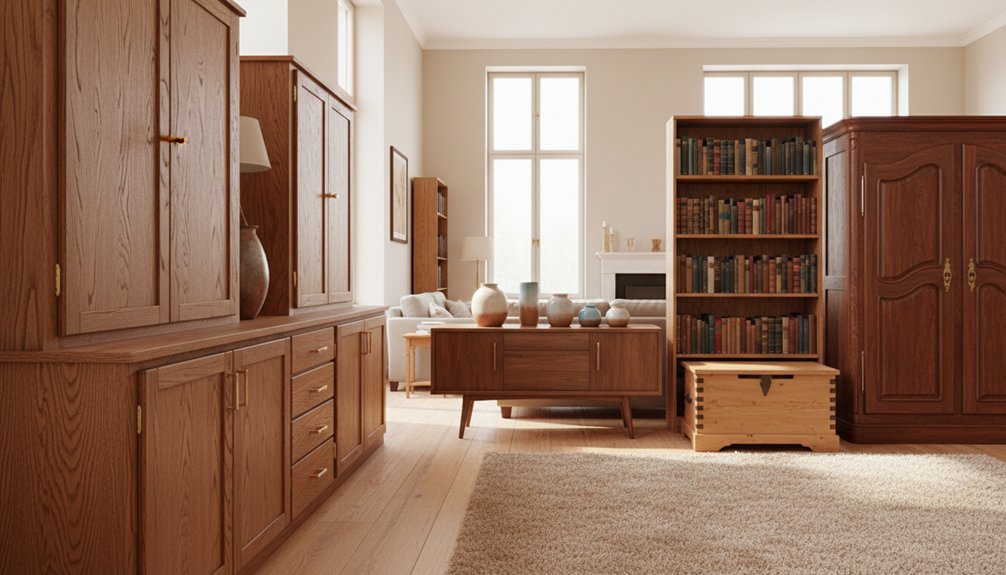
Solid wood cabinets provide durability and timeless style for various rooms in homes. In kitchens, pantry cabinets and islands deliver essential storage solutions. Wardrobes and armoires in bedrooms organize clothing and accessories efficiently. Living rooms incorporate media consoles that elegantly store entertainment systems. Choose from designs like Shaker, Traditional, Rustic, or Modern to align with your home’s décor.
Solid wood cabinets outperform engineered alternatives due to their resistance to warping, ability to support heavier loads, and potential for refinishing multiple times. This quality makes them a long-lasting investment for any homeowner. Below, we will discuss specific cabinet types, maintenance advice, and style considerations to ensure optimal functionality in each room.
Kitchen Cabinets
Kitchen cabinets provide storage and organization for cookware, utensils, and food items. Opt for pantry cabinets to maximize space efficiency and keep essentials accessible. Consider an island with built-in storage to enhance both functionality and aesthetics.
Bedroom Cabinets
Bedroom cabinets help manage clothing and personal items. Wardrobes can accommodate a range of clothing types, while armoires offer additional space for accessories. Choose cabinets with adequate shelving and hanging options to maintain organization.
Living Room Cabinets
Living room cabinets serve as media consoles that hold TVs, gaming systems, and entertainment devices. Select designs with cable management features to keep wires organized and out of sight. Ensure the cabinet size complements your room layout and furniture arrangement.
Maintenance Tips
Regular maintenance extends the life of solid wood cabinets. Clean surfaces with a damp cloth and avoid abrasive cleaners. Apply wood conditioner every six months to maintain luster and prevent drying. Address scratches immediately with touch-up markers or wood fillers.
Style Considerations
Choose cabinet styles that complement your existing décor. Shaker designs offer a clean, minimalist look, while Traditional cabinets provide ornate detailing. Rustic options bring warmth and character, and Modern styles often feature sleek lines and bold colors. Selecting the right style enhances the overall aesthetic of your space.
By understanding these aspects of solid wood cabinets, you can make informed choices that enhance both functionality and style in your home.
Wood Cabinet Types: Pantries, Wardrobes, Media Units, and Display Cases
Wood cabinets serve distinct purposes in your home, and understanding these purposes can help you choose the right design for your needs.
Pantry cabinets maximize kitchen storage with features like adjustable shelving and pull-out drawers. These cabinets help organize food items by providing designated spaces for different categories, making ingredients easily accessible.
Adjustable shelving and pull-out drawers transform pantry cabinets into organized food storage systems with easy access to all ingredients.
Wardrobes focus on clothing organization. They include hanging rods, built-in drawers, and shoe racks to efficiently store clothing and accessories. This design ensures that everything is in its place, allowing for easy selection when getting dressed.
Media units cater to electronics storage and organization. They feature cable management systems and ventilated backs, which protect electronic devices from overheating. Media units help create a tidy entertainment area by concealing wires and providing a dedicated space for devices.
Display cases showcase collectibles or decorative items. With glass doors and interior lighting, they highlight your prized possessions while protecting them from dust. Display cases serve as both storage and a visual focal point in a room.
Each cabinet type employs specific construction methods and hardware tailored to its function. For example, pantry cabinets use heavier shelving to support the weight of food items, while display cases require tempered glass for safety. Choosing solid wood options enhances durability and adds aesthetic appeal to your storage solutions.
Understanding these distinctions helps you select the right wood cabinet based on your specific storage needs and room requirements.
Kitchen and Dining Wood Cabinets: Pantries, Islands, and Sideboards
Kitchen and dining spaces benefit from specialized wood cabinets that enhance functionality and aesthetics.
Kitchen islands act as central workstations and provide valuable storage space beneath their countertops. Pantry cabinets organize food items and feature adjustable shelving for various container sizes. Dining sideboards store dishes, linens, and serving pieces while complementing the room’s décor.
When selecting wood cabinets, focus on these essential features:
- Soft-close hinges prevent slamming and help extend cabinet life.
- Pull-out drawers maximize accessibility in deep cabinets, making it easier to reach items.
- Adjustable shelving accommodates items of different heights, ensuring optimal organization.
- Solid wood construction guarantees durability and withstands daily use.
Maintaining at least 36 inches of space between cabinet edges and walls ensures comfortable movement and accessibility in your kitchen and dining area.
Kitchen islands and dining sideboards combine practical storage with attractive furniture pieces.
These solid wood options maintain their appearance and functionality over time, making them a worthy investment for any kitchen or dining area.
Bedroom Wood Cabinets: Wardrobes, Armoires, and Linen Storage
Bedroom wood cabinets organize spaces by providing specific storage solutions for clothing, linens, and personal items. Wardrobes offer full-length hanging space and shelving for various types of clothing, from suits to seasonal wear. Armoires serve as practical alternatives when closet space is limited, combining hanging rods and drawers for folded garments. Linen storage cabinets keep sheets, blankets, and towels neatly arranged and accessible.
When selecting wood cabinets, focus on finishes that match your existing bedroom furniture. Oak and maple offer durability in lighter tones, while walnut and cherry provide richer, darker aesthetics. You can choose between freestanding cabinets, which allow for flexibility in arrangement, or built-in cabinets for seamless integration into your space. Quality construction ensures that your cabinets withstand daily use and maintain their appearance over time.
To optimize organization, measure your available space and assess your storage needs. Consider factors such as the volume of clothing and linens you have, as well as your personal style preferences. Avoid overcrowding by selecting cabinets that match your storage capacity and layout.
Always prioritize solid wood options for durability, avoiding particle board or low-quality materials that may deteriorate quickly. Additionally, incorporating traditional furniture styles can enhance the overall aesthetic of your bedroom while providing timeless elegance.
Living Room Wood Cabinets: Media Consoles and Display Cases
Living room cabinets provide essential organization for electronics and decorative items. Media consoles, which come in various styles, range from modern designs with clean lines to traditional options featuring ornate details. Each type of media console serves the purpose of housing your entertainment systems while enhancing the room’s aesthetic.
The choice of wood type for display cases directly influences both durability and appearance. For example, oak provides strength and resilience, making it suitable for heavy items. Cherry offers a rich and warm color, adding an elegant touch, while pine is an economical option, ideal for those on a budget.
When selecting wood, consider the weight of the items you plan to display and how the cabinet will fit into your overall design scheme.
When installing these cabinets, ensure they’re mounted securely, especially if they’ll hold substantial weight. Use appropriate hardware to prevent accidents, particularly in households with children or pets.
Familiarize yourself with the dimensions and layout of your living room to choose cabinets that fit well and maximize storage without overcrowding the space.
Media Console Design Styles
Choosing the right style for your media console directly impacts the overall look and feel of your living room. Each style transforms your TV stand into a significant design piece, and here are four effective options that work well with solid wood construction:
- Modern Minimalist Media Consoles: These consoles feature clean lines, handleless drawers, and sleek profiles. The design emphasizes functionality, making them ideal for contemporary spaces.
- Traditional Designs: These consoles showcase ornate details, raised panel doors, and rich wood finishes. This style creates a sense of timeless elegance, suitable for classic interiors.
- Rustic Farmhouse Styles: Rustic consoles incorporate distressed finishes, visible grain patterns, and industrial hardware. This design brings warmth and a cozy atmosphere to your living space.
- Mid-Century Vintage Media Pieces: These pieces display tapered legs, geometric shapes, and warm walnut or teak tones. Mid-century designs add a retro touch while remaining functional.
When selecting a style, consider how the media console complements your existing décor.
Ensure that the design meets your aesthetic preferences while providing the necessary storage solutions.
Each style has unique advantages, so assess how each one fits within your room’s theme to make an informed choice.
Display Case Wood Types
When selecting wood for display cases, prioritize materials that enhance the visual appeal of your collectibles. Cherry and mahogany stand out for their rich tones, which create elegant backgrounds that highlight decorative items. Maple offers a lighter alternative; its subtle color complements vibrant displays without competing for attention.
Choose wood that harmonizes with glass paneling. For example, oak provides the necessary durability for heavier shelves while still looking attractive.
As you consider wood options, pay attention to how wood grain interacts with internal lighting. Dark woods, like mahogany, absorb light, generating dramatic shadows, while lighter woods reflect light, enhancing visibility.
Your choice of wood should align with your display goals. If you want the wood to subtly frame your items, opt for lighter options like maple. If your aim is a bold statement, darker woods like cherry or mahogany may be the better choice.
Always evaluate how the selected wood will work with both the items you plan to display and the lighting conditions of the environment.
Choosing Cabinet Styles: Shaker, Traditional, Rustic, and Modern Wood Designs
When you shop for wood cabinets, you’ll find four main design styles: Shaker, Traditional, Rustic, and Modern. Shaker cabinets feature clean lines and minimal ornamentation, making them a popular choice for those who prefer simplicity. Traditional cabinets showcase decorative details and raised panels, appealing to those who appreciate classic craftsmanship. Rustic cabinets emphasize natural wood textures and distressed finishes, which work well in cozy, farmhouse-style homes. Modern cabinets focus on sleek surfaces and simple hardware, perfect for contemporary spaces. Understanding these cabinet styles helps you select options that fit your room’s décor and functional needs effectively.
Shaker cabinets offer a straightforward design that fits seamlessly with various interior styles. Select Shaker cabinets if you desire a clean and uncluttered look. Traditional cabinets, with their ornate details, complement homes that showcase elaborate architecture. Choose Traditional cabinets if you appreciate timeless elegance in your space. For a more organic feel, Rustic cabinets will bring warmth and texture to your home. Opt for Rustic cabinets if you want to create a welcoming atmosphere. Finally, Modern cabinets provide a chic and streamlined look suitable for minimalist designs. Pick Modern cabinets if you prefer a fresh and contemporary aesthetic.
Each cabinet style serves specific preferences and environments. Shaker cabinets work best in spaces that require versatility. Traditional cabinets suit formal areas like dining rooms or living rooms. Rustic cabinets excel in kitchens or cabins where a warm, inviting feel is desired. Modern cabinets fit perfectly in urban apartments or homes with an open floor plan. Knowing the right style helps you avoid mismatched designs and ensures your selections enhance your overall décor.
Focus on the specific features of each cabinet style when making your decision. Shaker cabinets use flat-panel doors and minimal detailing, which allow for easy maintenance. Traditional cabinets often incorporate intricate moldings and raised panels, requiring more attention during installation. Rustic cabinets may have knots and imperfections that add character but can also pose challenges during the finishing process. Modern cabinets utilize high-gloss finishes and often lack decorative embellishments, making them easier to clean but potentially less forgiving of fingerprints and smudges.
Defining Each Cabinet Style
Before selecting cabinets for your home, understand the specific characteristics that define each major style. Different cabinet materials and finishes create unique looks that suit various design preferences.
Shaker cabinets feature clean lines and recessed panel doors. These cabinets have minimal ornamentation, making them versatile for traditional and modern room designs.
Shaker cabinets work well in kitchens and bathrooms where simplicity is desired.
Traditional cabinets showcase raised panel doors and decorative moldings. Ornate details create an elegant and timeless appearance.
These cabinets suit formal dining rooms and classic kitchens where a sophisticated look is essential.
Rustic cabinets emphasize natural wood grain and distressed finishes. Hardware often highlights their handcrafted character.
Rustic cabinets are ideal for country-style kitchens and cozy living spaces, providing warmth and a sense of history.
Modern cabinets display flat-panel doors and sleek hardware. Smooth surfaces create a contemporary, streamlined look.
These cabinets fit well in minimalist spaces and urban apartments where a clean aesthetic is key.
Each cabinet style offers distinct visual appeal and functional storage solutions.
Your choice should match these characteristics with your existing décor and personal preferences.
Consider the specific room environment and how each style will complement your overall design goals.
Matching Style to Room
Every room in a home serves a distinct function, and cabinet styles must reflect these purposes. For example, kitchens require durable cabinets, like traditional or Shaker styles, which can withstand daily wear while still looking classic.
In contrast, home offices need modern designs featuring clean lines to enhance productivity and organization. Living rooms and dens benefit from rustic cabinets that create a warm, inviting atmosphere suitable for relaxation.
When selecting cabinet styles, consider the specific functionality of each room. Bathrooms need moisture-resistant finishes to prevent damage from humidity, while bedrooms should feature storage solutions that promote a calm and organized environment.
Color coordination is essential; lighter wood tones can open up small spaces, whereas darker finishes can add sophistication to larger areas.
Evaluate how each cabinet style reinforces the purpose of the room and contributes to visual harmony. For instance, choosing cabinetry that matches existing décor can create a cohesive look throughout the home.
Why Solid Wood Cabinets Outlast Engineered Alternatives
Solid wood cabinets provide better longevity than engineered wood alternatives. This durability is rooted in the inherent properties of solid wood, making it the preferred choice for many professionals in furniture manufacturing.
Structural Integrity: Solid wood maintains its structure without delaminating or separating over time. Unlike particleboard or MDF, which can lose coherence, solid wood remains solid throughout its lifespan.
Repair Capability: Solid wood can be sanded, refinished, and restored multiple times. This ability allows for long-term maintenance, extending the cabinet’s life significantly. Engineered products often lack this repairability, requiring replacement instead.
Moisture Resistance: Solid wood handles changes in humidity better than glued composite materials. This characteristic prevents warping and swelling, which are common issues with engineered wood in humid environments.
Weight Capacity: Solid wood construction supports heavier loads without sagging. This strength makes solid wood cabinets suitable for storing heavy items, a critical factor in kitchen or bathroom applications.
Maintenance for solid wood cabinets involves straightforward tasks like periodic cleaning and occasional refinishing. These efforts keep the cabinets looking excellent for decades, making solid wood a worthwhile investment in quality furniture.
In contrast, engineered wood products may require more frequent replacements, leading to higher long-term costs. For those seeking durability and longevity, solid wood cabinets clearly outperform engineered alternatives.