

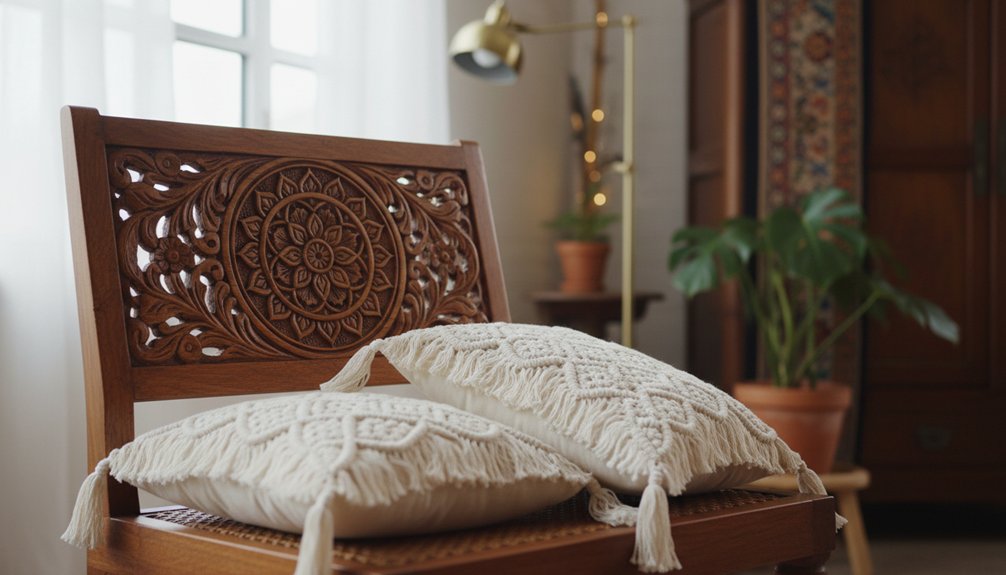
Hand-carved Bohemian furniture showcases the expertise of skilled artisans who dedicate countless hours to crafting distinctive patterns and designs. These artisans create unique grooves and curves that machines cannot replicate, resulting in each piece having its own character. You can identify these handmade features through organic flow patterns, subtle asymmetries, and visible tool marks, which highlight manual craftsmanship.
Artisans use premium hardwoods such as teak, walnut, and sheesham to ensure the durability of each piece. These materials not only provide strength but also reflect the rich cultural heritage embedded in traditional woodworking techniques. While hand-carved furniture typically costs three to five times more than factory-made options, purchasing these pieces supports artisan communities and guarantees longevity.
To identify authentic hand-carved details, examine the craftsmanship closely. Look for consistent quality across the piece and signs of manual work. Caring for these investment pieces requires regular maintenance; use appropriate cleaners and avoid harsh chemicals. Following these guidelines ensures that your hand-carved furniture remains a cherished part of your home for years to come.
What Makes Hand-Carved Bohemian Furniture Different From Factory-Made?
When you compare hand-carved bohemian furniture to factory-made pieces, you see the difference in craftsmanship and quality. Artisan craftsmen carve unique patterns and textures that machines can’t replicate. Each piece showcases individual skill through its distinct curves and grooves.
Factory-made furniture relies on standardized cuts and repetitive designs, resulting in a lack of character that hand-carved pieces possess.
Cultural influences shape hand-carved furniture. Artisans incorporate traditional motifs and techniques that have been passed down through generations. This practice connects each piece to a rich artistic heritage. You can find intricate floral designs, geometric patterns, and symbolic elements that tell meaningful stories.
Hand-carved furniture also prioritizes sustainability. Craftsmen often source local materials and produce less waste compared to mass production facilities. They focus on repairing and restoring items rather than discarding them, which extends the lifespan of the furniture and reduces overall environmental impact. Additionally, the use of traditional craftsmanship techniques ensures that each item is built to last, reflecting a commitment to quality and durability.
Hand-Carved vs. Machine-Made Bohemian Furniture: How to Tell
When you shop for bohemian furniture, you must identify authentic hand-carved pieces from machine-made alternatives. Focus on three key areas: visual texture, tool marks, and pricing.
Visual texture matters. Hand-carved furniture features unique patterns and textures on the wood surface. Each piece will show individual characteristics that reflect the artisan’s skills. In contrast, machine-made furniture has a uniform appearance, lacking the depth and richness found in hand-carved items.
Tool marks provide insight into craftsmanship. Skilled artisans leave behind distinctive tool marks and natural irregularities that demonstrate the handmade process. These marks are intentional and signify quality. Machine-made furniture typically lacks these features, resulting in a smoother, less personalized finish.
Pricing indicates the time and effort involved. Hand-carved furniture often comes with a higher price tag due to the hours of skilled labor invested in each piece. Machine-made alternatives are usually less expensive, as they’re produced en masse without the same level of craftsmanship. Additionally, selecting pieces that maintain at least 30 inches of clearance will enhance the functionality and flow of your space.
Understanding these characteristics will help you make informed decisions and ensure you’re purchasing genuine hand-carved bohemian furniture. Look for visual texture, tool marks, and pricing to distinguish between authentic craftsmanship and machine-made products.
Visual Texture and Patterns
Hand-carved bohemian furniture offers unique surface characteristics that machine-made furniture cannot replicate. Each piece showcases distinct depth variations, allowing for organic flow patterns that reflect the natural beauty of the wood. Skilled artisans create slight asymmetries through hand carving, which adds character to the furniture. You can feel the tool marks left by chisels, giving each item a sense of authenticity.
| Hand-Carved Features | Machine-Made Features |
|---|---|
| Unique depth variations | Uniform, identical depths |
| Organic flow patterns | Repetitive, rigid patterns |
| Slight asymmetry | Perfect symmetry |
| Tool mark character | Laser-precision cuts |
When you run your fingers across a hand-carved surface, you can immediately sense these differences. Each piece tells its own story, influenced by the wood grain and craftsmanship, resulting in one-of-a-kind designs. In contrast, machine-made furniture produces identical patterns and finishes every time, lacking the unique character found in hand-carved pieces.
Hand-carved furniture reflects the artisan’s skill and attention to detail. This approach creates a connection between the craftsman and the final product, something that mass production simply cannot achieve. The limitations of machine manufacturing mean that it cannot capture the same level of artistry or the nuanced imperfections that make hand-carved furniture special. Each piece stands as a testament to the craft, showcasing the beauty of imperfection and individuality.
Tool Marks and Irregularities
Authentic hand-carved bohemian furniture showcases unique tool marks that reflect the artisan’s working process. Each piece carries subtle variations that machine-made furniture fails to replicate. These design irregularities serve as evidence of true craftsmanship rather than flaws.
When you assess hand-carved furniture, focus on these specific indicators:
- Chisel impressions: Look for small grooves and indentations where the artisan shaped the wood. These marks demonstrate the manual effort involved.
- Asymmetrical patterns: Notice the slight differences in repeated motifs across the piece. Hand-carving allows for individual expression that machines can’t achieve.
- Depth variations: Observe the carved areas with inconsistent depths and angles. This variability highlights the artisan’s unique technique.
- Surface texture: Check for uneven finishes that result from the natural motion of carving. This texture adds character to the furniture.
In contrast, machine-made furniture presents uniform precision with identical repeating patterns. Hand-carved pieces exhibit slight imperfections that contribute to their uniqueness.
These tool marks and design irregularities enhance the character and authenticity of your bohemian furniture, ensuring that each item stands out as a one-of-a-kind creation with real artistic value.
Understanding these details helps you appreciate the craftsmanship involved in creating genuine hand-carved furniture.
Price Point Indicators
Price differences between hand-carved and machine-made bohemian furniture highlight significant variations in production methods and quality. Hand-carved pieces typically cost three to five times more than machine-made items due to the skilled labor and time involved in their creation. This price premium reflects the expertise of artisans who’ve honed their craft over generations.
When you purchase a hand-carved wooden chair, you invest in a piece that embodies traditional techniques and cultural heritage. Artisans use responsibly sourced materials to create durable furniture that can last for decades. This commitment to quality means that you receive a unique item that stands apart from mass-produced alternatives.
Machine-made furniture offers a lower price point through mass production, but it often lacks the uniqueness and craftsmanship found in hand-carved pieces. While machine-made options provide affordability, they don’t support artisan communities or preserve traditional woodworking practices.
When evaluating prices, remember that higher costs typically indicate authentic handwork and sustainable practices. By choosing hand-carved furniture, you aren’t just purchasing an item; you’re supporting skilled craftspeople and contributing to the preservation of cultural traditions.
Why Hand-Carved Bohemian Furniture Costs More (And Lasts Longer)
When you shop for bohemian furniture, you’ll find that hand-carved pieces often have higher price tags than machine-made ones. This price difference is significant because it reflects the extensive skilled labor involved in crafting each piece.
Skilled artisans spend hours selecting high-quality materials and applying traditional construction techniques, which ensures that each item can endure for generations. The skilled labor involved in creating hand-carved furniture directly impacts the final product’s quality.
Artisans dedicate time to carving intricate designs, which machine production can’t replicate. This attention to detail adds to the furniture’s durability and uniqueness.
High-quality materials contribute significantly to the longevity of hand-carved furniture. Artisans often choose solid woods like teak or mahogany, which resist wear and tear better than cheaper materials.
The selection of premium materials ensures that each piece not only looks beautiful but also withstands everyday use. Traditional construction techniques further enhance the durability of hand-carved furniture.
Skilled craftsmen use methods like mortise and tenon joints, which provide strength and stability. These techniques often exceed the durability of furniture made with modern assembly methods, ensuring that hand-carved pieces remain functional and aesthetically pleasing for years.
Investing in hand-carved bohemian furniture means valuing craftsmanship, quality materials, and traditional techniques. This investment not only enriches your home decor but also offers the benefit of owning a piece that can be enjoyed by future generations.
Understanding these factors clarifies why hand-carved furniture represents a long-term investment rather than a fleeting purchase. Additionally, the intricate designs often reflect traditional styles that enhance the overall aesthetic of your living space.
Time-Intensive Artisan Labor
Bohemian furniture requires skilled craftsmanship, and each hand-carved piece takes hundreds of hours to complete. When you purchase this furniture, you pay for the artisan’s expertise, not mass production.
Each craftsman specializes in techniques that have been handed down through generations, focusing on intricate patterns that reflect cultural heritage.
The time investment for creating a hand-carved piece consists of specific stages:
- Craftspeople select and prepare wood by examining grain patterns for quality.
- They sketch detailed designs to ensure alignment with traditional motifs.
- Carvers work slowly and precisely to avoid mistakes in the wood, which is irreplaceable.
- Finally, artisans hand-sand and treat the furniture to protect the artwork from wear.
For example, a single chair can take up to forty hours to carve, while a more complex cabinet might require several weeks of dedicated effort.
Each stage is essential for producing high-quality, one-of-a-kind furniture that embodies the art of handcrafting.
Superior Material Selection
The quality of wood directly affects furniture cost and longevity. Artisans choose premium hardwoods like teak, walnut, and mahogany because these materials resist warping, cracking, and pest damage. Cheaper woods don’t offer the same durability, leading to higher maintenance costs over time.
Sourcing these premium materials often involves importing them from sustainable forests, which increases expenses but ensures responsible harvesting practices.
Choosing high-quality wood provides a significant advantage over mass-produced furniture. Many workshops now focus on eco-friendly practices, selecting woods from responsibly managed forests with proper certifications. While these ethical choices can raise costs, they contribute to protecting natural resources for future generations.
The dense grain structure of quality hardwoods allows for intricate carving that withstands wear. This prevents fine details from chipping or degrading over time, ensuring that your furniture remains a lasting investment.
Heirloom Quality Construction
Hand-carved bohemian furniture uses traditional joinery techniques to create strong, durable connections. Unlike mass-produced furniture that relies on staples and industrial adhesives, hand-carved pieces employ methods like mortise-and-tenon joints and dovetailing. These techniques have proven their strength over centuries; they don’t weaken over time as glue or metal fasteners can.
When you choose hand-carved bohemian furniture, you invest in heirloom-quality construction that can last for generations. The joints in this furniture naturally tighten as the wood expands and contracts with changing humidity levels. Craftsmen carefully assess each piece to ensure optimal grain alignment, which maximizes strength.
The hand-planed surfaces offer better wood-to-wood contact compared to machine cuts. Additionally, artisans select specific joinery methods tailored to each piece’s stress points, further enhancing durability.
This approach results in furniture that withstands decades of daily use without compromising structural integrity. You’re not just purchasing furniture; you’re acquiring a quality construction that can endure the test of time.
Traditional Hand-Carving Techniques Used in Bohemian Furniture
Skilled artisans in the Bohemian region hand-carve furniture using techniques developed over centuries. These methods include relief carving, which creates raised designs on flat surfaces, and pierced carving, which produces intricate openwork patterns. Artisans typically incorporate traditional motifs such as floral designs, geometric shapes, and nature-inspired elements into their work.
Hand-carving provides benefits that machine production can’t match. Each carved detail adds texture and depth to the furniture, enhancing its visual appeal and tactile experience. Craftsmen utilize specialized tools like chisels, gouges, and mallets to shape the wood while considering its grain and properties. This process ensures that the finished product is both durable and beautiful.
The hand-carving process requires significant expertise, typically taking years of training to master. Craftsmen develop a deep understanding of various wood types and how to manipulate them effectively.
When someone invests in hand-carved Bohemian furniture, they acquire a unique piece that reflects cultural heritage and demonstrates exceptional human craftsmanship.
Floral Scrolls to Geometric Patterns: Common Hand-Carved Bohemian Motifs
When I examine hand-carved Bohemian furniture, I notice recurring decorative patterns that define the style across various pieces and eras. These motifs not only showcase the craftsmanship but also reflect cultural influences from Central Europe.
Common Patterns in Hand-Carved Bohemian Furniture
Hand-carved Bohemian furniture often features four common patterns:
- Floral Scrolls: Craftsmen carve intricate designs of intertwining vines, roses, and acanthus leaves. These motifs are prevalent due to their aesthetic appeal and symbolic meanings.
- Geometric Designs: Repeating diamonds, chevrons, and interlocking squares are common in this style. These patterns require precise cuts and measurements, demonstrating the craftsman’s skill in symmetry.
- Nature-Inspired Elements: Carvings of oak leaves, wheat stalks, and grape clusters reflect the natural world and local agricultural traditions. These designs often symbolize growth and abundance.
- Baroque Flourishes: Curved ribbons, shell forms, and ornamental borders add a touch of elegance. These flourishes require advanced carving techniques to achieve their detailed appearance.
Techniques Used in Carving
Each pattern involves specific carving techniques. For example, floral scrolls often require shallow relief work to create a delicate appearance, while geometric designs may need deep dimensional cuts to cast dramatic shadows.
Unique Compositions
Craftsmen frequently combine these motifs to create unique compositions. The ability to blend patterns effectively demonstrates a craftsman’s expertise and artistry. Each unique piece reflects a careful selection of designs, enhancing the overall aesthetic of the furniture.
Conclusion
Best Woods for Hand-Carved Bohemian Furniture (Mango, Sheesham, Acacia)
Mango, Sheesham, and Acacia woods are the best choices for hand-carved Bohemian furniture. Mango wood is sustainable, shows beautiful grain variations, and allows for intricate carvings at an affordable price.
Sheesham, or Indian rosewood, is known for its durability. Artisans use Sheesham for its dense composition, which prevents splitting and cracking, making it suitable for detailed designs that last for generations.
Acacia wood offers natural resistance to moisture and insects, enhancing its longevity. Its warm honey tones fit well within Bohemian aesthetics. Each wood type provides distinct characteristics that influence the design and durability of hand-carved furniture, allowing you to select pieces that meet your style and practical needs.
When choosing wood for Bohemian furniture, consider the specific properties of each option. Mango wood’s sustainability and attractive grain patterns support intricate designs.
Sheesham wood’s density ensures that detailed carvings remain intact over time. Acacia wood’s moisture and insect resistance make it ideal for various environments. These attributes help you determine the best fit for your furniture projects.
In practice, artisans often choose mango wood for more affordable pieces while reserving Sheesham for high-end items that require greater durability. Acacia is frequently selected for outdoor furniture due to its resistance to the elements.
Understanding the characteristics of each wood allows craftsmen to create functional and aesthetically pleasing pieces.
Pay attention to the limitations of each wood type as well. While mango wood is affordable, it may not be as durable as Sheesham for heavy-use items.
Sheesham wood can be more expensive and may not be available in all regions. Acacia wood, while resistant to moisture, still requires maintenance to preserve its appearance over time.
Regional Craft Hubs: Why Jaipur Leads in Hand-Carved Bohemian Furniture
Jaipur leads India’s hand-carved Bohemian furniture market due to its strong woodworking heritage and skilled artisans. Artisans in Jaipur have developed techniques over generations, resulting in intricate patterns that characterize authentic Bohemian designs.
Skilled Workforce: Jaipur artisans receive training in specialized workshops where master craftsmen teach traditional carving methods. This hands-on training ensures high levels of skill and craftsmanship.
Material Access: Jaipur’s location near timber suppliers allows artisans to source premium woods like mango, sheesham, and acacia. This access to quality materials enhances the durability and aesthetic appeal of the furniture.
Design Innovation: Artisans blend traditional Rajasthani motifs with contemporary global Bohemian trends. This fusion creates unique furniture pieces that resonate with both local and international markets.
Production Infrastructure: Jaipur has established networks that connect carvers, finishers, and exporters. These connections streamline the production process, ensuring efficient delivery of quality products.
These factors enable Jaipur artisans to produce hand-carved Bohemian furniture that meets international quality standards while upholding traditional craftsmanship values.
Caring for Hand-Carved Details on Bohemian Furniture
Hand-carved Bohemian furniture requires consistent maintenance to preserve its artistry and craftsmanship. Dust the intricate carvings every week using a soft, dry cloth or a natural-bristle brush. This weekly dusting prevents dust buildup in the grooves and protects the wood’s finish.
Weekly dusting with soft cloths or natural-bristle brushes prevents buildup in carved grooves and protects the delicate wood finish.
For deeper cleaning, use a slightly damp cloth with mild soap, making sure to follow the wood grain. Always dry the surface immediately to prevent moisture damage.
Apply furniture wax or oil every six months to nourish the wood and enhance the carved details. Avoid placing your furniture in direct sunlight or near heat sources to prevent warping and fading.
Regular maintenance ensures that your hand-carved furniture retains its unique character for generations. By following these specific steps, you can maintain the beauty and value of your investment in Bohemian craftsmanship.
Styling Hand-Carved Bohemian Furniture in Minimalist and Modern Interiors
Many homeowners believe that ornate Bohemian furniture clashes with minimalist interiors. However, you can create visual contrast through strategic placement. By treating hand-carved furniture as sculptural focal points, you achieve harmony in a clean-lined space. Position one statement piece against neutral walls to highlight its intricate details without overwhelming the area.
To balance Bohemian aesthetics with modern design, consider these specific placement strategies:
- Place a carved wooden console in an entryway and limit accessories to only a few essential items. This keeps the focus on the console’s details.
- Position an ornate side table next to a streamlined sofa. This juxtaposition enhances both pieces’ visual appeal.
- Feature a hand-carved headboard against a backdrop of white bedding. This combination emphasizes craftsmanship while maintaining a sleek look.
- Use a decorative carved chair as a standalone art piece in a corner. This approach showcases the chair’s design without cluttering the space.
Pair rich wood tones with monochromatic palettes to create depth in your room. This method allows the craftsmanship of the Bohemian furniture to shine while preserving a contemporary feel.