
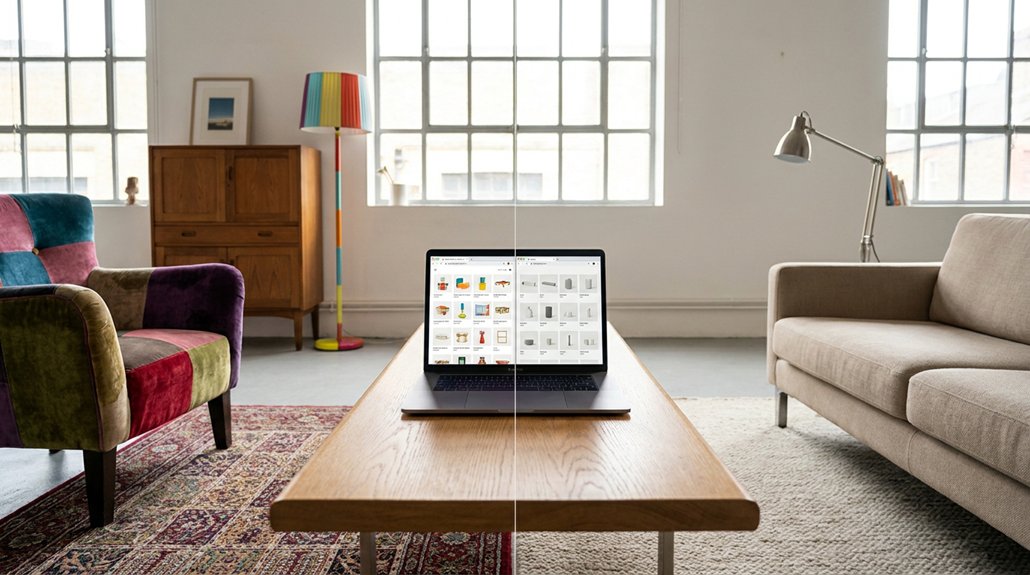
When comparing BigBuy and Syncee for furniture dropshipping, we see distinct offerings in catalogue depth. BigBuy provides several thousand mid-priced SKUs, primarily in core home-and-living categories. This structured inventory ensures predictable stock levels, making it suitable for businesses aiming for mass-market scaling. In contrast, Syncee connects numerous independent suppliers, offering a wider range of micro-brands and niche products, such as pet furniture and sustainable wood options. This variety allows for greater long-tail depth, catering to specialized customer preferences.
To determine which platform aligns better with your growth strategy, consider your target market. If you plan to target a broad audience with reliable inventory, BigBuy’s extensive catalogue is advantageous. However, if you seek to differentiate your offerings with unique, niche products, Syncee’s supplier network provides that flexibility.
Evaluate your business goals to choose the right platform. BigBuy excels in providing structured SKUs for rapid scaling. Syncee shines in offering diverse options for niche markets. Both platforms have their strengths, so your choice should reflect your specific needs in furniture dropshipping.
Why Catalogue Depth Matters for Furniture Dropshipping
Catalogue depth is essential in furniture dropshipping; it drives market coverage, conversion rates, and average order value. Expanding our assortment increases touchpoints with various buyer segments and styles, allowing us to meet diverse customer needs effectively.
When we analyze catalogue depth against search demand, we identify clear trends. A broader range in key categories—such as sofas, dining sets, storage solutions, and outdoor furniture—aligns with actual search behavior. This alignment helps us capture long-tail search queries and minimizes “no result” scenarios, which often push potential buyers to our competitors.
Stores with shallow catalogues depend on a limited number of popular products and compete primarily on price. In contrast, stores with strategic depth offer more finishes, sizes, and materials to accommodate different homes and budgets. This variety enhances cross-selling opportunities, increases average order value, and stabilizes revenue through changing trends, seasons, and economic conditions.
In practical terms, a deeper catalogue allows for better targeting of specific customer needs. For instance, a store offering 10 sofa styles versus one with 50 styles can tap into a wider audience. The store with 50 styles can better cater to various aesthetic preferences and price points, leading to higher customer satisfaction and repeat business.
Limiting catalogue depth restricts options for customers and reduces the likelihood of meeting their specific requirements. Customers seeking unique designs or specific dimensions may abandon a site with a narrow selection, resulting in lost sales. Additionally, accurate room dimensions ensure that customers can find furniture that fits their spaces effectively, further enhancing their shopping experience.
How to Compare BigBuy and Syncee Furniture Catalogues
When comparing BigBuy and Syncee furniture catalogues, we need to conduct a thorough market analysis. First, we map the SKU volume against category coverage, focusing on specific areas: living room, bedroom, outdoor, office, storage, and décor.
We then examine the depth within each segment by price tier, style—such as Scandi, industrial, boho, and minimalist—and material types.
Next, we assess catalogue organization. We check if we can filter efficiently by shipping country, lead time, weight, and parcel size.
> We then evaluate catalogue structure, validating robust filters for shipping country, lead time, weight, and parcel dimensions.
We also determine if product attributes are standardized enough to support clean advertising and effective feed-driven campaigns.
We then benchmark supplier reliability. For Syncee, we review vendor ratings, stock update frequency, and historical order issues.
For BigBuy, we analyze key service metrics such as fill rates, on-time dispatch rates, and damage or return ratios.
Finally, we align the assortment data from each platform with our target niches and profit margins. This analysis helps identify which catalogue can sustain a profitable and scalable furniture positioning strategy, especially considering the durability of solid wood furniture that affects long-term customer satisfaction.
Inside BigBuy’s Furniture Catalogue: Size and Focus
BigBuy’s furniture catalogue serves as a key component of its home & living strategy. The catalogue features several thousand furniture SKUs across categories like living room, bedroom, dining, office, garden, and storage. This extensive range positions BigBuy closer to a mid-sized specialist than a typical generalist dropshipping wholesaler.
BigBuy balances essential items with contemporary styles. The catalogue includes not only flat-pack basics but also seasonal outdoor sets, Scandinavian designs, and solutions for small spaces. This variety meets the needs of a diverse audience, from budget-conscious first-time renters to mid-market household upgraders, without over-complicating supplier relationships.
Most items in BigBuy’s furniture catalogue fall within the mid-price range. This pricing strategy enhances the potential for mass-market conversions rather than focusing on luxury sales. As a result, BigBuy’s furniture offerings provide a practical foundation for volume-driven dropshipping stores. Additionally, the Scandinavian design principles reflected in many products emphasize simplicity and functionality, appealing to modern consumers.
Inside Syncee’s Furniture Catalogue: Suppliers and Niches
Syncee‘s Approach to Furniture Dropshipping
Syncee acts as a marketplace that connects numerous independent furniture suppliers and micro-brands. Unlike a single wholesaler like BigBuy, Syncee provides access to a wide variety of production styles, price points, and regional designs. This supplier diversity is crucial for effective furniture dropshipping.
Testing Niche Markets with Lower Risk
Syncee enables businesses to explore niche markets with reduced risk. For example, suppliers can cater to specific trends like Japandi, boho, reclaimed wood, pet furniture, and RV interiors.
This approach allows businesses to align suppliers with distinct audience segments and marketing strategies.
Understanding Supplier Signals
- Local Artisan Woodshops provide unique items for businesses wanting exclusivity.
- Regional EU/US Quick-Ship Partners offer fast shipping to businesses needing speed.
- FSC-Certified and Reclaimed-Material Brands appeal to companies focused on sustainability.
- Design-Led Micro-Brands attract customers seeking storytelling in their furniture.
- Value-Focused Importers supply affordable options for price-sensitive businesses.
Supporting Experimentation and Positioning
Syncee’s structure encourages businesses to experiment with different suppliers. This flexibility helps sharpen positioning in a fragmented furniture market.
Companies can adapt quickly to changing consumer demands by utilizing a diverse supplier network.
In summary, Syncee’s marketplace model enhances opportunities for furniture dropshipping by providing a broad range of suppliers and niche options.
This diversity allows businesses to test markets effectively and align with specific consumer needs.
BigBuy vs Syncee: Furniture SKU Count and Categories
BigBuy vs. Syncee: Furniture SKU Count and Categories****
BigBuy and Syncee differ significantly in their inventory offerings for furniture sellers. BigBuy lists thousands of SKUs within a structured home-and-living category, providing a stable and predictable inventory. In contrast, Syncee features a broader and more variable SKU count from multiple suppliers, leading to frequent changes in available products. This variability affects furniture sellers’ ability to categorize and manage their inventories effectively.
BigBuy focuses on key revenue-generating categories: living-room, bedroom, outdoor, office, and storage. Each category includes well-defined subcategories that aid in merchandising and advertising. For instance, living-room furniture includes sofas, coffee tables, and entertainment centers, allowing sellers to target specific customer needs.
On the other hand, Syncee reflects a marketplace model by covering niche areas such as pet furniture, kids’ study spaces, and specialized shelving. However, the depth of offerings in these micro-segments can vary, making it harder for sellers to predict inventory availability.
For brands aiming to build a structured catalog, BigBuy’s predictable inventory supports efficient planning and marketing strategies. Conversely, Syncee’s diverse inventory provides opportunities for sellers interested in exploring niche markets but may require more agility in managing inventory fluctuations.
BigBuy vs Syncee: Furniture Style Diversity
When comparing furniture style diversity between BigBuy and Syncee, we evaluate a focused European catalog against a broad multi-supplier marketplace. BigBuy emphasizes modern styles and minimalist aesthetics, featuring clean-lined furniture, compact storage solutions, and neutral color palettes.
While BigBuy includes some vintage designs and luxury options, these selections feel limited and handpicked rather than extensive.
BigBuy’s vintage and luxury pieces appear curated and selective, offering depth but not broad stylistic coverage
In contrast, Syncee aggregates products from hundreds of suppliers, providing wider stylistic coverage. Syncee features strong representations of vintage, farmhouse, industrial, and boho styles alongside contemporary pieces. This diversity facilitates targeting multiple micro-niches simultaneously.
Regarding eco-friendly options, Syncee lists a larger selection of sustainable and recycled products. BigBuy does offer some green selections, but these are fewer in number.
Syncee’s marketplace model showcases more boutique brands, allowing for semi-custom furniture and configurable variants. In comparison, BigBuy tends to offer standardized products, prioritizing scalable stock-keeping units (SKUs) over deep personalization.
BigBuy vs Syncee: Furniture Pricing, Quality, and Stock
BigBuy vs. Syncee: Furniture Pricing, Quality, and Stock
BigBuy and Syncee directly influence the profitability of a furniture brand through their pricing, quality, and stock reliability. BigBuy uses volume-based wholesale pricing and offers periodic discounts, which provide clearer profit margins on mid-range furniture.
In contrast, Syncee aggregates multiple suppliers, resulting in fragmented pricing that can be sharper for niche or locally sourced furniture.
Pricing Strategies
BigBuy utilizes a straightforward pricing strategy based on high-volume sales. This approach gives us predictable margins on mid-range furniture.
Syncee’s fragmented pricing strategy allows us to find competitive prices, especially for unique or locally sourced items.
Quality Assessment
BigBuy maintains a standardized quality across its catalog. The consistent product data and customer reviews allow us to anticipate defect rates accurately.
Syncee, on the other hand, offers a broader range of quality. While we can find high-quality craftsmanship, we must vet each supplier to ensure product reliability.
Stock Reliability
BigBuy’s centralized warehousing provides predictable inventory levels and quick replenishment. This structure reduces the likelihood of stock-outs.
In contrast, Syncee’s decentralized model can lead to stock volatility, making inventory management more challenging.
Key Challenges
We face critical challenges in the following areas:
- Margin Protection: Intense price competition pressures our profit margins.
- Quality Control: We need to minimize returns due to quality failures, which can harm our reputation.
- Stock Management: We must prevent cancellations caused by stock-outs, which can frustrate customers.
- Brand Trust: Every delivery must meet expectations to maintain brand trust.
BigBuy vs Syncee: Best Platform for Your Furniture Brand
Choosing between BigBuy and Syncee requires careful consideration of your furniture brand’s objectives and market focus.
If you aim to sell fast-moving, mid-priced items that align with mainstream furniture trends, BigBuy offers centralized logistics, European warehousing, and pre-packaged bundles. This setup allows for straightforward scaling and a data-driven approach. BigBuy’s extensive catalog supports brands that prioritize volume, speed, and competitive pricing.
In contrast, Syncee is more suitable for brands targeting niche markets with unique aesthetics or higher profit margins. Syncee aggregates various wholesalers, giving brands the ability to curate product lines that align closely with their identity. This flexibility enables you to test different furniture trends based on supplier, region, or pricing strategy, which is essential for effective dropshipping.
To summarize, BigBuy serves brands focused on volume and operational efficiency across Europe. Syncee caters to those emphasizing brand uniqueness, supplier diversity, and adaptability. Your decision should align with your target average order value (AOV), shipping service level agreements (SLAs), and the level of brand defensibility you aim for in the next 12 to 24 months.
BigBuy: Ideal for Volume and Efficiency
BigBuy works best for brands that prioritize high volume and operational simplicity.
It provides a streamlined process for brands looking to scale quickly across Europe.
Syncee: Ideal for Niche and Flexibility
Syncee is the right choice for brands that value uniqueness and flexibility.
It enables you to build a differentiated furniture line with curated products from various suppliers, allowing for experimentation with market trends.
Decision Factors for Your Brand
Consider factors like average order value, shipping timelines, and brand strategy when making your choice.
This ensures that your selected platform aligns with your long-term vision for the furniture brand.